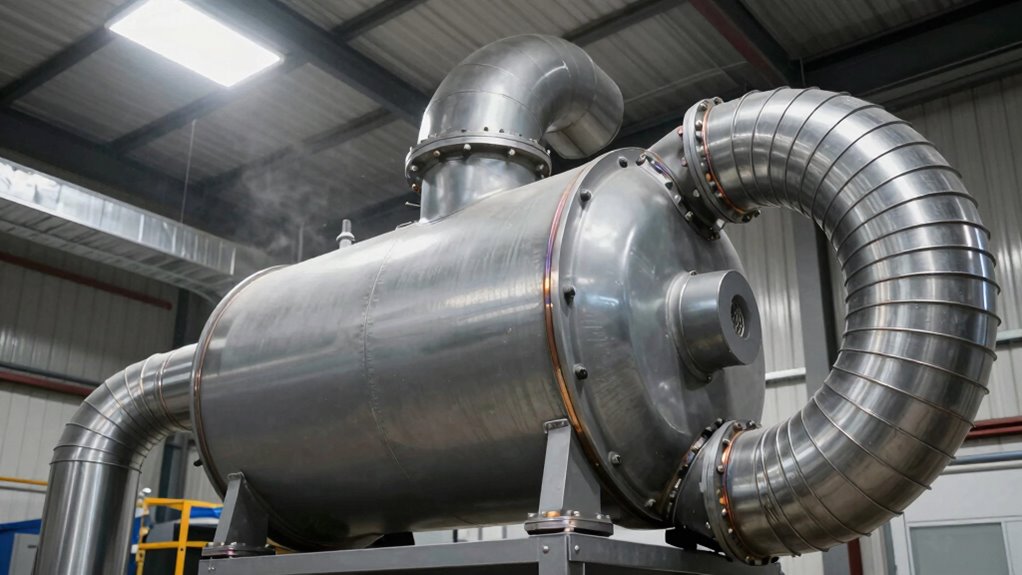

Your dust collector’s horsepower isn’t the only factor that determines its effectiveness. Proper ductwork design plays a vital role by reducing resistance, maintaining consistent airflow, and preventing dust leaks. Even a powerful motor can’t perform well if the duct system is poorly designed or installed. Optimized duct sizing, smooth bends, and sealed joints help improve airflow and efficiency. Keep going to discover how ductwork can sometimes matter more than horsepower alone.

Get business pricing on tools and workshop supplies
- Business-only prices and quantity discounts
- Tax-exempt purchasing
- Multiple users, one account, clear invoices
Key Takeaways
- Proper ductwork design reduces resistance, allowing even smaller motors to achieve optimal dust collection performance.
- Poor duct layout causes airflow restrictions, forcing higher horsepower motors to compensate, increasing energy costs.
- Well-designed duct systems maintain consistent airflow, making high horsepower less critical for effective dust collection.
- Inadequate ducting leads to leaks and turbulence, diminishing system efficiency regardless of motor size.
- Optimized ductwork improves air quality and system longevity, often more impactfully than increasing motor horsepower.
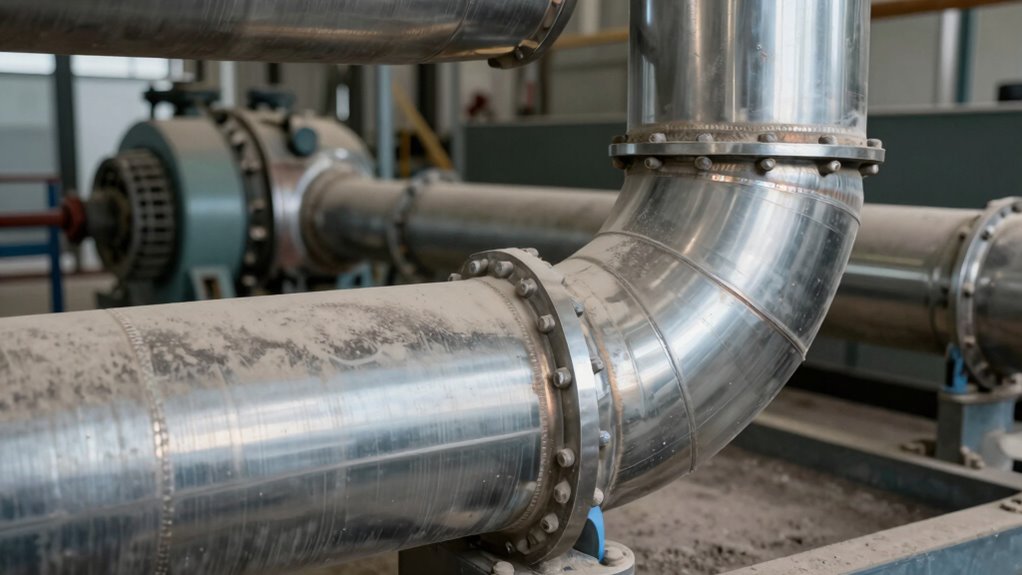
Choosing the right dust collector horsepower is essential for effectively managing airborne debris in your workspace. The horsepower determines how much air the system can move, impacting both air quality and overall efficiency. When selecting a unit, it’s tempting to focus solely on the motor size, but the ductwork plays a critical role that often gets overlooked. Proper duct design can make or break your system’s performance, regardless of the horsepower you choose. Poorly designed ductwork increases resistance, reducing airflow and forcing the system to work harder. This not only hampers air quality by allowing dust to escape but also wastes energy, making your setup less energy-efficient.
In terms of air quality, the goal is to capture and contain dust before it disperses into your workspace. Even with a high horsepower dust collector, if the ductwork isn’t optimized, dust can escape through leaks or be inadequately directed, compromising the air you breathe. Proper duct sizing, smooth bends, and sealed joints help maintain consistent airflow, ensuring dust is efficiently captured and removed. When airflow is optimized, you get cleaner air, which benefits your health and safety. Additionally, understanding airflow resistance in your ductwork can help you make better design choices to maximize system performance. A well-planned duct layout can significantly reduce turbulence and improve overall airflow efficiency. Considering airflow dynamics can further enhance the effectiveness of your duct system, ensuring optimal performance. Ensuring proper duct sealing is also vital to prevent leaks that can diminish system efficiency and air quality.
Energy efficiency is another critical aspect that hinges on ductwork. A system with excessive duct resistance requires more power to operate effectively, leading to higher energy costs. Conversely, well-designed ductwork minimizes resistance, allowing your dust collector to operate at lower power levels while still performing well. This not only reduces your electricity bills but also extends the lifespan of your equipment, as it’s not overexerting itself. Even if you have a powerful motor, inefficient ductwork diminishes its effectiveness and increases operational costs. Furthermore, duct layout can significantly influence how well your system performs, emphasizing the importance of strategic planning in your setup. Properly crafted ductwork that considers airflow dynamics can make the difference between a mediocre and a highly efficient system. Regular maintenance and inspection of ductwork also help sustain optimal airflow and system performance over time.
As an affiliate, we earn on qualifying purchases.
Frequently Asked Questions
How Does Ductwork Length Affect Dust Collector Performance?
Longer ductwork reduces your dust collector’s performance by decreasing airflow efficiency. As duct length increases, resistance builds, making it harder for dust and debris to travel smoothly to the collector. Proper ductwork design minimizes bends and optimizes diameter, helping maintain strong airflow. Keep ductwork as short and straightforward as possible, ensuring your dust collection system works effectively and saves energy by reducing the workload on your dust collector.
What Materials Are Best for Dust Ductwork?
Choosing the right material for dust ductwork is like picking a sturdy shield—you want durability and reliability. You should opt for galvanized steel or aluminum because they resist corrosion and withstand wear. These materials are easy to install, making your setup smoother, and they last longer, ensuring consistent performance. Consider installation considerations carefully to prevent leaks or damage, and prioritize durable materials for the best dust collection system.
How Often Should Ductwork Be Cleaned?
You should clean your ductwork at least once a year to maintain ideal airflow efficiency. Regular cleaning prevents dust buildup that can impede airflow, reducing your dust collector’s performance. Additionally, make sure your duct sealing is intact; leaks can cause inefficiencies. If you notice excessive dust or reduced suction, consider more frequent cleanings. Proper maintenance keeps your system running smoothly, prolongs equipment life, and maintains a safe, dust-free environment.
Can Improper Ductwork Cause Health Issues?
Improper ductwork can definitely cause health issues. Poorly installed or clogged ducts can reduce indoor air quality, trapping dust, mold, and allergens. This buildup can trigger allergic reactions, asthma symptoms, or other respiratory problems. When ductwork isn’t sealed or maintained properly, airborne contaminants circulate more easily, making it harder to breathe comfortably and safely indoors. Regular inspections and proper installation help guarantee healthier air and reduce health risks.
What’s the Average Lifespan of Typical Duct Systems?
You can expect a typical duct system to last around 10 to 15 years with proper maintenance. Regular airflow optimization and duct installation checks help extend its lifespan. Over time, ducts may develop leaks, rust, or insulation issues, which can reduce efficiency and indoor air quality. Staying proactive with inspections and cleaning guarantees your system performs well longer, saving you money and maintaining a healthier environment.
As an affiliate, we earn on qualifying purchases.
Conclusion
In the end, understanding that ductwork can be just as vital as your dust collector’s horsepower is key. Don’t overlook the importance of proper design and installation — it’s the backbone of an efficient system. Remember, a chain is only as strong as its weakest link. When you pay attention to both power and ductwork, you’re setting yourself up for a smooth operation that keeps dust at bay and your workspace running like a well-oiled machine.
airflow optimized ductwork for dust collector
As an affiliate, we earn on qualifying purchases.
As an affiliate, we earn on qualifying purchases.
sealed duct joints for dust collection
As an affiliate, we earn on qualifying purchases.
As an affiliate, we earn on qualifying purchases.
Fall Picks
fall essentials
As an affiliate, we earn on qualifying purchases.