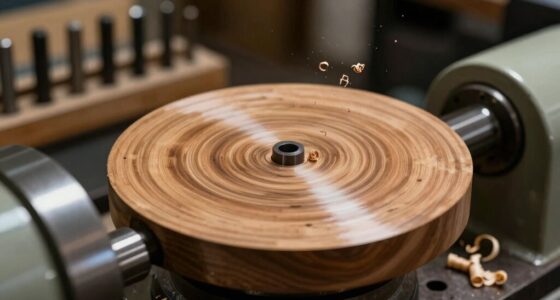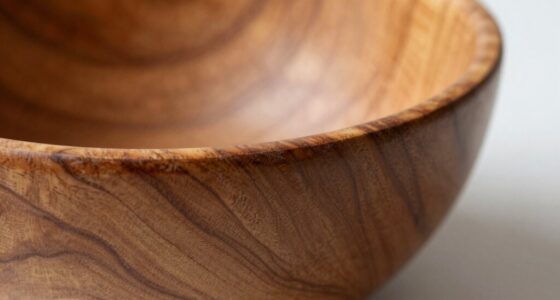
The finish you choose for your turned bowls really affects how they feel in your hand. Glossy finishes can be sleek but might feel slippery, while matte finishes provide a better grip. Different wood species react uniquely to finishes, which impacts the overall texture and comfort. By understanding these features, you’ll be able to enhance your finished product. Let’s explore how various application techniques and maintenance can further improve your experience with these beautiful creations.

Get business pricing on tools and workshop supplies
- Business-only prices and quantity discounts
- Tax-exempt purchasing
- Multiple users, one account, clear invoices
Key Takeaways
- Different wood species absorb finishes uniquely, affecting the tactile feel and overall user experience in hand.
- Matte finishes provide a textured surface that enhances grip, making them feel more comfortable to hold.
- Glossy finishes, while visually appealing, can feel slippery and less secure in hand during use.
- Multiple layers of oil finishes not only enhance color but also create a smoother, more pleasing texture to the touch.
- Regular maintenance and reapplication of oil keep the finish feeling great and looking beautiful, enhancing user satisfaction.
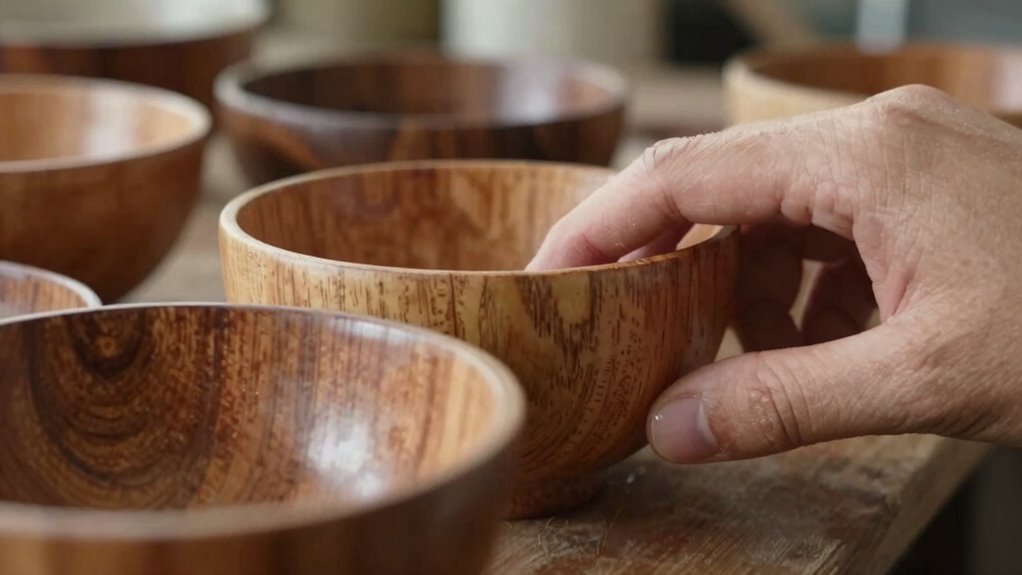
Different wood species react uniquely to finishes. Some may absorb oil finishes deeply, enhancing their color and texture, while others might require a different approach. Understanding the characteristics of the wood you’re working with can help you select the most effective application techniques. For instance, a softer wood like pine may absorb oil differently than a harder species like maple. Adjusting your technique for each type can lead to better results in both appearance and feel.
User preferences also play a significant role in the finishing process. Some people prefer a glossy finish, while others lean towards a more matte look. Glossy finishes can provide a sleek surface texture, but they may also make the bowl slippery in the hand. On the other hand, a more textured finish can enhance grip, making the bowl feel more secure during use. It’s vital to think about how your finished product will be used and who’ll be using it.
When applying oil finishes, consider multiple layers to build up durability. This not only protects your bowls but also creates a depth of color that enhances the grain. You can use a soft cloth or a brush for application, depending on your comfort level. Remember to allow each layer to cure properly before adding the next, which will guarantee a smooth, even finish. Understanding the characteristics of the wood can help you choose the best application method for optimal results. Additionally, understanding the reaction of wood to finishes can guide you in selecting the right products and techniques for each piece. Recognizing the absorption properties of different woods can further improve your finishing approach. Knowing how different woods respond to oil finishes can also influence your technique and product choice. Exploring the longevity of finishes can help you make more informed decisions to ensure your bowls remain beautiful over time.
Maintenance tips are important, too. Encourage users to periodically reapply oil to maintain the beauty and functionality of the bowl. A little care goes a long way in prolonging the life of your work. By guiding users on how to care for their bowls, you not only enhance their experience but also establish a relationship built on quality craftsmanship.
In the end, the finishing process is a blend of art and science. It’s about creating a piece that not only looks stunning but feels great in the hand, making every bowl you turn a true reflection of your creativity.
matte finish for turned wood bowls
As an affiliate, we earn on qualifying purchases.
As an affiliate, we earn on qualifying purchases.
Frequently Asked Questions
What Types of Wood Are Best for Turned Bowls?
For turned bowls, you’ll want to choose woods like maple, cherry, or walnut. These woods have excellent characteristics, such as durability and a fine grain. Maple offers a smooth finish and subtle grain patterns, while cherry develops a rich color over time. Walnut stands out with its striking dark hues and unique grain. Each wood type gives your bowl a distinct aesthetic and tactile experience, ensuring it feels great in your hands.
How Do I Prevent My Bowl From Cracking?
To prevent your bowl from cracking, focus on moisture control during the wood drying process. Start by sealing the end grain of your bowl with wax or a sealant right after turning it. This helps slow down moisture loss. Store the bowl in a stable environment with consistent humidity and temperature. If you notice any cracks forming, you can apply a thin layer of wood glue to help stabilize the wood before it worsens.
Can I Use Food-Safe Finishes on My Bowls?
Absolutely, you can use food-safe finishes on your bowls! Isn’t it ironic? You’d think a beautiful bowl should be safe to eat from, right? When applying your finish, make sure it’s labeled food-safe to guarantee safety. Oils, waxes, and certain varnishes work well, but you’ll want to follow application instructions closely. This way, your bowl not only looks stunning but is also ready for all those delicious treats you plan to serve!
What Tools Are Essential for Turning Bowls?
To turn bowls effectively, you’ll need essential tools like bowl gouges and various lathe tools. Start with a sharp bowl gouge for roughing out the shape, then refine it with a spindle gouge or scraper. Mastering sanding techniques is vital for achieving a smooth finish. Don’t forget tool maintenance; keep your tools sharp and clean to guarantee consistent performance. With the right tools and care, you’ll create beautiful, functional bowls.
How Do I Clean and Maintain My Finished Bowl?
To keep your bowl beautifully balanced, start with simple cleaning techniques. Use a soft cloth for daily dusting and avoid abrasive materials. For deeper dirt, a mild soap solution works wonders. As for maintenance tips, periodically apply a food-safe oil to enhance the finish and prevent drying. Always store your bowl in a cool, dry place to preserve its polished perfection. With these steps, your bowl will stay stunning for years to come!
As an affiliate, we earn on qualifying purchases.
Conclusion
In the end, the right finish can transform your turned bowl from ordinary to extraordinary. It’s all about finding that perfect balance—smooth yet textured, warm yet cool. You’ll notice how the finish feels in your hand, almost like it was meant just for you. As you experiment, let each coat guide you, leading you to a finish that’s not only beautiful but also inviting. Trust the process, and you’ll create pieces that truly resonate.
As an affiliate, we earn on qualifying purchases.
As an affiliate, we earn on qualifying purchases.
Fall yard work Picks
leaf blowers
As an affiliate, we earn on qualifying purchases.