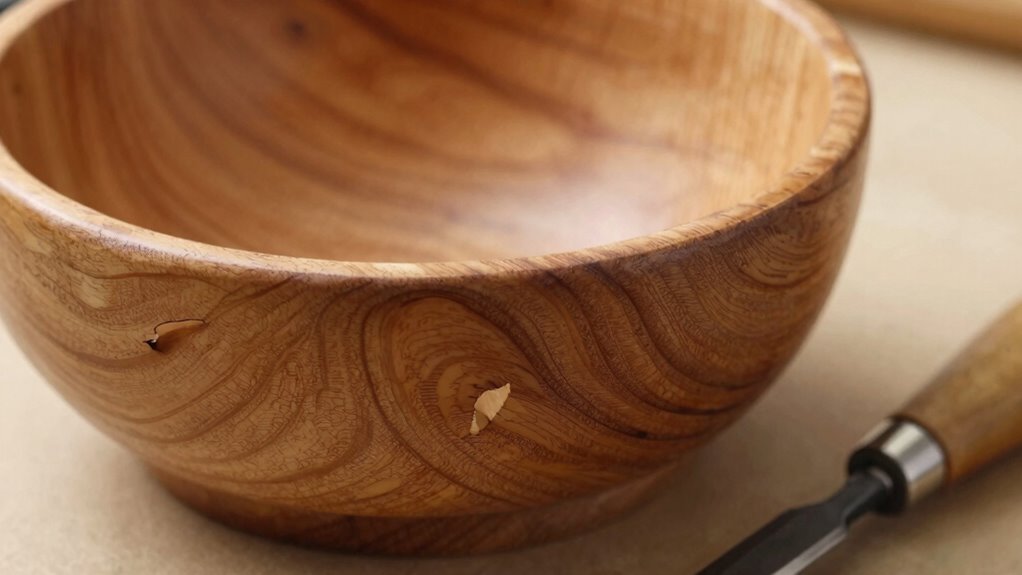

To tackle end grain tear-out, focus on your toolpath. Always cut downhill on the grain with sharp tools, preferably high-speed steel or carbide. Maintain a lower lathe speed for better control and use the right cutting angles to slice fibers cleanly. Proper sanding techniques, like working with the grain and using varying grits, help achieve a smooth finish. By mastering these strategies, you’ll enhance your turning projects considerably. Discover more effective tips ahead!

Get business pricing on tools and workshop supplies
- Business-only prices and quantity discounts
- Tax-exempt purchasing
- Multiple users, one account, clear invoices
Key Takeaways
- Use well-sharpened high-speed steel or carbide tools to minimize end grain tear-out during turning.
- Always cut downhill on the grain to reduce the risk of tearing fibers.
- Maintain lower lathe speeds for better control and reduced likelihood of tear-out.
- Experiment with grain orientation to find the most effective cutting approach for your wood type.
- Apply finishes slowly and deliberately to avoid highlighting any imperfections caused by tear-out.
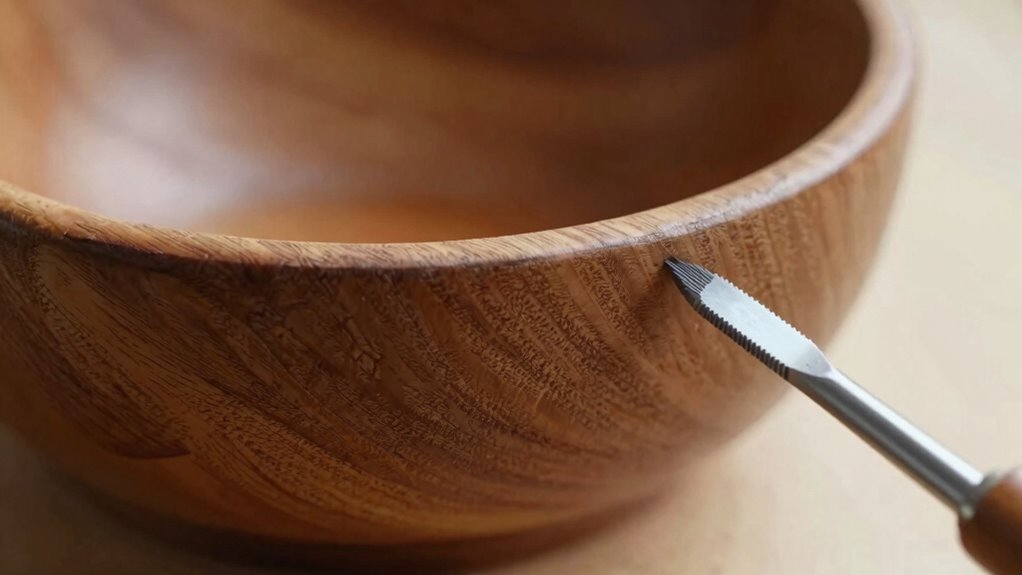
End grain tear-out can be be a frustrating issue for woodworkers, but you’re not alone in facing this challenge. Many find that when turning wood, especially end grain, they struggle with unsightly tear-out that can ruin a project. Fortunately, understanding a few key factors can help you tackle this problem effectively.
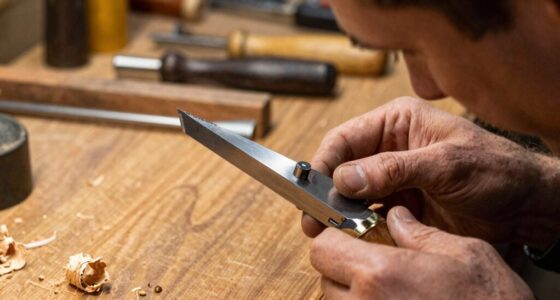
First, consider your tool selection carefully. Not all tools are created equal, and using the right tool can make a significant difference. High-speed steel (HSS) tools or carbide tools often provide better results. Verify your tools are well-sharpened; dull tools tend to create more tear-out. Pay attention to the cutting angles as well; a sharper angle can slice through the fibers more cleanly, minimizing damage.
Consider your tool selection carefully; sharp, high-quality tools make a significant difference in reducing end grain tear-out.
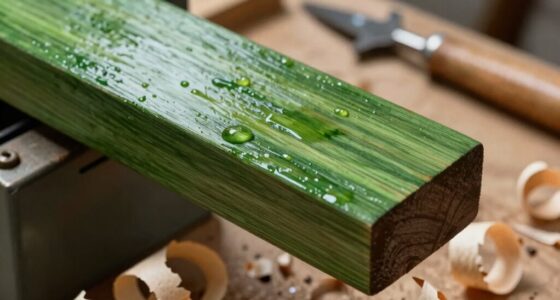
Next, grain orientation plays an essential role in achieving a smooth finish. When you’re working with end grain, the direction in which you approach your cuts matters. Always cut downhill on the grain to reduce the chances of tearing. If you find yourself working with a particularly tricky wood species, remember that some woods are more prone to tear-out than others. Softer woods might tear more easily, while denser woods can yield better results with the right approach. grain orientation can be a critical factor in minimizing tear-out, so experimenting with different approaches can be beneficial. Additionally, using grain direction to plan your cuts can further improve your results.
Lathe speed can also impact the outcome of your work. If you’re turning too quickly, you’re likely to experience more tear-out. Experiment with lower lathe speeds, as this can give you more control over your cuts. You might be surprised how a slight reduction in speed can improve your results. Additionally, paying attention to cutting angles can further reduce tear-out by ensuring the fibers are sliced rather than torn. Using proper feed rate is also essential to prevent tearing; moving the tool at an appropriate pace helps maintain clean cuts. Incorporating cutting technique adjustments can also make a significant difference in reducing tear-out during turning.
After turning, sanding techniques become vital. Sanding with the grain, rather than against it, helps smooth out any remaining imperfections. You might want to start with a coarser grit and gradually work your way up to finer grits for the best finish. Don’t forget to clean the surface between grits to remove any dust that could cause further imperfections. Proper sanding technique can significantly improve the appearance of your project.
Finally, when it comes to finish application, take your time. Applying a finish too quickly can highlight imperfections, including any tear-out. Instead, opt for a slower, more deliberate application process, allowing each coat to dry properly before adding another. Proper preparation and patience in finishing are key to achieving a flawless final surface.
high-speed steel woodturning tools
As an affiliate, we earn on qualifying purchases.
As an affiliate, we earn on qualifying purchases.
Frequently Asked Questions
What Wood Species Are Most Prone to End Grain Tear-Out?
Maple and oak are two wood species that can be prone to end grain tear-out. Maple’s fine grain and density can lead to splintering, especially when working against the grain. Oak, while known for its durability, can also experience tear-out due to its open grain structure. When turning these woods, taking care with your toolpath and techniques can help minimize issues, ensuring a smoother finish in your projects.
How Can I Prevent Tear-Out When Sanding?
Think of sanding as a dance, where each move counts. To prevent tear-out, start with finer grits and use a light touch—it’s all about finesse. Employ sanding techniques like working with the grain and varying your angles. Choose the right abrasive, too; open-coat options help minimize clogging. By blending these strategies, you’ll smooth out imperfections and keep your wood beautiful, like a well-rehearsed performance that leaves the audience in awe.
What Is the Best Tool for Turning End Grain?
The best tool for turning end grain is a bowl gouge or a skew chisel, depending on your technique. When you pick your chisel selection, look for one with a sharp edge and a good profile for the shape you’re creating. Use a light touch and a smooth motion to minimize tear-out. Experiment with angles and pressure to find what works best for you, ensuring a clean and polished finish.
Can Tear-Out Be Repaired After It Occurs?
Yes, you can repair tear-out after it occurs. Imagine turning a beautiful bowl, only to find some ugly tear-out marring the surface. You can use tear-out techniques like filling the damaged area with epoxy or wood filler, then sanding it smooth. Another option is to carefully carve out the rough patch, blending it with the surrounding wood. With patience and the right repair options, you can restore your piece to its former glory.
How Does Grain Orientation Affect Tear-Out Risk?
Grain orientation greatly affects tear-out risk. When you turn wood, the grain pattern influences how your tools interact with the fibers. If your tool angle isn’t aligned with the grain, you’re more likely to experience tear-out. Keeping the tool angled correctly helps slice through the fibers rather than tearing them apart. Pay attention to the wood’s grain direction, and adjust your approach to minimize the risk of damage during turning.
As an affiliate, we earn on qualifying purchases.
Conclusion
Just like a skilled gardener prunes a bush to encourage healthy growth, refining your toolpath can nurture your turning projects, preventing end grain tear-out. By carefully guiding your tools, you shape the wood’s natural beauty, allowing it to flourish without unsightly blemishes. Embrace this technique, and watch your creations blossom, free from imperfections. With each turn, you’re not just crafting an object; you’re cultivating a masterpiece that stands the test of time.
As an affiliate, we earn on qualifying purchases.
woodworking sanding sponge for grain finishing
As an affiliate, we earn on qualifying purchases.
As an affiliate, we earn on qualifying purchases.
Fall Picks
fall essentials
As an affiliate, we earn on qualifying purchases.