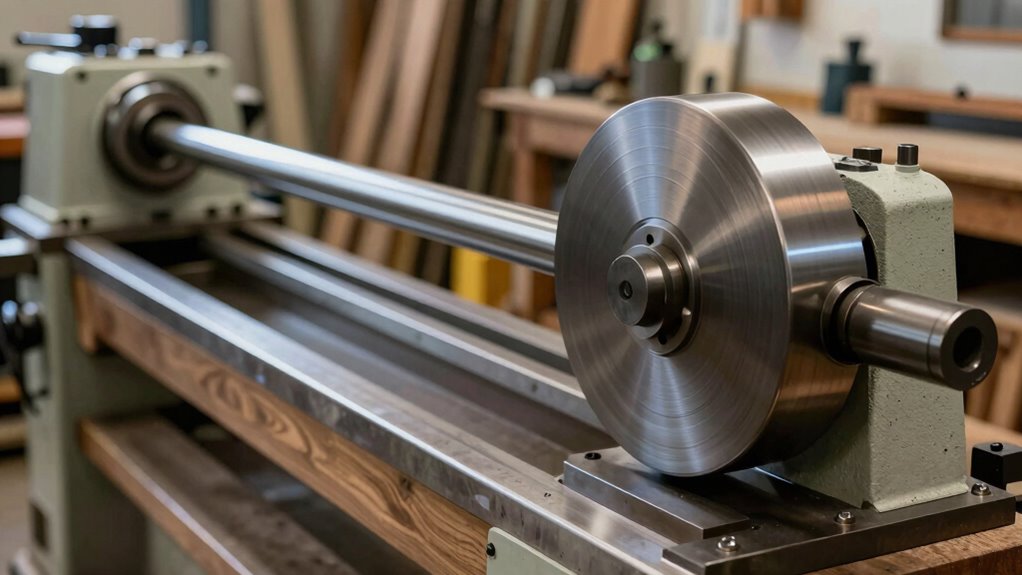

When choosing a wood lathe, understanding swing size and bed length helps you match your projects. Swing over the bed shows the largest diameter you can turn without hitting the bed—bigger swings handle larger projects like bowls or table legs. Bed length determines how long your projects can be, whether small pens or long spindles. Considering these factors guarantees you select the right machine for your work. If you want to explore more details, this guide will help clarify further.
Key Takeaways
- Swing over the bed indicates the maximum diameter of workpiece a lathe can handle without hitting the bed.
- Bed length determines the maximum length of projects like spindles or table legs that can be turned.
- Larger swing and bed length enable working on bigger, more complex projects but require more space and safety precautions.
- Smaller lathes with less swing and shorter beds are ideal for hobbyists and small-scale projects.
- Choosing the right size depends on project scope, workspace, and future woodworking needs.
Have you ever wondered how the size of a wood lathe impacts your projects? The answer lies in understanding two key aspects: swing and bed length. These measurements directly influence what you can create and how comfortably you can work. When choosing a lathe, you need to think about tool compatibility because different sizes accommodate specific tools and accessories. A larger lathe typically allows for bigger tools and more complex operations, but it also demands more space and a stronger power supply. Conversely, smaller lathes are more portable and easier to fit into a home workshop, but they come with limitations in the size of projects you can handle.
Choosing the right wood lathe depends on project size, tool compatibility, space, and safety considerations.
Swing, or swing over the bed, determines the maximum diameter of a workpiece you can turn without hitting the bed. For example, a 12-inch swing means you can work on pieces up to 12 inches in diameter. If you plan to turn large bowls or table legs, opting for a lathe with a bigger swing makes sense. However, larger swings often mean the lathe is heavier, bulkier, and may require more robust safety considerations. Safety is crucial, especially when working with larger, more powerful machines. You want to guarantee your workspace is secure, the lathe is properly mounted, and you’re familiar with its operation to prevent accidents. Tool compatibility also plays a role here—larger swings often mean more versatile tool options, but you need to verify that your favorite chisels and turning tools will fit and function correctly. Additionally, understanding lathe size specifications can help you make more informed decisions when selecting equipment. Knowing how these specifications relate to your projects can save you time and investment in the long run. Moreover, considering the lathe’s weight and stability can ensure safe operation, especially with larger models. Being aware of the machine capacity also helps in planning projects that align with your lathe’s capabilities and avoiding equipment overloads.
Bed length, on the other hand, influences how long your projects can be. A longer bed allows you to work on elongated pieces like spindles or table legs without repositioning the workpiece. Shorter beds are suitable for smaller projects, such as pens or small decorative items, and tend to be more compact and easier to manage. When selecting a lathe, consider what projects you’re most interested in and whether the bed length supports those ambitions. Safety considerations come into play again—longer beds can be more challenging to maneuver and stabilize, so you need to assure your workspace can handle the size and weight of the machine. Proper support and secure mounting are crucial to prevent vibrations or accidents during use. Additionally, safety precautions should always be prioritized, especially when working with larger and more powerful equipment, to prevent injuries and ensure a smooth workflow. Thinking about your future projects and workspace limitations will help you choose the most suitable bed length for your needs. Being mindful of your workspace size can help ensure your setup remains practical and efficient for your woodworking endeavors.
wood lathe with large swing capacity
As an affiliate, we earn on qualifying purchases.
As an affiliate, we earn on qualifying purchases.
Frequently Asked Questions
How Do I Choose the Right Lathe Size for Beginners?
To choose the right lathe size as a beginner, consider material compatibility and motor power. Opt for a lathe with a smaller swing (around 12-14 inches) for versatility and easier handling. Make certain it has enough motor power (at least 1-1.5 HP) to handle different projects. This size suits beginners, offering enough capacity for various projects without overwhelming you, while still providing room to grow your skills.
Can a Small Lathe Handle Large Projects?
A small lathe can surprise you, but its capacity limits big projects. While it handles smaller woodworking projects with ease, tackling large pieces might mean trouble, risking safety or damaging your work. If you’re eyeing larger projects, consider a lathe with greater swing and bed length. Don’t push your small lathe beyond its capacity; instead, choose equipment that matches your project size to guarantee quality and safety.
What Safety Features Are Related to Lathe Size?
You should prioritize safety features like dust collection systems and an emergency stop when considering lathe size. Larger lathes often come with better dust collection, keeping your workspace cleaner and safer. An emergency stop button is essential, especially with bigger, more powerful machines, as it allows you to quickly shut down in emergencies. These features help prevent accidents and protect you during long, intensive projects.
How Does Lathe Size Affect Precision and Finish Quality?
A larger lathe size enhances precision and finish quality by providing better tool stability and reducing vibration. When you work on bigger projects, the increased bed length stabilizes your workpiece, minimizing wobble. This stability allows for cleaner cuts and smoother finishes. A bigger swing offers more control over larger projects, ensuring vibration control improves overall accuracy, giving you a superior, professional-looking result.
Are Larger Lathes More Difficult to Operate?
Larger lathes can be a handful to operate, but it’s not a no-brainer. You need to take into account their weight and motor power, which impact stability and ease of use. Heavier lathes require more muscle to move and setup, while powerful motors handle bigger projects better. With practice, you’ll get the hang of it—just remember, the bigger they are, the harder they fall if you’re not careful.
long bed wood lathe for spindles
As an affiliate, we earn on qualifying purchases.
As an affiliate, we earn on qualifying purchases.
Conclusion
Choosing the right wood lathe size is like finding the perfect fit—big enough to handle your projects, yet manageable for your workspace. Think of the swing as your reach and the bed length as your workspace horizon. While a larger lathe offers more versatility, it also demands more space and investment. Balance your needs with your space, and you’ll craft with confidence—big or small, your woodworking journey begins with the right size.
As an affiliate, we earn on qualifying purchases.
wood lathe accessories and tools
As an affiliate, we earn on qualifying purchases.
As an affiliate, we earn on qualifying purchases.