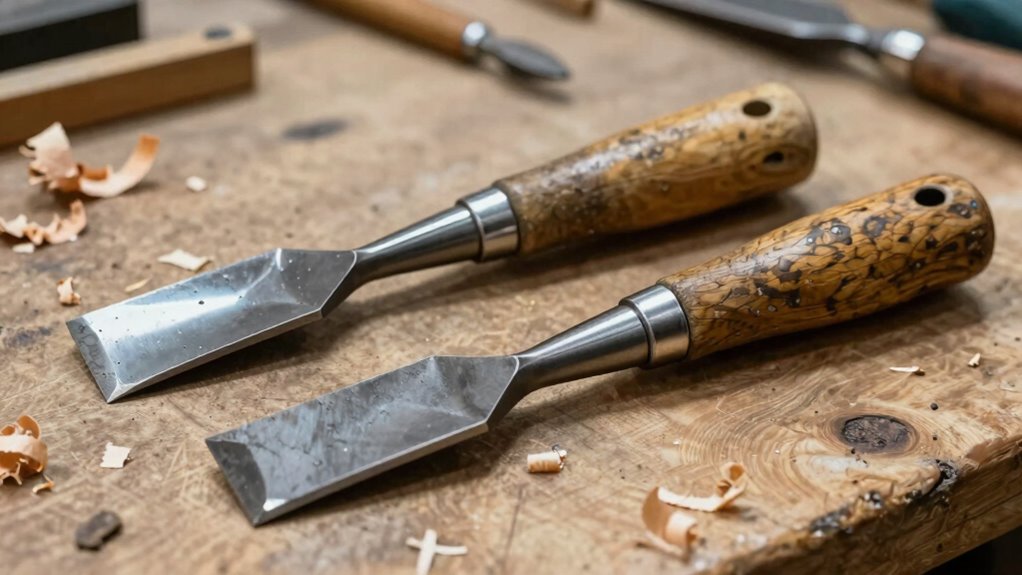

If you’re keen to speed up your woodworking skills, carbide tools might be your best bet. They’re forgiving for beginners and offer quicker results, letting you spend more time on projects and less on honing. You’ll achieve smoother finishes with less effort, encouraging continual practice. However, if you’re committed to mastering the craft, traditional gouges can enhance your control and finesse. Understanding your personal goals can help you decide the right path. There’s more to discover about each option!

Get business pricing on tools and workshop supplies
- Business-only prices and quantity discounts
- Tax-exempt purchasing
- Multiple users, one account, clear invoices
Key Takeaways
- Carbide tools offer quick results, making them ideal for beginners eager to practice and improve their skills.
- Traditional gouges foster a deeper understanding of materials, enhancing craftsmanship over time despite a steeper learning curve.
- The durability of carbide tools minimizes honing time, allowing more focus on learning techniques and completing projects.
- Users of traditional gouges develop a tactile feel for wood, which can significantly improve overall woodworking skills.
- Personal learning preferences and goals should guide the choice between carbide tools and traditional gouges for optimal skill development.
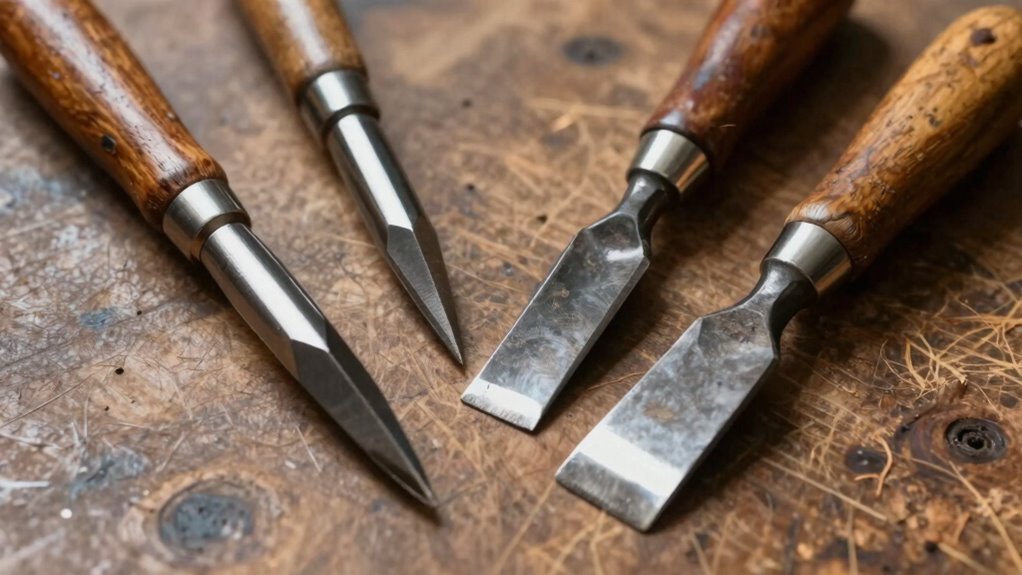
When you’re choosing between carbide tools and traditional gouges, it’s vital to understand the strengths of each. Carbide tools offer several advantages that can markedly affect your learning process. One of the most notable carbide advantages is their durability. Carbide maintains a sharp edge longer than traditional gouges, which means you’ll spend less time honing and more time working on your projects. This tool longevity allows you to focus on mastering your craft rather than worrying about constant maintenance.
Choosing between carbide tools and traditional gouges? Carbide’s durability lets you focus on mastering your craft rather than constant maintenance.
On the other hand, traditional gouges come with their own set of benefits, especially when it comes to gouge techniques. They provide a level of control that many woodworkers appreciate. This control can be essential when you’re learning how to carve intricate designs. With traditional gouges, you can develop a feel for the material, which can enhance your skills as you progress. However, the learning curves for gouges can be steeper, as you have to invest time in understanding how to properly sharpen and maintain them. Additionally, understanding the material properties of wood can help you choose the right tool for each project. Developing a good sense of wood behavior can significantly improve your craftsmanship and tool choice.
Your user preferences will play a considerable role in determining which tool suits you best. If you’re just starting out, you might find carbide tools to be a more forgiving option. Their ease of use can accelerate your learning experience, allowing you to achieve good results more quickly. This quick learning can be encouraging, especially if you’re keen to see the fruits of your labor. Moreover, understanding tool maintenance can help prolong the lifespan of your tools and maintain their performance. Recognizing how different tools interact with various wood surfaces can also impact your results and efficiency. However, if you’re committed to mastering the art of woodworking, investing time in traditional gouges might pay off in the long run.
When it comes to surface finishes, both tools can deliver impressive results, but they do so in different ways. Carbide tools often produce a smoother finish due to their sharp edges, minimizing the amount of sanding you’ll need to do afterward. Conversely, traditional gouges might require more finesse and practice to achieve that same level of finish, but the process can enhance your craftsmanship. Understanding these finishing differences can help you set realistic expectations for your projects and guide your practice.
Ultimately, your choice should align with your goals and how you prefer to learn. If you value speed and efficiency, carbide tools may be your best bet. If you’re willing to invest time and effort to refine your skills, traditional gouges could be the path for you. Consider what resonates with you, and let that guide your decision.
As an affiliate, we earn on qualifying purchases.
Frequently Asked Questions
What Are the Costs Associated With Carbide Tools and Traditional Gouges?
When comparing costs, carbide tools often have a higher upfront price but can save you money in the long run due to their durability and reduced need for frequent sharpening. Traditional gouges usually come at a lower initial cost, but you might find yourself investing more in maintenance over time. Weighing these factors helps you decide which option suits your budget and learning goals while considering the long-term investment aspect.
How Do Maintenance Requirements Differ Between Carbide Tools and Traditional Gouges?
Maintaining your tools is like tending a garden; a little care goes a long way. Carbide tools require minimal upkeep since they don’t need regular sharpening. Instead, they focus on tool longevity, lasting longer between replacements. Traditional gouges, however, demand more attention with consistent sharpening techniques to keep them effective. While both serve you well, your choice hinges on how much maintenance you’re willing to invest in your crafting journey.
Can Beginners Easily Switch From One Tool Type to Another?
Yes, you can switch between tool types, but it might take some adjustment. Tool familiarity plays a big role; if you’ve mastered one, you may find the change smoother. However, each type has its own learning curve. Carbide tools often require less maintenance and can be more forgiving for beginners, while traditional gouges demand more skill. Embrace the challenge, and you’ll find your rhythm with either tool in no time!
What Safety Precautions Should I Take When Using These Tools?
When using tools, prioritize safety by practicing proper tool handling and maintaining risk awareness. Always wear safety goggles and a dust mask to protect your eyes and lungs. Keep your workspace organized to avoid accidents, and guarantee your tools are sharp and in good condition. Use both hands when operating tools to maintain control, and never rush your work. Stay focused and aware of your surroundings to minimize hazards.
Are There Specific Projects Better Suited for Carbide Tools or Traditional Gouges?
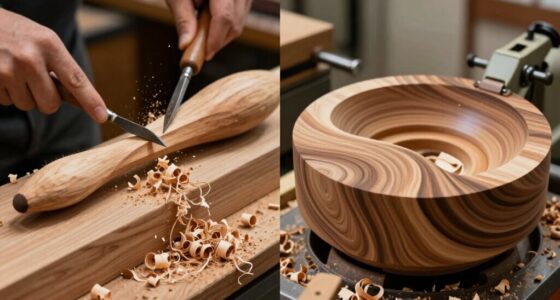
When you picture a smooth, polished bowl emerging from a block of wood, you’ll find carbide tools excel in this project. Their durability and sharpness make them perfect for hard woods. On the other hand, if you’re carving intricate details on softer materials, traditional gouges shine, allowing for precision and control. Each tool has its strengths, so consider project suitability and material compatibility to choose wisely for your next creative endeavor.
As an affiliate, we earn on qualifying purchases.
Conclusion
So, if you want to channel your inner Michelangelo with traditional gouges, prepare for a long, romantic journey of splinters and sore hands. But if you’d rather glide through your projects like a hot knife through butter, carbide tools are your ticket to instant craftsmanship. Who needs patience when you can just play the “modern artist” card? In the end, it’s all about whether you want to suffer for art or let technology do the heavy lifting!
As an affiliate, we earn on qualifying purchases.
As an affiliate, we earn on qualifying purchases.
Fall yard work Picks
leaf blowers
As an affiliate, we earn on qualifying purchases.