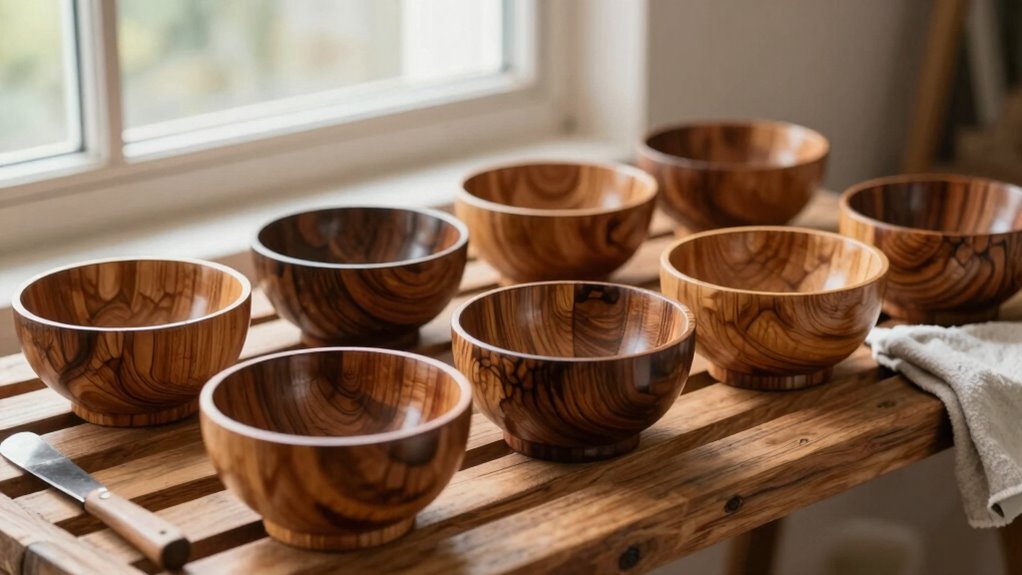

When drying turned bowls, keep moisture control in mind. Use a moisture meter to check levels, and let them decrease gradually to prevent cracking. Place your bowl in a cool, dry spot with good airflow, avoiding direct sunlight. Seal the ends to slow moisture loss while allowing air circulation. Regularly monitor moisture levels and sand while slightly damp for a smoother finish. Patience is key, and there’s more you can do to guarantee success along the way.

Get business pricing on tools and workshop supplies
- Business-only prices and quantity discounts
- Tax-exempt purchasing
- Multiple users, one account, clear invoices
Key Takeaways
- Use a moisture meter to accurately assess the wood’s moisture content before drying to prevent cracks and warping.
- Place the bowl in a cool, dry area with good airflow, avoiding direct sunlight or heat sources for even drying.
- Seal the end grains with a sealant to slow moisture loss and reduce the risk of cracks while allowing air circulation.
- Regularly monitor moisture levels during the drying process, especially in the initial days, to ensure stability and prevent issues.
- Sand the bowl while slightly damp for a smooth finish, then allow it to dry completely with adequate air circulation.
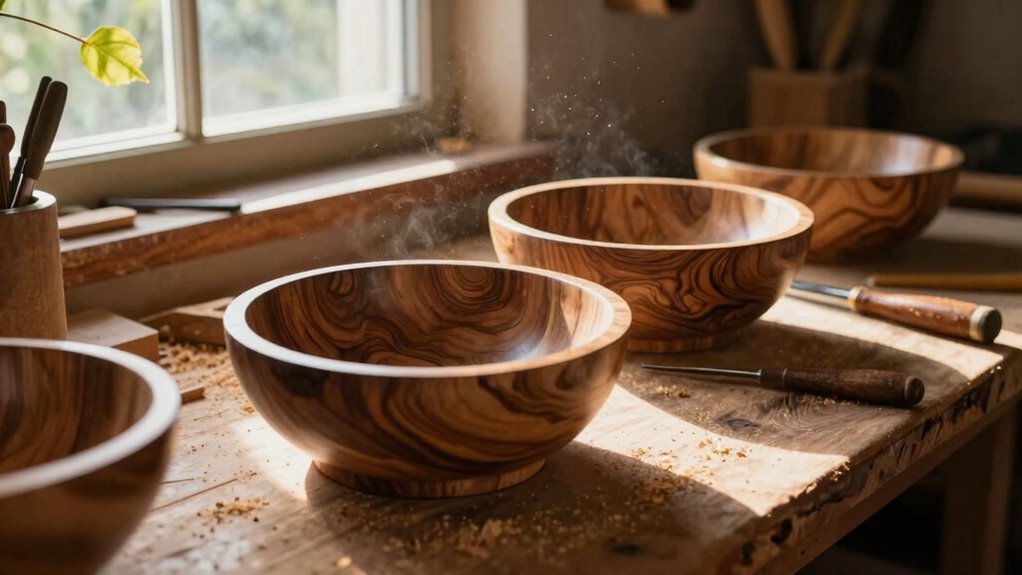
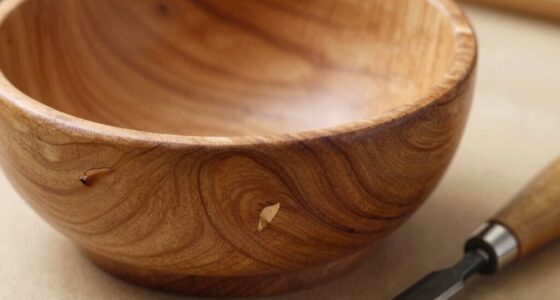
When you finish turning a bowl, the next vital step is drying it properly to avoid cracks and warping. You’ve put in the effort to create a beautiful piece, and you don’t want to see it ruined because of improper drying. The key lies in understanding wood moisture and the techniques to control it.
First, check the moisture content of your wood. If you’ve used green wood, it’s important to know that it contains a significant amount of moisture. Ideally, you want to bring that moisture level down gradually. Rapid drying can cause your bowl to crack or warp. A moisture meter can be a handy tool here, giving you precise readings to guide your drying process.
Once you have a gauge on the wood moisture, it’s time to think about your drying environment. Ideally, you should place your bowl in a cool, dry area with good airflow. Avoid direct sunlight or heat sources, as they can cause uneven drying, leading to more potential cracks. Covering your bowl with a cloth or placing it in a cardboard box can help regulate the drying process by slowing it down, allowing for a more controlled release of moisture.
You may also want to use a method called “end grain sealing.” This involves applying a sealant to the ends of the bowl. It helps slow down moisture loss from those areas, minimizing the risk of cracks. After sealing, make sure the rest of the bowl is left open for air circulation. Additionally, understanding the moisture content of your wood is crucial for a successful drying process. Knowing how to interpret these readings can help prevent cracks and warping from developing. Proper moisture management is essential for a successful outcome.
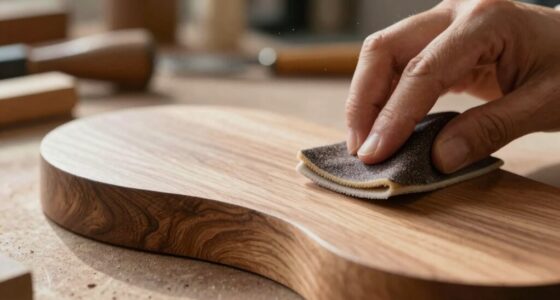
As the bowl dries, periodically check its moisture level. You’ll want to monitor it closely, especially during the first few days. Once the moisture content reaches a stable level, you can start incorporating sanding techniques. Sanding your bowl while it’s still a bit damp helps smooth out any rough spots and reduces the risk of cracking. Use finer grits as you progress, which will give your bowl a beautiful finish.
Finally, once you’re satisfied with the sanding, let the bowl dry completely. Patience is essential at this stage. Rushing through can lead to regrettable results. Keep in mind that proper air circulation is vital during this process to ensure even drying. By following these steps, you’ll guarantee your turned bowl dries correctly, preserving its beauty and integrity for years to come. Enjoy the satisfaction of completing a project that’s both functional and aesthetically pleasing!
wood moisture meter for woodworking
As an affiliate, we earn on qualifying purchases.
As an affiliate, we earn on qualifying purchases.
Frequently Asked Questions
What Types of Wood Are Best for Turning Bowls?
When you’re turning bowls, hardwoods like maple, cherry, and walnut are your best bets. They offer durability, fine grain, and beautiful finishes, making your bowls stand out. On the other hand, softwoods like pine can warp or split easily, leading to disappointing results. While softwoods might be easier to work with initially, their drawbacks often outweigh the benefits. Stick with hardwoods for quality and longevity in your turned bowls.
How Can I Tell if Wood Is Dry Enough?
To tell if wood’s dry enough, you should use a moisture measurement tool, like a moisture meter. Did you know that properly dried wood can have a moisture content of just 6-8%? Using effective drying techniques, like air drying or kiln drying, can help you reach this level. Regularly check the moisture content as you go; this guarantees your wood’s ready for turning and reduces the risk of warping later on.
What Tools Are Essential for Turning Bowls?
To turn bowls effectively, you need a lathe, sharp chisels, a bowl gouge, and a parting tool. Don’t forget about tool maintenance; keep your tools sharp for smoother cuts and safer operation. A faceplate or chuck is essential for securing your blank. Always prioritize lathe safety by wearing a face shield and securing loose clothing. With the right tools and precautions, you can create beautiful bowls with confidence.
How Do I Prevent Cracking During Drying?
To prevent cracking during drying, you’ve got to treat your bowls like fragile treasures! Start with air drying them slowly to maintain a steady moisture content. Wrap your bowls in paper or cloth to control evaporation, and keep them in a cool, shaded area. You can also use a sealer on the surface to help retain moisture. Monitor them regularly, and you’ll keep those cracks at bay like a pro!
Can I Use a Microwave to Speed up Drying?
You can use a microwave to speed up drying, but you need to be cautious. Microwave safety is essential; make sure to use a low power setting and monitor your bowl closely. Start with short intervals, checking for cracks or changes in shape. While this technique can help, it might not be the best drying method for all woods. Always consider traditional drying techniques to avoid any risks associated with quick drying.
As an affiliate, we earn on qualifying purchases.
Conclusion
To successfully dry your turned bowls, remember that patience is key. With the right techniques, you can achieve stunning results without the risk of cracks or warping. Curiously, studies show that wood shrinks about 5% in volume as it dries, which highlights the importance of monitoring moisture levels. By applying these methods, you guarantee your bowls stay beautiful and functional for years to come. So, take your time, and enjoy the process of creating!
air circulation drying rack for wood
As an affiliate, we earn on qualifying purchases.
As an affiliate, we earn on qualifying purchases.
As an affiliate, we earn on qualifying purchases.
Fall Picks
fall essentials
As an affiliate, we earn on qualifying purchases.