Heavier lathes feel more stable because their added weight dampens vibrations and reduces wobbling during operation. This stability helps prevent workpiece distortion and guarantees smoother, more precise cuts. With stronger construction and balanced weight distribution, heavier machines support high-speed, heavy-duty tasks with better control. If you want to understand how weight influences overall performance and why it’s a key factor in quality machining, keep exploring to discover the details.

Get business pricing on tools and workshop supplies
- Business-only prices and quantity discounts
- Tax-exempt purchasing
- Multiple users, one account, clear invoices
Key Takeaways
- Heavier lathes resist wobbling and shifting, ensuring more stable and accurate machining.
- Increased weight dampens motor vibrations, improving workpiece quality and precision.
- Durable materials in heavier lathes maintain alignment and shape over time, supporting consistent results.
- The added mass absorbs vibrations, reducing workpiece distortion and enhancing finish quality.
- Proper weight distribution in heavier machines ensures better balance during demanding or high-speed operations.

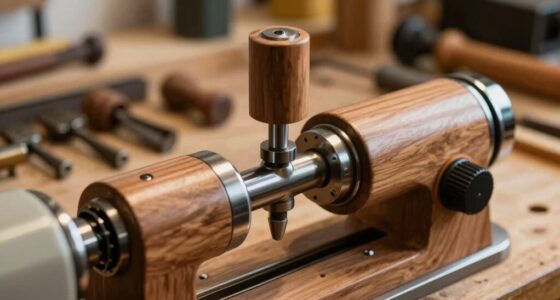
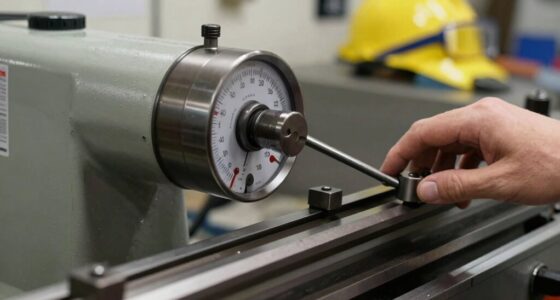
Have you ever wondered why some lathes feel more stable than others? The answer often comes down to their weight and how it impacts overall performance. When you operate a heavier lathe, it’s less likely to wobble or shift under pressure, giving you a smoother, more precise cut. The extra weight helps dampen motor vibration, which is critical because vibrations can distort your workpiece and lead to inaccuracies. A heavier machine absorbs these vibrations better, allowing for cleaner finishes and more consistent results. You’ll notice that the motor runs more quietly and steadily on a stable, substantial lathe, making your work less stressful and more predictable. Additionally, the material durability of heavier lathes contributes significantly to their stability and longevity. Heavier lathes are typically built with tougher, more durable materials—think cast iron or thick steel—that resist flexing and deformation over time. This robustness ensures that the lathe maintains its shape and alignment, even after prolonged use. When your lathe maintains its structural integrity, it’s easier to produce precise cuts because the machine’s framework doesn’t shift or vibrate excessively. As a result, you can work with confidence, knowing that the setup won’t compromise your project’s accuracy. The durability also means the lathe can handle heavier workloads without wearing down quickly, which extends its lifespan and reduces maintenance costs. The weight of the lathe directly influences its stability during operation. When you turn on the machine, the added mass acts as a counterbalance, reducing the risk of unwanted movement. This stability is especially important when working with tough materials or high-speed operations, where even slight vibrations can lead to errors. A heavier lathe also helps in controlling motor vibration, making your work smoother and less prone to disturbances. You’ll find that the machine’s steadiness allows for more precise adjustments and finer finishes, which are essential for professional-grade projects. Additionally, machine design and construction quality influence how well a lathe maintains its stability over time. Proper weight distribution is also crucial for ensuring the machine’s balance and overall performance, particularly during demanding tasks. In essence, the weight of a lathe isn’t just about size; it’s a critical factor that affects how well the machine performs over time. A heavier lathe offers better dampening of motor vibration, supports more durable construction, and provides a stable platform for your machining tasks. Investing in a lathe with appropriate weight distribution can further enhance its stability and performance, especially when used for demanding tasks. When you prioritize weight and build quality, you’re investing in a tool that will deliver consistent, accurate results and last through years of demanding use. Proper machine setup also plays a vital role in maintaining the lathe’s stability and overall performance. So, if you want a lathe that feels solid and reliable, leaning towards the heavier models is a smart choice.
Products Worth Considering

Philips Hue Secure Wired Video Doorbell, 2K, Black

Samsung 42-Inch S90H OLED 4K Smart TV Bundle

Levoit Core 600S-P Smart Air Purifier for Large Rooms
As an affiliate, we earn on qualifying purchases.
Frequently Asked Questions
Does a Heavier Lathe Require More Maintenance?
A heavier lathe generally requires more maintenance because it involves balancing precision and material durability. The increased weight puts more stress on components, so you need to regularly check for wear and tear, lubricate moving parts, and guarantee stability. While it may seem like extra work, maintaining a heavier lathe ensures peak performance, longevity, and safety, making the effort worthwhile for precise and durable results.
Can a Lightweight Lathe Be Just as Stable?
A lightweight lathe can be just as stable if you prioritize balance considerations and address portability challenges. Properly designed, it distributes weight evenly and uses sturdy materials to maintain stability during operation. While portability challenges exist, such as ease of movement, you can offset these by incorporating features like adjustable feet or a solid base. Ultimately, thoughtful design and setup enable a lightweight lathe to perform reliably without the heaviness.
How Does Lathe Weight Affect Vibration Levels?
Think of your lathe like a boat in choppy water; the heavier the boat, the better it dampens vibrations. Material mass plays a key role in vibration damping, absorbing shocks more effectively. When your lathe has substantial weight, it resists bouncing and wobbling, leading to smoother cuts. So, a heavier lathe generally results in lower vibration levels, giving you more control and better finishing results.
Is a Heavier Lathe Safer to Operate?
A heavier lathe is generally safer to operate because it provides better stability, reducing the risk of accidents. However, you should still follow safety precautions like wearing protective gear and securing the workpiece properly. The added weight also enhances operator comfort, as it minimizes vibrations and wobbling during use. Always guarantee your equipment is well-maintained, regardless of its weight, to maximize safety and performance.
Do Different Materials Influence Lathe Weight and Stability?
Like a ship with a well-balanced hull, different materials influence lathe weight and stability. Heavier materials, such as cast iron or steel, offer better weight distribution and durability, making your lathe more stable. Lighter materials, like aluminum, reduce overall weight but may compromise stability. The choice depends on your project needs; heavier materials usually provide a more solid, secure operation, especially when precision and safety matter most.
Conclusion
Remember, a heavier lathe often provides better stability, making your work smoother and safer. While it might seem tempting to go for lighter models, the extra weight helps absorb vibrations and reduces movement during machining. As the saying goes, “A heavy weight carries a steady hand.” Trust in this principle—investing in a heavier lathe can make your projects more precise and enjoyable, proving that sometimes, size and weight truly do matter.