
Choosing quiet dust collection often costs you airflow efficiency, which can reduce dust capture and impact safety. To lower noise, you might need to invest in advanced insulation, sound-dampening materials, or larger systems, raising your initial expenses. Smaller or quieter units might struggle with strong dust production, forcing you to spend more on additional equipment. If you want to understand how to balance noise and performance effectively, keep exploring these trade-offs.

Get business pricing on tools and workshop supplies
- Business-only prices and quantity discounts
- Tax-exempt purchasing
- Multiple users, one account, clear invoices
Key Takeaways
- Achieving quiet operation often reduces airflow efficiency, potentially compromising dust collection effectiveness.
- Noise reduction features, like insulation and specialized fans, increase system cost and complexity.
- Smaller or less powerful motors used in quieter systems can limit airflow and dust capture performance.
- Larger, quieter units may require more space and higher initial investment.
- Balancing noise levels with airflow needs may lead to additional equipment or system upgrades.

Have you ever been frustrated by loud, noisy dust collection systems while working in your workshop? If so, you’re not alone. Many workshop owners want a quieter environment but worry that reducing noise might come at a cost. The truth is, choosing a dust collection system with low noise levels often involves trade-offs, especially when it comes to airflow efficiency and motor noise reduction. Understanding these factors helps you make smarter decisions without sacrificing performance.
When you prioritize quiet operation, you might notice a dip in airflow efficiency. Traditional high-power dust collectors deliver strong suction, but they tend to generate more noise. To achieve quieter operation, manufacturers often reduce the motor’s speed or use sound-dampening materials. While this makes the machine less disruptive, it can also mean less airflow, which might not be enough to handle your workshop’s dust and debris. If airflow efficiency drops too much, your system won’t effectively capture dust at the source, leading to dust buildup and potential health concerns. It’s a balancing act—getting a system that’s quiet enough to work with comfortably while still maintaining enough suction to keep your workspace clean.
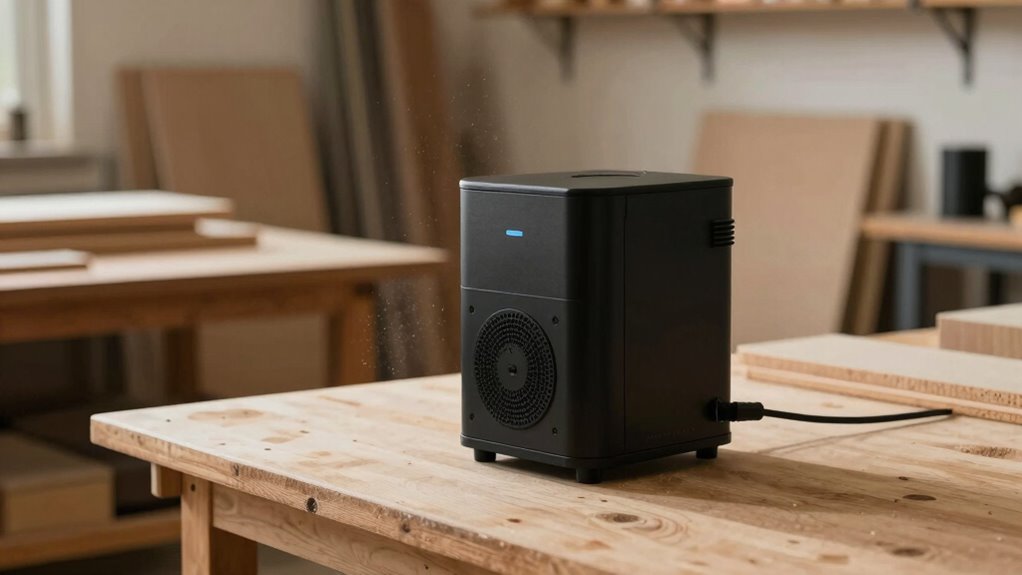
Motor noise reduction is a key feature in quieter dust collection systems, but it’s not always a straightforward fix. Many systems incorporate sound insulation around the motor or use specially designed fans to minimize noise. These modifications help keep your workshop quieter, but they can also increase the system’s cost and complexity. Sometimes, reducing motor noise means using a smaller or less powerful motor, which can impact airflow. If you’re working with larger tools or a bigger shop, lower-powered systems might struggle to keep up, forcing you to choose between noise levels and dust collection performance. Additionally, understanding the airflow efficiency of a dust collector can help you select a model that balances noise and performance effectively. Considering the cost of noise reduction features is also important, as it often influences the overall investment in your dust collection setup. Being aware of noise mitigation techniques can help you identify solutions that improve quiet operation without overly compromising performance. Investing in advanced insulation can be an effective way to achieve quieter operation without significantly sacrificing airflow.
Ultimately, opting for a quieter dust collection system usually costs you some degree of efficiency or added expense. You might find yourself needing a larger or more advanced system to compensate for reduced airflow, or investing in premium models with sophisticated noise reduction features. The initial cost of quiet systems can be higher, but it may be offset by benefits like a more comfortable working environment and improved health. The key is to identify your workshop’s specific needs—how much dust you generate, the size of your space, and your tolerance for noise. With careful consideration, you can find a solution that minimizes noise without sacrificing too much airflow efficiency, ensuring a cleaner, quieter workspace that doesn’t compromise safety or productivity.
quiet dust collector with low noise
As an affiliate, we earn on qualifying purchases.
As an affiliate, we earn on qualifying purchases.
Frequently Asked Questions
How Do Noise Levels Vary Between Different Dust Collection Systems?
You’ll notice noise levels vary markedly across dust collection systems. Soundproofing upgrades can reduce noise, but higher-end models often offer better noise level comparisons, operating more quietly. Cheaper systems tend to be louder, while premium options incorporate sound-dampening features. If quiet operation matters, investing in a system with effective soundproofing and favorable noise level comparisons can make a big difference in your workspace comfort.
Are Quieter Dust Collectors Less Effective at Filtering Dust?
You might think quieter dust collectors filter less, but that’s not true. Studies show some models with noise reduction feature advanced air filtration systems that trap fine dust particles effectively. Quieter systems often use soundproofing and efficient air filtration to maintain filtration performance. So, you don’t have to sacrifice dust filtering power for noise reduction—modern designs deliver both, making your workspace safer and quieter simultaneously.
What Maintenance Is Required for Low-Noise Dust Collection Units?
You need to regularly check and replace filters to maintain filtration efficiency in your low-noise dust collection unit. Clean the filters gently to prevent damage and guarantee ideal airflow. Keep an eye on ductwork for blockages or leaks, which can reduce performance. While these maintenance tasks may increase your ongoing costs, they help preserve the unit’s quiet operation and filtration effectiveness, making them a worthwhile investment for your workspace.
Can I Retrofit My Existing Dust Collector for Quieter Operation?
You can retrofit your existing dust collector for quieter operation, proving that where there’s a will, there’s a way. Focus on noise reduction options like adding mufflers, sealing leaks, or installing sound barriers. Cost considerations matter, but investing in these upgrades often pays off with a more comfortable workspace. Keep in mind, small improvements can make a big difference in reducing noise and creating a safer, more pleasant environment.
Do Quiet Dust Collection Systems Require More Space or Special Installation?
Quiet dust collection systems typically require slightly more space due to soundproofing components and specialized silencers. You might also encounter increased installation complexity, as these systems often need precise setup to maximize noise reduction. However, the added space is usually minimal, and professional installation can guarantee ideal performance. Overall, expect some adjustments in your workspace, but the quieter operation is well worth the extra effort.
dust collection system with high airflow efficiency
As an affiliate, we earn on qualifying purchases.
As an affiliate, we earn on qualifying purchases.
Conclusion
In choosing quiet dust collection, you’re planting seeds of serenity amidst the chaos of work. Though the cost may seem steep, it’s an investment in tranquility — a gentle ripple in a turbulent pond. Silence becomes your sanctuary, a silent guardian that nurtures focus and peace. In this quiet space, you find not just cleaner air, but a reflection of your inner calm, reminding you that sometimes, the softest sound holds the greatest power.
As an affiliate, we earn on qualifying purchases.
low noise workshop dust extractor
As an affiliate, we earn on qualifying purchases.
As an affiliate, we earn on qualifying purchases.
Fall yard work Picks
leaf blowers
As an affiliate, we earn on qualifying purchases.