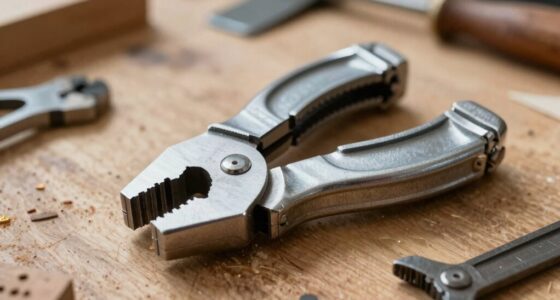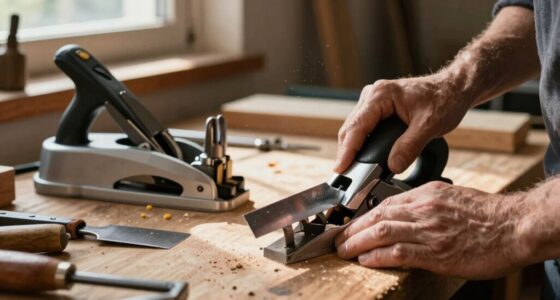

When it comes to plane sole flatness, you should aim for precision within a few thousandths of an inch. This allows your hand plane to glide smoothly, ensuring consistent and accurate cuts. While fine joinery demands near-perfect flatness, rougher tasks might tolerate minor imperfections. Regular maintenance also plays a key role in achieving peak performance. If you want more tips on evaluating and tuning flatness, there’s plenty more to discover about optimizing your woodworking tools.

Get business pricing on tools and workshop supplies
- Business-only prices and quantity discounts
- Tax-exempt purchasing
- Multiple users, one account, clear invoices
Key Takeaways
- Aim for flatness within a few thousandths of an inch for optimal performance in woodworking tasks.
- Use a straightedge to check for gaps, indicating areas needing correction.
- Fine joinery requires closer to perfect flatness, while rough tasks can tolerate slight imperfections.
- Regular maintenance of the plane ensures consistent performance and longevity.
- Different woodworking projects may necessitate varying levels of flatness based on specific requirements.
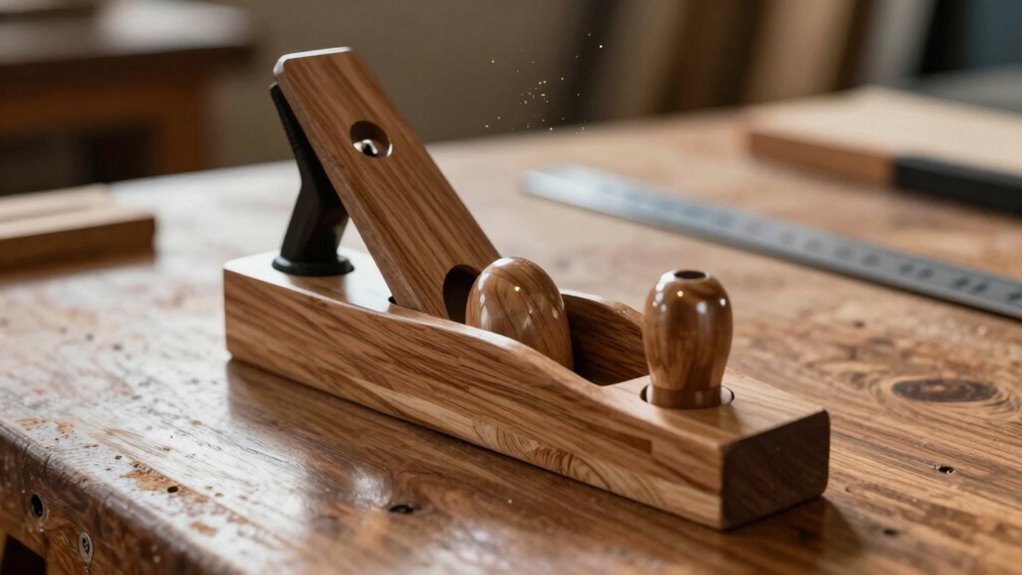
When it comes to guaranteeing peak performance in woodworking, few factors matter as much as plane sole flatness. A flat sole allows your hand plane to glide smoothly over the wood, resulting in consistent and accurate cuts. If your plane isn’t flat, you’ll quickly find yourself wrestling with uneven surfaces and frustrating results. So, how flat is flat enough? The answer lies in a combination of effective tuning techniques and precise measuring methods.
Achieving peak performance in woodworking hinges on plane sole flatness, ensuring smooth gliding and accurate cuts for exceptional results.
To start, you’ll want to assess the flatness of your plane’s sole. An easy way to measure this is by using a straightedge or a reliable reference surface. Place the straightedge on the sole and look for gaps. If you spot any light shining through, that’s an indicator of unevenness. The goal is to have as little gap as possible—ideally, you want the sole to be within a few thousandths of an inch flat. This level of precision makes a noticeable difference in your woodworking projects.
Once you’ve determined whether your plane is flat, you can engage in tuning techniques. If adjustments are necessary, consider using sandpaper on a flat surface or a sharpening stone to correct any high spots. You can also use a file for more stubborn areas. The key is to work methodically and check your progress frequently. Don’t rush; it’s better to take your time and achieve a precise result than to overcorrect and create new issues. Proper measuring techniques are essential in this process to avoid unnecessary adjustments. Using the right tools, such as a dial indicator, can help you achieve these measurements more accurately and efficiently.
Another effective method is to use a dial indicator, which allows for more precise measurements. This tool can help you pinpoint exactly where the sole deviates from flatness, making it easier to target your tuning efforts. Remember, achieving perfect flatness might be a lofty goal, but aiming for a slight bow or a minor twist can still yield excellent results. Understanding wood grain orientation can influence how flatness impacts your work, as different wood types may react differently to minor imperfections. Lastly, it’s worth noting that different types of woodworking tasks may require varying degrees of flatness. For instance, if you’re working on fine joinery, you’ll want your plane to be as close to perfect as possible. However, for rougher tasks, a slightly less flat sole may suffice. Ultimately, finding the right balance between your plane’s flatness and your specific needs is essential. Maintaining awareness of tool maintenance can also help ensure your plane remains in optimal condition for achieving the desired flatness.
In woodworking, plane sole flatness can make or break your projects. By utilizing effective measuring methods and tuning techniques, you can guarantee your hand plane performs at its best, leading to results you’ll be proud of.
As an affiliate, we earn on qualifying purchases.
Frequently Asked Questions
How Does Sole Flatness Affect Overall Skiing Performance?
Sole flatness directly impacts your ski performance by affecting edge control. When your skis’ soles are flat, you can engage the edges more effectively, leading to better grip on various snow conditions. If they’re uneven, you might struggle with stability and precision, especially on hardpack or icy surfaces. Maintaining flat soles helps you carve tighter turns and respond quickly, enhancing your overall skiing experience and confidence on the slopes.
Can I Check Sole Flatness at Home?
Yes, you can check sole flatness at home! Use DIY techniques like the “pencil test” or a flat surface with a feeler gauge. Place your ski on a flat surface, then roll a pencil along the sole. Look for gaps—those indicate issues. Common mistakes include not using a truly flat surface or applying too much pressure while checking. Take your time, and you’ll get a good sense of your ski’s flatness.
What Tools Are Best for Measuring Flatness?
When it comes to measuring flatness, you can’t just wing it! A good digital caliper or a machinist’s straightedge will do wonders. Combine these with calibration techniques like using a feeler gauge for precision, and you’re set. Stick to established measurement standards to guarantee accuracy. With the right tools and methods, you’ll confidently determine flatness in no time, leaving you free to focus on what really matters—your craft.
How Often Should I Check My Ski Bases?
You should check your ski bases regularly—ideally before each season and after a few days on the slopes. This helps you catch any issues early. For effective base maintenance, keep an eye on flatness; it guarantees better glide and control. If you notice any irregularities, address them promptly. By staying proactive, you’ll enjoy the flatness benefits and extend the life of your skis, making your time on the snow much more enjoyable!
Does Sole Flatness Impact Edge Grip on Snow?
Absolutely, sole flatness affects your edge grip on snow. If your skis aren’t flat enough, you might struggle in varying snow conditions, compromising your control. Good ski design relies on precision, and tuning techniques can help maintain that flatness. When you hit the slopes, you’ll notice the difference—better grip means more confidence as you carve through turns. So, keep those bases checked and tuned for the best performance.
woodworking straightedge for flatness check
As an affiliate, we earn on qualifying purchases.
As an affiliate, we earn on qualifying purchases.
Conclusion
In woodworking, a plane’s sole is like a compass guiding your craftsmanship. Just as a sturdy boat needs a flat hull to sail smoothly, your tools require precision to create beauty. While perfection’s a lofty goal, knowing how much flat is enough empowers you to craft with confidence. Embrace the journey, and let the whispers of wood guide your hands. Remember, it’s not just about the tool’s flatness; it’s about the artistry you bring to life.
dial indicator for woodworking tools
As an affiliate, we earn on qualifying purchases.
As an affiliate, we earn on qualifying purchases.
sanding block for plane sole tuning
As an affiliate, we earn on qualifying purchases.
As an affiliate, we earn on qualifying purchases.
Fall yard work Picks
leaf blowers
As an affiliate, we earn on qualifying purchases.