
To prevent rust in your humid shop, you need a proactive system, not just wiping down tools. Start by controlling humidity with a dehumidifier and monitor levels with hygrometers. Store tools in airtight containers and choose rust-resistant materials. Improve airflow with fans and guarantee proper ventilation to keep moisture at bay. Regular maintenance is essential; check for rust and address issues immediately. Want to discover more effective strategies? There’s plenty to explore!
Listen free for 30 days with Audible
Thousands of audiobooks and originals — cancel anytime.
As an affiliate, we earn on qualifying purchases.
Key Takeaways
- Invest in a dehumidifier to maintain humidity levels below 50%, effectively reducing rust risk.
- Store tools in airtight containers to minimize exposure to humid air and moisture.
- Choose rust-resistant materials, like stainless steel, for long-term durability and minimal maintenance.
- Ensure proper air circulation with fans and vents to prevent stagnant moisture in enclosed spaces.
- Implement regular maintenance routines that include rust checks and immediate treatment of any identified rust spots.
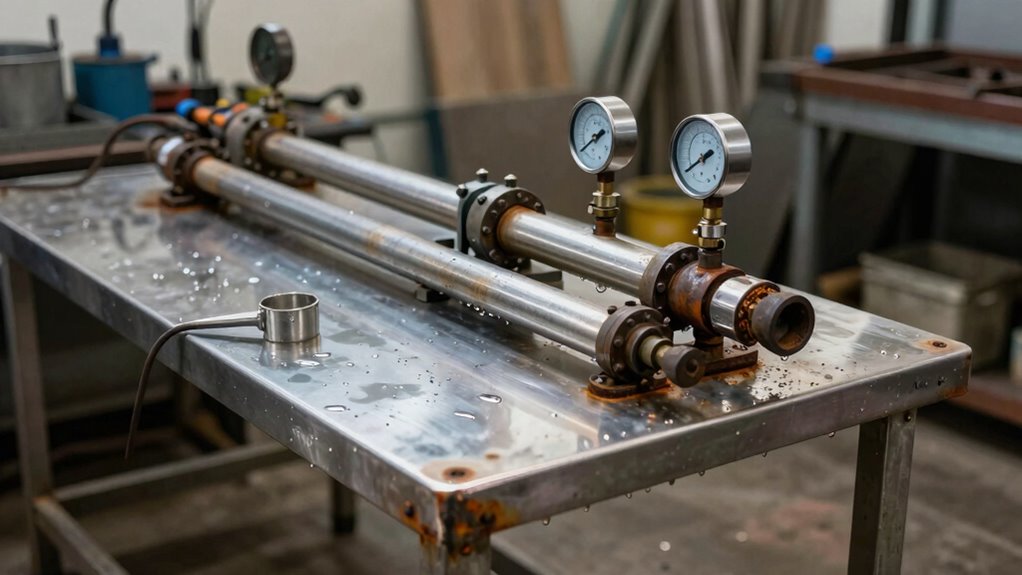
When you run a shop in a humid environment, preventing rust becomes vital to maintaining your tools and equipment. The constant moisture can wreak havoc on metal surfaces, leading to corrosion that can compromise both functionality and safety. To tackle this issue effectively, you need to implement a robust system that goes beyond simply wiping down your tools.
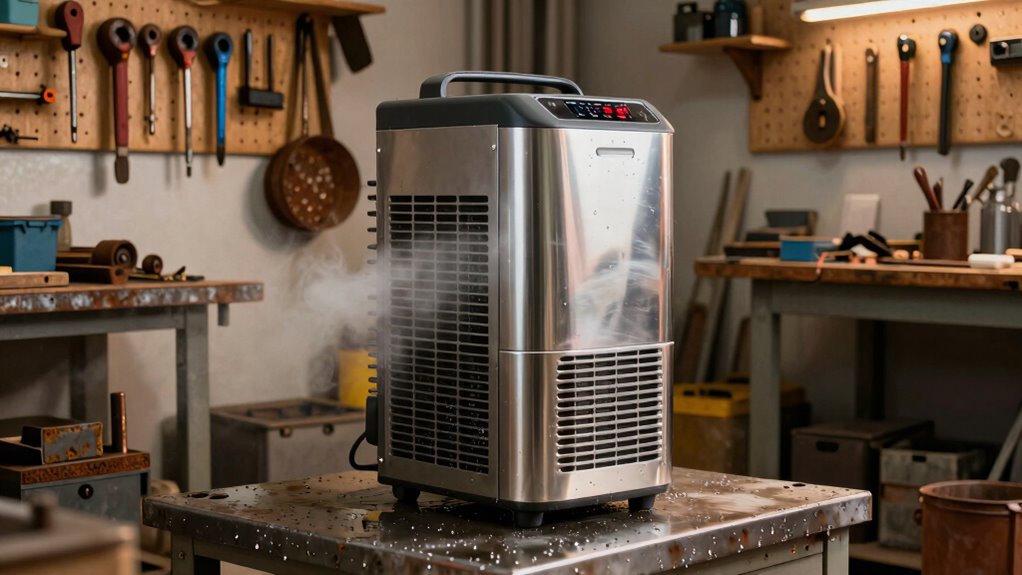
First, humidity control is essential. Investing in a dehumidifier can be a game changer. It not only reduces moisture levels but also creates a more pleasant working environment. You’ll want to keep the humidity below 50% if possible. Pair this with environmental monitoring tools, like hygrometers, to keep track of the moisture levels regularly. Knowing when the humidity spikes can help you adjust your equipment storage or maintenance routines accordingly.
Humidity control is crucial; a dehumidifier can significantly improve conditions and protect your tools from rust.
Next, consider your equipment storage. Keeping your tools in a dedicated storage area can minimize their exposure to humid air. Seal the storage area as much as possible, using airtight containers or cabinets. When you do store your tools, make sure they’re clean and dry. Wiping them down isn’t enough; applying protective coatings or rust inhibitors will add an extra layer of defense. These products create a barrier against moisture, greatly reducing the chance of corrosion. Additionally, using rust-resistant coatings can provide ongoing protection and extend the lifespan of your tools. Implementing proper storage techniques can further prevent moisture buildup and rust formation. Proper organization and storage routines are also key in reducing moisture exposure.
Your product selection matters too. Opt for tools and equipment made from stainless steel or coated with rust-resistant materials. While these options may cost a bit more upfront, they’ll save you money in the long run by reducing maintenance needs.
Don’t forget about air circulation. Stagnant air can trap moisture, so make certain there’s good airflow in your shop. Fans or vents can help keep fresh air circulating, reducing humidity build-up. This is especially important in enclosed spaces where moisture can linger. Incorporating air quality management strategies can further improve your shop’s environment by controlling pollutants and humidity levels. Improving ventilation systems can also aid in maintaining a consistent, low-humidity environment.
Incorporating these strategies into your daily maintenance routines will lead to long-lasting results. Regularly check for signs of rust, and if you spot any, address it immediately. It’s much easier to manage small issues before they escalate into larger problems.
As an affiliate, we earn on qualifying purchases.
Frequently Asked Questions
What Types of Materials Are Most Susceptible to Rust in Humidity?
Iron and steel are the most susceptible metal types to rust in high humidity levels. When moisture in the air settles on these metals, it creates an ideal environment for oxidation. You might notice that even stainless steel can corrode if exposed to salty or humid conditions for too long. To protect your tools and equipment, it’s essential to monitor humidity levels and take preventive measures to keep rust at bay.
How Often Should I Inspect Equipment for Rust?
Think of your equipment like a ship steering through stormy seas; regular rust inspections are your lifeboat. You should inspect your gear at least once a month, but if humidity’s high, ramp it up to bi-weekly. This rust inspection frequency guarantees you catch those sneaky spots before they become a problem. Pair it with solid equipment maintenance tips, like keeping surfaces dry, and you’ll sail smoothly through the challenges of moisture.
Can I Use Household Products for Rust Prevention?
Yes, you can use household products for rust prevention. Household oils, like vegetable or mineral oil, create a protective barrier on metal surfaces. Vinegar solutions can also help; they remove existing rust and prevent further corrosion. Just clean the metal thoroughly, apply a thin layer of oil, or use a vinegar solution followed by drying. This simple approach can save you time and money while keeping your equipment in top condition.
What Are the Signs of Rust Damage to Look For?
If you’re hoping to spot rust damage, look for those charming orange spots that make your tools resemble a peculiar art project. Rust indicators include flaking paint, pitting, and a rough texture. Corrosion signs often show up as bubbling under the surface, like your metal’s trying to escape. Don’t forget the dreaded “rust bloom”—that’s when your metal just gives up and starts looking like a science experiment gone wrong!
How Do Temperature Fluctuations Affect Rust Formation?
Temperature fluctuations can accelerate rust formation by creating condensation, especially in humid environments. When temperatures rise and fall, moisture in the air can settle on your tools and equipment, leading to corrosion. You need effective temperature control and humidity regulation in your workspace to minimize these risks. Keeping your shop at a consistent temperature reduces the chances of condensation, helping protect your items from rust damage and prolonging their lifespan.
airtight tool storage containers
As an affiliate, we earn on qualifying purchases.
As an affiliate, we earn on qualifying purchases.
Conclusion
In a humid shop, rust can creep in like an uninvited guest, but you don’t have to let it take over. By implementing a reliable prevention system, you’ll protect your tools and equipment effortlessly. Instead of wiping them down constantly, invest in methods that create a barrier against moisture. With the right approach, you’ll keep rust at bay and guarantee your workspace remains as productive and polished as it should be.
rust-resistant stainless steel tools
As an affiliate, we earn on qualifying purchases.
As an affiliate, we earn on qualifying purchases.
As an affiliate, we earn on qualifying purchases.
NFL season / tailgating Picks
team gear
As an affiliate, we earn on qualifying purchases.