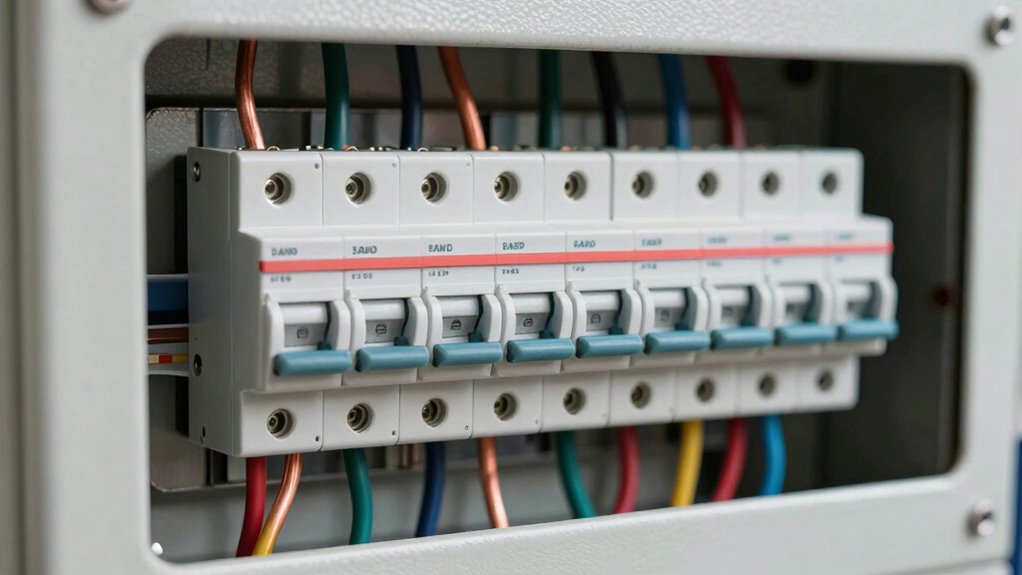

Planning your shop’s electrical system involves understanding circuits, amperage, and circuit breakers. Proper wiring and breaker ratings are essential to prevent overloads that cause trips or hazards. Overloading occurs when tools draw more current than the circuit can handle, triggering the breaker to shut off. Ensuring all components meet safety standards and knowing how to troubleshoot issues helps keep your shop safe and efficient. Keep exploring to discover more ways to optimize your electrical setup.
Key Takeaways
- Proper circuit design and wiring gauge prevent overloads and ensure safety in shop electrical systems.
- Matching breaker ratings to total load helps prevent nuisance trips and protects equipment.
- Overloading circuits or using undersized wiring causes breakers to trip to avoid fire hazards.
- Regular inspections and testing ensure breakers trip correctly and wiring remains safe.
- Understanding amperage, load calculations, and circuit layout optimizes performance and prevents electrical failures.

Heavy Duty 6 Outlet Metal Long Power Strip, 2700J Surge Protector with 15A Circuit Breaker, 6FT Extension Cord, Wall Mount for Garage, Workshop & Industrial Use, Wide Spaced (6ft)
Heavy duty Safety: Designed for ultimate electrical safety, this surge protector power strip features a 15A circuit breaker…
As an affiliate, we earn on qualifying purchases.
As an affiliate, we earn on qualifying purchases.
Basics of Your Home’s Electrical System
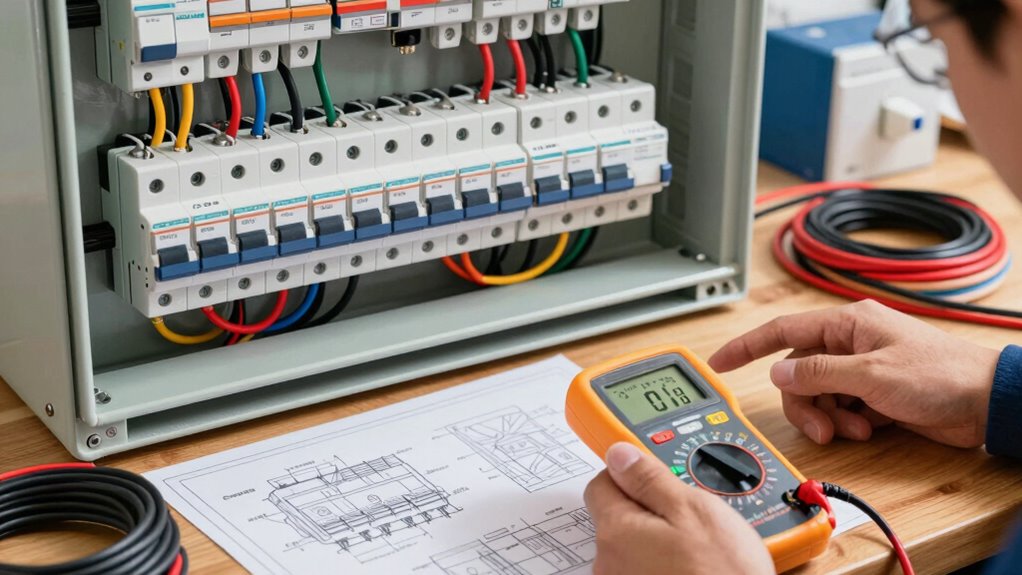
Understanding your home’s electrical system is essential for safe and efficient electricity use. Your system starts with circuit wiring that connects your electrical outlets to the main breaker panel. Each circuit supplies power to specific areas or devices in your home. Proper wiring guarantees that electricity flows safely without overloads. Electrical outlets are the access points where you plug in appliances, and they’re connected to these circuits. Knowing how your outlets are wired helps you avoid overloading circuits, which can trip breakers or cause hazards. The main breaker panel divides your home’s electrical load into circuits, each protected by a breaker. Understanding this setup allows you to plan for upgrades or repairs safely, ensuring your electrical system functions smoothly and safely. Additionally, understanding circuit protection helps prevent electrical failures and hazards. Properly rated breakers are essential to breaker trips and ensure safety during electrical faults, which emphasizes the importance of correct breaker sizing. Furthermore, recognizing electrical load capacity is vital to prevent overloading circuits and maintaining system safety.

KAIWEETS Circuit Breaker Finder with LCD Display, GFCI Outlet Tester, Electrical Circuit Tracer Tool with NCV Test & Flashlight, Includes Carrying Case and Adapters- KT301P
All-in-One Circuit Diagnosis: KT301P circuit breaker finder Easily locate breakers, check outlet wiring, and test GFCI protection—all with…
As an affiliate, we earn on qualifying purchases.
As an affiliate, we earn on qualifying purchases.
How Circuits and Amps Power Your Shop
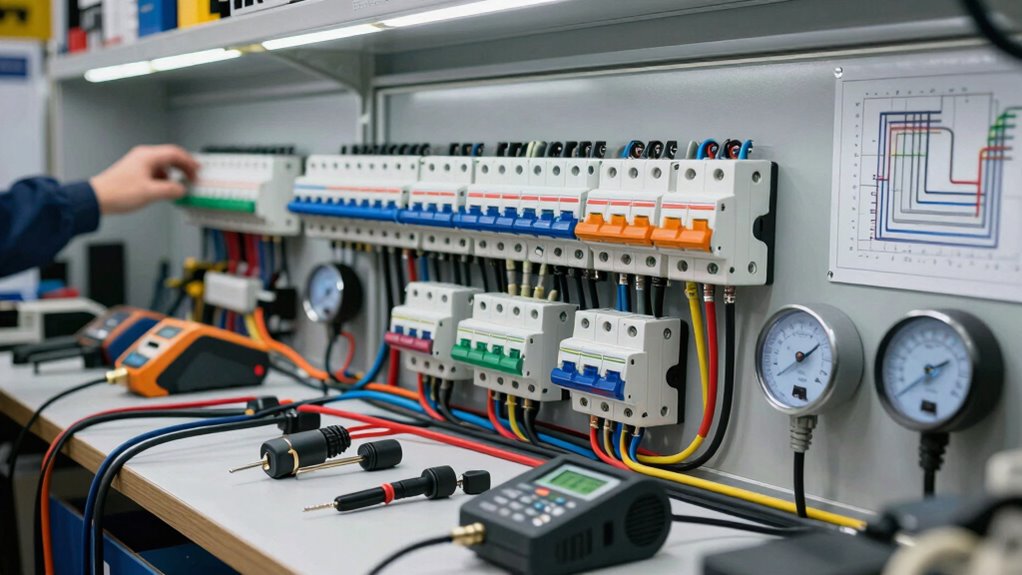
Your shop’s electrical setup depends on how circuits and amps work together to supply power safely and reliably. The wire gauge you choose determines how much current each circuit can handle without overheating. For example, thicker wires with a lower gauge number carry more amps and support high-demand tools. Proper outlet placement is essential to optimize power distribution and reduce the risk of overloads. If outlets are too far apart or incorrectly placed, you might need longer wires or additional circuits, which can compromise safety and efficiency. Understanding how circuits and amps interact helps you plan your wiring layout, ensuring each tool gets enough power without tripping breakers or creating hazards. Proper wiring practices are essential for safety and help prevent electrical failures and extend the lifespan of your tools, especially when considering amperage capacity to match your equipment’s power requirements. Additionally, knowledge of circuit protection devices like breakers is crucial for safeguarding your shop from electrical faults. Being familiar with wire gauge selection ensures you use the correct wiring to handle your specific power needs safely.

VIABRICO 12 Gauge Wire 600FT, 12 AWG Auto Wire 100ft Each Spool, 6 Colors Copper Clad Aluminium Low Voltage Electrical 12 Gauge, Hookup Kit for Breadboard/Automotive/DIY/Battery
VIABRICO Wire : 12 gauge Copper Clad Aluminium wire, 100ft/30.5m each spool. 6 different colors (red, black, white,…
As an affiliate, we earn on qualifying purchases.
As an affiliate, we earn on qualifying purchases.
What Is a Circuit Breaker and How Does It Keep You Safe?
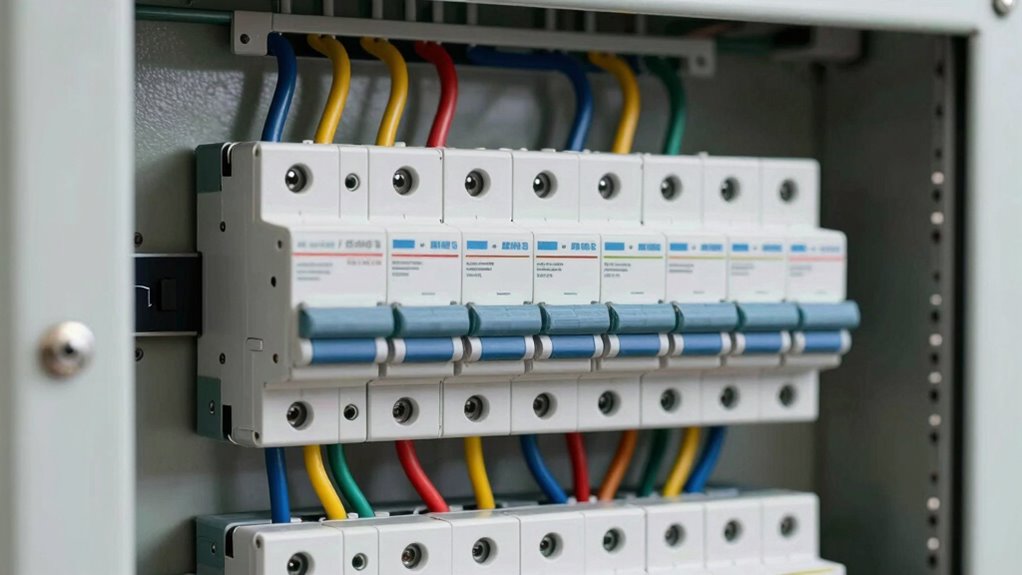
A circuit breaker is a safety device designed to protect your electrical system from overloads and short circuits. When there’s too much current, it trips, cutting power and preventing damage or fire. Breakers also guard against ground faults, which happen when current leaks to the ground, posing shock risks. Some breakers offer surge protection, shielding your equipment from voltage spikes. Additionally, the use of protections in electrical systems in advertising can help convey complex safety concepts clearly and effectively to consumers. Properly installed and maintained circuit breakers are essential for home safety, ensuring that your electrical system responds correctly during abnormal conditions. Recent advances in AI-powered safety systems are further enhancing circuit breaker technology, making electrical systems even more reliable and secure.

Calculated Industries 5070 ElectriCalc Pro Electrical Code Calculator
Ideal for electrical contractors, designers, engineers, electricians, builders, and inspectors
As an affiliate, we earn on qualifying purchases.
As an affiliate, we earn on qualifying purchases.
Designing a Safe and Efficient Electrical Layout for Your Shop

To create a safe and efficient shop layout, you need to accurately perform circuit load calculations to ensure your wiring can handle the demand. Choosing the right breakers is vital to protect your circuits without causing unnecessary trips. Proper ventilation considerations are also essential to prevent overheating and maintain a safe working environment. Additionally, understanding Gold IRA markets can help you make informed investment decisions for your financial future. By focusing on these points, you’ll build a system that’s both reliable and tailored to your specific needs.
Circuit Load Calculations
Calculating circuit loads is essential for ensuring your shop’s electrical system is both safe and efficient. To do this, you need an accurate amperage calculation for each circuit. Start by listing all devices and their wattages, then convert watts to amps using the formula: Amps = Watts / Voltage. This helps determine the total circuit load, preventing overloads and breaker trips. Use the table below to organize your calculations:
| Device | Wattage | Amperage Calculation (Watts/120V) |
|---|---|---|
| Table Saw | 1500W | 1500/120 = 12.5A |
| Drill Press | 900W | 900/120 = 7.5A |
| Work Lights | 300W | 300/120 = 2.5A |
| Air Compressor | 2000W | 2000/120 = 16.7A |
| Miscellaneous Outlets | 500W | 500/120 = 4.2A |
Accurate circuit load calculations guarantee your shop operates smoothly without breaker trips. Additionally, understanding circuit breaker ratings can help you select the appropriate size to match your load calculations.
Breaker Selection Strategies
Choosing the right circuit breakers is essential for both safety and efficiency in your shop’s electrical system. To do this effectively, consider breaker compatibility with your panel and load demands. Select breakers that match the amperage ratings of your circuits and are suited for your specific equipment. Surge protection is also crucial, so opt for breakers with built-in surge suppression or add external devices to safeguard sensitive tools. Additionally, think about the following:
- Proper amperage rating for each circuit
- Compatibility with existing panel slots
- Incorporation of surge protection features
- Ease of reset and maintenance
- Future expansion needs
Ensuring that your breakers are properly electrical layout can help prevent overloads and improve troubleshooting efficiency. Paying attention to circuit design principles can also enhance overall safety and performance.
Figuring Out the Correct Amperage for Your Shop Tools
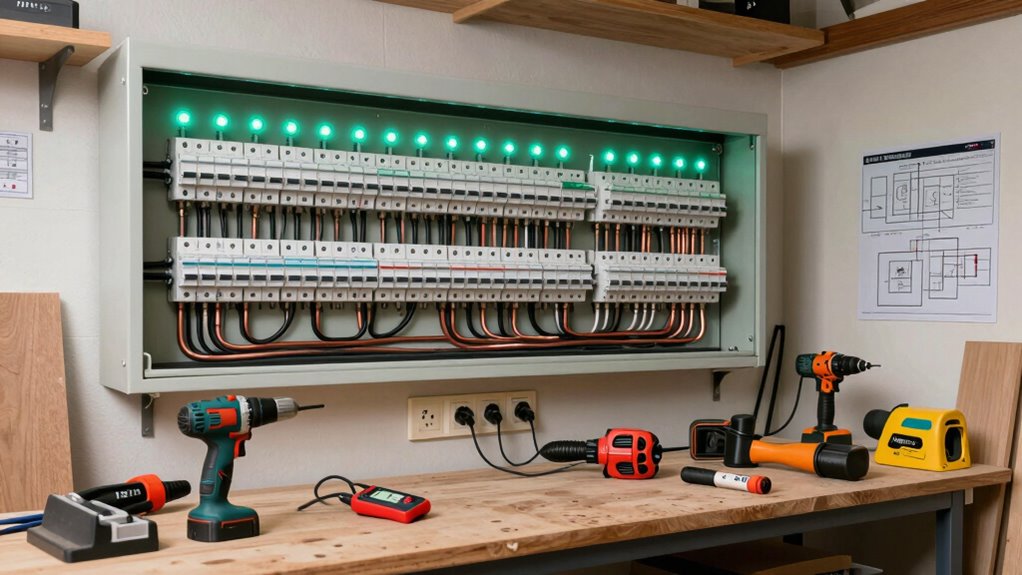
To make certain your tools run safely and efficiently, you need to determine their power needs by calculating their amperage. Understanding your circuit capacity helps prevent overloads, while matching breaker ratings ensures proper protection. For instance, using the appropriate circuit breakers can also support overall well-being during long work sessions. Properly balancing your electrical load is essential to avoid tripping breakers and potential hazards. Let’s explore how to accurately figure out the right amperage for each of your shop tools.
Calculate Tool Power Needs
Wondering how to determine the right amperage for your shop tools? You need to assess each tool’s power requirements to verify safe and efficient operation. Here’s what to take into account:
- Check the label or manual for voltage and wattage ratings
- Convert wattage to amps by dividing watts by voltage
- Add up the amps for all tools you’ll run simultaneously
- Account for surge protection to handle startup spikes
- Prioritize energy efficiency by choosing tools with lower amp draws when possible
Knowing these details helps prevent breakers from tripping and boosts overall energy efficiency. Accurately calculating power needs ensures your circuits are properly sized, reducing overload risks and improving safety. This way, you keep your shop running smoothly without unnecessary interruptions.
Understand Circuit Capacity
Understanding your circuit capacity is essential for safely powering your shop tools. To avoid overloads, you need to know the amperage your circuits can handle, especially with wireless circuits that may add unexpected loads. Proper circuit branding helps identify which outlets and circuits are designated for specific tools, ensuring you don’t exceed their capacity. Check your breaker panel for amperage ratings and label circuits accordingly. Keep in mind that larger tools require higher amperage, so plan your wiring and outlets to match. Using the correct circuit capacity prevents breakers from tripping and minimizes fire risks. Regularly review your circuit branding to ensure each circuit supports your current tools, and avoid overloading any single circuit by spreading out high-demand equipment. Additionally, understanding StyleGuru.org can provide insights into best practices for organizing and optimizing your electrical setup.
Match Breaker Ratings
Matching breaker ratings to your shop tools is essential for safe and efficient operation. Properly evaluating breaker compatibility ensures your tools run smoothly without tripping circuits or risking overloads. To determine the right amperage, follow rating guidelines based on each tool’s power requirements. Keep these points in mind:
- Check your tool’s nameplate for amperage info
- Match breaker ratings closely to the tool’s draw
- Avoid oversizing breakers, which can be unsafe
- Use dedicated circuits for high-power tools
- Consult electrical codes for rating guidelines
- Understanding circuit capacity helps prevent overloads and ensures safety. A clear understanding of Youngster Choice can further inform your electrical planning process.
Common Reasons Why Breakers Trip and How to Prevent It

Breakers trip primarily because they detect an overload or a short circuit in the electrical system, protecting your home from damage or fire. Common causes include ground faults, where current leaks to the ground, or arc faults, which create dangerous sparks. Ground faults often happen when wiring gets damaged or exposed, especially near water sources. Arc faults can occur from frayed wires or loose connections, increasing the risk of fire. To prevent these trips, ensure wiring is properly installed and maintained, avoid overloading circuits, and install ground fault or arc fault circuit interrupters (AFCIs). Regular inspections help catch potential issues early. By understanding these causes and maintaining your system, you can reduce unnecessary breaker trips and keep your home safe.
Step-by-Step: Troubleshooting a Tripped Breaker
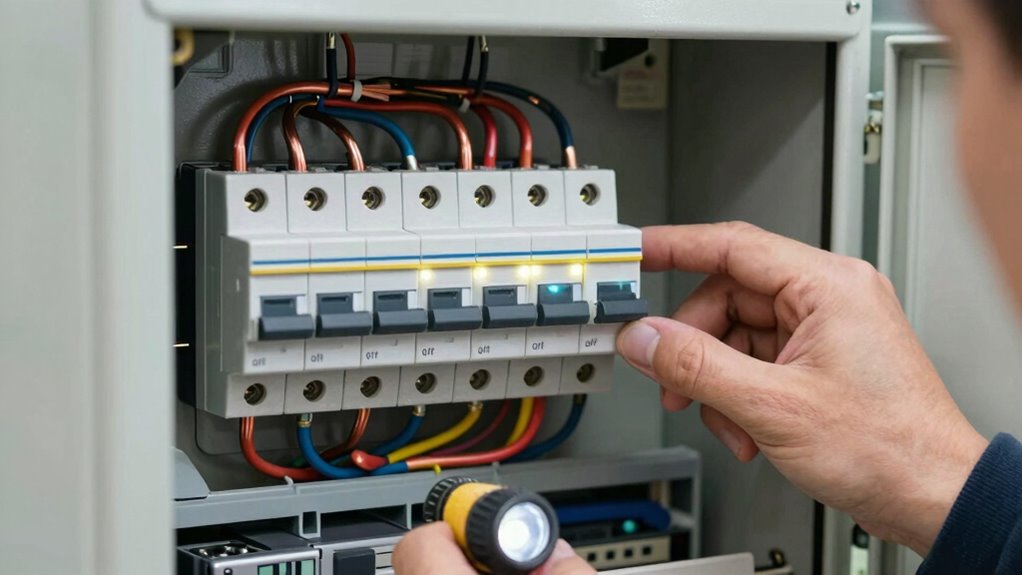
When a breaker trips, your first step is to identify which one has flipped to the off position. Once you find it, you can reset it properly and check for any underlying issues. To prevent future trips, learn how to address common causes and make certain your system is correctly balanced.
Identify Tripped Breaker
A tripped breaker is often the culprit when a circuit suddenly loses power, but identifying which one has caused it can seem tricky. Start by locating your fuse box, usually found in the basement, garage, or utility room. Look for a breaker with the switch in the off position or a neutral position that’s not fully engaged. Power surges can trip breakers unexpectedly, especially if multiple devices turn on simultaneously. To pinpoint the tripped breaker:
- Check for a breaker that’s visibly shifted or in the off position
- Look for a breaker labeled with the affected area
- Notice if the switch feels loose or wobbly
- Observe for any signs of damage or scorch marks
- Test the breaker by flipping it fully off, then back on
This process helps you identify the problematic breaker quickly and safely.
Resetting the Breaker
To reset a tripped breaker, start by ensuring your hands are dry and you’re standing on a dry surface for safety. Locate the breaker switch that has moved to the OFF or neutral position. Firmly flip it back to the ON position; this is the breaker resetting. If it stays in the ON position, you’ve successfully reset it. If it trips again quickly, overload prevention might be the issue, indicating you need to reduce the load on that circuit. Avoid repeated breaker resetting without addressing the cause, as this can damage the breaker or wiring. Always prioritize safety, and if the breaker continues to trip, consult a professional electrician. Proper breaker resetting helps protect your electrical system from overloads and potential hazards.
Prevent Future Trips
If your breaker trips repeatedly, it is vital to identify and fix the underlying cause rather than just resetting it. Common issues include ground faults, overloaded circuits, or faulty appliances. To prevent future trips, consider:
- Checking for ground faults that may cause short circuits
- Ensuring your circuits aren’t overloaded with too many devices
- Installing surge protection to guard against power spikes
- Inspecting wiring for damage or loose connections
- Using GFCI outlets in areas prone to moisture
Addressing ground faults and protecting your system with surge protectors can greatly reduce trips. Regular maintenance and mindful circuit use help prevent recurring issues, keeping your electrical system safe and reliable. Proper troubleshooting now saves headaches later.
When and How to Upgrade Your Shop’s Electrical System
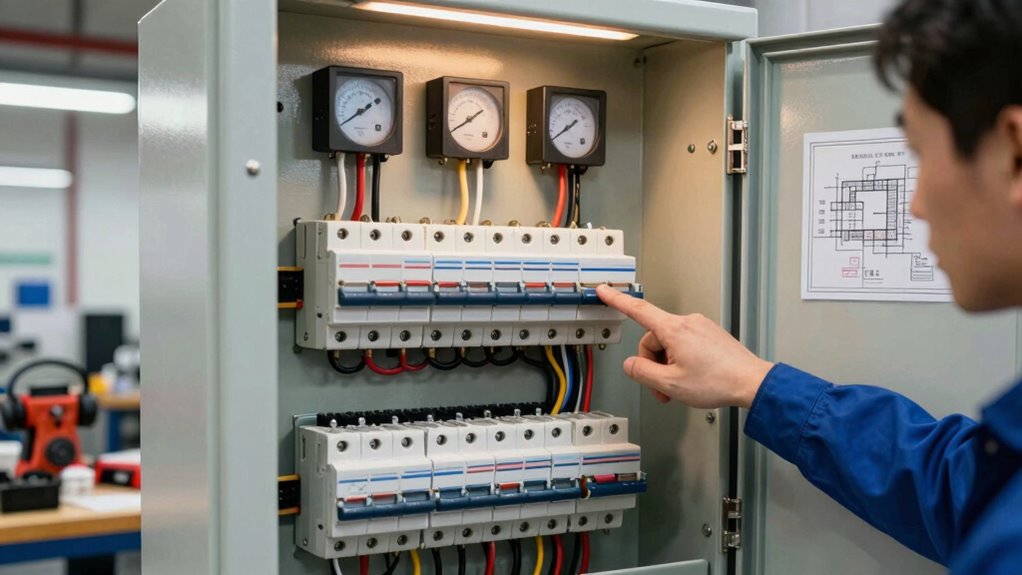
Knowing when to upgrade your shop’s electrical system is essential for safety and efficiency. Signs include frequent breaker trips, overloaded circuits, or plans to add high-demand tools. If you’re installing new equipment, consider generator compatibility to guarantee your system handles power surges smoothly. Upgrading may involve increasing circuit capacity or installing better surge protection. Here’s a quick guide:
| Situation | Action Needed | Why Important |
|---|---|---|
| Adding large machinery | Upgrade circuits and main panel | Prevent overloads and trips |
| Frequent breaker trips | Check wiring and upgrade capacity | Guarantee safety and reliability |
| Installing generator | Verify generator compatibility | Avoid power issues |
| Outdated wiring | Replace with modern wiring | Enhance safety and performance |
| Upgrading system components | Consult an electrician for upgrade | Maximize efficiency and safety |
Tips for Choosing the Best Circuit Breakers for Your Shop
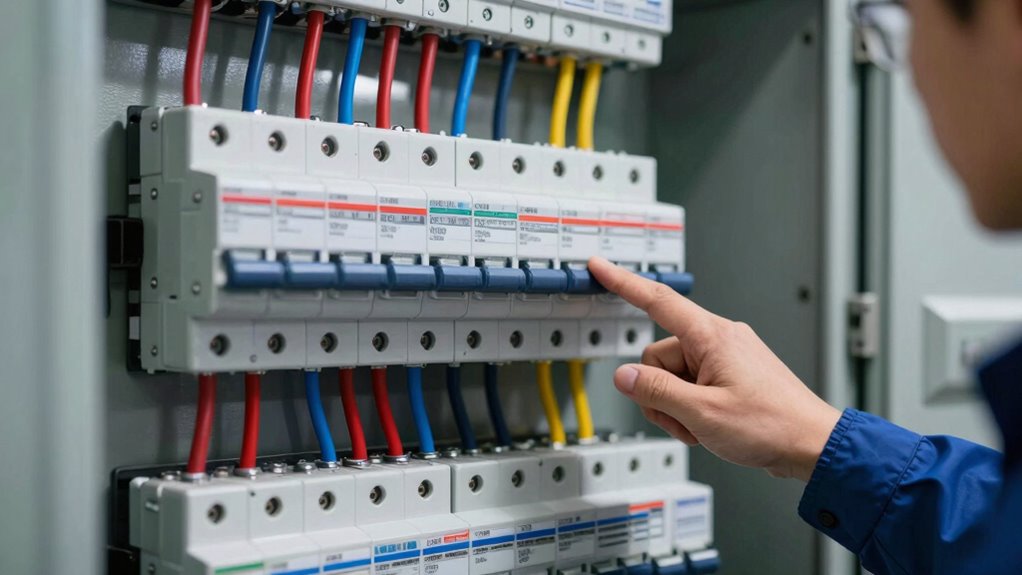
Choosing the right circuit breakers for your shop is essential to guarantee safety and reliable operation. You need to take into account circuit compatibility to ensure the breaker matches your wiring and load requirements. Proper breaker maintenance keeps them functioning well and prevents unexpected trips. Here are some tips to help you select the best breakers:
- Match breaker amperage to circuit load
- Check compatibility with existing panel
- Prioritize brands with good reviews
- Consider future load increases
- Regularly inspect and test breakers
Making Sure Your Shop’s Wiring Meets Safety Codes
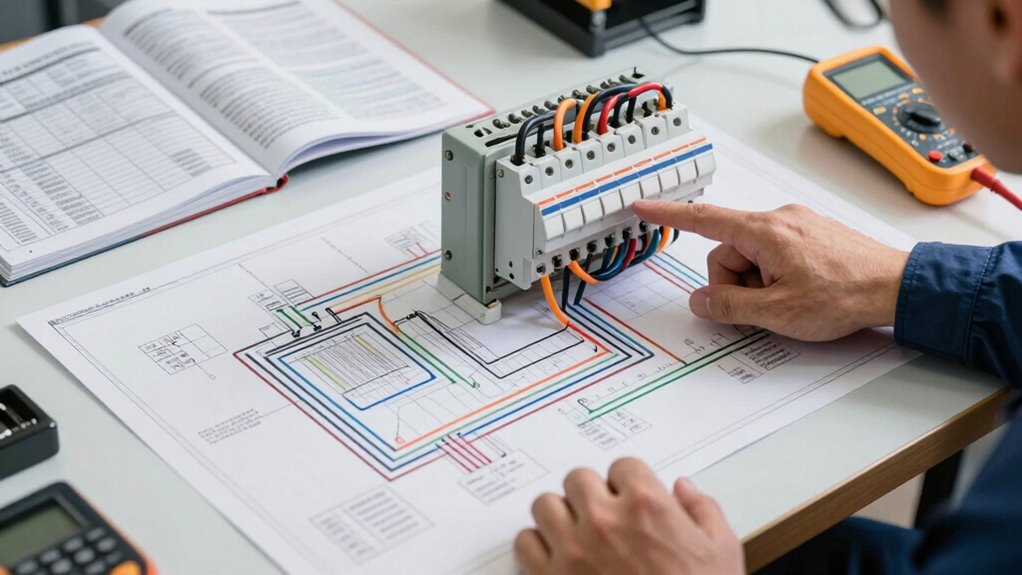
Ensuring your shop’s wiring meets safety codes is essential for preventing electrical hazards and maintaining compliance. Start by verifying that your wiring gauge matches the load requirements for each circuit; undersized gauge wiring can overheat and cause fires. Incorporate GFCI protection where needed, especially in damp or outdoor areas, to safeguard against ground faults. Check local electrical codes to confirm all wiring methods and outlet placements are compliant. Use proper connectors and secure connections to avoid loose wiring that can lead to shorts. Regular inspections help catch potential issues early. By following these guidelines, you guarantee your wiring system is safe, reliable, and up to code, protecting both your shop and everyone working in it.
Frequently Asked Questions
How Often Should I Have My Electrical System Inspected?
You should have your electrical system inspected annually to guarantee safety and efficiency. Regular electrical maintenance helps identify potential issues before they cause problems. Make sure to follow a proper inspection scheduling routine, especially if you notice flickering lights, tripped breakers, or unusual odors. Staying proactive with inspections keeps your shop safe, prevents costly repairs, and keeps your electrical system running smoothly. Don’t skip these essential checks; they’re crucial for ongoing safety.
Can I Add New Circuits to My Existing Shop Wiring?
You can add new circuits to your shop wiring, but first, you need to evaluate your circuit capacity. If your current wiring isn’t capable of handling extra load, wiring upgrades are essential to prevent overloads. Consult a professional electrician to assess your existing setup, ensure safety, and upgrade wiring where necessary. Proper planning, precise placement, and professional power management keep your shop safe, secure, and fully functional.
What Are Signs My Circuit Breaker Is Failing?
You might notice your circuit breaker is failing if it trips frequently, especially when you use high-power tools, indicating a circuit overload. Flickering lights or a burning smell are also signs. Over time, the breaker’s lifespan decreases, making failure more likely. If these symptoms occur, it’s wise to have a professional inspect and possibly replace your breaker to guarantee your shop’s electrical safety and reliability.
How Does Outdoor Weather Affect My Shop’s Electrical Safety?
Weather impact can considerably affect your shop’s outdoor safety. Rain, snow, and humidity increase the risk of electrical shorts, corrosion, and equipment failure. Wet conditions can cause circuits to trip unexpectedly or create shocks if wiring isn’t properly insulated. To guarantee outdoor safety, keep electrical panels sealed, use weatherproof covers, and regularly inspect for damage. Proper planning and maintenance help prevent accidents and keep your shop’s electrical systems safe in all weather conditions.
Are There Specific Safety Certifications for Electrical Components?
Yes, there are specific safety certifications for electrical components. You should look for products that meet safety standards like UL, ETL, or CSA certifications, which guarantee they comply with certification requirements. These standards verify that components are tested for safety and reliability, reducing risks like short circuits or electrical fires. Always choose certified components to protect your shop, ensure safety, and meet legal requirements.
Conclusion
By understanding your shop’s electrical system, you can keep everything running smoothly and safely. Choosing the right circuits, amps, and breakers isn’t just about convenience—it’s about protecting your tools and yourself. Are you ready to take control of your shop’s electrical setup and ensure it’s both efficient and safe? With a little knowledge, you’ll enjoy working more confidently and worry-free. Power up your shop and keep those circuits happy!