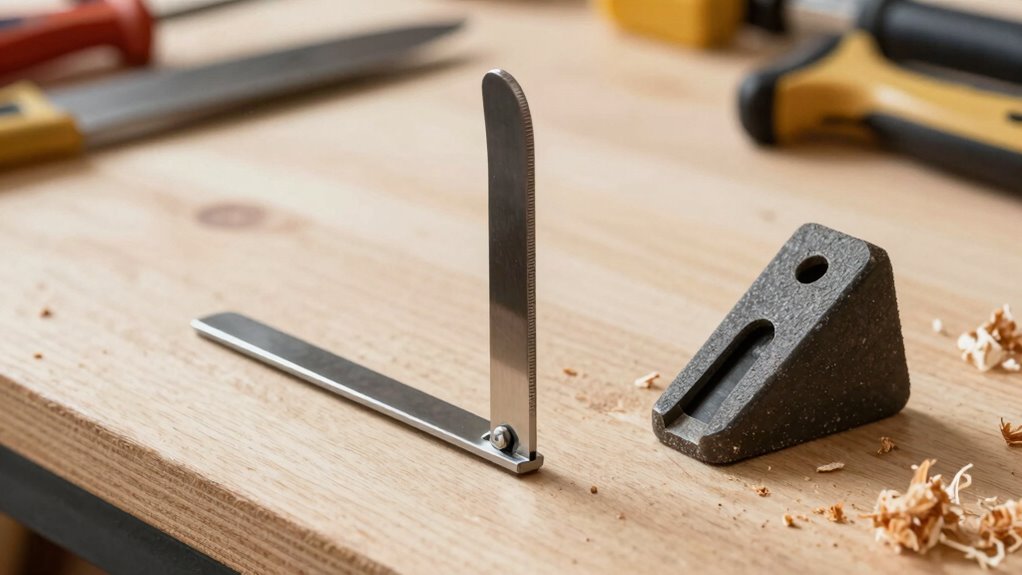

A riving knife offers a safer option by moving with the saw blade, helping prevent kickback and accidental contact, unlike a fixed splitter that stays stationary and offers less reliable protection. Its precise alignment and ability to adapt to different cuts markedly reduce risks. If you’re concerned about safety during table saw use, understanding this key difference can make a big impact—continue exploring to learn how to choose the best safety setup.

Get business pricing on tools and workshop supplies
- Business-only prices and quantity discounts
- Tax-exempt purchasing
- Multiple users, one account, clear invoices
Key Takeaways
- Riving knives move with the blade, maintaining alignment and reducing kickback more effectively than fixed splitters.
- Riving knives are typically more durable and resistant to damage, enhancing safety over time.
- Properly installed and aligned riving knives provide consistent protection during various cuts.
- Splitters are less effective at preventing kickback due to their fixed position and potential misalignment.
- Using a riving knife significantly decreases the risk of blade pinching and accidental contact compared to splitters.
As an affiliate, we earn on qualifying purchases.
How Do Riving Knives and Splitters Differ in Design and Placement?
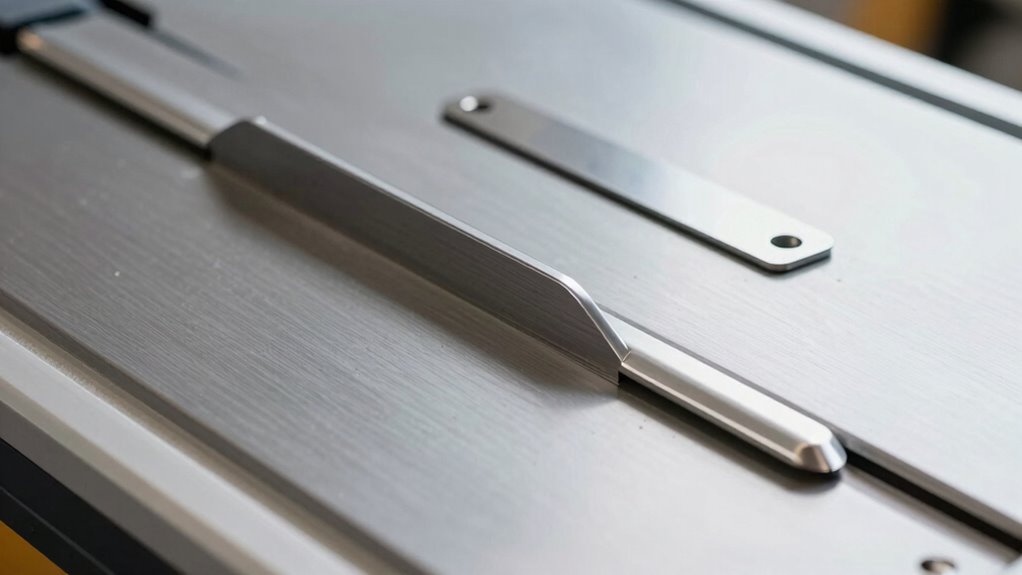
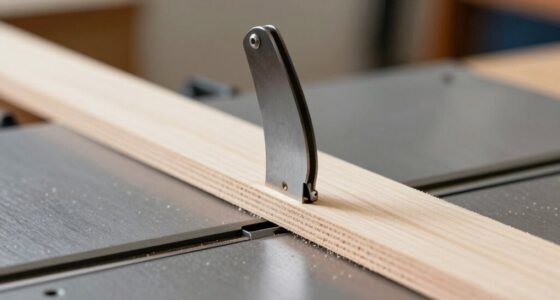
While both riving knives and splitters serve to prevent kickback, they differ considerably in design and placement. Riving knives are thin, flat blades positioned directly behind the saw blade, maintaining precise blade alignment. This close positioning ensures they move with the blade, reducing the risk of material pinching. In contrast, splitters are fixed plates mounted behind the blade, usually attached to the saw’s body. They don’t move with the blade, which can impact blade alignment during adjustments. Material durability also varies; riving knives are typically made from high-strength steel or durable composites to withstand constant movement and contact, ensuring longevity. Additionally, the role of calibration in maintaining proper alignment is crucial for both components to function safely and effectively. Proper maintenance practices help ensure that both parts remain effective and aligned over time, enhancing safety during operation.
As an affiliate, we earn on qualifying purchases.
Why Is Safety the Main Difference Between Riving Knives and Splitters?
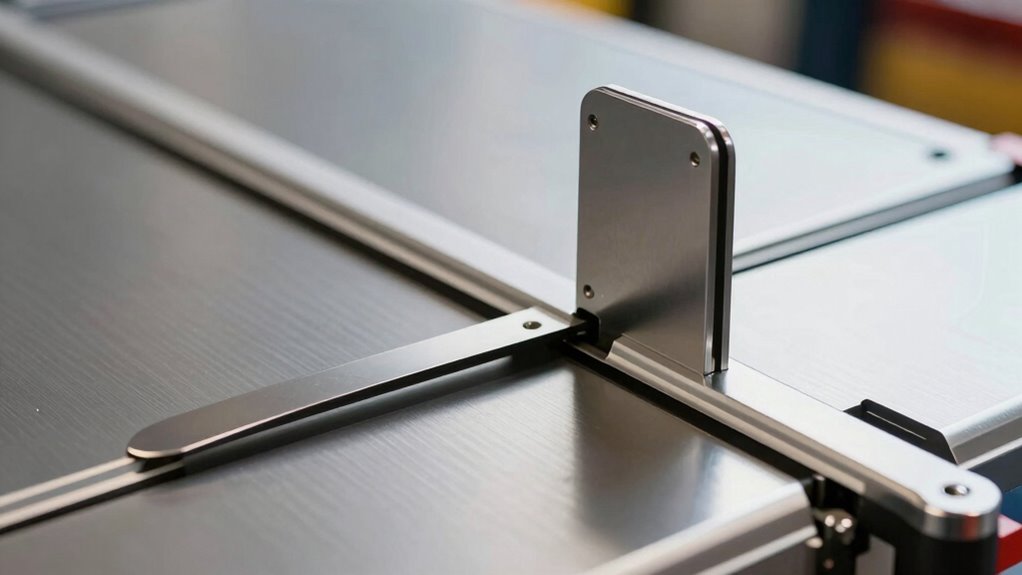
Safety is the primary reason many woodworkers prefer riving knives over splitters. Riving knives are designed to stay aligned with the blade, reducing kickback and accidental contact. Their blade material is often durable, resisting damage from wood chips or accidental impacts, which enhances safety. Splitters, on the other hand, are usually less sturdy and can be prone to bending or breaking if hit with debris, increasing risk. Additionally, maintenance routines matter: riving knives require regular checks to ensure proper positioning and integrity, maintaining their safety advantages. Proper maintenance routines are essential to ensure the continued safety benefits of a riving knife. Furthermore, the construction quality of riving knives often reflects higher safety standards, providing more confidence during cuts. Unlike splitters, which may need less frequent attention, a well-maintained riving knife consistently offers a safer cutting environment. Advances in manufacturing technology have also contributed to producing safer, more reliable riving knives, reinforcing their importance in cautious woodworking. This focus on safety through construction and upkeep makes riving knives the preferred choice for cautious woodworkers.
safety riving knife for woodworking
As an affiliate, we earn on qualifying purchases.
As an affiliate, we earn on qualifying purchases.
How Effective Is a Riving Knife Compared to a Splitter at Preventing Kickback?
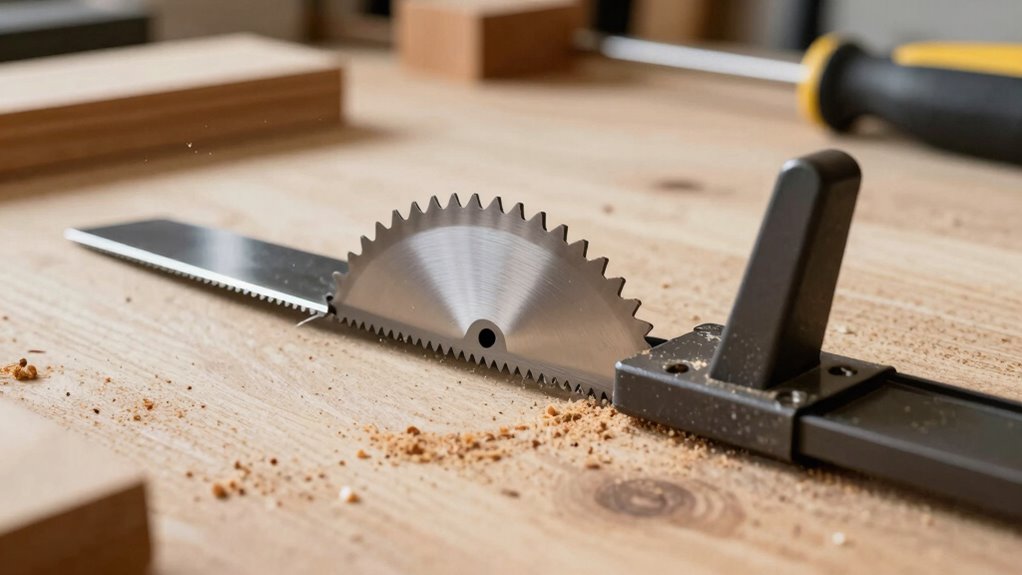
A riving knife offers better protection against kickback because it moves with the blade, maintaining a close guard. In contrast, a splitter provides limited protection since it stays stationary and can leave gaps. This difference makes the riving knife more effective at preventing dangerous kickback incidents. Additionally, Free Floating designs allow for easier adjustments and improved safety during various cuts.
Riving Knife’s Superior Guarding
A riving knife offers markedly better protection against kickback than a splitter because it moves with the saw blade, maintaining close contact throughout cuts and keeping the stock’s kerf open. This dynamic movement ensures consistent blade alignment, reducing the risk of the stock pinching the blade as you cut. Unlike a fixed splitter, the riving knife adapts to material thickness, providing reliable guarding across a range of cuts. Its design also minimizes gaps that could allow material to slip through, preventing dangerous pinches. Material compatibility is essential—most riving knives are adjustable or come in different sizes to fit various saw models and blade types. Overall, this superior guarding greatly enhances safety by continuously preventing the stock from twisting or pinching the blade during operation.
Splitter’s Limited Protection
While splitters provide some level of protection, they generally fall short compared to riving knives at preventing kickback. Splitters are fixed and don’t move with the blade, making blade alignment vital but often difficult to achieve perfectly. Misaligned blades can cause wood to pinch or catch, increasing kickback risk. Additionally, splitters don’t assist with dust collection, which can obscure your view and lead to unsafe cuts. Riving knives, by contrast, stay close to the blade and move with it, offering continuous protection.
| Feature | Splitter | Riving Knife |
|---|---|---|
| Blade Alignment | Critical but challenging to perfect | Maintains consistent alignment |
| Dust Collection | Limited, dust obscures view | Better dust management |
| Kickback Prevention | Limited effectiveness | Substantially reduces risk |
As an affiliate, we earn on qualifying purchases.
What Are the Risks of Using a Splitter Without a Riving Knife?
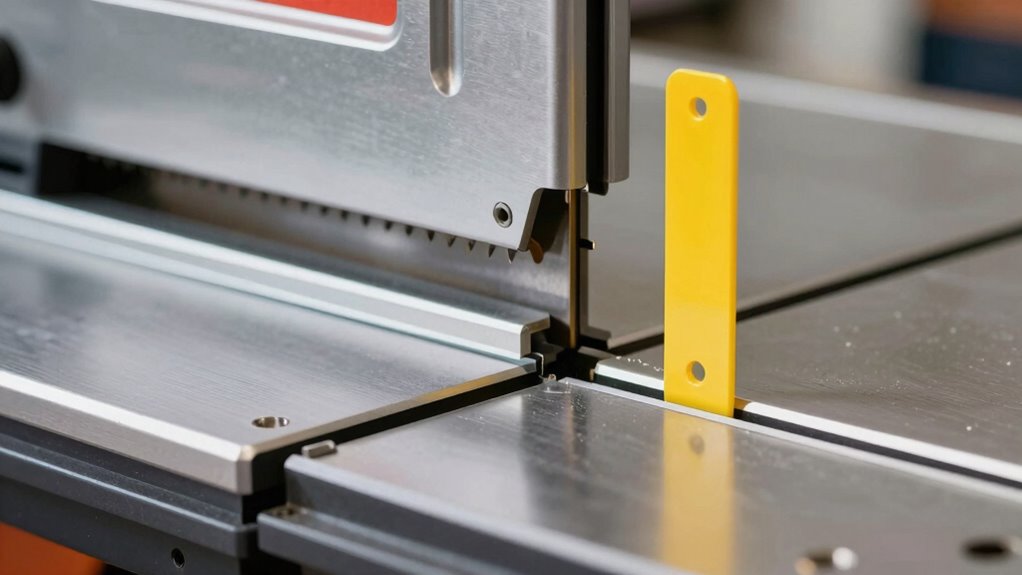
Have you considered the dangers of operating a splitter without a riving knife? Without this safety feature, the risk of blade exposure increases considerably. As you cut, the wood can pinch or shift unexpectedly, causing the saw to kick back or bind, which can lead to serious injuries. Additionally, the lack of a riving knife hampers effective dust collection, allowing sawdust and debris to build up around the blade. This not only reduces visibility but also creates a hazardous environment, increasing the chance of accidents. Without proper protection, you’re more vulnerable to kickback and other dangerous incidents. Using a splitter without a riving knife compromises your safety, making it vital to always ensure this component is in place for safer, cleaner cuts. Proper safety measures are essential to prevent injuries and ensure safe operation. Wave and wind are also factors that can influence saw operation and safety conditions.
How Do You Install and Adjust Riving Knives and Splitters?
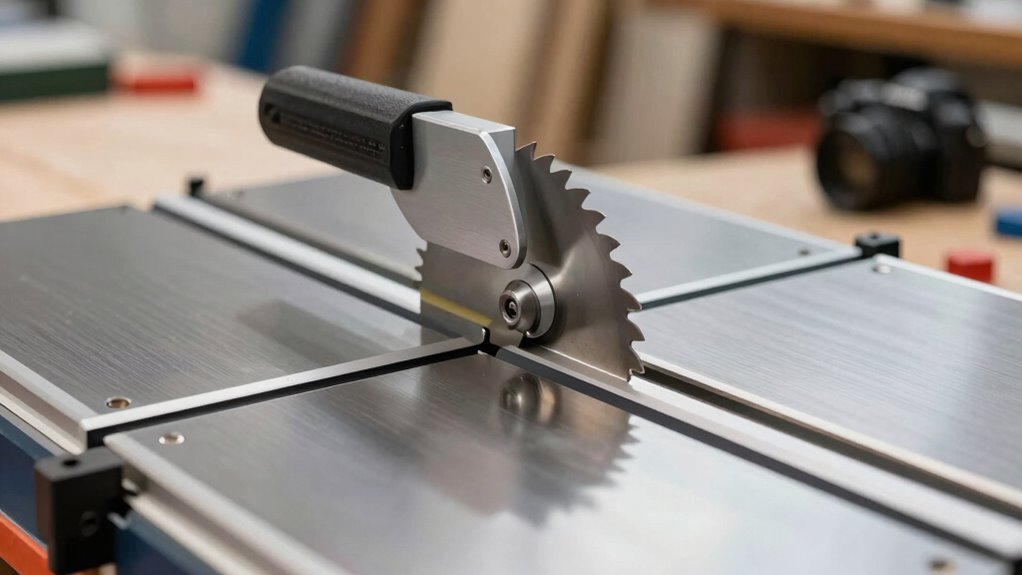
To install and adjust your riving knife or splitter properly, start by preparing the blade assembly to make sure everything is clean and secure. Next, carefully mount the device at the correct height and position according to your saw’s instructions. Finally, fine-tune the alignment for safety and smooth operation before making your cuts. Additionally, always verify that the safety features are functioning correctly to prevent accidents during use.
Preparing the Blade Assembly
Installing and adjusting a riving knife or splitter begins with ensuring your saw is unplugged for safety. Next, check the blade assembly to confirm the blade is properly aligned. Proper blade alignment is vital for smooth cuts and safety, so use a combination square or a blade alignment tool to verify it’s square with the table. Before installing the riving knife or splitter, clean any debris or sawdust from the assembly to guarantee a snug fit. Follow the manufacturer’s instructions to attach the device securely, making sure it’s positioned at the correct height and distance from the blade. Regular maintenance routines, like inspecting for wear or damage and rechecking alignment, help keep the blade assembly functioning safely and efficiently. Proper preparation ensures maximum performance and safety during woodworking.
Properly Mounting the Device
Begin by positioning the riving knife or splitter so it aligns correctly with the saw blade. Follow the manufacturer’s mounting procedures carefully, ensuring the device is securely attached to the saw. Use proper alignment techniques by checking that the riving knife or splitter is parallel to the blade’s teeth and set at the correct height—just above the top of the blade. Tighten all mounting bolts firmly to prevent movement during operation. Double-check the alignment after initial tightening, as vibrations can shift the device. Make sure the device doesn’t interfere with blade movement or cut quality. Proper mounting and adjustment are essential for safety and effective operation, so take your time to verify everything before making cuts. Proper installation minimizes risks and enhances your saw’s performance. Ensuring the correct device height is crucial for preventing kickback and maintaining a smooth cut.
Fine-Tuning for Safety
Once you’ve securely mounted your riving knife or splitter, the next critical step is fine-tuning for safety. Start by adjusting the device so it aligns perfectly with the saw blade, ensuring the blade material doesn’t interfere with its operation. Check that the riving knife or splitter is positioned just slightly behind the blade’s kerf to prevent kickback. Consider your saw’s motor power; heavier, more powerful motors may require more precise adjustments to maintain stability and safety. Make sure the device is snug and doesn’t wobble during operation. Regularly inspect the alignment, especially after blade changes or adjustments. Proper fine-tuning minimizes gaps and ensures consistent performance, reducing the risk of wood pinching or kickback during cuts.
Are Blade Guards Compatible With Different Table Saws?
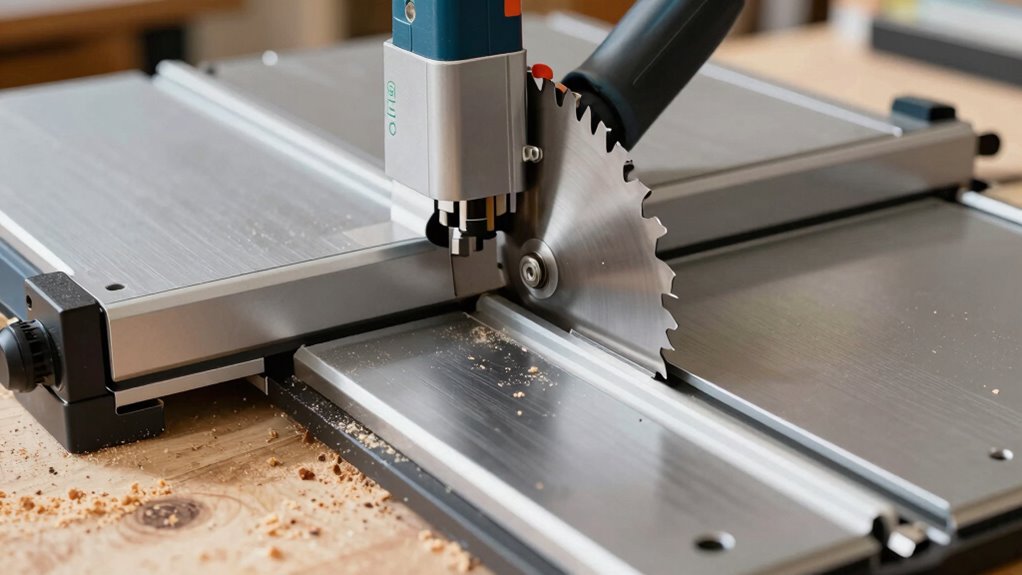
Are blade guards compatible with different table saws? Not always. Blade guard compatibility depends on your saw model considerations, as many guards are designed to fit specific brands or models. Some universal guards exist, but they may require adapters or modifications to work properly. Before purchasing a guard, check your saw’s make and model to ensure proper fit and safety. Compatibility issues can lead to reduced effectiveness or even safety hazards if the guard doesn’t fit securely. Understanding compatibility is crucial to making informed and safe choices when selecting safety equipment for your power tools. Additionally, being aware of energetic alignment principles can help you approach safety with a focused mindset, enhancing your overall protection. Always prioritize safety and compatibility to ensure your blade guard functions correctly and protects you during use.
Do Riving Knives or Splitters Affect Cutting Performance or Ease of Use?
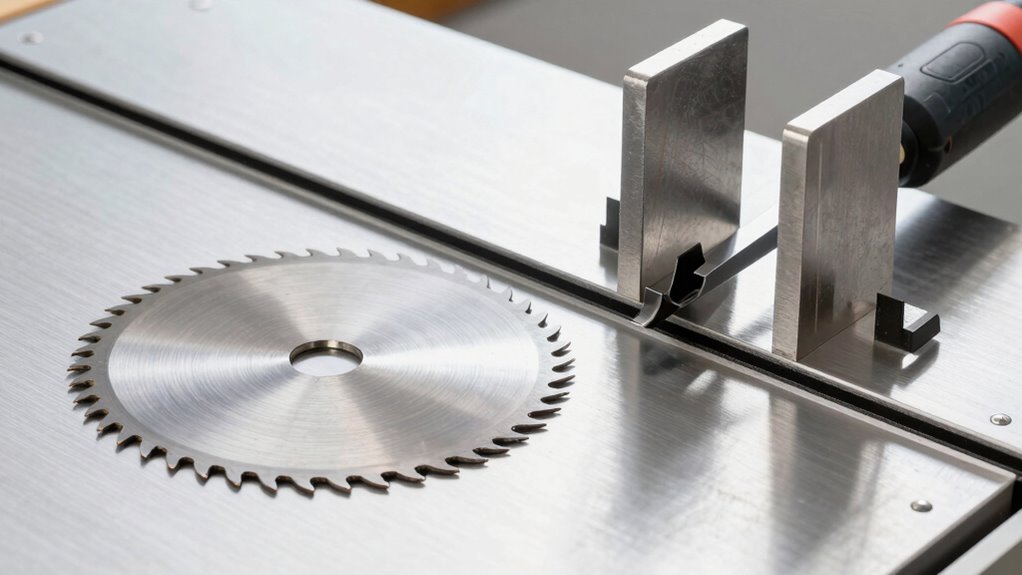
Riving knives and splitters are designed to improve safety by preventing wood from pinching or twisting during cuts, but they can also influence how smoothly your saw operates. While both enhance safety, they may slightly impact cutting precision and material compatibility. Riving knives, usually adjustable and closer to the blade, allow for more accurate cuts on various materials. Splitters are fixed and simpler but may require adjustments for different thicknesses. Consider this table:
| Feature | Riving Knife | Splitter | Ease of Use |
|---|---|---|---|
| Cutting Precision | Higher, due to adjustability | Moderate, fixed position | Slightly easier with splitter |
| Material Compatibility | Better for diverse materials | Less adaptable | Comparable, depends on setup |
| Maintenance | More adjustments needed | Simpler, less maintenance | Easier to maintain |
Both can affect performance, but your choice depends on your projects. Additionally, proper setup and maintenance can help mitigate some of these differences and ensure optimal operation, especially since regular inspection is key to maintaining safety features. Moreover, understanding the specific safety features of your saw can influence your decision between a riving knife and a splitter. Furthermore, being aware of the compatibility considerations can help you select the best option for your woodworking needs. Also, choosing the right safety device can improve overall cutting efficiency and help prevent accidents.
Debunking Common Safety Myths About Riving Knives and Splitters?
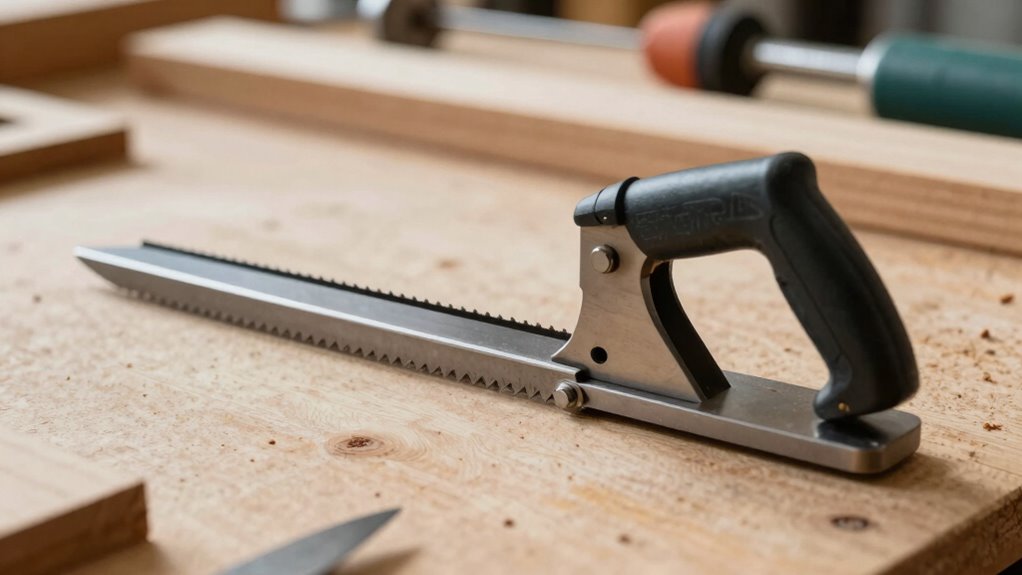
Many people believe that installing a riving knife or splitter completely eliminates the risk of kickback and accidents, but this isn’t true. This is a common safety misconception, and myth correction is essential to understanding real risks. Riving knives and splitters greatly reduce the chance of kickback, but they don’t make your saw entirely safe. Other factors, like proper technique, blade condition, and push sticks, also play vital roles in safety. Relying solely on these safety devices can give a false sense of security. It’s important to recognize that no tool or device can eliminate all hazards. Educating yourself about these myths helps you work more safely and prevents complacency that could lead to accidents. Understanding saw safety emphasizes that comprehensive awareness and safe practices are crucial for preventing injuries. Additionally, proper maintenance of your tools and consistent use of safety equipment are key components in creating a safe working environment. Recognizing the limitations of safety devices encourages a more cautious and informed approach to woodworking safety. Incorporating safety training and ongoing education can further reduce the risk of accidents in your workshop.
How Do You Choose the Safest Blade Guard for Your Table Saw?
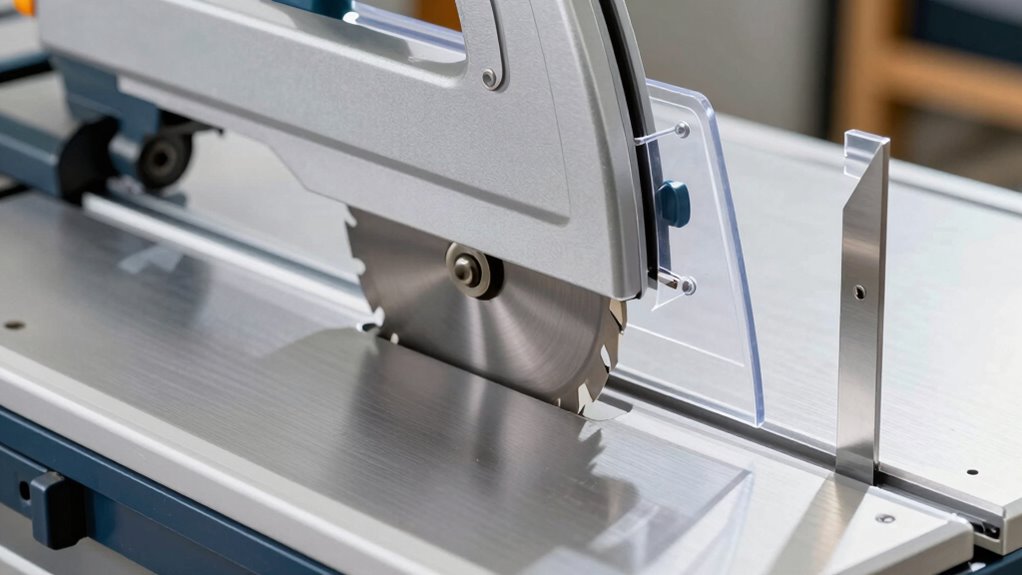
Choosing the safest blade guard for your table saw involves evaluating both the guard’s design and how well it integrates with your saw and workflow. First, consider the blade material—some guards are made from durable plastics, while others use metal, which impacts longevity and safety. A guard that’s sturdy and resistant to damage offers better protection. Next, look at motor power, as more powerful saws require guards that can handle higher torque without compromising safety. Ensure the guard moves smoothly with the blade and doesn’t obstruct your work or control. Compatibility with your saw’s size and your typical projects is essential, too. The safest guard combines strong blade material, reliable movement, and seamless integration with your saw’s motor power for maximum protection.
Frequently Asked Questions
Can a Splitter Be Used Without a Riving Knife Safely?
You shouldn’t use a splitter alone without a riving knife safely, as safety standards emphasize their combined use. Splitters are designed for blade compatibility and work best when paired with a riving knife to prevent kickback. Operating without a riving knife increases the risk of injury, so always ensure your saw’s safety features are properly installed and maintained for maximum safety during cuts.
Do Different Saw Brands Have Compatible Riving Knives and Splitters?
Think of saw parts like puzzle pieces—some fit perfectly, others need a little work. Most brands have their own special designs, making universal compatibility tricky. While a few universal riving knives and splitters exist, you’ll mostly find brand-specific designs that snugly fit only their saws. Always check your saw’s make and model before swapping parts, ensuring a safe, snug fit that keeps your cuts clean and safe.
How Does Blade Height Influence Safety With These Devices?
Adjusting blade height impacts safety considerably. When you set the blade height correctly, usually just above the material’s thickness, it minimizes kickback and reduces the risk of contact with the blade. Proper blade height ensures the riving knife or splitter functions effectively, preventing wood from pinching the blade. Always double-check your blade height before cutting to enhance safety and avoid accidents during your woodworking projects.
Are There Specific Woodworking Projects Better Suited for One Device?
Think of your saw as a trusty steed suited for different terrains. For specialized projects like intricate joinery or thin veneer, a splitter keeps the cut smooth and safe, especially with delicate materials. Riving knives excel with thicker, more robust wood, offering better control and safety. Match your device to your project’s material considerations, and you’ll ride smoothly through each task, avoiding mishaps and ensuring precision every time.
What Maintenance Is Required to Keep Riving Knives and Splitters Effective?
To keep your riving knife and splitter effective, you should regularly check blade alignment to guarantee proper cutting. Keep a consistent lubrication schedule for moving parts to prevent rust and ensure smooth operation. Clean debris and resin buildup often, and inspect for any damage or wear. Proper maintenance not only extends the lifespan of your safety devices but also keeps your cuts precise and safe during woodworking projects.
Conclusion
Choosing between a riving knife and a splitter isn’t just about convenience—it’s about safety. The right choice can drastically reduce kickback and protect you from harm. But which one offers true peace of mind? The answer might surprise you, and once you know the facts, you’ll see why making the right decision matters more than ever. Stay alert, stay safe, and remember—your next cut depends on it.
Halloween Picks
halloween
As an affiliate, we earn on qualifying purchases.