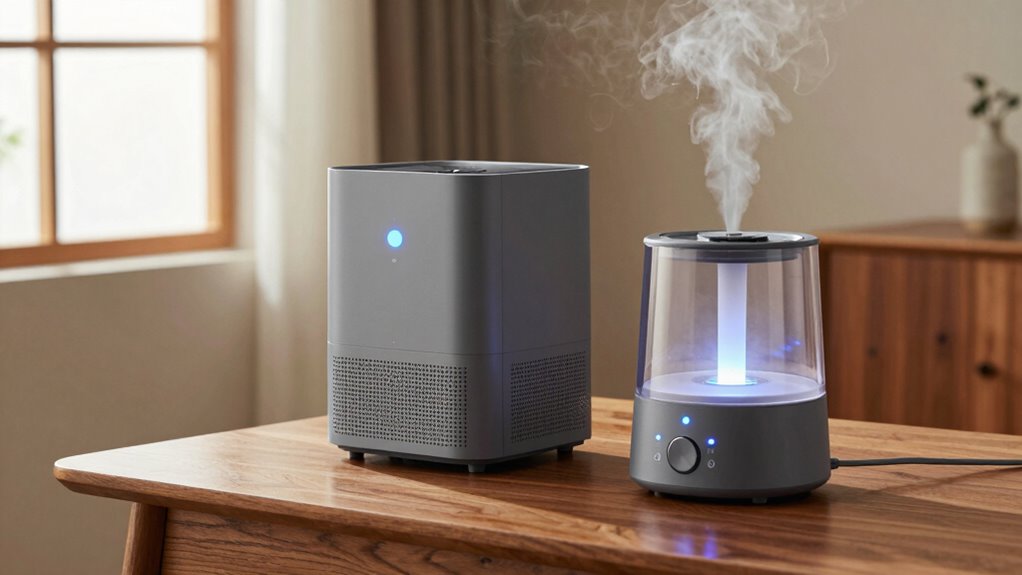
Dehumidifiers and humidifiers do more than protect wood—they keep your entire home healthier and more comfortable. By controlling indoor humidity, they prevent mold, reduce dust mites, and improve air quality. Dehumidifiers reduce excess moisture in damp spaces, while humidifiers add moisture in dry environments. Together, they help avoid structural damage and respiratory issues. If you want to discover how these devices can safeguard your home and health even further, keep exploring.

Get tools and workshop supplies delivered free — and shop member deals
- Fast, free delivery on millions of items
- Access to Prime Big Deal Days deals on October 6–7
- Prime Video, Amazon Music and more included
Key Takeaways
- Dehumidifiers and humidifiers regulate indoor humidity to prevent mold growth and moisture-related damage beyond just protecting wood.
- Proper humidity control reduces airborne allergens like dust mites and mold spores, safeguarding overall health.
- These devices improve indoor air quality, creating a safer environment for respiratory health and comfort.
- Maintaining balanced humidity helps preserve various home materials, including electronics, furniture, and structural elements.
- Climate tools like dehumidifiers and humidifiers prevent structural damage and health issues caused by excessive dryness or dampness.
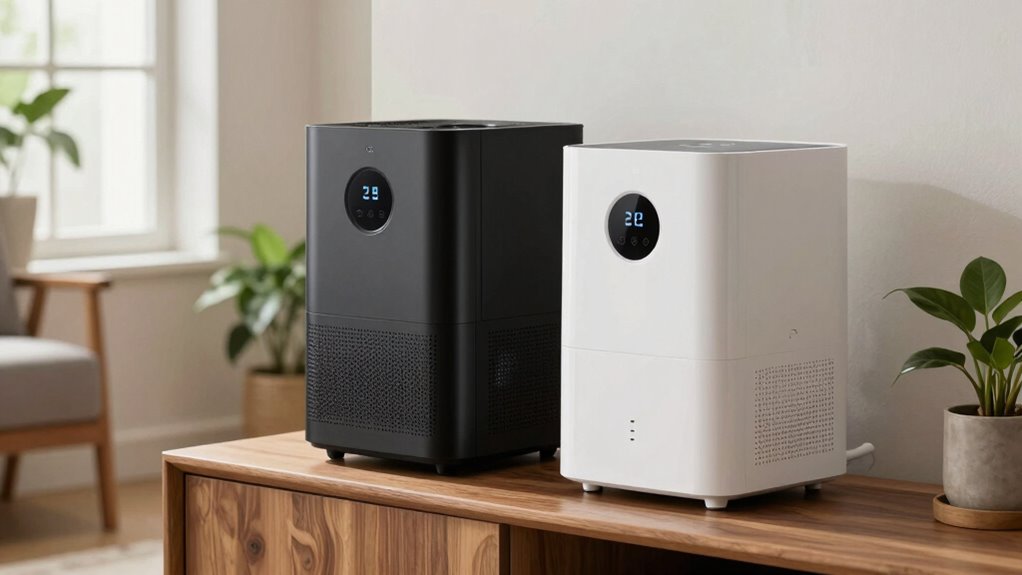
Have you ever wondered how to maintain the perfect indoor humidity level? Achieving this balance isn’t just about comfort; it’s about protecting your home and health. When the air is too damp, mold can start to grow, leading to structural damage and potential health issues. On the other hand, if the air is too dry, it can cause irritation, respiratory problems, and make your home feel stuffy. Using a dehumidifier or humidifier helps you control these conditions, but their benefits go far beyond just comfort. They play an essential role in mold prevention and air quality improvement, keeping your living space safer and healthier.
Maintaining optimal humidity protects your home and health by preventing mold and respiratory issues.
A dehumidifier pulls excess moisture from the air, which is especially important in damp environments or during humid seasons. By reducing humidity levels, you prevent mold spores from settling and multiplying on walls, ceilings, and furniture. Mold isn’t just a nuisance—it can trigger allergies, asthma, and other respiratory conditions. Keeping humidity in check with a dehumidifier minimizes these risks and preserves your home’s structural integrity. Better air quality isn’t just about removing moisture; it’s also about reducing dust mites and mold spores that thrive in humid conditions. This leads to a cleaner, healthier environment, especially if you or your family members have allergies or respiratory sensitivities.
Conversely, a humidifier adds moisture to dry air, which can be particularly helpful during winter months when indoor heating dries out the air. Proper humidity levels help keep your nasal passages and skin hydrated, reducing irritation and the likelihood of colds or flu. It also helps prevent wood furniture, flooring, and musical instruments from cracking or warping due to excessive dryness. Maintaining ideal humidity creates a more comfortable atmosphere and supports overall air quality improvement by reducing airborne dust and static electricity. Proper indoor air quality management with these devices can also help reduce the presence of airborne dust and static, further enhancing comfort. Additionally, controlling indoor humidity levels with these tools can help prevent the growth of mold spores, which thrive in unbalanced conditions. Furthermore, monitoring and adjusting humidity with the right devices can prevent the development of moisture-related problems that may go unnoticed until they cause significant damage.
Both devices serve as essential climate tools that do more than just regulate moisture; they actively contribute to a healthier, more comfortable home environment. Properly managing indoor humidity with these tools prevents mold growth, preserves your home’s materials, and improves air quality. Maintaining optimal humidity levels also helps to prevent the proliferation of dust mites, which can exacerbate allergies and asthma. By doing so, you protect yourself and your loved ones from health issues related to mold, dust, and dry air. The right use of a dehumidifier and humidifier ensures your home remains a safe haven where the air is just right—neither too damp nor too dry—helping you breathe easier and live better.
best dehumidifier for mold prevention
As an affiliate, we earn on qualifying purchases.
As an affiliate, we earn on qualifying purchases.
Frequently Asked Questions
How Do I Choose the Right Size Dehumidifier or Humidifier?
To choose the right size dehumidifier or humidifier, consider your room’s size and moisture levels. Size considerations help you pick a unit powerful enough for your space without being overkill. Also, focus on placement strategies; place the device centrally for even distribution, and avoid obstructing air flow. Proper sizing and placement guarantee efficient moisture control, protecting your home and belongings effectively.
Can Dehumidifiers and Humidifiers Improve Indoor Air Quality?
Surprisingly, dehumidifiers and humidifiers do more than just protect wood; they actually improve indoor air quality. By aiding in air purification and allergen reduction, they help you breathe easier. While their primary role isn’t air cleaning, maintaining ideal humidity levels prevents mold, dust mites, and other allergens from thriving. So, yes, these climate tools can considerably boost your home’s air quality, making your living space healthier and more comfortable.
Are There Energy-Efficient Models Available for These Devices?
Yes, there are energy-efficient models available for dehumidifiers and humidifiers. You can find options designed to maximize energy savings and reduce your carbon footprint. Look for devices with ENERGY STAR ratings or eco-friendly features, such as low power consumption and sustainable materials. These models help you maintain ideal indoor humidity levels while saving money on electricity bills and supporting environmentally conscious choices.
How Often Should I Clean or Replace Filters in These Devices?
You should clean filters in your dehumidifier or humidifier every 2 to 4 weeks, depending on usage and air quality. Follow the manufacturer’s filter maintenance instructions for maximum performance. Replace filters on a regular schedule, typically every 6 to 12 months, or when they show signs of wear or dirt buildup. Proper filter maintenance ensures your device runs efficiently and helps maintain healthy indoor air quality.
Can These Tools Help With Mold Prevention Beyond Wood Protection?
You can definitely use these tools to help prevent mold growth, which is vital since airborne spores can cause health issues. Remarkably, mold spores are everywhere and thrive in humid environments, making controlling moisture essential. By maintaining ideal humidity levels, dehumidifiers and humidifiers reduce the chances of mold developing, especially in damp areas. This not only protects your home but also promotes healthier indoor air quality overall.
As an affiliate, we earn on qualifying purchases.
Conclusion
Just as a skilled gardener tends to their plants, you can care for your home by balancing humidity levels with dehumidifiers and humidifiers. These climate tools act like invisible guardians, protecting your space from the silent threats of mold, warping, and decay—much like the wise old oak shielding its roots. Keep your environment stable, and like a well-tended garden, your home will flourish, echoing nature’s harmony and resilience.
air quality monitor with humidity control
As an affiliate, we earn on qualifying purchases.
As an affiliate, we earn on qualifying purchases.
compact dehumidifier for basement
As an affiliate, we earn on qualifying purchases.
As an affiliate, we earn on qualifying purchases.
Fall yard work Picks
leaf blowers
As an affiliate, we earn on qualifying purchases.