
TL;DR

Get tools and workshop supplies delivered free — and shop member deals
- Fast, free delivery on millions of items
- Access to Prime Big Deal Days deals on October 6–7
- Prime Video, Amazon Music and more included
A Family Handyman report explains why fall storms can put extra stress on trees that still have their leaves: the canopy catches wind, while saturated soil can weaken the roots’ hold. The risks vary by tree and conditions; the cited sources do not establish that every leafy tree is more likely to fail.
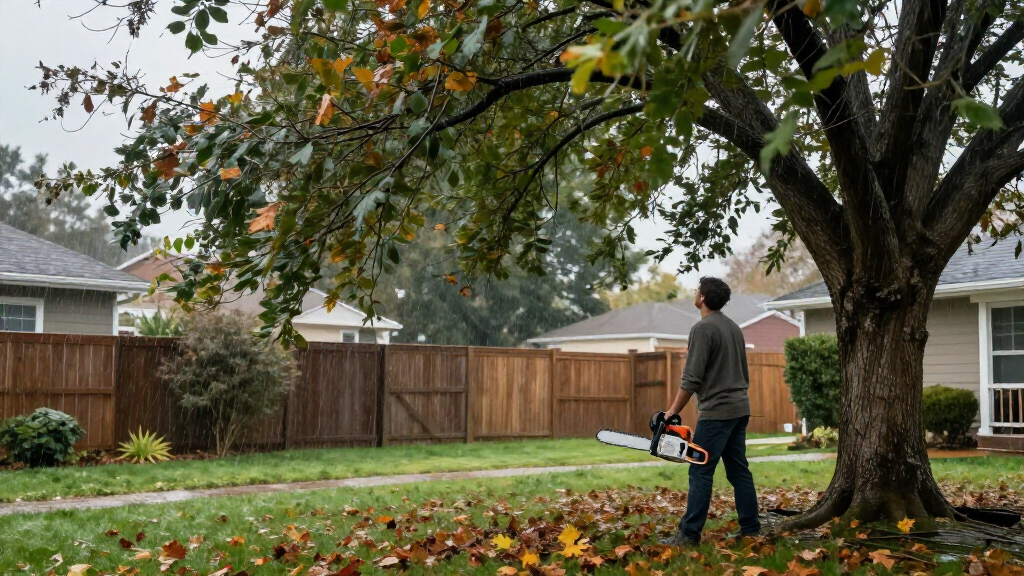
A Family Handyman report explains why trees may face added stress when strong fall winds arrive before deciduous trees lose their leaves: the canopy gives wind more surface to push against, and rain-saturated soil may provide less support for roots. The combination can raise the risk of broken branches, leaning or uprooting, though a tree’s condition and local conditions also matter.
Tree professionals sometimes describe a dense canopy’s effect as a “windsail”: leaves and branches present more area to the wind, increasing pressure on the tree. The source cites research on red maples published in an International Society of Arboriculture journal, which found that crown structure affects the amount of wind load a tree experiences. It also notes that leaves can turn or cluster and branches can bend during gusts, responses that may reduce some pressure.
The report cites an eight-year study of street trees in Rochester, New York, in which most branch failures occurred while trees were in leaf. That finding applies to the trees and study conditions examined; it does not establish that all leafy trees will fail during windstorms. Separately, the U.S. Forest Service says saturated soil and shallow roots can make trees more vulnerable to windthrow, while Penn State Extension notes that wet soil may fail to hold roots securely.
Risk can be greater when a full canopy catches strong wind above ground that has been soaked by heavy or prolonged rain. But decay, root damage, weak branches and earlier storm damage can also affect a tree’s response. The report cautions against treating heavy pre-storm thinning as a general solution: pruning needs depend on the species and the tree’s condition, and major decisions are best made with a qualified arborist.
When Wind Meets Saturated Soil
The seasonal combination matters to people living near mature trees because wind and rain can create different pressures at the same time. A canopy exposed to gusts may load the trunk and branches, while wet ground can reduce the support around roots. This helps explain why a tree may lean or fall even when it has not suffered obvious damage to its branches.
That explanation is useful for judging conditions around a home, but it is not a prediction that a particular tree will fail. Tree species, structure, root health, soil and storm conditions vary. The report supports attention to warning signs and professional assessment where a damaged tree could threaten people or property; it does not offer a universal wind threshold or individual risk calculation.
As an affiliate, we earn on qualifying purchases.
A Risk Before Leaves Fall
Deciduous trees shed their leaves seasonally, but strong winds can arrive before that process is complete. The report identifies this timing as one reason fall storms can expose leafy crowns to wind. It also distinguishes the canopy’s effect from the condition of the soil beneath the tree, which may be saturated after heavy or prolonged rain.
The source material points to several kinds of evidence: research on red maple wind loading, a Rochester street-tree study of branch failures, and guidance from the U.S. Forest Service and Penn State Extension on windthrow and leaning trees. Together, these sources describe plausible risk factors; they do not say that leaves alone cause damage or that every storm will produce the same result.
“Saturated soil and shallow roots can make trees more vulnerable to being uprooted by wind.”
— U.S. Forest Service, as summarized in the Family Handyman report
As an affiliate, we earn on qualifying purchases.
What Tree Risk Depends On
The supplied material does not identify a specific storm, location or individual tree at risk, and it gives no universal wind speed or rainfall threshold for failure. The Rochester finding concerns the street trees studied there, and the red maple research concerns that species; the source does not provide enough detail to apply either result to every tree or setting.
It is also not possible from these sources alone to determine whether a particular tree is structurally sound. Root damage, decay, weak limbs and past storm injuries may change how it responds. A leaning tree or raised soil near its roots can signal movement, but the report advises professional assessment when damage could endanger people or property.
As an affiliate, we earn on qualifying purchases.
After a Windstorm
After a storm, people should stay clear of trees that have newly leaned, lifted soil, cracked limbs or hanging branches. If a damaged tree could reach a home, road or other occupied area, Penn State Extension recommends professional assessment. A qualified arborist can evaluate the tree and advise on appropriate care, including whether pruning is suitable.
The next relevant development for any specific tree is an on-site assessment, not a conclusion based on its leaves alone. The cited report offers seasonal risk factors and warning signs; it does not forecast a particular storm’s damage or say whether an individual tree will remain standing.
As an affiliate, we earn on qualifying purchases.
Key Questions
Why can leaves increase wind stress on a tree?
Leaves and branches give wind more surface to push against, which can increase pressure on the canopy. Leaves may also turn or cluster, and branches can bend in gusts, reducing some pressure.
Does wet soil make trees more likely to fall?
Saturated soil may hold roots less securely, particularly where roots are shallow. The risk for a specific tree depends on its roots, condition, soil and exposure.
Should trees be heavily pruned before a storm?
The report does not recommend heavy pruning as a general storm precaution. Pruning needs vary by species and tree condition; a qualified arborist can advise on major work.
What signs should people watch for after a storm?
Stay clear of trees with new leaning, raised soil, cracked limbs or hanging branches. Seek a professional assessment if a damaged tree could threaten people or property.
Source: rss
Halloween Picks
halloween
As an affiliate, we earn on qualifying purchases.