
If you’re focused on minimizing wood movement, mini splits can be a worthwhile choice for shop climate control. They provide precise temperature and humidity management, helping to prevent warping and cracking. Plus, they’re energy-efficient and easy to install, making them a cost-effective solution over time. While there’s an initial investment, the benefits in wood stability and shop comfort can be significant. Keep exploring to discover how mini splits can best suit your specific workspace needs.

Get tools and workshop supplies delivered free — and shop member deals
- Fast, free delivery on millions of items
- Access to Prime Big Deal Days deals on October 6–7
- Prime Video, Amazon Music and more included
Key Takeaways
- Mini splits provide precise temperature and humidity control, reducing wood movement and warping in woodworking shops.
- They enable targeted zoning, maintaining stable conditions crucial for wood stability.
- Energy-efficient operation lowers long-term costs, making climate control more affordable.
- Easy installation and quiet operation minimize disruption, enhancing workspace comfort.
- Overall, mini splits offer a cost-effective solution for managing wood movement through consistent environmental conditions.
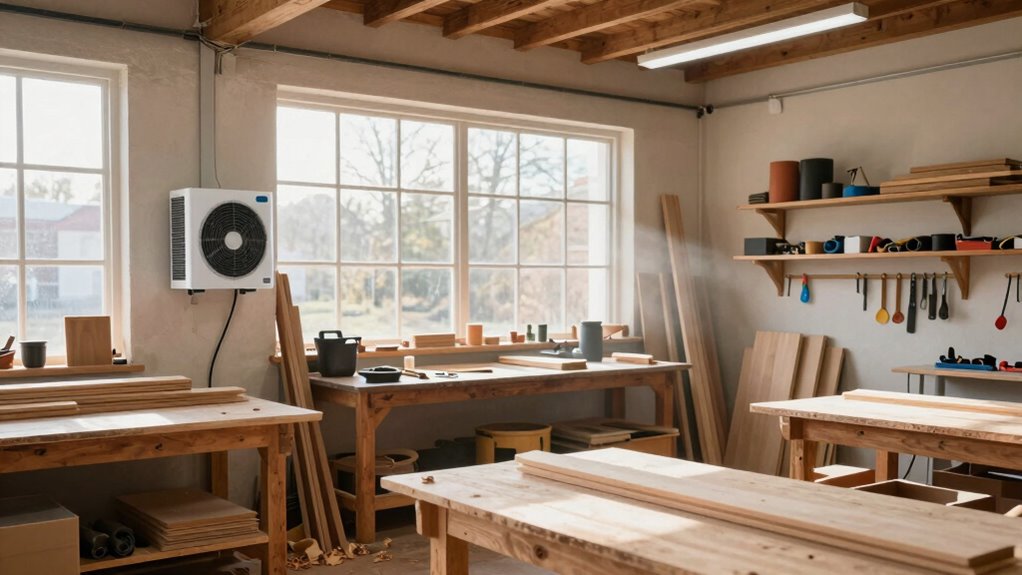
Maintaining a comfortable shop environment can be challenging, especially when outdoor weather fluctuates wildly. When it’s hot and humid one day and cold and dry the next, your woodworking projects can suffer from wood movement, warping, or cracking. That’s where mini splits come into play. These ductless heating and cooling systems are designed to provide precise temperature control, helping to stabilize the environment inside your shop. But before investing, you need to weigh the benefits against the costs.
One of the main advantages of mini splits is their energy efficiency. Unlike traditional HVAC systems, which often waste energy by heating or cooling unoccupied spaces, mini splits allow you to target specific zones. You can set different temperatures for different parts of your shop, reducing unnecessary energy consumption. This precise control not only saves you money on utility bills but also guarantees a more consistent environment for your woodworking. When humidity and temperature stay within a suitable range, wood doesn’t expand or contract as much, leading to more stable projects and less frustration. Proper climate control can significantly impact the quality and longevity of your work.
Additionally, mini splits can help create a stable environment, which is crucial for reducing wood movement and ensuring the longevity of your projects. However, it’s important to reflect on the installation costs associated with mini splits. While these systems are generally easier and cheaper to install than traditional HVAC setups, they still require some upfront investment. You’ll need to purchase the units and have them professionally installed to ensure proper operation and efficiency. This initial expense can be a barrier for some shop owners, especially if you’re working with a tight budget. But, keep in mind, the long-term savings on energy bills and the improved quality of your work can offset these upfront costs over time.
Additionally, mini splits are compact and flexible, making them suitable for shops of various sizes. They don’t require ductwork, which simplifies installation and reduces disruption to your workspace. Plus, many models operate quietly, so they won’t interfere with your focus or concentration while you work on intricate projects.
In the end, whether a mini split is worth it for the sole reason of managing wood movement depends on your specific needs and budget. If controlling climate for better wood stability is a priority and you’re willing to invest in energy-efficient technology, a mini split can be a smart choice. It’s an investment that not only improves your shop’s comfort but also enhances the quality of your craftsmanship over time.
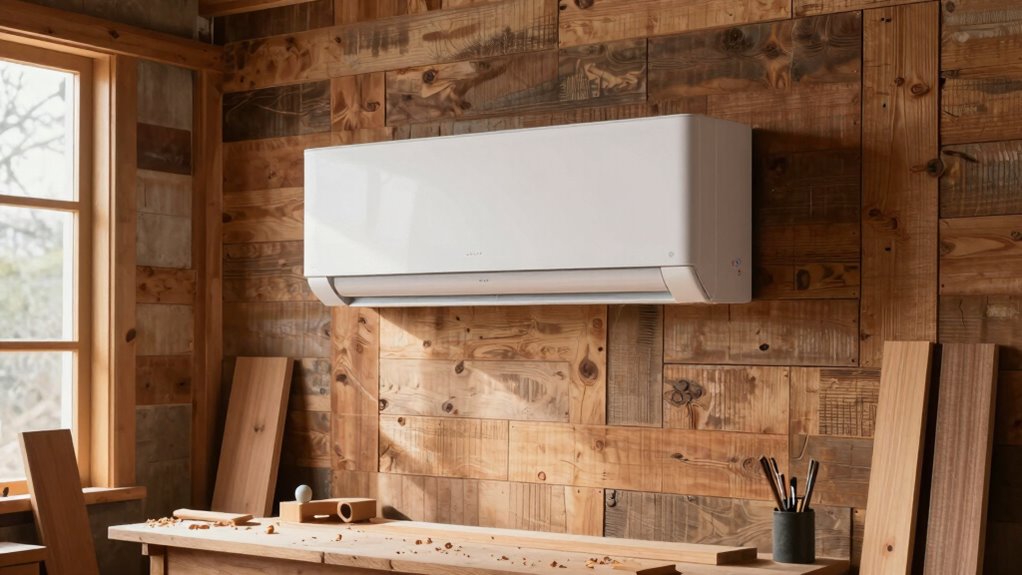
mini split air conditioner for woodworking shop
As an affiliate, we earn on qualifying purchases.
As an affiliate, we earn on qualifying purchases.
Frequently Asked Questions
How Energy-Efficient Are Mini Splits Compared to Traditional HVAC Systems?
Mini splits are more energy-efficient than traditional HVAC systems because they use less energy to heat and cool your space, leading to significant energy savings. You’ll notice lower utility bills and a reduced environmental impact since they produce fewer emissions. Their targeted heating and cooling help maintain consistent temperatures, making them an eco-friendly choice that also benefits your wallet by cutting energy costs over time.
What Is the Typical Installation Cost for a Mini Split System?
The typical installation cost for a mini split system usually falls between $1,500 and $3,500, depending on your shop’s size and specific needs. Cost considerations include the unit’s capacity and complexity of installation. You might face installation challenges, especially if your shop has limited space or difficult access, which could increase labor costs. It’s wise to get multiple quotes and consider long-term energy savings when planning your investment.
Can Mini Splits Effectively Dehumidify a Woodworking Shop?
Yes, mini splits can effectively dehumidify your woodworking shop. They provide humidity control by removing excess moisture from the air, which helps manage moisture and prevent wood warping or cracking. Unlike traditional systems, mini splits are energy-efficient and adjustable, giving you precise moisture management. By maintaining a consistent, ideal humidity level, they guarantee your wood stays stable, making them a smart investment for any serious woodworker.
Are Mini Splits Suitable for Large or Multi-Zone Workshop Spaces?
Think of mini splits as the versatile conductors of your workshop symphony. They’re well-suited for large or multi-zone spaces, offering zoning flexibility that makes temperature control feel like a tailored suit. While their space requirements are minimal, they can efficiently handle multiple zones, ensuring each area gets just the right climate. If you need adaptable, targeted climate control for a sprawling workshop, mini splits are an excellent choice.
What Maintenance Is Required to Keep Mini Splits Functioning Properly?
To keep your mini split functioning properly, you need to regularly clean the filters and check refrigerant levels. Filter cleaning should be done monthly or as needed, depending on usage, to guarantee good airflow and efficiency. Also, have a professional inspect refrigerant levels annually to prevent leaks and maintain ideal cooling performance. These simple maintenance steps help extend the life of your system and keep your workspace comfortable.
ductless mini split heating cooling system
As an affiliate, we earn on qualifying purchases.
As an affiliate, we earn on qualifying purchases.
Conclusion
If you think controlling shop climate is just a small perk, think again—mini splits are like having a personal climate wizard at your beck and call! They don’t just keep your space comfortable; they banish wood warping and cracking like magic. Ignoring this game-changing technology could turn your woodworking paradise into a warped disaster zone. Invest in a mini split now, and save yourself from a woodworking apocalypse—your future projects will thank you!
As an affiliate, we earn on qualifying purchases.
energy-efficient mini split unit
As an affiliate, we earn on qualifying purchases.
As an affiliate, we earn on qualifying purchases.
Fall Picks
fall essentials
As an affiliate, we earn on qualifying purchases.