
Choosing between thin kerf and full kerf blades affects your saw’s performance, speed, and cut quality. Thin kerf blades are lighter, cut faster, and produce less waste, making them ideal for quick jobs and conserving power. Full kerf blades are thicker, more stable, and better suited for heavy-duty tasks needing extra durability. Understanding these tradeoffs helps you pick the right blade for your project; explore further to discover how to optimize your saw’s capabilities.

Get business pricing on tools and workshop supplies
- Business-only prices and quantity discounts
- Tax-exempt purchasing
- Multiple users, one account, clear invoices
Key Takeaways
- Thin kerf blades cut faster, produce less waste, and require less power, ideal for efficiency and material conservation.
- Full kerf blades offer greater stability, durability, and are better suited for cutting dense or tough materials.
- Thin kerf blades may be less stable and wear out quicker, needing more frequent replacements.
- Full kerf blades provide precise, stable cuts but generate more waste and demand more power.
- The choice depends on balancing speed, material type, saw power, and desired cut quality.
As an affiliate, we earn on qualifying purchases.
What Are Thin Kerf and Full Kerf Blades, and How Do They Differ?

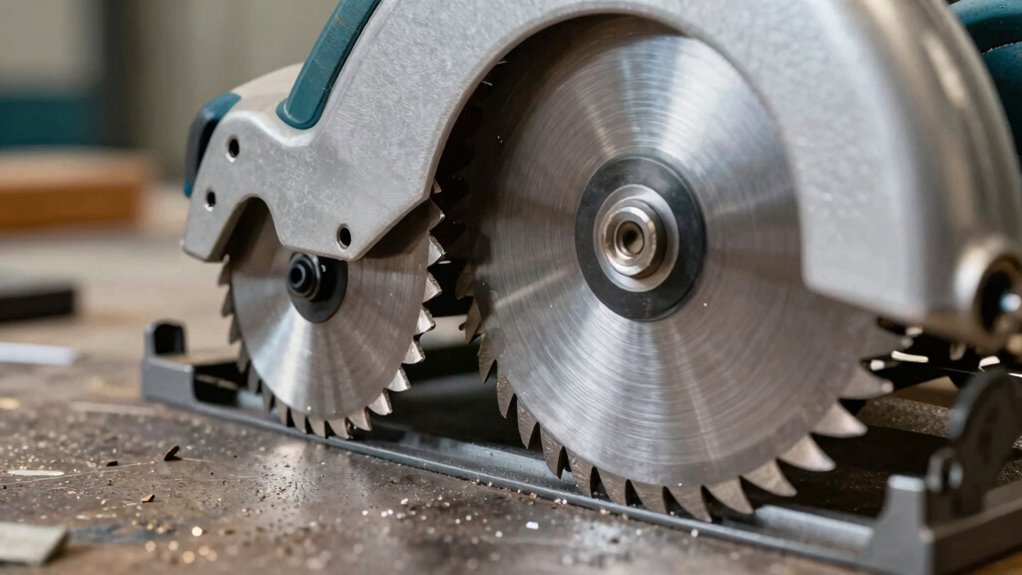
Thin kerf and full kerf blades are two common types of saw blades used in woodworking and cutting applications. The main difference lies in blade thickness, which directly affects the kerf width—the amount of material removed during a cut. A thin kerf blade has a narrower blade thickness, typically around 0.045 inches, resulting in a slimmer kerf width. This reduces material waste and requires less power from your saw. In contrast, a full kerf blade is thicker, usually about 0.125 inches, producing a wider kerf width that provides increased stability and durability. Your choice depends on the project’s precision needs, the material’s density, and the power available to your saw. Both types serve specific purposes depending on your cutting requirements. Additionally, the cut quality can vary between the two, with thin kerf blades often producing cleaner cuts when used correctly. Selecting the appropriate blade type can also influence the blade lifespan, especially under heavy-duty use. When considering blade selection, it’s helpful to understand how kerf width impacts overall cutting performance and material savings. For example, the material removal rate can be significantly affected by the blade type chosen, influencing your workflow and efficiency. Moreover, understanding the cutting efficiency helps in choosing the right blade for different tasks.
As an affiliate, we earn on qualifying purchases.
How Do Thin Kerf Blades Speed Up Cuts and Reduce Waste?

Because they remove less material during each cut, thin kerf blades allow you to make faster cuts while conserving energy. The reduced blade thickness means less resistance, which speeds up cutting and minimizes strain on your saw. Additionally, thinner blades help improve cutting accuracy by reducing wobble. Here’s how they make a difference:
Thin kerf blades cut faster, save energy, and improve accuracy by reducing resistance and wobble.
- Faster cuts – Less material removal means quicker progress through your workpiece.
- Less waste – Narrower kerf preserves more material, reducing scrap.
- Lower power demand – The saw works more efficiently, conserving energy and prolonging motor life.
- Enhanced precision – Thin blades reduce vibration, resulting in cleaner, more accurate cuts.
woodworking saw blades for heavy-duty use
As an affiliate, we earn on qualifying purchases.
As an affiliate, we earn on qualifying purchases.
Are Full Kerf Blades More Durable and Stable for Heavy Duty?

Full kerf blades are generally more durable and stable for heavy-duty tasks because their wider cutting edges provide greater support and resistance against bending or flexing under load. The increased blade thickness enhances robustness, reducing vibrations that can compromise cutting accuracy. This stability allows you to push through tougher materials without worrying about blade deflection. The thicker kerf also minimizes wobbling, ensuring cleaner, more precise cuts. Additionally, choosing the right blade can impact cutting efficiency and overall jobsite safety. Here’s a quick comparison:
| Feature | Thin Kerf Blade | Full Kerf Blade |
|---|---|---|
| Blade Thickness | Slimmer | Thicker |
| Cutting Accuracy | Slightly less | Higher |
| Durability & Stability | Moderate | Superior |
Furthermore, the blade support provided by full kerf blades can help reduce tool wear and prolong the lifespan of your saw.
best thin kerf blades for precision cuts
As an affiliate, we earn on qualifying purchases.
As an affiliate, we earn on qualifying purchases.
Which Blade Is Best for Your Jobsite: Thin or Full Kerf?

Choosing the right blade for your jobsite depends on the specific demands of your project. If you prioritize speed and reduced material waste, a thin kerf blade might be your best choice. For durability and stability, especially with tough cuts, a full kerf blade could be better. Consider these factors:
- Blade maintenance needs—full kerf blades typically last longer but may require more effort to maintain.
- Cost considerations—thin kerf blades are usually cheaper upfront but might need replacing sooner.
- Material type—thick blades handle dense materials better, while thin blades excel with softer woods.
- Cut precision—thin kerf blades often provide cleaner cuts with less tear-out.
- Understanding kerf width is essential for selecting the appropriate blade based on your project needs. Additionally, the cutting speed can be affected by the kerf type, influencing overall efficiency on the jobsite. A clear grasp of blade thickness can also help optimize your tool’s performance and safety. Recognizing how blade compatibility impacts your saw’s operation can prevent potential issues during cutting. Moreover, choosing the correct kerf type can also reduce the overall material waste, leading to cost savings and more efficient project execution.
What Tradeoffs Should You Know About When Choosing a Blade?

When selecting a saw blade, you need to weigh the tradeoffs between different features and performance characteristics. Blade maintenance is a key factor—some blades require more frequent sharpening or cleaning, which can affect your workflow. Cutting accuracy is also essential; a blade with the right tooth design and sharpness ensures cleaner cuts and reduces errors. Full kerf blades tend to be more durable but may generate more waste and require more power, while thin kerf blades cut faster with less material removal, but may be less stable. Consider your saw’s power, the materials you work with, and how much time you’re willing to spend on maintenance. Balancing these tradeoffs helps you choose a blade that aligns with your project needs and keeps your cuts precise. Additionally, understanding the different blade types, such as vetted options, can help you select a blade that offers the best performance for your specific application. Being aware of cutting efficiency and its impact on project timelines can further inform your selection process. Moreover, considering the historical significance of different blade technologies can provide insights into their durability and performance evolution over time.
How to Pick the Right Blade to Maximize Your Saws’ Performance

Selecting the right saw blade can substantially boost your tool’s performance and the quality of your cuts. To do this, focus on key factors:
- Blade materials – Choose high-quality steel or carbide-tipped blades for durability and cleaner cuts.
- Cutting precision – Look for blades with sharp teeth and proper tooth count to achieve smooth, accurate cuts.
- Blade width – Match the kerf size to your saw’s capacity for *ideal* performance.
- Blade speed compatibility – Ensure the blade’s RPM ratings align with your saw for safe operation and *maximum* efficiency.
Frequently Asked Questions
How Does Blade Thickness Impact Cut Quality and Finish?
Blade thickness directly impacts cut quality and finish. A thinner blade typically provides better cut precision because it creates less kerf, resulting in smoother, cleaner edges. You’ll notice a finer blade finish on your cuts, which reduces the need for sanding or finishing work. Thinner blades also reduce material waste and cut more efficiently, making them ideal for achieving high-quality results in your projects.
Can Using a Thin Kerf Blade Cause More Blade Deflection?
You might notice that thin kerf blades can cause more blade deflection, especially when cutting dense materials. With only about 0.06 inches of blade thickness, they’re less rigid, making them more susceptible to bending or flexing under pressure. This reduced blade rigidity means material flexibility can amplify deflection, leading to less precise cuts. So, if you’re working on accuracy, consider how blade thickness impacts stability during your cuts.
Are There Safety Concerns With Thin Kerf Blades?
Yes, there are safety concerns with thin kerf blades. Since they remove less material, they can be less stable, potentially increasing the risk of blade deflection or wobbling if not compatible with your saw. Always check blade compatibility to guarantee proper fit. Be cautious of jobsite hazards, as these blades might require extra attention during operation to prevent accidents or kickback. Proper handling and maintenance minimize safety risks.
How Does Blade Material Affect Lifespan and Performance?
While it’s tempting to overlook, consider how blade material composition subtly influences blade durability and performance. Steel blades tend to offer reliable longevity, whereas carbide-tipped blades excel in maintaining sharpness longer, enhancing cutting precision. When you choose a blade based on its material, you’re effectively balancing performance with lifespan. This strategic decision guarantees your saw operates smoothly, reduces frequent replacements, and keeps your worksite efficient and well-maintained.
Is a Full Kerf Blade Better for Certain Types of Cuts?
A full kerf blade is better for precise cuts, especially when blade alignment is critical. It requires more saw horsepower to handle the increased material removal, but it offers more stability and cleaner cuts. If you’re working with dense materials or need accuracy, go for a full kerf blade. Just guarantee your saw can supply enough power, and keep the blade aligned properly for peak results.
Conclusion
Choosing between thin kerf and full kerf blades depends on your project needs. Remember, a wise man once said, “You get what you pay for.” If speed and minimal waste matter most, thin kerf blades are your best bet. But for heavy-duty tasks requiring durability, full kerf blades might serve you better. Consider your saw’s capacity and your workload to make the right choice—your tools will thank you.
Fall Picks
fall essentials
As an affiliate, we earn on qualifying purchases.