
TL;DR
According to Hunker, a YouTube creator known as Woodworking Skill used reclaimed pallets to build a short picket fence attached to freestanding planter boxes. The design is suited to a ground-level porch or patio, not a yard fence or raised-deck railing, and the pallets’ wood and treatment should be checked before reuse.
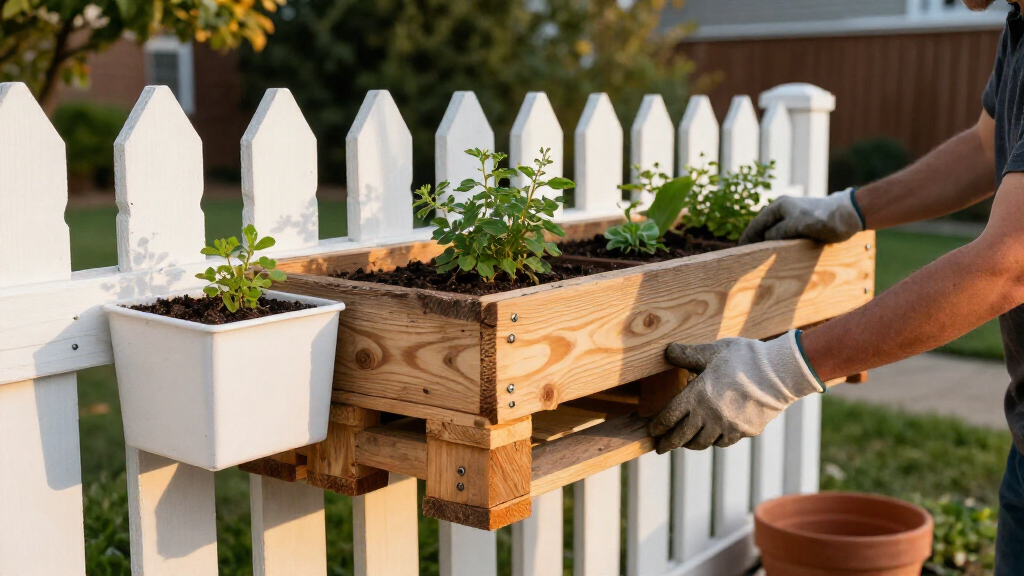
In a project described by Hunker, Woodworking Skill, a YouTube creator, made a short picket fence for a ground-level porch by cutting reclaimed pallets into fence sections and fastening them to planter boxes built from pallet wood. The design offers a way to reuse suitable pallets while adding planting space, but its short sections and freestanding supports make it a porch or patio feature rather than a conventional yard fence.

Get business pricing on tools and workshop supplies
- Business-only prices and quantity discounts
- Tax-exempt purchasing
- Multiple users, one account, clear invoices
Hunker reports that the pallets used for the project were about 4 feet wide and made from blemish-free fir or pine, with 1-by-4 boards attached to 2-by-4 stringers. The creator cut each pallet down the middle with a circular saw, trimmed the lower boards and formed two sections with pickets about 2 feet long. He cut triangular points into the picket tops.
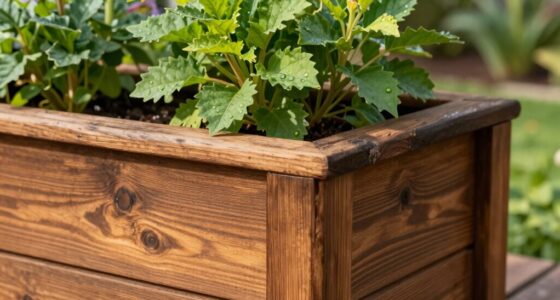
For the supports, the article says he cut leftover pallet boards into uniform pieces about 6 to 8 inches long and nailed them to four-foot corner sections to make the sides of rectangular planter boxes. He joined the four sides with a nail gun, added 1-by-2 trim along the top and bottom, then screwed wooden holders onto opposite sides of each box. The fence sections fastened to those holders.
According to Hunker, the creator applied a clear spray finish to the wood. The article says a liner can also be added inside the boxes before planting. The finished arrangement sits on a concrete slab without separate fence posts; the planter boxes provide the support described for this installation.
Turn Pallets Into a Porch Fence
Reclaimed pallet boards become short picket sections attached to freestanding planter boxes. The design is for a ground-level porch or patio border.
How the build works
The measurements describe one project; pallet sizes and condition can vary.
The creator split each pallet down the middle, trimmed the lower boards and shaped pointed picket tops.
Pallet boards formed rectangular boxes, joined with a nail gun and finished with top and bottom trim.
Wooden holders screwed to opposite sides of each box hold the fence sections in place.
Choose the right setting
The planter boxes support the short sections on a hard surface.
- Ground-level porch or patio
- Decorative border with planting space
- Concrete slab installation
- Enclosing a yard as shown
- Railing on a raised porch or deck
- Use as a safety barrier
Check materials before reuse
A clean appearance does not establish that reclaimed wood is safe or suitable for planters.
- Inspect pallet condition and treatment markings.
- Check the wood, dimensions and fasteners; adapt cuts to the actual boards.
- Consider a liner inside the boxes before planting.
- For a lawn or garden edge, plan for suitable posts and secure installation.
A Porch Border With Planting Space
Hunker presents the project as combining two functions in a compact footprint: a decorative border and containers for plants. Reusing pallet boards can also give serviceable wood another purpose, though the suitability of any particular pallet depends on its condition, wood type and treatment. The design is most relevant to people looking for a low boundary around a porch, patio or walkway rather than a barrier intended to enclose a yard.
The distinction matters for placement and safety. The pickets shown in the project are short, and the planter boxes rest on a hard surface. Hunker says the sections are too short for a yard fence or a railing on a raised porch or deck. Anyone adapting the idea for a lawn or garden border would need a different support arrangement, including posts buried in the ground; the article mentions 4-by-4 material found on heavy-duty pallets as one possible source.
Products Worth Considering

Samsung 55-Inch QN70H Neo QLED 4K Smart TV (2026)

Shark IY143H Cordless Pet Stick Vacuum

Google Nest Learning Smart Thermostat (3rd Gen, Stainless Steel) Bundle with 3 Temperature Sensors and Matte White Wall Plate
As an affiliate, we earn on qualifying purchases.
How the Pallet Build Is Sized
The design depends on the dimensions and construction of the pallets used. Hunker’s example used pallets roughly 4 feet wide, with boards and stringers that could be cut into pickets, box sides and trim. Those measurements are specific to the pallets in the project, not a standard guarantee: pallet sizes, lumber dimensions and condition can vary.
The Hunker article notes that about 400 million wooden pallets are made in the United States each year. That figure is a broad production estimate, not a measure of how many pallets are available for reuse or suitable for a home project. The article also says pallet wood may be softwood or hardwood and warns that some pallets may have been treated with dangerous pesticides. The project’s result does not establish that other pallets are safe to handle or use for planters.
Check Pallet Wood Before Use
Hunker’s project description does not identify a treatment mark or testing process for the pallets, and it does not establish that all reclaimed pallets are safe for planting projects. The article says pallet quality varies and warns that some wood may have been treated with dangerous pesticides. It describes the finish only as a clear spray finish; the product, weather resistance and suitability for contact with soil are not stated.
Dimensions and construction will also vary between pallets, so the stated cuts may not fit a different supply. The article provides no load rating, anchoring details or long-term durability results for the planter-supported fence. It should not be treated as a guard or railing, especially beside a raised porch or deck.
Plan for the Site and Materials
Before copying the design, identify the pallet wood and inspect it for damage, contamination and treatment markings; do not assume that a pallet is suitable because it looks clean. Check the dimensions and fasteners, then adapt the cut list to the actual boards. Hunker says a liner can be added to the boxes; choose materials appropriate for the intended exposure to water and weather.
For a ground-level concrete porch, the project described by Hunker uses the boxes to support the short sections as a decorative feature. For a lawn or garden edge, plan for suitable posts and secure installation rather than relying on boxes resting on the ground. The article does not provide a tested construction plan, permit guidance or a schedule for future updates, so those details remain dependent on the site and materials.
Key Questions
Can this pallet fence be used as a yard fence?
Not in the form shown. Hunker describes pickets about 2 feet long and planter boxes resting on a concrete surface. A lawn or garden installation would need appropriate posts and a different support plan.
How are the planter boxes attached to the fence?
According to Hunker’s project description, wooden holders are screwed onto opposite sides of each box, and the fence sections are fastened to those holders. The boxes support the sections in the porch design.
Are all used pallets safe for this project?
No such assurance is given. Hunker says pallet wood and treatments vary, and warns that some pallets may have been treated with dangerous pesticides. Check the material and its markings before reuse.
Can the design be used as a railing on a raised deck?
Hunker says the sections are too short for a railing on a raised porch or deck. The article presents the build as a decorative feature for a ground-level porch or similar space.
Source: hunker.com