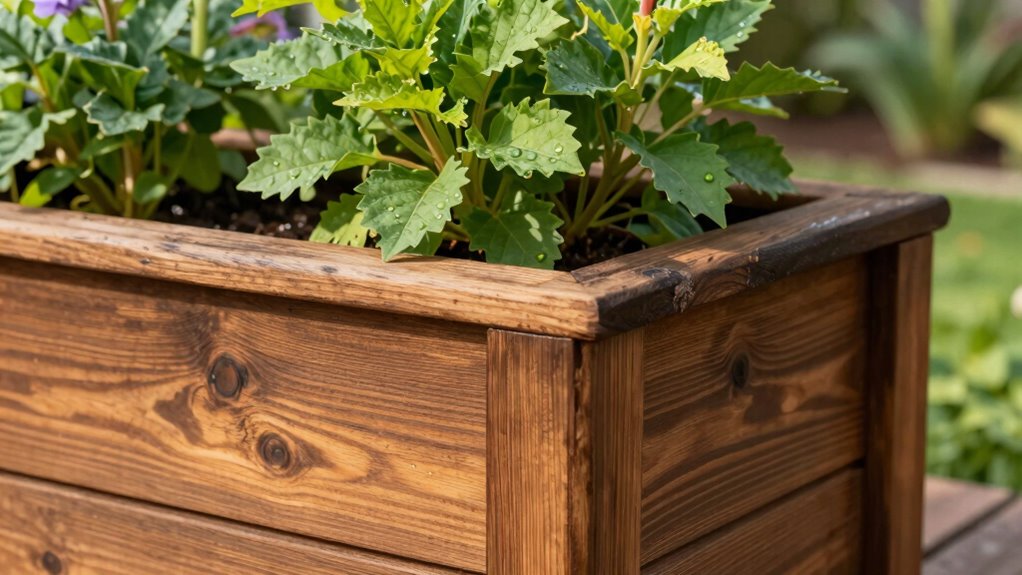

To build planter boxes that last longer than one season, start with rot-resistant wood like cedar or redwood. Make sure you drill drainage holes and layer gravel for effective water management. Choose a quality soil mix with potting soil, compost, and perlite to support healthy plant growth. Regularly inspect your planters for wear and maintain the wood and soil to prolong their lifespan. Stick around to discover more tips for creating durable and beautiful planter boxes.

Get business pricing on tools and workshop supplies
- Business-only prices and quantity discounts
- Tax-exempt purchasing
- Multiple users, one account, clear invoices
Key Takeaways
- Select rot-resistant woods like cedar or redwood to enhance durability against weather elements.
- Design planter boxes with proper height and width for both aesthetic appeal and ease of gardening.
- Incorporate drainage solutions, such as drilled holes and gravel layers, to prevent waterlogging and root rot.
- Use a well-balanced soil mix of potting soil, compost, and perlite for optimal plant growth and aeration.
- Regularly inspect and maintain planter boxes by tightening screws and refreshing soil to extend their lifespan.
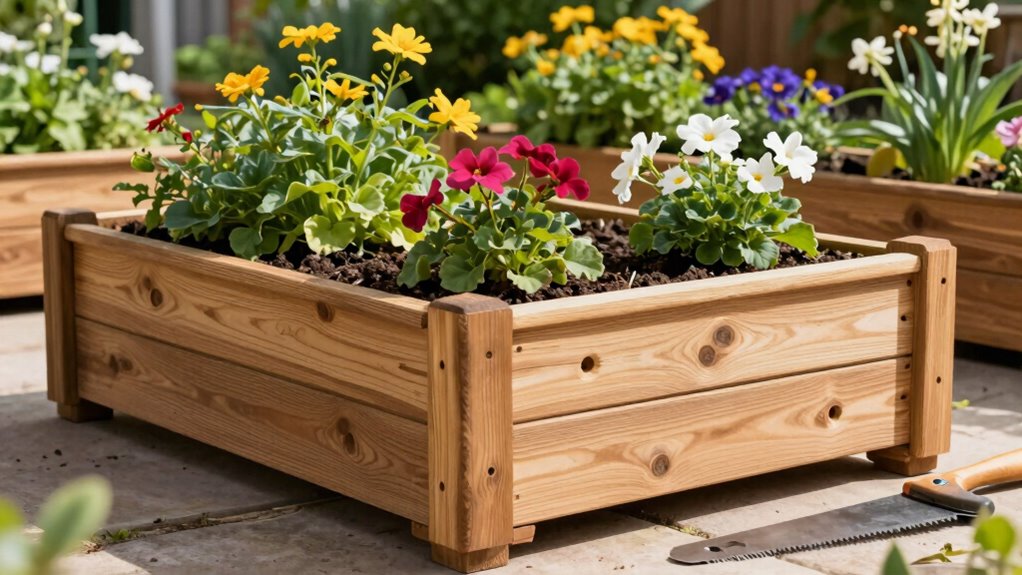
Building planter boxes is a rewarding way to enhance your garden and showcase your favorite plants. When you decide to take on this project, you need to start with good wood selection. Choose rot-resistant options like cedar or redwood, as these will stand up to the elements much better than untreated lumber. If you’re on a budget, pressure-treated wood can also work, but remember to line the interior with a barrier to protect your plants from chemicals.
Once you’ve got your wood, think about the design styles that suit your garden. Whether you prefer a rustic look or something more modern, you can easily customize your planter box to fit your aesthetic. Consider height and width as well; a taller box can make gardening easier on your back, while wider boxes provide more planting space.
Consider the design of your planter box to match your garden style; height and width can enhance both aesthetics and gardening ease.
Next up is drainage solutions, an essential step that can’t be overlooked. You want your plants to thrive, and good drainage is key to preventing waterlogged roots. Drill holes in the bottom of your boxes, and consider adding a layer of gravel before filling them with soil. This guarantees excess water can escape, helping your plants flourish. Additionally, using permeable materials can further aid in water management and soil health. Incorporating proper drainage techniques can significantly improve the longevity of your planter boxes by preventing root rot and structural damage.
Speaking of soil choices, the right soil mix is critical for healthy growth. A blend of potting soil, compost, and perlite will provide your plants with the nutrients they need while guaranteeing proper aeration. It’s a good idea to periodically check the soil quality and replenish nutrients as necessary.
Finally, incorporating sustainable practices such as using eco-friendly sealants and locally sourced materials can extend your planter box’s lifespan and reduce environmental impact. Finishing techniques can elevate your planter boxes and extend their lifespan. Consider applying a non-toxic sealant or stain to protect the wood from moisture and UV rays. This not only enhances durability but also adds a polished look to your boxes.
Finally, don’t forget about maintenance tips. Regularly inspect your planter boxes for signs of wear or damage. Tighten any screws, replace rotting wood, and refresh the soil as needed. With a bit of upkeep, your planter boxes can last longer than just one season.
As an affiliate, we earn on qualifying purchases.
Frequently Asked Questions
What Types of Plants Are Best for Long-Lasting Planter Boxes?
For long-lasting planter boxes, focus on herb selection and perennial choices. Herbs like rosemary, thyme, and oregano thrive and can be harvested year after year. Additionally, consider perennials like lavender and chives, which return each season. These plants not only provide beauty but also offer practical benefits for your kitchen. By choosing these durable options, you’ll enjoy vibrant growth and flavor without needing to replant every year. Happy gardening!
How Do I Prevent Pests in My Planter Boxes?
Ever wondered how to keep your plants thriving without pests ruining the fun? To prevent pests in your planter boxes, choose pest resistant plants that naturally repel unwanted visitors. Consider incorporating herbs like basil or marigolds, which deter insects. You can also use natural repellents, such as neem oil or garlic spray, to keep pests at bay. Regularly check your plants for signs of trouble, and you’ll maintain a healthy garden.
Can I Use Recycled Materials for Planter Boxes?
Absolutely, you can use recycled materials for your planter boxes! Recycled wood works great for a rustic look, while metal containers can add a modern touch. Consider plastic alternatives like repurposed bottles or crates for an eco-friendly option that’s lightweight and durable. Just make sure any materials are safe for plants, and you’ll create beautiful, sustainable planter boxes that not only look good but help the environment too!
How Should I Store Planter Boxes During Winter?
To store your planter boxes during winter, clean them thoroughly and let them dry completely. For wooden boxes, apply a protective sealant to prevent moisture damage. Use a sheltered area, like a shed or garage, to keep them safe from harsh weather. If you’re short on space, stack smaller boxes inside larger ones. Regular winter maintenance will help prolong their life, ensuring you’re ready for spring planting without worry.
What Are the Best Soil Types for Planter Boxes?
The best soil types for planter boxes often contain a mix of 60% topsoil, 30% compost, and 10% perlite or vermiculite. Did you know that proper soil composition can increase plant growth by up to 30%? For effective drainage solutions, make certain your mix allows excess water to escape while retaining moisture. This balance keeps roots healthy and promotes robust growth, so your plants thrive in their cozy boxes.
drainage gravel for planter boxes
As an affiliate, we earn on qualifying purchases.
As an affiliate, we earn on qualifying purchases.
Conclusion
So, you’ve built your sturdy planter boxes, only to find out they last longer than your enthusiasm for gardening. Isn’t it ironic? You’ve crafted a lasting home for your plants, but your green thumb seems to vanish each season. Embrace the irony, though! With a little care and creativity, those robust boxes can be a lasting reminder of your gardening ambitions. Who knows? They might just inspire you to dig in and grow something beautiful next year!
outdoor wood sealant for planters
As an affiliate, we earn on qualifying purchases.
As an affiliate, we earn on qualifying purchases.
As an affiliate, we earn on qualifying purchases.
Evergreen bestsellers Picks
bestsellers
As an affiliate, we earn on qualifying purchases.