
TL;DR

Get business pricing on tools and workshop supplies
- Business-only prices and quantity discounts
- Tax-exempt purchasing
- Multiple users, one account, clear invoices
Ideal Home’s report recommends six habits for indoor laundry drying: remove extra water with a suitable spin cycle, leave space between garments, consider a heated airer and dehumidifier, position the rack for airflow, and ventilate the room. These are practical recommendations, not a guarantee against condensation or mould; results depend on the home, weather and drying setup.
Ideal Home has published six recommendations for drying laundry indoors during cold or wet weather, advising households to reduce the water left in clothes, allow airflow around garments and remove moisture from the room. The guidance matters because wet washing releases moisture indoors, which can contribute to condensation when ventilation is limited; the article does not claim its steps will prevent damp or mould in every home.
The first two recommendations focus on how laundry is prepared and arranged. Ideal Home advises using an extra spin cycle before hanging clothes, provided the selected spin speed is suitable for the items. It says this can reduce the amount of water left in garments and may shorten drying time, particularly for heavier items such as towels, jeans and bedding.
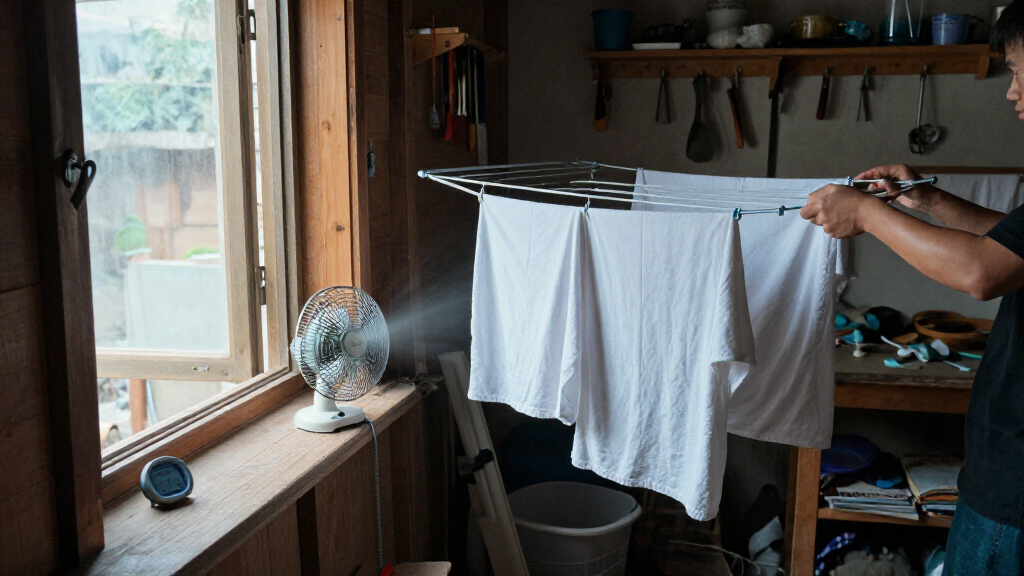
The report also recommends leaving space between clothes on the rack rather than loading it as tightly as possible. Brabantia laundry expert Lauren Roelofs says airflow between garments can help them dry more evenly. The article suggests spreading out sleeves, opening shirts and avoiding folded-over trouser legs; heavier items can be turned during drying to reduce the chance of damp patches.
For equipment and room setup, the report suggests considering a heated clothes airer and pairing it with a dehumidifier. Lakeland buying lead Catrin Parry says a cover for a heated airer can help retain warm air and may reduce drying time by a couple of hours, depending on the load and conditions. Parry also says a dehumidifier can remove excess moisture from the air. Ideal Home’s remaining tips are to place the rack where air can circulate, rather than tight against a wall, and to ventilate the room.
Reducing Moisture From Indoor Laundry
Indoor drying is a practical option when outdoor drying is unavailable, but the water in wet clothes does not disappear: it evaporates into the surrounding air. In a room with limited ventilation, that added moisture can contribute to higher indoor humidity and condensation. The advice therefore combines two approaches: help garments dry with more airflow and less retained water, and manage moisture in the room through ventilation or a dehumidifier.
The recommendations are most useful as habits to test alongside the conditions in a particular home. A dehumidifier or heated airer may add equipment and running costs, while opening a window may not be practical in every room or in cold weather. The article offers no measurements comparing the options and does not establish that any one measure prevents mould. Persistent condensation or visible mould may require attention beyond changing laundry routines.
Products Worth Considering

Philips Hue Festavia 130-Foot Indoor/Outdoor Smart String Lights, 500 LEDs

eufy Security E30 4K Indoor Camera, 2-Pack

Sony BRAVIA 5 85-Inch Mini LED 4K HDR Smart TV (K-85XR50)
As an affiliate, we earn on qualifying purchases.
Why Indoor Drying Adds Humidity
The report frames its advice around cold and wet weather, when outdoor drying may be less feasible. It says households without a tumble dryer, or those limiting its use, may rely more heavily on clothes airers. The central point is that moisture from wet washing enters the home unless it is carried away through ventilation or removed from the air.
Ideal Home presents the six steps as recommendations from its own reporting and named laundry specialists, rather than as a formal building-health standard. It also mentions heated airers and dehumidifiers, but the product descriptions and performance figures in the source are not independent guidance for every household. Drying times and moisture levels can vary with the load, room size, airflow, temperature and appliance used.
“One of the simplest ways to speed things up is to avoid overcrowding your drying rack. Leaving space between garments allows air to circulate, helping clothes dry more evenly.”
— Lauren Roelofs, laundry expert at Brabantia, as quoted by Ideal Home
Results Depend on Home Conditions
The supplied report does not give a publication date, measured humidity readings or a controlled comparison of the six practices. It is therefore unclear how much each step changes drying time or condensation risk in a particular home. The claimed reduction of a couple of hours for a heated-airer cover is explicitly dependent on the load and conditions.
The article also does not set out a threshold for when ventilation alone is insufficient, or assess the cost and energy use of running heated airers and dehumidifiers. It presents ways to manage moisture, not a diagnosis or a guarantee that damp and mould will be avoided. The amount of moisture released, room ventilation and existing building conditions all remain relevant.
How Households Can Apply the Advice
The report does not announce a follow-up study or policy change. Households can apply its suggestions by checking the washing machine’s suitable spin setting, spacing items across the rack and placing it where air can move around it. Ventilating the room and, where appropriate, using a dehumidifier may help manage moisture; any appliance should be used according to its manufacturer’s instructions.
Readers should judge whether the routine is helping by paying attention to drying time and signs of condensation, while recognising that the article supplies no formal measurement method. If damp or mould persists, laundry practices may not be the only cause, and the report does not provide a building assessment. Further details on the effectiveness of each measure would require evidence beyond the recommendations in the supplied article.
Key Questions
What are the six recommendations for drying laundry indoors?
Ideal Home recommends an extra suitable spin cycle, leaving space between garments, considering a heated airer, pairing the airer with a dehumidifier, positioning the rack for airflow and ventilating the room.
Why leave space between clothes on an airer?
Brabantia expert Lauren Roelofs says gaps let air circulate, which can help garments dry more evenly. The report also advises spreading out sleeves and turning heavier items during drying.
Does a heated airer remove moisture from the room?
Not by itself, according to the report. A heated airer warms and dries laundry, while a dehumidifier is intended to remove moisture from the air. Results vary with the room and load.
Will these steps prevent mould?
The report does not guarantee that they will. It says moisture from laundry can contribute to condensation and offers ways to manage it, but mould risk depends on wider home conditions, including ventilation and existing damp.
Source: idealhome.co.uk