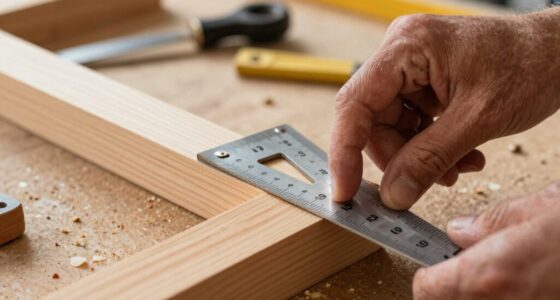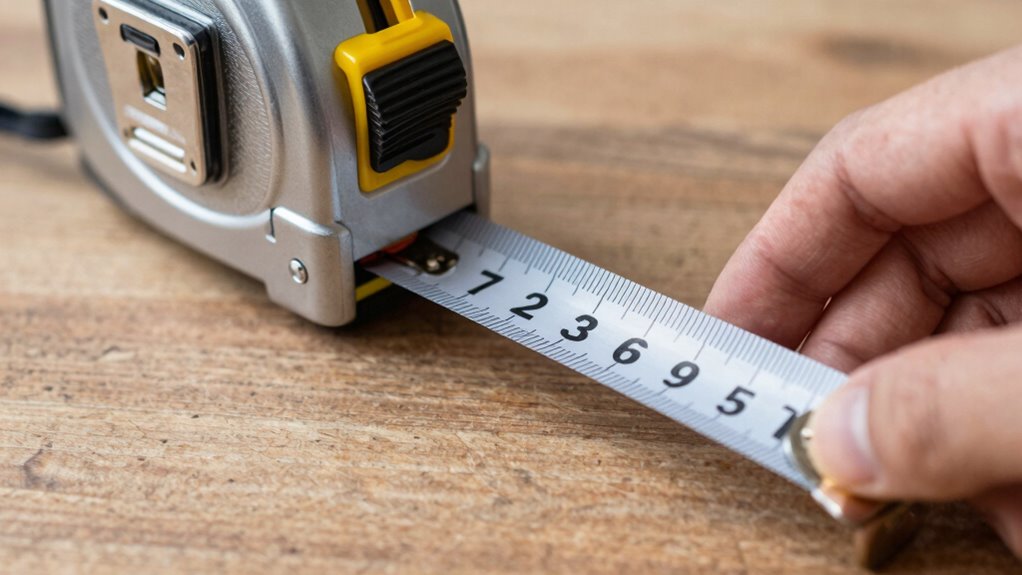
To quickly master fractions on a tape measure, focus on understanding how fractional markings are spaced between inch and centimeter lines. Recognize common divisions like halves, quarters, eighths, and sixteenths, and practice converting these into decimals for accuracy. Avoid mistakes by double-checking your measurements and familiarizing yourself with measurement conventions. With consistent practice and the right tools, you’ll become confident in reading fractions swiftly and precisely. Keep reading to discover more helpful tips and tricks.
Key Takeaways
- Familiarize yourself with fractional markings and their positions between inch and centimeter marks.
- Visualize fractional divisions by understanding their placement relative to major inch marks.
- Practice converting fractions to decimals for quicker, more accurate readings.
- Develop consistent measurement habits by slow, careful readings and double-checking.
- Use high-contrast tools and digital resources to enhance fraction recognition and measurement speed.

Digital Tape Measure 16 Ft – 6 Metric and Imperial Units, Easy Read Digital Measuring Tape Retractable with Fractions 1/16, Rechargeable Measurement Tool, for Distance/Area/Volume, Yellow
DATA SYNC DISPLAY TECHNOLOGY – The DT20 Digital Tape Measure is the world's most productive tape measure delivering…
As an affiliate, we earn on qualifying purchases.
As an affiliate, we earn on qualifying purchases.
How to Read Fractions on a Tape Measure
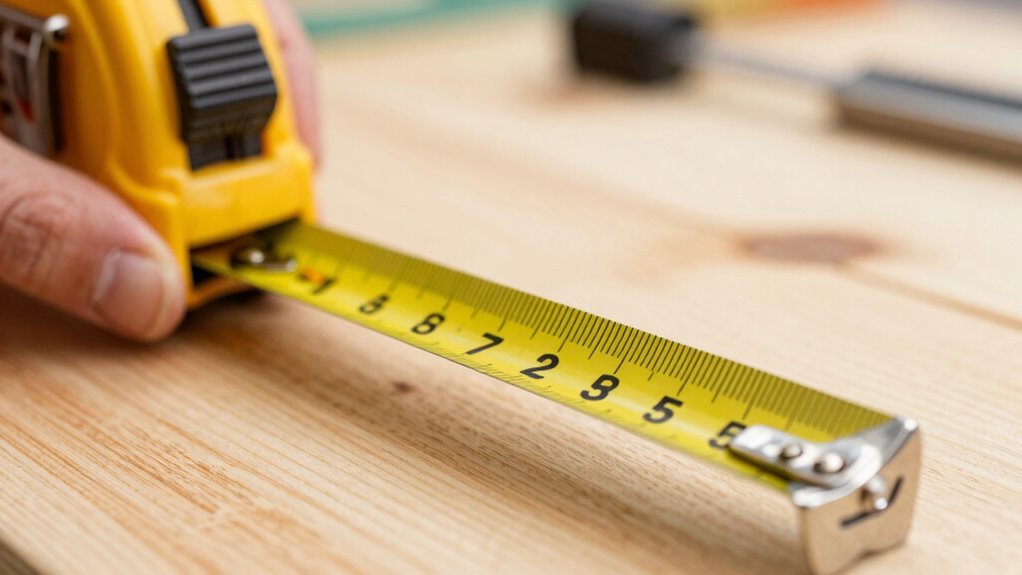
Have you ever wondered how to accurately interpret the small fraction markings on a tape measure? Mastering measuring accuracy begins with understanding fraction visualization. Each small line represents a fraction of an inch, typically divided into halves, quarters, eighths, or sixteenths. To read these fractions correctly, focus on the position of the line relative to the main inch marks. Visualize the division by imagining how many parts make up a full inch. As you become familiar with these divisions, measuring becomes faster and more precise. Practice helps improve your ability to quickly identify fractions, preventing errors. By honing your fraction visualization skills, you’ll confidently read even the most detailed measurements, ensuring your projects are accurate and professional.
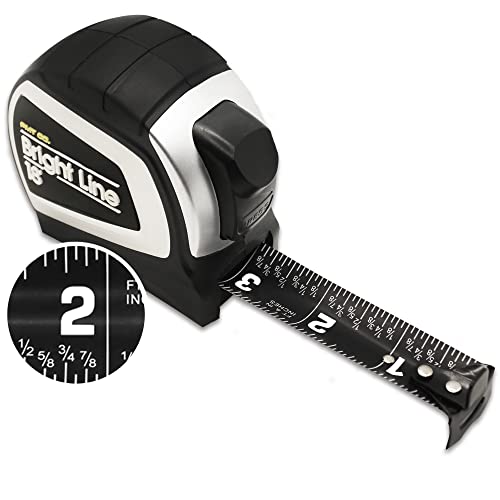
Perfect Measuring Tape – BrightLine High Contrast Dark Mode Easy Read Tape Measure for Low Light Visibility – Heavy Duty Rubber Case 18ft (Inch Fractions) Dual Sided Auto Lock Tape Measure Retractable
HIGHEST CONTRAST TAPE IN ALL LIGHT CONDITIONS: This high visibility easy-to-read black tape measure with fractions is perfect…
As an affiliate, we earn on qualifying purchases.
As an affiliate, we earn on qualifying purchases.
What Are the Fractional Markings and How Are They Placed?
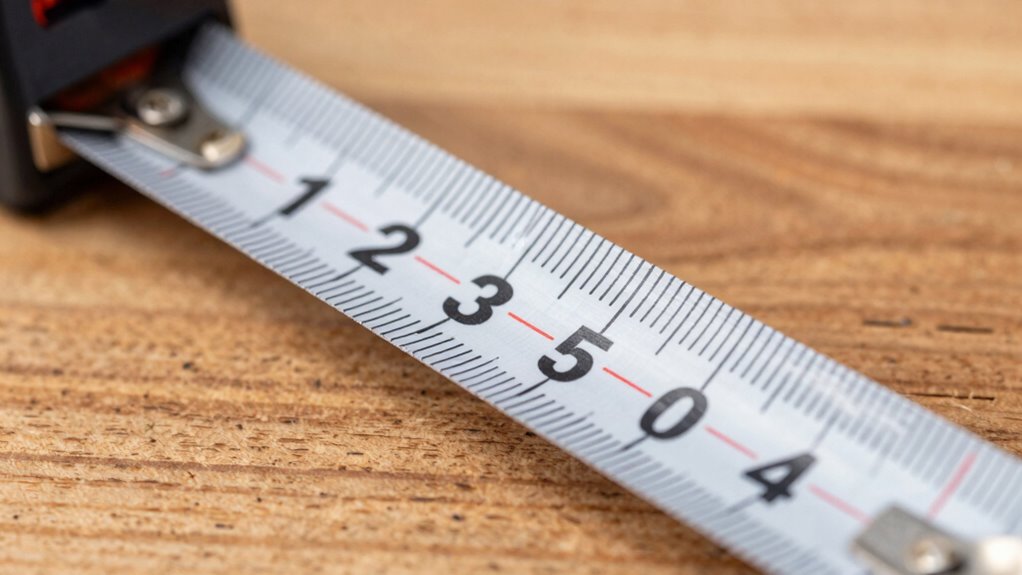
Fractional markings on a tape measure are carefully placed at specific intervals to help you read measurements accurately. You’ll notice the spacing between these marks varies depending on the fraction size, making it easier to identify common measurements quickly. Understanding how these markings are positioned and the notation used can improve your measurement skills markedly. This precise placement is designed to provide clarity and reduce measurement errors during use.
Fractional Markings Placement
Ever wondered how tape measures display such precise measurements? It all comes down to how the fractional markings are positioned. These markings are carefully placed between whole inch and centimeter marks to enhance measuring accuracy. You’ll notice that:
- The fractional lines are evenly spaced, matching specific fractions for easy visualization.
- Longer lines indicate common fractions like 1/2 or 1/4, making fraction visualization straightforward.
- Smaller, finer markings show less common fractions, helping you read measurements quickly and accurately.
- The placement of these markings relies on precise measurement techniques, ensuring consistency across tools.
This strategic placement ensures you can quickly interpret fractional parts without guessing. Accurate placement of these markings is essential for precise measurements, especially when working on projects that demand high measuring accuracy. It’s all about making fractions clear and easy to read at a glance.
Marking Intervals and Spacing
Understanding how fractional markings are spaced on a tape measure reveals the careful planning behind their placement. Marking intervals are precisely spaced to indicate fractional parts of an inch, ensuring accurate readings. The spacing consistency between these marks is essential; each interval represents a specific fraction, like 1/2, 1/4, or 1/8 inch, depending on the measure’s design. The longer markings typically denote whole inches, while shorter marks indicate fractional divisions. Manufacturers use standardized intervals to maintain uniformity, making it easier for you to quickly interpret measurements. By paying attention to the distribution of these markings, you can reliably read fractions without confusion. Proper understanding of how these intervals are spaced helps you measure accurately and efficiently every time. Additionally, recognizing the concept of Free Floating indicates the importance of the markings’ independence from fixed positions, allowing for flexible measurement.
Common Fractional Notations
On a tape measure, the fractional markings are carefully placed to represent specific parts of an inch, making it easier for you to read measurements accurately. These markings follow standard fraction notation, helping you interpret the measurement symbols quickly. The common fractional notations include lines and numbers that show halves, quarters, eighths, and sixteenths. Recognizing the power output of electric bikes helps you understand the level of precision needed for different measurement tasks. The longer lines indicate whole inches or major fractions like halves and quarters. The shorter lines mark eighths and sixteenths, giving precise measurement points. Numbers next to the lines specify the exact fraction, making your reading straightforward.
Understanding these measurement symbols and how they’re arranged ensures you can measure accurately without confusion, saving you time and effort on every project.

CRAFTSMAN 25-Ft Tape Measure with Fraction Marketing, Retractable, Manual-Locking Blade (CMHT37443S)
13 ft. Of reach*: allows for easy measurements when working alone (*based on maximum extension of average professional…
As an affiliate, we earn on qualifying purchases.
As an affiliate, we earn on qualifying purchases.
Easy Tips for Converting Fractions to Decimals
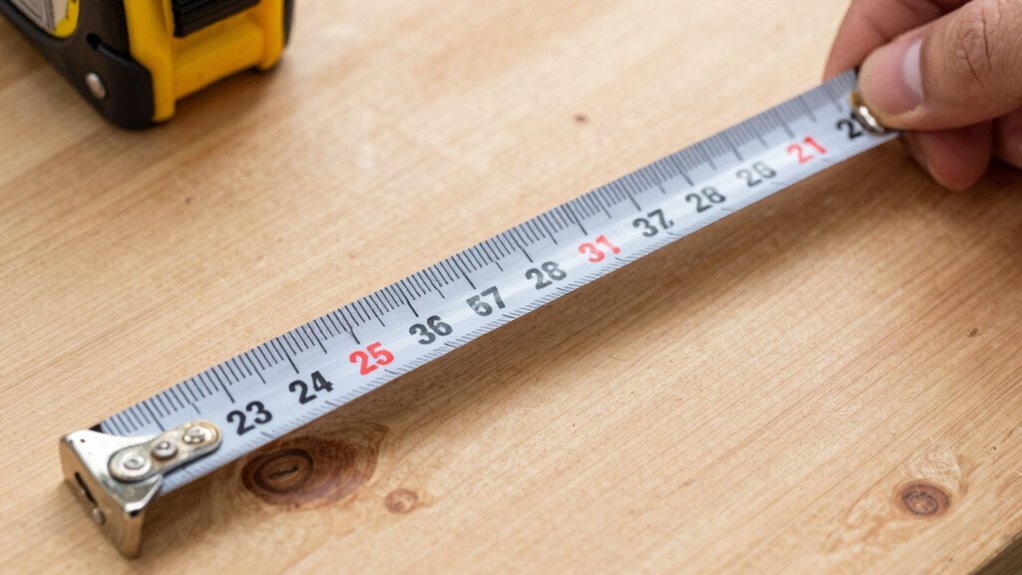
To convert fractions to decimals easily, start by simplifying the fraction first so you work with the smallest numbers. Next, use known decimal equivalents or divide the numerator by the denominator for accuracy. Practicing regular conversions helps you become faster and more confident with different types of fractions. Mastering measurement techniques ensures you can handle fractions accurately in woodworking projects.
Simplify Fractions First
Have you ever tried converting a fraction to a decimal only to get lost in complicated calculations? Simplifying fractions first makes things easier and improves measurement accuracy. When you reduce a fraction, you eliminate unnecessary complexity, making the conversion smoother.
To do this effectively:
- Find the greatest common divisor (GCD) to simplify the fraction.
- Always check if the fraction can be reduced before converting.
- Simplified fractions lead to quicker, more accurate measurements.
Use Decimal Equivalents
Once you’ve simplified your fractions, converting them to decimals becomes straightforward. Using decimal equivalents improves measurement accuracy and makes readings faster. To do this, you can memorize common conversions, like 1/2 = 0.5 or 1/4 = 0.25, or use a calculator for unfamiliar fractions. Visualizing the fraction as a decimal helps you see the measurement more clearly, especially when reading a tape measure quickly. Decimal equivalents eliminate guesswork and reduce errors, making your measurements more precise. Practice converting fractions to decimals regularly, so it becomes second nature. This skill is essential for quick, accurate readings and better fraction visualization, ultimately improving your overall measurement mastery. Remember, the more familiar you are with decimal equivalents, the faster and more confidently you’ll work with fractions on your tape measure.
Practice Regular Conversions
Want to improve your accuracy with fractions? Practicing regular conversions helps you develop better measurement accuracy and strengthen your fraction visualization skills. The more you convert fractions to decimals, the easier it becomes to estimate measurements quickly and confidently. To make this process effective, consider these tips:
- Convert fractions during daily tasks, like cooking or measuring supplies.
- Use online tools or apps for instant practice and feedback.
- Keep a chart of common fraction-to-decimal conversions nearby for quick reference.
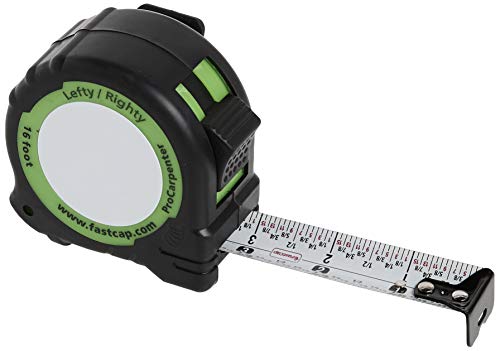
FastCap PSSR-16 16 Foot Pro Carpenter Standard Reverse Measuring Tape
The Standard/Standard Reverse features standard measurements that are readable when the tape is extended from either the right…
As an affiliate, we earn on qualifying purchases.
As an affiliate, we earn on qualifying purchases.
Common Mistakes When Reading Tape Measure Fractions
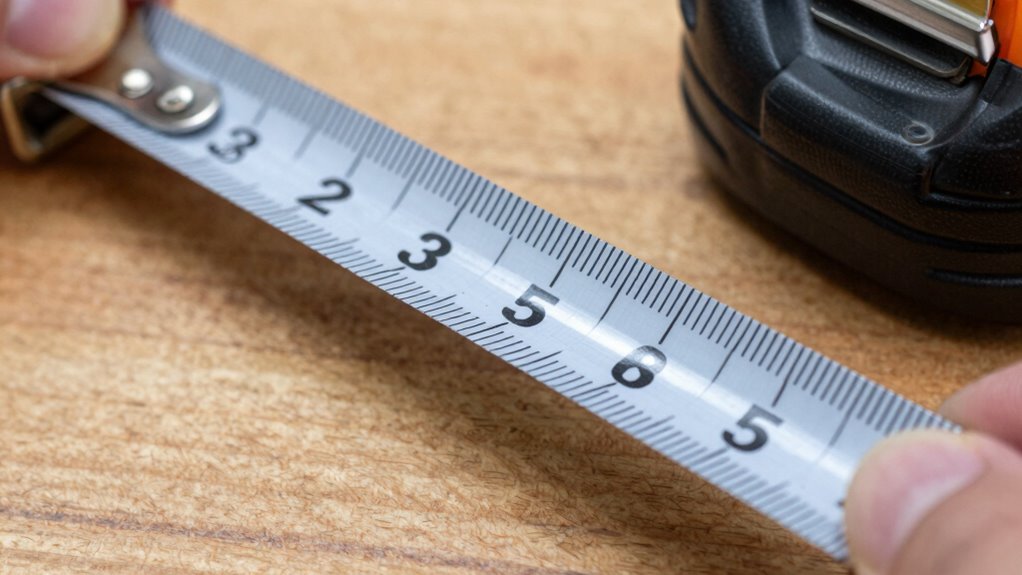
Reading tape measure fractions accurately can be tricky, especially when you’re not paying close attention to the markings. One common mistake is misreading the smaller fractions, like confusing 1/8 with 1/16, which affects measurement accuracy. Another error is ignoring the proper placement of the decimal point or misinterpreting the lines, leading to inaccurate readings. Often, you might focus on the whole inch mark and overlook the fractional parts, reducing your reading proficiency. Rushing through measurements can cause you to skip over critical fractions or misjudge the spacing between marks. To improve measurement accuracy, slow down and double-check each fractional mark. Being mindful of these common mistakes helps you develop precise reading habits, ensuring your measurements are both accurate and reliable. Paying attention to measurement conventions can further enhance your reading skills and prevent errors.
Practice Drills to Improve Your Measurement Reading Speed
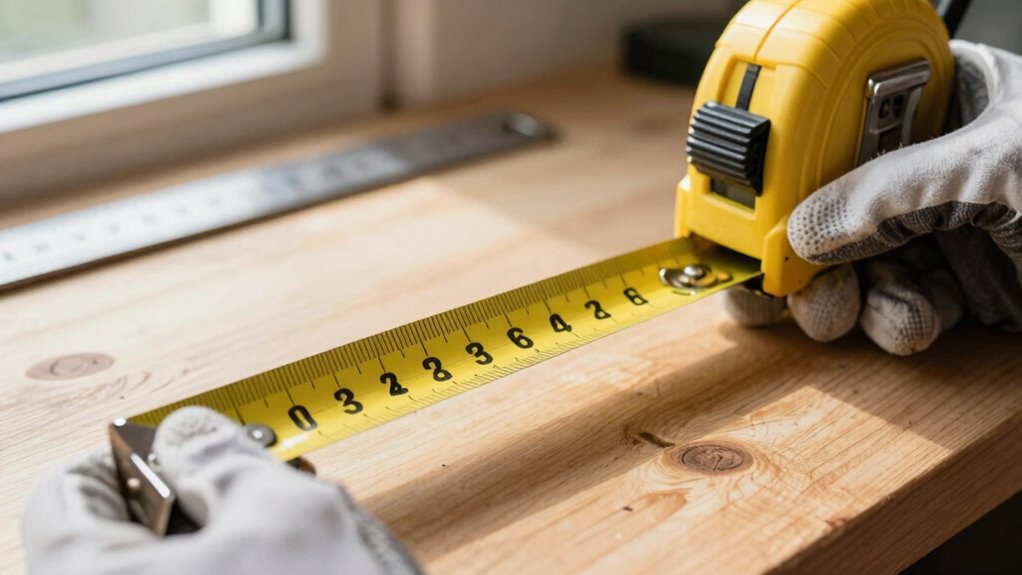
To boost your measurement reading speed, incorporating targeted practice drills can make a significant difference. Consistent exercises help you recognize fractions quickly, improving both measurement accuracy and reading speed.
Try these drills:
- Measure familiar objects repeatedly, focusing on quick, accurate readings.
- Time yourself reading a series of tape measures, aiming to reduce your speed without sacrificing accuracy.
- Challenge yourself with complex fractions, gradually increasing difficulty to build confidence.
These drills reinforce your ability to interpret fractions swiftly and accurately, saving time during projects. Practicing regularly hones your skills, ensuring you can read fractions on a tape measure confidently and efficiently. With dedication, you’ll master measurement reading speed and accuracy in no time.
Top Tools and Resources to Master Tape Measure Fractions
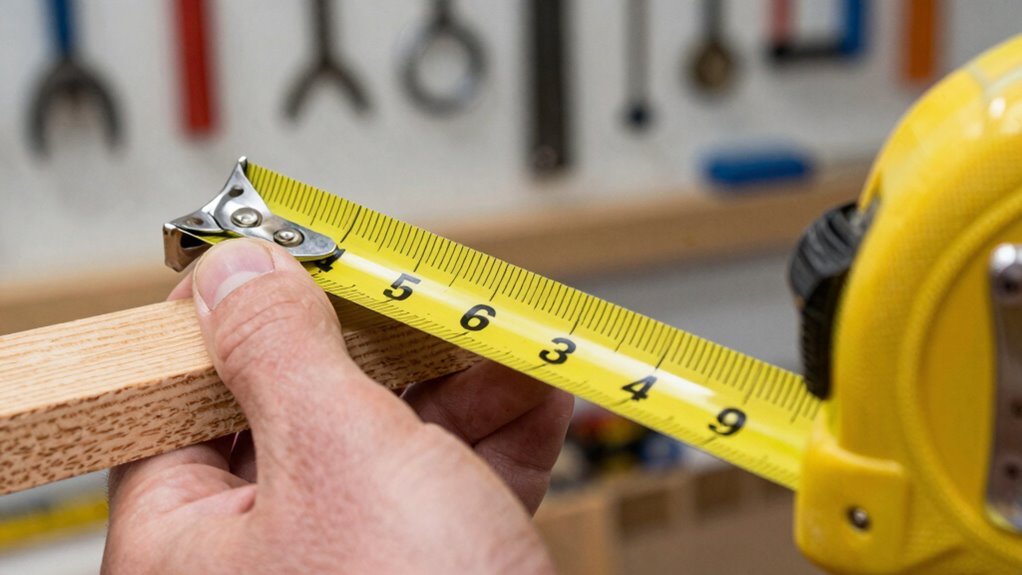
Mastering tape measure fractions becomes much easier when you have the right tools and resources at your fingertips. Digital calipers are excellent for precision, allowing you to compare fractional measurements quickly and accurately. They help you understand fractions better by providing digital readouts that clarify complex measurements. Laser measurement tools are another valuable resource, offering fast and highly accurate readings over longer distances. These tools reduce guesswork and improve your overall measurement skills. Additionally, smartphone apps and online calculators can help convert fractions, making practice more effective. Combining these high-tech tools with traditional tape measures gives you a powerful toolkit to master fractions faster. Using tools with high contrast and clarity can further enhance your ability to read fractions precisely. With the right resources, you’ll develop confidence and speed in reading tape measure fractions correctly.
Frequently Asked Questions
How Can I Memorize Common Fractional Markings Quickly?
To memorize common fractional markings quickly, focus on fraction memorization through visual patterns and associations. Use quick recall techniques like flashcards or apps highlighting fractions like 1/2, 1/4, and 1/8. Practice regularly by reading tape measures and mentally identifying fractions. Break down complex markings into smaller parts, and connect them with familiar objects or concepts. This approach boosts your speed and confidence in reading fractions accurately.
Are Digital Tools Available to Assist With Tape Measure Readings?
Did you know that over 60% of DIY enthusiasts now use digital aids? Yes, digital tools like measurement apps are available to help you read tape measure fractions more accurately. These apps often include features that interpret fractional markings and convert them into decimal or metric units. Using measurement apps can speed up your projects and reduce errors, making tape measure readings much easier and more precise.
What Are the Best Methods for Practicing Measurement Accuracy?
To improve your measurement accuracy, practice visualization techniques by imagining the fractions on the tape and how they align with markings. Use mnemonic devices to remember common fractions, like “Half is 1/2, close to the middle,” or “Quarter, a quarter way.” Regularly measuring objects and checking your readings against a ruler helps reinforce accuracy. Keep practicing, and these methods will become second nature.
How Do Different Tape Measure Brands Vary in Fractional Markings?
You might worry about inconsistent readings, but brand differences in fractional accuracy are usually minor. Different tape measure brands use slightly varied markings, which can affect precision. High-quality brands tend to have more precise fractional markings, making measurements easier and more accurate. So, choose reputable brands for better fractional accuracy, and don’t let minor differences discourage you—practice and familiarity will help you read fractions confidently across any tape measure.
Can Understanding Fractions Improve Overall Construction or DIY Skills?
Yes, understanding fractions can substantially boost your construction or DIY skills. By improving your fractional literacy, you gain measurement precision, ensuring cuts and placements are accurate. This helps you avoid mistakes, saves time, and results in a professional finish. When you master reading fractions quickly and correctly, you become more confident, efficient, and precise in all your projects, making your work stronger and more reliable.
Conclusion
Now that you know how to read fractions on a tape measure quickly and accurately, are you ready to put your skills to the test? With practice and the right tools, you’ll become confident in measuring every time. Don’t let fractions slow you down—mastering them will make your projects smoother and more precise. So, why not start practicing today and see how fast you can read a tape measure with ease?