The diagonal check is the easiest way to confirm a box is square because equal diagonals indicate right angles. To do this, measure both diagonals with a reliable tool, making sure to keep it flat and consistent. If the measurements match, your box is square. Any discrepancy suggests it isn’t. Keep in mind common mistakes so you can get accurate results. If you continue, you’ll discover more tips to perfect your measurement technique.

Get business pricing on tools and workshop supplies
- Business-only prices and quantity discounts
- Tax-exempt purchasing
- Multiple users, one account, clear invoices
Key Takeaways
- Measure both diagonals from corner to corner using a reliable tool like a tape measure or caliper.
- Ensure measurement tools are calibrated and held flat against the surfaces for accuracy.
- Compare the two diagonal measurements; equal diagonals confirm the box is square.
- Take multiple measurements to verify consistency and reduce errors.
- Avoid common mistakes such as misaligning edges or measuring on uneven surfaces for reliable results.
digital caliper for precise measurements
As an affiliate, we earn on qualifying purchases.
As an affiliate, we earn on qualifying purchases.
Why Use the Diagonal Check to Confirm a Square Box
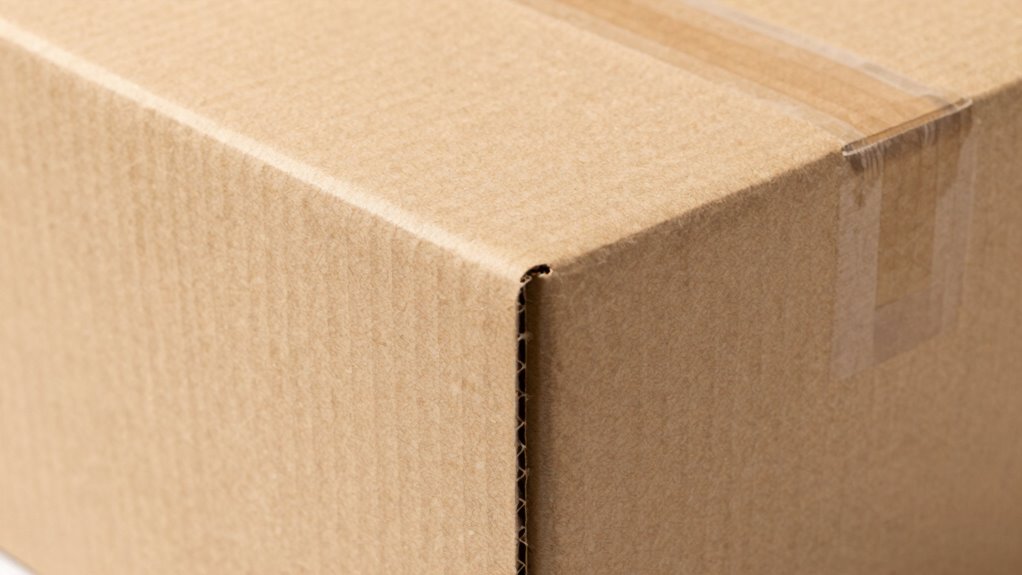
Using the diagonal check is an effective way to confirm that a box is a perfect square because it relies on a simple geometric principle. When a box is square, its diagonals are equal in length, demonstrating diagonal consistency. This makes the check reliable, quick, and straightforward. Unlike measuring angles or sides, verifying diagonal equality directly tests box squareness without complicated tools. If the diagonals match, you can confidently say the box is perfectly square; if not, it’s skewed. This method eliminates guesswork and ensures precision. You don’t need advanced math skills—just measure both diagonals, compare them, and confirm the box’s squareness. The diagonal check is a practical, efficient way to verify that your box maintains true squareness every time. This method leverages core geometric principles to provide a reliable and simple verification process.
As an affiliate, we earn on qualifying purchases.
How to Measure Diagonals Accurately and Consistently
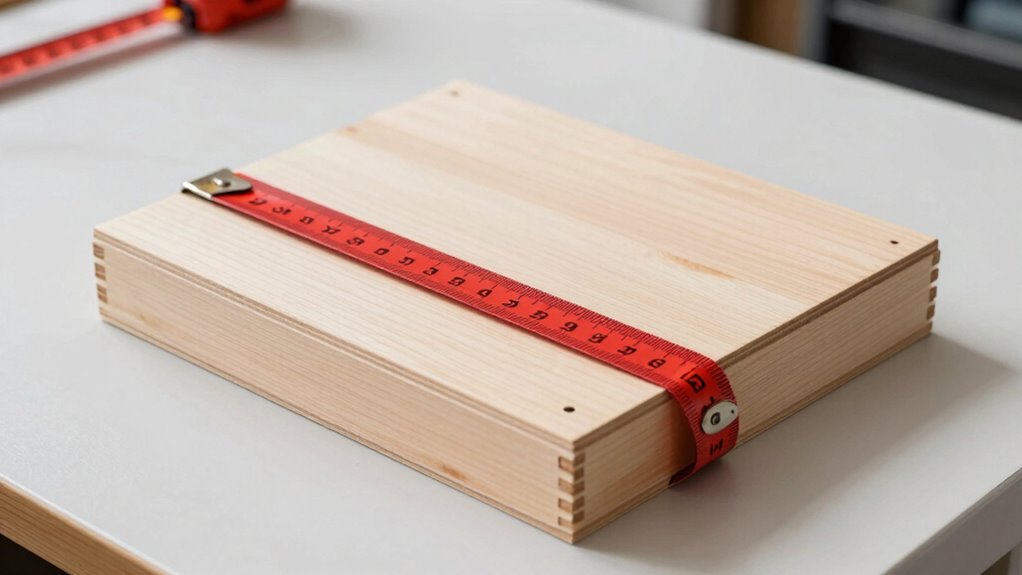
Have you ever wondered how to measure diagonals accurately and consistently? To do this, start by choosing reliable measurement tools, like a tape measure or a digital caliper, that can provide precise readings. Calibration techniques are vital; verify your tools are correctly calibrated before measuring. For example, check your tape measure against a standard or use a known straight edge to verify accuracy. When measuring, keep the tape or ruler flat against the surface without bending or slack, and take multiple readings to confirm consistency. Avoid rushing; take your time to ensure the measurements are stable and precise. Accurate diagonal measurements are essential for confirming if your box is square, so invest in good tools and double-check your calibration regularly. Additionally, understanding the precision of your tools helps ensure your measurements are reliable.
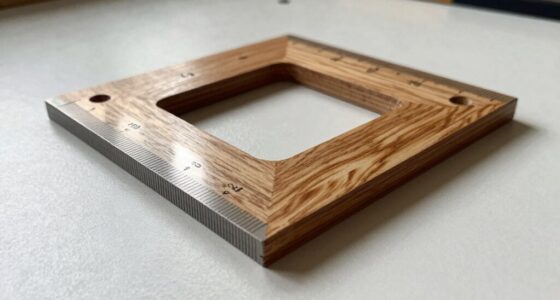
square ruler for checking squareness
As an affiliate, we earn on qualifying purchases.
As an affiliate, we earn on qualifying purchases.
How to Read Diagonal Measurements and Tell if Your Box Is Square
Wondering how to interpret your diagonal measurements to determine if your box is square? Once you’ve taken the measurements, use simple diagonal measurement techniques to assess if your box is square. Here’s what to look for:
- Equal measurements on both diagonals indicate a square or perfectly rectangular box.
- Discrepancies suggest the box isn’t square, and adjustments are needed.
- Remember, small measurement variations may occur, so compare carefully.
- Use a reliable measuring tape or ruler for accuracy.
- Consistent diagonal measurements across multiple checks reinforce your box shape verification.
- To improve your assessment, understanding the passive voice in your writing can make your instructions clearer and more direct.
As an affiliate, we earn on qualifying purchases.
Tips for Getting Precise and Reliable Diagonal Measurements
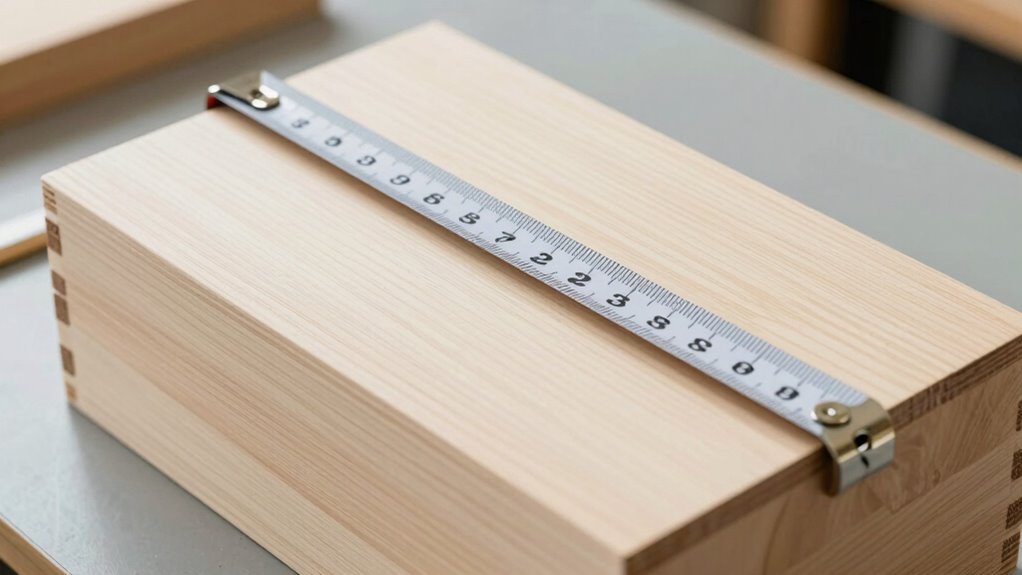
Getting precise and reliable diagonal measurements starts with careful setup. First, ensure your measurement tools are properly calibrated; regular calibration techniques help maintain accuracy. Use a high-quality tape measure or a laser distance meter for better precision. Before measuring, check that your tools are free of dirt, dust, or damage, which can affect readings. Keep the tape or device straight and taut to avoid slack or bowing, and measure from corner to corner with the tool perpendicular to the surfaces. Repeat measurements at least twice to confirm consistency. Additionally, record measurements immediately to prevent errors. Proper calibration of your tools ensures ongoing measurement accuracy. By maintaining calibrated tools and employing careful measurement techniques, you’ll markedly improve the reliability of your diagonal readings, making it easier to determine if your box is square.
Common Mistakes When Checking If a Box Is Square and How to Avoid Them
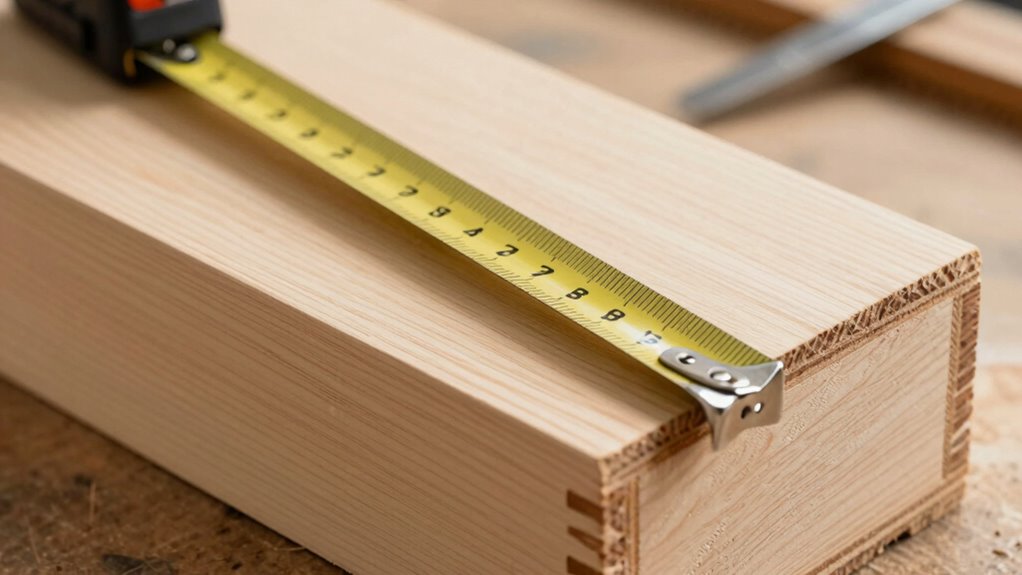
One common mistake when checking if a box is square is relying on measurements taken from inconsistent or uncalibrated tools. This can lead to measurement errors that skew your results. Additionally, misaligned edges can give a false sense of accuracy, causing you to overlook subtle inaccuracies. To avoid these mistakes:
- Always use calibrated tools for measurements.
- Double-check that edges are properly aligned before measuring.
- Measure multiple times to confirm consistency.
- Avoid measuring from rough or uneven surfaces.
- Be cautious of parallax errors when reading measurements.
- Remember that body jewelry measurements should be precise to ensure proper fit and comfort.
Frequently Asked Questions
Can the Diagonal Check Be Used for Irregular or Non-Rectangular Shapes?
Yes, you can use the diagonal check for irregular shapes and non-rectangular forms, but it’s less reliable. For these shapes, measuring diagonals may not accurately confirm symmetry or proper angles. Instead, focus on measuring all sides and angles directly. The diagonal check works best for rectangular or square shapes, but for irregular or non-rectangular forms, more precise methods guarantee your measurements remain accurate.
What Tools Are Best for Measuring Diagonals in Tight or Awkward Spaces?
In tight or awkward spaces, you’ll find a measuring tape or a laser level your best tools for measuring diagonals. A measuring tape bends easily around corners, giving you accurate readings in confined areas. A laser level projects a straight line across difficult spaces, making it easier to confirm measurements quickly. Both tools help you verify your box or structure is square without hassle, even in challenging spots.
How Does Temperature or Humidity Affect Diagonal Measurements?
Like a sponge soaking up water, your measurements can expand or contract with temperature and humidity changes. Environmental factors cause material expansion, affecting diagonal measurements. Warmer temperatures make materials swell slightly, lengthening diagonals, while humidity can cause wood and other materials to warp or shrink. To get accurate results, measure in stable conditions or account for these environmental effects, especially when precision matters.
Is the Diagonal Check Suitable for Very Large or Very Small Boxes?
The diagonal check works well for most sizes, but scale limitations can affect measurement accuracy on very large or small boxes. For tiny boxes, precision tools are necessary because small errors matter more. When measuring large boxes, you might encounter challenges with tape sagging or stretching, reducing accuracy. So, while it’s a quick method, verify you consider scale limitations to get reliable results across different sizes.
How Often Should I Verify a Box’s Squareness Using the Diagonal Method?
Think of verifying your box’s squareness like tuning a musical instrument—regular checks keep it in harmony. You should perform the diagonal check during your initial assembly, then periodically as part of your quality assurance process. For high-stakes projects, measure more often to catch any shifts early. Consistent measurement frequency guarantees your boxes stay true, preventing issues before they become costly or complicated down the line.
Conclusion
By using the diagonal check, you simplify your task, guarantee accuracy, and confirm your box’s squareness with confidence. Measure carefully, read precisely, and avoid common mistakes to get reliable results every time. When you focus on accuracy, consistency, and simplicity, you make the process straightforward and stress-free. So, trust the diagonal check, stay precise, and enjoy the satisfaction of perfectly square boxes every time you measure.
Fall yard work Picks
leaf blowers
As an affiliate, we earn on qualifying purchases.