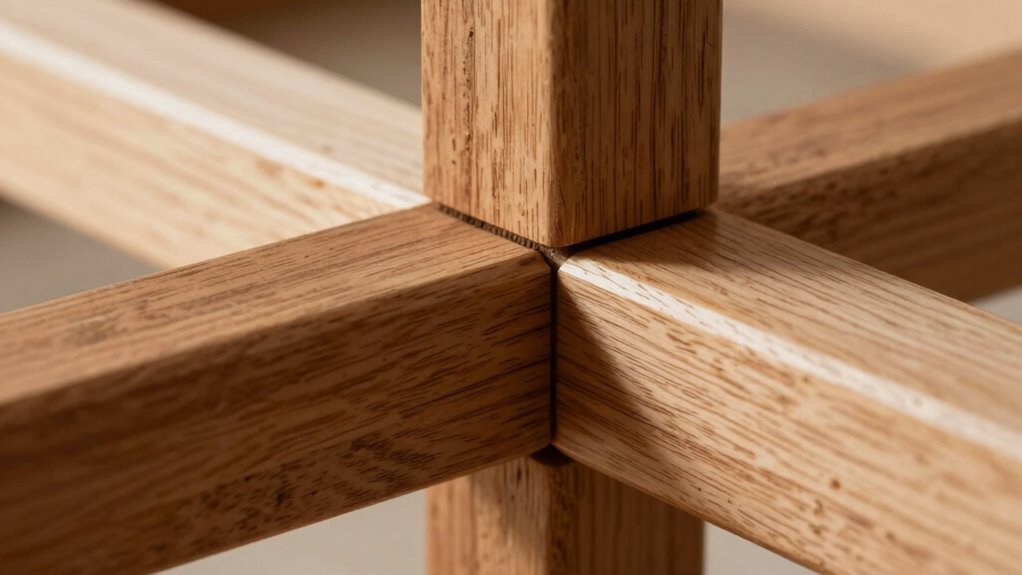

Half-blind dovetails are a woodworking joint that hides the connection from one side, providing strength and a clean look. You typically see them in drawers and cabinet doors, where the joint’s hidden side remains smooth and attractive. They combine durability with aesthetic appeal, making projects look professional. If you want to master this elegant technique and learn how to create perfect half-blind dovetails, explore further to discover all the tips and tricks.

Get business pricing on tools and workshop supplies
- Business-only prices and quantity discounts
- Tax-exempt purchasing
- Multiple users, one account, clear invoices
Key Takeaways
- Half-blind dovetails are a woodworking joint with pins hidden from one side, offering a clean exterior appearance.
- They provide strong, durable connections ideal for drawer fronts and cabinet doors.
- Precise marking and cutting techniques are essential to ensure tight-fitting, hidden joints.
- Using specialized tools like dovetail jigs and sharp chisels enhances accuracy and craftsmanship.
- This joint combines strength with aesthetics, making it a popular choice for high-quality furniture projects.
As an affiliate, we earn on qualifying purchases.
What Are Half-Blind Dovetails and Why Use Them?
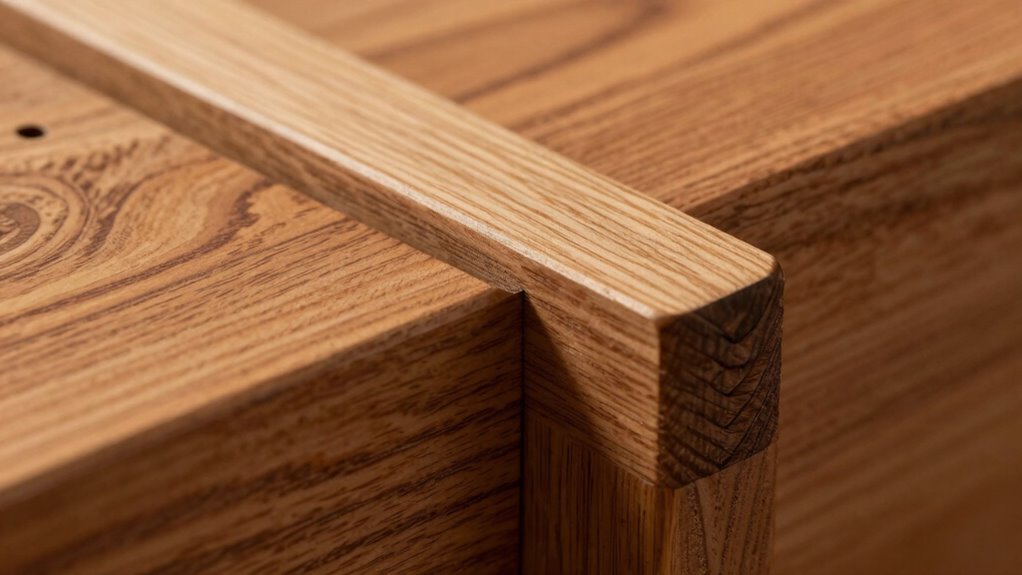
Have you ever wondered how skilled woodworkers create joints that are both strong and aesthetically pleasing? Half‑blind dovetails achieve this by offering excellent joint stability, ensuring your projects stay durable over time. These joints are designed so that the tail is visible from one side, but the pin is hidden, giving a clean look. Their design requires woodworking precision, as the cuts must fit perfectly for maximum strength. Using half‑blind dovetails is ideal for attaching drawer fronts or cabinet doors where you want a seamless appearance on the outside. The joint’s ability to blend strength with visual appeal makes it a popular choice among craftsmen. Mastering this technique elevates your woodworking projects, combining form and function effortlessly. Understanding joint construction techniques can help you choose the right method for your project and improve your craftsmanship.
As an affiliate, we earn on qualifying purchases.
What Are the Benefits of Half-Blind Dovetails for Your Projects?
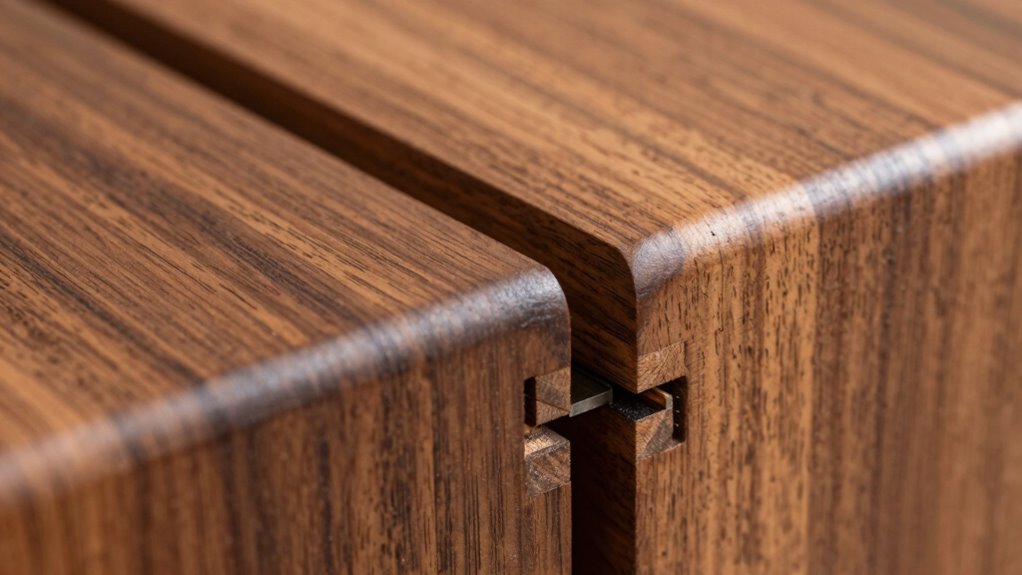
Half-blind dovetails improve the look of your projects by hiding the joinery, giving your work a cleaner appearance. They also create a stronger connection between pieces, increasing durability. Plus, because the joint is concealed, you can achieve a professional finish without visible fasteners. Incorporating visual and auditory cues can further enhance the precision and aesthetic quality of your woodworking techniques.
Aesthetic Appeal Enhancement
Because the dovetail joints are hidden on the front, half-blind dovetails create a clean, seamless appearance that enhances the overall aesthetic of your project. They allow you to showcase the natural beauty of your wood by emphasizing grain alignment, giving your piece a polished look. The precise joinery improves finish quality, making your work look professional and refined. With half-blind dovetails, you can achieve a sleek, sophisticated style that highlights craftsmanship without visible joints. This joint type is ideal for furniture like drawers and cabinets, where visual appeal matters. You’ll enjoy a refined look that draws attention to the material itself, elevating your project’s overall design. The subtlety of this joint style ensures your work looks both elegant and expertly made. Additionally, employing energy-efficient techniques can contribute to more sustainable woodworking practices and enhance the durability of your finished pieces.
Stronger Joint Integrity
While half-blind dovetails are prized for their aesthetic appeal, they also provide exceptional joint strength. Proper grain orientation plays a key role in this, as aligning the wood’s fibers correctly guarantees maximum resistance to tension and shear forces. When you cut the dovetails, pay close attention to joint alignment; precise fit enhances stability and prevents gaps that could weaken the connection. The interlocking design distributes stress evenly across the joint, reducing the risk of splitting or failure over time. This means your projects will last longer and withstand daily use better. Color accuracy and calibration also contribute to the overall quality and durability of the joint. The combination of careful grain orientation and accurate joint alignment results in a strong, reliable connection that maintains its integrity even under load, making half-blind dovetails an excellent choice for durable furniture and cabinetry.
Concealed Joinery Benefits
One of the main advantages of half-blind dovetails is their ability to create a seamless, professional appearance by concealing the joinery. This makes your projects look clean and refined, especially in visible areas. Using this joinery technique enhances the aesthetic appeal without sacrificing strength. It also simplifies the assembly process, saving you time and effort. With proper woodworking tips, you can achieve precise fits, ensuring durability and a polished look. Plus, these joints hide the connection from view, making your furniture look more elegant and high-quality. Incorporating local automation can further streamline your woodworking workflow, allowing for more efficient project assembly.
As an affiliate, we earn on qualifying purchases.
What Tools Do You Need to Cut a Half-Blind Dovetail?
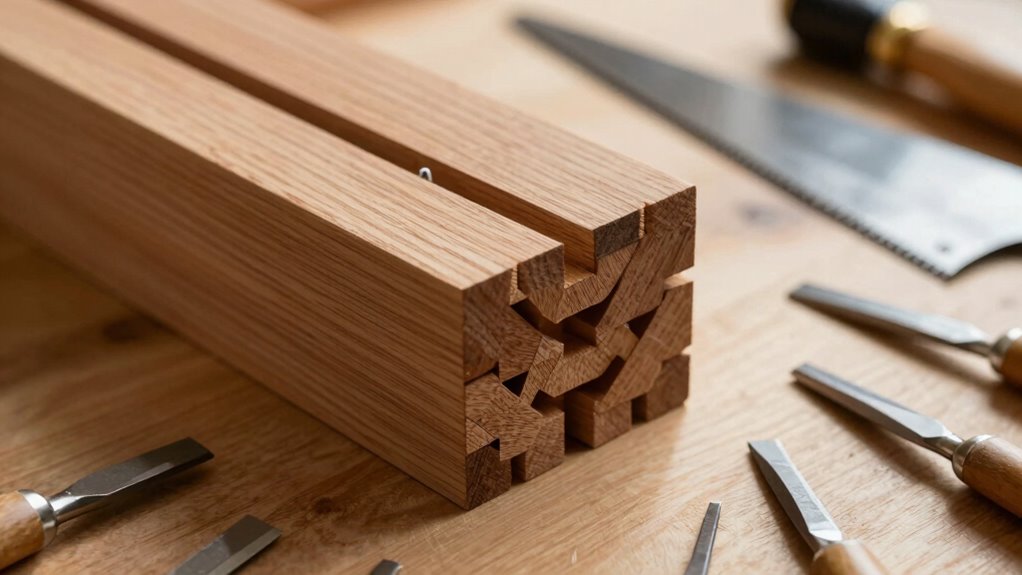
To cut a half-blind dovetail accurately, you’ll need a few essential tools. Safety is paramount, so always follow woodworking safety practices and keep your tools well-maintained. The right tools ensure precision and ease during your cut. Here’s what you’ll need:
| Tool | Purpose | Tips |
|---|---|---|
| Dovetail Saw | Make precise cuts | Keep blade sharp |
| Marking Gauge | Transfer measurements | Check for accurate marks |
| Chisels | Clean out waste | Maintain sharp edges |
| Pencil | Mark cut lines | Use for clear guidelines |
| Clamps | Secure workpiece | Prevent movement |
Using these tools with care and proper maintenance guarantees safer, cleaner cuts, and a professional finish. Additionally, understanding the fundamentals of joint fitting can greatly improve your accuracy and craftsmanship.
As an affiliate, we earn on qualifying purchases.
How Do You Cut a Half-Blind Dovetail Step by Step?
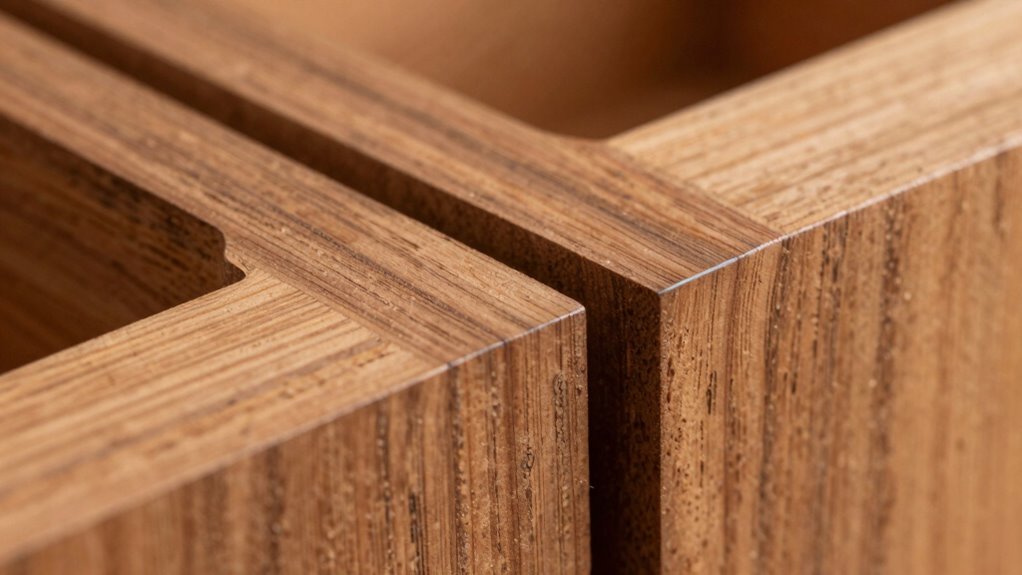
First, you’ll want to prepare your materials by marking and cutting your wood pieces accurately. Then, follow the steps to execute each cut precisely, ensuring your dovetails fit tightly. With careful preparation and execution, your half-blind dovetail will come together smoothly.
Preparing Your Materials
Before you start cutting your half-blind dovetails, it’s essential to select and prepare the right materials. First, choose hardwoods with straight, tight grain to ensure strong joints and clean cuts. Next, consider using dovetail jigs if you want accuracy and consistency, especially if you’re new to the process. Make certain your wood pieces are securely clamped and free of warping. Pay attention to the wood grain direction; cutting along the grain reduces splintering and makes fitting easier. Finally, make sure your tools are sharp and properly set up. Properly prepared materials and understanding of wood grain will give you a solid foundation for precise, neat half-blind dovetails.
Executing the Cuts
Executing the cuts for half-blind dovetails requires careful precision and attention to detail. First, guarantee your wood selection is stable and free of defects. Proper joint alignment is essential—measure and mark accurately before cutting. Use a sharp saw and a fine chisel for clean, precise edges. Follow your marked lines closely, making sure each cut aligns perfectly with your layout. For better control, cut from both sides if necessary, especially on thicker stock. Keep your saw at the correct angle and steady throughout. Here’s a quick visual guide:
| Step | Key Point |
|---|---|
| 1 | Mark accurately |
| 2 | Use sharp tools |
| 3 | Maintain proper alignment |
This process ensures tight fitting joints that hide the secret, supported by precise measurement techniques to enhance accuracy.
What Are Common Challenges When Making Half-Blind Dovetails: and How Can You Solve Them?

Making half-blind dovetails can present several common challenges, especially if you’re new to the technique. One major issue is achieving perfect dovetail alignment, which requires precise cuts and careful measurement. Another challenge is working with varying wood grain; if the grain runs awkwardly, it can cause splitting or difficulty fitting the joint. Additionally, maintaining consistent dovetail size and angle can be tricky, leading to weak or uneven joints. To solve these problems:
- Use sharp tools and take your time to ensure accurate dovetail alignment.
- Pay close attention to the direction of the wood grain, adjusting your cuts accordingly.
- Regularly check your work with a square or jig to maintain consistent angles and fit.
- Understanding wood grain behavior can help you anticipate how the wood will react during cutting and fitting.
Addressing these challenges improves both the strength and appearance of your half-blind dovetails.
How Did Half-Blind Dovetails Evolve? A Brief History
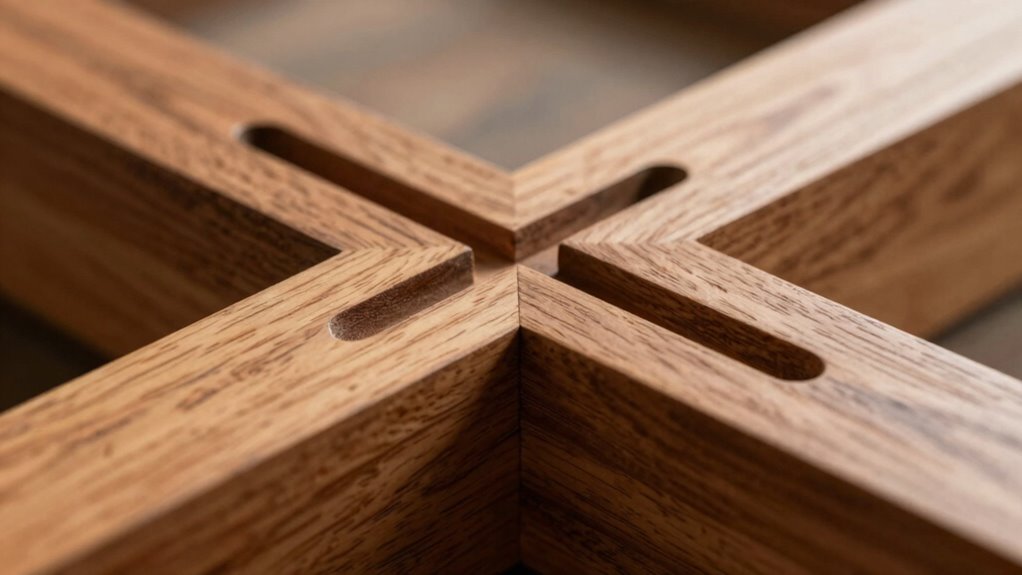
Half-blind dovetails have a rich history that traces back centuries, showcasing their enduring popularity in fine woodworking. Historically, craftsmen used simple tools and techniques to create these joints, often relying on hand-cut methods passed down through generations. Over time, the evolution of joints like the half-blind dovetail reflects a desire for strength, durability, and aesthetic appeal in furniture making. As woodworking advanced, so did the techniques, moving from basic chisel and saw work to more refined methods involving specialized tools and jigs. This progression allowed artisans to produce tighter, more precise joints while maintaining a concealed appearance. The development of these joints highlights a continuous effort to blend craftsmanship with innovation, preserving their status as a fundamental element in quality woodworking. Additionally, the availability of vetted tools and resources has helped craftsmen improve their technique and efficiency with these joints.
What Are Some Variations and Advanced Techniques for Half-Blind Dovetails?
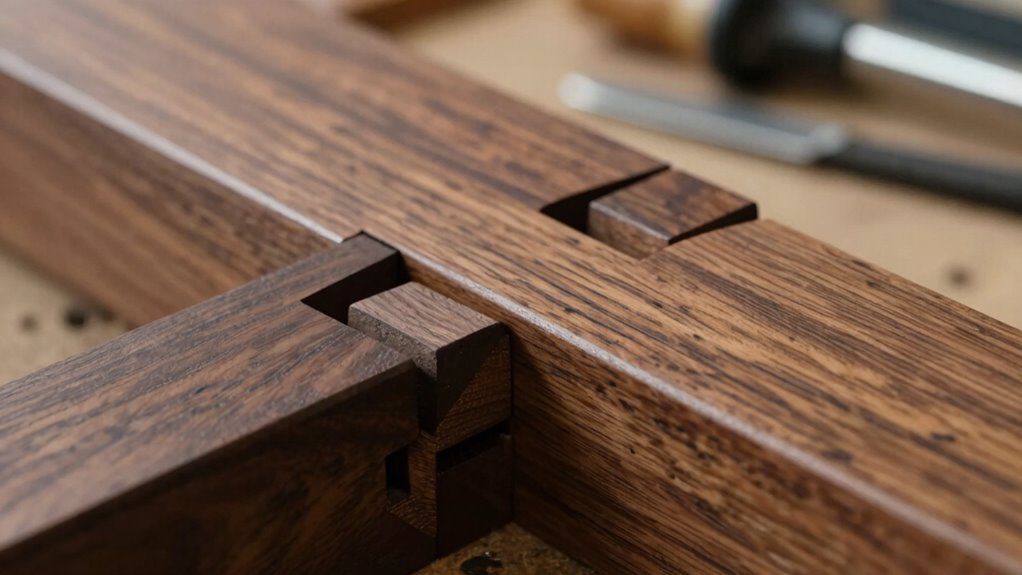
To enhance the strength and visual appeal of half-blind dovetails, woodworkers have developed several variations and advanced techniques. These methods improve joint alignment and highlight wood grain patterns. One variation is the angled dovetail, which adds decorative flair while strengthening the joint. You can also experiment with pinless half-blind dovetails, emphasizing seamless grain flow without visible pins. Additionally, hybrid techniques combine half-blind dovetails with other joinery styles, optimizing stability and aesthetics. To execute these advanced methods successfully, pay close attention to joint alignment, ensuring the pins and tails fit precisely. Carefully selecting wood with prominent grain enhances the joint’s visual impact, making the craftsmanship stand out. Mastering these techniques allows you to create durable, attractive furniture pieces with hidden strength. Understanding grain patterns can also help in selecting the most suitable wood for these intricate joints.
Tips for Making Precise and Strong Half-Blind Dovetails
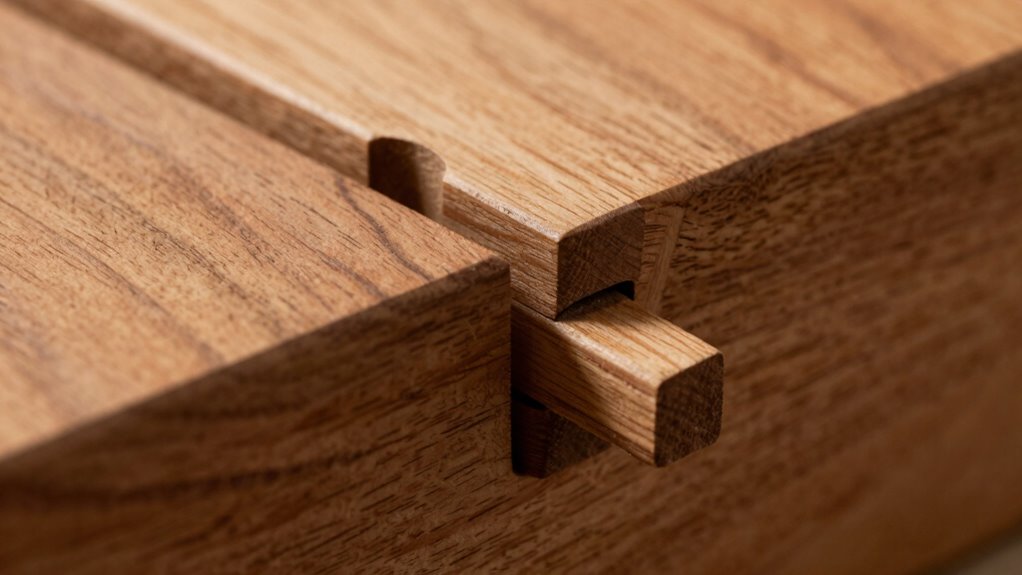
Achieving precise and strong half-blind dovetails relies on careful planning and meticulous execution. Start by paying close attention to grain orientation; aligning the grain properly guarantees the joint’s strength and reduces chipping during cutting. When marking the tails and pins, use sharp tools and precise measurements to maintain consistency. During cutting, keep your saw and chisel angles steady to achieve clean, tight joints. Proper grain orientation helps distribute joint tension evenly, preventing gaps or splits. Test fit frequently, making adjustments as needed to ensure a snug fit without forcing the joint. Remember, a well-executed half-blind dovetail not only looks beautiful but also provides lasting strength, thanks to careful attention to grain direction and balanced joint tension throughout the process.
Projects That Show Off Half-Blind Dovetails in Action

Showcasing half-blind dovetails in projects highlights their beauty and strength, making them a favorite choice for fine woodworking. These joints are perfect for creating elegant drawers, jewelry boxes, and cabinet doors, where the joint remains hidden but provides exceptional durability. Using dovetail jigs simplifies the process, ensuring consistent and precise cuts. When combined with miter joints, you can achieve seamless corners that enhance the overall appearance. Projects like a custom jewelry box or a high-end drawer showcase how half-blind dovetails add both aesthetic appeal and structural integrity. They demonstrate craftsmanship and attention to detail, impressing anyone who sees your work. Whether you’re building small boxes or larger cabinetry, these projects show off the joint’s versatility and the skill involved in making them look effortless.
Frequently Asked Questions
Can Half-Blind Dovetails Be Used for Furniture Joints Besides Drawers?
Yes, you can use half-blind dovetails for furniture joints beyond drawers. They work well for decorative applications like cabinets, face frames, and small boxes, offering an attractive look. However, consider structural considerations, as they might not be as strong as other joints for load-bearing parts. Use them where aesthetics matter most, and reinforce with additional joinery if necessary for added strength.
What Are the Best Wood Types for Half-Blind Dovetails?
You want the best wood types for half-blind dovetails, and honestly, the choice can make or break your project! Opt for hardwoods like cherry, walnut, or maple—they’re sturdy, beautiful, and hide the joint’s secrets perfectly. Your wood selection should also match your aesthetic considerations; softer woods like pine can work but might not offer the same durability or elegance. Pick wisely, and your craftsmanship will truly shine!
How Do You Repair a Half-Blind Dovetail Joint if It Fails?
If your half-blind dovetail joint fails, you should reinforce it with glue and clamps, then carefully disassemble if needed. For more secure repair, consider using epoxy or wood filler to fill gaps. You can also re-cut or re-fit the joint, applying proper joint reinforcement techniques. Sand and smooth the repaired area for a seamless finish, ensuring the joint regains strength and stability without revealing the repair.
Are There Alternative Joints That Mimic Half-Blind Dovetails?
You might think finding a joint that perfectly mimics half-blind dovetails is impossible, but surprisingly, there are several options. Consider joint alternatives like sliding dovetails, box joints, or even lock miter joints—they all offer sturdy connections with decorative options that can resemble the elegance of half-blind dovetails. These joints can be crafted to hide their secrets beautifully, giving your project a sophisticated yet practical finish.
How Long Does It Typically Take to Master Cutting Half-Blind Dovetails?
You can master cutting half-blind dovetails in about 20 to 40 hours of focused practice, but it depends on your learning curve and skill development. Expect initial challenges as you learn the technique, but with consistent effort, your proficiency improves quickly. Patience and regular practice help you refine your skills, making the joint cleaner and more precise over time. Keep practicing, and you’ll master it faster than you think.
Conclusion
Now that you’ve uncovered the secrets of half-blind dovetails, you’re ready to weave strength and beauty into your projects. With each cut, you’re crafting a silent symphony of craftsmanship—hidden yet essential. Embrace the challenge, refine your technique, and let your woodworking journey unfold like a masterful dance. These joints aren’t just connections; they’re the heartbeat of timeless craftsmanship, whispering stories of skill and patience with every seamless fit.
Fall yard work Picks
leaf blowers
As an affiliate, we earn on qualifying purchases.