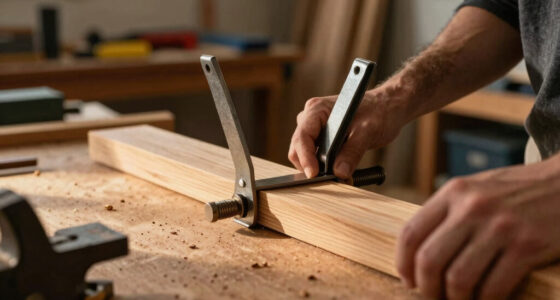
For a biscuit joiner for professional woodworking, I’d start with the Makita PJ7000 as the best overall balance of practical adjustment, established corded performance, and shop-ready versatility. The Lamello Classic X is a standout for joinery-focused shops seeking a premium system, while the DEWALT 20V MAX XR DCW682B suits professionals who value cordless mobility. The main tradeoff is between the repeatable power and steady workflow of corded tools, the freedom of battery platforms, and the higher cost or system commitment of specialty machines. I’ll compare all 13 options by fit, precision, usability, and limitations so you can choose the right tool for your work.

Get business pricing on tools and workshop supplies
- Business-only prices and quantity discounts
- Tax-exempt purchasing
- Multiple users, one account, clear invoices
Complete the kit



Key Takeaways
- The Makita PJ7000 leads as a practical all-around shop choice: it offers the kind of straightforward corded setup many production and cabinet shops can build daily work around.
- Lamello models serve a different tier of work: the Classic X is a premium joinery system, while the Zeta P2 adds specialized capability that makes most sense when its system features will see regular use.
- Cordless convenience depends on the battery platform already in your shop: the DEWALT DCW682B and Makita XJP03Z can reduce cord handling, but tool-only kits make battery compatibility part of the decision.
- Basic corded alternatives trade refinement for a simpler entry point: AOBEN, VEVOR, and the BJ760 list core adjustment and cutting features, but buyers should verify setup, service support, and repeatability for demanding work.
- Not every listing is a joiner: the WEN 20 Birch Wood Biscuits are consumables, not a cutting tool, so they belong on a replenishment list rather than in a tool comparison.


| biscuit joiner for professional woodworking | Weight | Power source |
|---|---|---|
| Makita PJ7000 Plate Joiner | 5.6 kg | Hand powered (as listed) |
| Lamello Classic X Biscuit Join | 10.5 pounds | AC, 120 volts |
| AOBEN Biscuit Cutter Plate Joi | 7.6 pounds | AC |
| DEWALT 20V MAX XR Biscuit Join | 5.5 pounds | Battery powered |
| Bosch GFF18V-086N 18V Brushles | 5.7 pounds | Battery powered |
| Lamello Zeta P2 Biscuit Joiner | — | AC |
| VEVOR Biscuit Plate Joiner | 6.61 pounds | — |
| WEN 20 Birch Wood Biscuits for | — | — |
| Ecarke Cordless Biscuit Joiner | 6.96 pounds | Battery-powered |
| Biscuit Joiner Plate Jointer | 5 pounds | Corded electric |
| Makita XJP03Z 18V LXT Lithium- | 7.6 pounds | Makita 18V LXT lithium-ion battery; sold separately |
| Ecarke Cordless Biscuit Joiner | 7.06 pounds | — |
| DEWALT Biscuit Joiner | 6.6 pounds | Corded electric |
More Details on Our Top Picks
Makita PJ7000 Plate Joiner
For a professional shop that values predictable setup over cordless convenience, I rank the Makita PJ7000 first. Its 5.6-amp motor runs at 11,000 rpm, while the adjustable fence with positive stops helps repeat biscuit positions across cabinetry and furniture parts. Multiple depth settings and straightforward blade changes make it a practical daily-use choice rather than a specialist system. Compared with the cordless DEWALT 20V MAX XR, the Makita avoids battery-platform planning, but its 5.6 kg listed weight is a notable penalty when working away from a bench or making many overhead-positioned cuts. Its fixed base and biscuit-focused function also limit its usefulness beyond plate joining. I’d choose it for stable, regular shop production, not for crews prioritizing low carry weight or cordless mobility.
Pros:- 5.6-amp motor and 11,000-rpm speed support efficient, consistent cutting.
- Adjustable fence with positive stops helps repeat joint positioning.
- Multiple depth settings cover common biscuit-joint work.
- Blade changes and fence adjustments are designed for straightforward setup.
Cons:- Listed weight of 5.6 kg makes extended handling and job-site transport less appealing.
- Corded operation limits mobility compared with the DEWALT 20V MAX XR and Bosch 18V models.
- Its dedicated biscuit-joinery function offers little value for buyers seeking a more versatile tool.
Best for: Professional cabinetmakers and furniture shops that want a corded joiner with repeatable fence settings for recurring biscuit-joint work.
Not ideal for: Mobile installers or woodworkers who make long runs of cuts away from outlets and want a lighter cordless tool.
- Power source:Hand powered (as listed)
- Voltage:110 volts
- Motor power:5.6 A; 0.94 hp
- Maximum speed:11,000 rpm
- Base type:Fixed
- Weight:5.6 kg
- Blade diameter:4 inches
- Maximum cutting depth:3/4 inch
Our verdict“Choose the Makita PJ7000 for repeatable, corded biscuit joining in a professional shop, but pick a cordless model if portability matters more.”
Lamello Classic X Biscuit Joiner
The Lamello Classic X earns its place for shops where accurate, repeatable cuts and durable construction matter more than low weight or broad appeal. Its CNC-machined parts, adjustable guides, and positive stops are aimed at keeping alignment consistent across demanding furniture and cabinetry work. A key distinction is its stated support for 12 biscuit sizes without changing the cutter, which can simplify jobs that move between joint sizes. Compared with the Makita PJ7000, the Lamello is the more specialized precision pick, while the Makita offers a more straightforward general-purpose shop option. The tradeoff is clear: at 10.5 pounds, it is not the tool I’d choose for frequent overhead or site work, and its one-year warranty is a limited comfort for buyers expecting long service life. It suits experienced users who can justify a dedicated professional tool.
Pros:- CNC-machined construction and adjustable guides support precise joint alignment.
- Positive stops help repeat settings across production work.
- Accommodates 12 biscuit sizes without changing the cutter, according to the supplied product data.
- Aluminum construction is suited to regular professional shop use.
Cons:- At 10.5 pounds, it is heavier than the DEWALT 20V MAX XR for extended handling.
- Its professional-focused feature set may be unnecessary for occasional biscuit joining.
- The listed one-year warranty offers limited coverage for a tool positioned for long-term use.
Best for: Experienced furniture makers and cabinet shops that switch among biscuit sizes and prioritize precise, repeatable alignment.
Not ideal for: Occasional users or mobile crews who need a lighter, simpler tool and do not need broad biscuit-size flexibility.
- Power source:AC, 120 volts
- Motor output:780 W
- Speed:10,000 rpm
- Weight:10.5 pounds
- Dimensions:16.75 × 12.5 × 6 inches
- Material:Aluminum
- Cord length:8 feet
- Warranty:1 year
Our verdict“Pick the Lamello Classic X when precision and biscuit-size flexibility justify a heavier, more specialized shop tool.”
AOBEN Biscuit Cutter Plate Joiner 8.5 Amp with No. 0, 10, 20 Wood Biscuits, 4″ Tungsten Carbide Tipped Blade, Adjustable Angle, Dust Bag
The AOBEN stands out for combining a strong listed 8.5-amp motor with an adjustable tilt fence and dust collection, giving it a broader setup range than a basic fixed-angle joiner. Its preset stops for #0, #10, and #20 biscuits cover common furniture and cabinetry joints, while the dust bag can help contain debris when extraction equipment is not at hand. Compared with the Makita PJ7000, the AOBEN adds a stated tilt fence and included dust collection, but the Makita’s positive-stop fence is the more clearly specified choice for repeatable positioning. The AOBEN also weighs 7.6 pounds and requires an outlet, so it is less appealing for prolonged handheld work or installation jobs. I’d consider it for a corded shop seeking angle flexibility, while buyers needing a lighter tool should look at the DEWALT 20V MAX XR.
Pros:- 8.5-amp motor and 11,000-rpm cutting speed provide a strong corded specification.
- Adjustable tilt fence adds flexibility for angled joinery.
- Preset stops cover common #0, #10, and #20 biscuit sizes.
- Included dust bag helps manage debris without a separate extraction setup.
Cons:- At 7.6 pounds, it is heavier than the DEWALT 20V MAX XR for extended handheld work.
- Preset biscuit options are limited to three listed sizes.
- Corded operation ties the tool to an available outlet.
Best for: Small professional shops that want a corded joiner with an adjustable angle fence and dust bag for varied furniture and cabinetry joints.
Not ideal for: Mobile installers or production users making extended runs of cuts who need lower weight, cordless freedom, or more biscuit-size options.
- Power source:AC
- Amperage:8.5 A
- Cutting speed:11,000 rpm
- Blade diameter:4 inches
- Groove width:5/32 inch
- Weight:7.6 pounds
- Dimensions:17 × 14 × 5 inches
- Preset biscuit sizes:#0, #10, #20
Our verdict“Choose the AOBEN for a corded shop setup that benefits from angle adjustment and included dust collection, rather than for lightweight mobility.”
DEWALT 20V MAX XR Biscuit Joiner – Brushless, Tool Only (DCW682B)
When a professional needs to make biscuit joints at the installation site rather than beside a shop outlet, the DEWALT 20V MAX XR is the clearest fit in this group. Its brushless motor and roughly 5.5-pound tool weight support portable work, while tool-free depth, height, and bevel adjustments make changes less of a setup chore. The dual rack-and-pinion fence is a practical advantage for alignment compared with the Bosch GFF18V-086N, whose supplied data highlights angle detents and dust extraction instead. The DEWALT’s main compromise is that it is sold as a tool only: buyers need compatible batteries and a charger, and biscuits are not included. For a shop already invested in the platform, that is easier to absorb; for a corded production station, the Makita PJ7000 avoids battery logistics.
Pros:- Brushless motor is specified for consistent cutting and longer runtime.
- Tool-free depth, height, and bevel adjustments speed up setup changes.
- Dual rack-and-pinion fence supports accurate positioning.
- Approximate 5.5-pound weight makes it easier to carry than the Lamello Classic X.
Cons:- Tool-only format requires a compatible battery and charger.
- Biscuits are not included.
- Battery runtime and performance depend on the separately supplied battery.
Best for: Cabinet installers and finish carpenters already using DEWALT 20V MAX XR batteries who need accurate biscuit joining away from a fixed bench.
Not ideal for: Woodworkers without compatible batteries or shops that make long, uninterrupted runs where corded power is more convenient.
- Power source:Battery powered
- Battery platform:20V MAX XR lithium
- Motor type:Brushless
- Base type:Fixed
- Weight:5.5 pounds
- Model number:DCW682B
- Adjustments:Tool-free depth, height, and bevel
- Fence:Dual rack-and-pinion
Our verdict“Choose the DEWALT DCW682B for portable, adjustable biscuit joining if your crew already has compatible 20V MAX XR batteries.”
Bosch GFF18V-086N 18V Brushless Biscuit Joiner – Cordless Woodworking Tool for Accurate Joints, Adjustable Cutting Depth, Dust Extraction Port, Ergonomic Design
The Bosch GFF18V-086N earns a distinct place for professionals who need cordless work with more specified angle range and dust-management options. Its fence adjusts from 0° to 90° with five lock-in detents, giving the operator defined positions for angled joints, while the dust-extraction port can connect to a suitable collection setup. At 5.7 pounds, it is close to the DEWALT 20V MAX XR in listed weight, though the DEWALT’s dual rack-and-pinion fence and tool-free adjustments make it the stronger match for rapid setup changes. Bosch instead lists a cutting depth up to 0.87 inch and an ergonomic auxiliary handle. The compromises are the separate 18V battery requirement and biscuits sold separately. I’d select Bosch for angle-focused work and extraction; buyers already on DEWALT batteries may prefer the DEWALT for platform continuity.
Pros:- Fence covers 0° to 90° with five lock-in detents for repeatable angled setups.
- Cutting depth is listed up to 0.87 inch.
- Dust-extraction port supports connection to a suitable collection system.
- Brushless motor and auxiliary handle support cordless work and controlled handling.
Cons:- Requires a compatible 18V battery system for cordless operation.
- Biscuits are sold separately.
- At 5.7 pounds, it is slightly heavier than the listed DEWALT 20V MAX XR tool.
Best for: Professional furniture makers and cabinet installers who need cordless angled joints, defined fence detents, and dust extraction compatibility.
Not ideal for: Buyers without compatible Bosch 18V batteries or crews that prioritize tool-free adjustment speed and an established DEWALT 20V MAX XR platform.
- Power source:Battery powered
- Voltage:18 volts
- Motor type:Brushless
- Weight:5.7 pounds
- Maximum cutting depth:0.87 inch
- Fence angle range:0° to 90°
- Fence detents:Five lock-in positions
- Compatible biscuit sizes:#0, #10, #20; sold separately
Our verdict“Pick the Bosch GFF18V-086N if cordless angle flexibility and dust extraction matter more than matching the DEWALT platform.”
Lamello Zeta P2 Biscuit Joiner with Diamond Cutter, Drill Jig & Systainer Case
For shops building premium cabinetry or repeatable furniture assemblies, the Zeta P2 serves a different purpose from a conventional plate joiner: it cuts P-System profile grooves for form-locking fittings rather than relying only on standard biscuits. Its automatic vertical cutting motion speeds the groove-making step, while the included diamond cutter, drill jig, spacers, and stop square support a more specialized workflow. Compared with the lighter, conventional BJ760, this Lamello offers a more advanced connection system, but it is heavier and requires compatible P-System fittings. The 17.18-pound tool and bulky case make it less appealing for frequent site moves. I’d rank it for professional shops where connection speed and precise profile joints justify a dedicated system; occasional biscuit joinery does not make full use of its advantages.
Pros:- Automatic vertical drive speeds profile-groove cutting
- P-System grooves create form-locking connections
- Works with solid wood, plywood, MDF, particleboard, and plastics
- Includes diamond cutter, drill jig, spacers, stop square, and Systainer case
Cons:- At 17.18 pounds, it is heavier than conventional joiners such as the BJ760
- P-System fittings create a specialized workflow rather than standard biscuit compatibility
- Bulky package takes more room in a mobile shop
Best for: Cabinet and furniture shops that regularly make repeatable P-System joints across solid wood, sheet goods, or plastics.
Not ideal for: Woodworkers who mainly cut standard #0, #10, or #20 biscuit slots, or crews needing a light tool for frequent jobsite carry.
- Manufacturer:Lamello
- Model:101402DS
- Power source:AC
- Item weight:17.18 pounds
- Cutter:Diamond P-System cutter
- Included accessories:P-System drill jig, 2 mm and 4 mm spacer plates, stop square, angle disc, suction stubs, and Systainer case
- Package dimensions:19.01 x 18.86 x 11.81 inches
Our verdict“Choose the Zeta P2 if your professional workflow can benefit from fast, repeatable P-System connections and can accommodate its weight and specialized fittings.”
VEVOR Biscuit Plate Joiner, 760W, 11,600 RPM, Adjustable Angle & Depth, Carbide Tipped Blade, Dust Bag, for Woodworking
The VEVOR is a conventional corded joiner for professionals who want a broad range of fence settings without moving to a specialty system. Its 0–90-degree angle adjustment and six depth settings let one tool handle varied panel and frame joints, while the 760W motor at 11,600 RPM is specified for brisk cutting. Against the simpler BJ760, VEVOR lists more explicit angle and depth adjustment detail, but the BJ760 is lighter at five pounds; this one weighs 6.61 pounds. The supplied biscuits and dust bag help get a basic setup started, though the listed 120V supply limits where it can be used. I’d pick it for a fixed-shop or nearby-outlet workflow that values adjustability over minimum weight, not for extended overhead or all-day handheld work.
Pros:- 760W motor and 11,600 RPM specification support efficient cutting
- Angle fence adjusts from 0 to 90 degrees
- Six depth settings accommodate different biscuit cuts
- Includes a dust bag, fence, carbide-tipped blade, and wood biscuits
Cons:- Heavier than the five-pound BJ760, which can add fatigue during prolonged use
- 120V corded operation limits mobility
- Supplied information does not specify the blade diameter or dust-port size
Best for: Cabinetmakers and furniture builders with 120V shop access who need angle and depth flexibility for varied conventional biscuit joints.
Not ideal for: Mobile crews without reliable 120V power or operators prioritizing a light tool for long handheld sessions.
- Power:760W
- Speed:11,600 RPM
- Voltage:120V
- Weight:6.61 pounds
- Adjustable angles:0–90 degrees
- Depth settings:6
- Maximum cutting width:3 inches
- Included components:Dust bag, fence, hex wrench, wood biscuits, user manual, and carbon brushes
Our verdict“Choose the VEVOR for adjustable, corded biscuit cutting at a stationary shop, and favor the lighter BJ760 if handheld weight matters more.”
WEN 20 Birch Wood Biscuits for Woodworking, 100 Pack
These WEN biscuits are a consumable, not a joiner, so their value to a professional shop depends on whether its work and cutter setup call for #20-size, 56 x 23 mm biscuits. FSC-certified birch and a 100-piece resealable pack make them a practical replenishment choice for regular panel alignment and edge-joining jobs. Unlike the included mixed-size biscuits supplied with the cordless Ecarke Makita-compatible joiner, this pack provides only one size; that keeps stock focused but offers no alternative for narrower or smaller joints. The biscuits are 4 mm thick and are described as expanding with water-based glue, so adhesive choice and slot fit matter to the intended result. I’d keep these on hand for a shop that already uses #20 slots, but they are not a substitute for a joiner or a varied biscuit assortment.
Pros:- FSC-certified birch construction
- Standard #20 dimensions suit matching #20 slots
- Resealable bag supports organized storage between jobs
- 100-piece quantity provides a single-size working stock
Cons:- Only #20 size is included
- Requires a matching cutter depth and slot size
- Glue-related expansion is specified for water-based adhesive use
Best for: Professional woodworkers who routinely cut #20 slots and want a labeled, resealable supply of birch biscuits for panel and edge joints.
Not ideal for: Shops that mainly use #0 or #10 biscuits, need a joiner rather than consumables, or use adhesives outside the stated water-based-glue application.
- Size:#20
- Dimensions:56 x 23 x 4 mm
- Material:Birch wood
- Quantity:100 pieces
- Certification:FSC-certified
- Model number:JN122B
- Storage:Resealable bag
Our verdict“Buy this pack if your shop regularly cuts #20 biscuit slots and needs a straightforward birch refill, not if you need a joiner or mixed sizes.”
Ecarke Cordless Biscuit Joiner Tool Compatible with Makita 18V Battery, 0-90° Cutting, 6 Depth Settings, Tool Only
For installation crews and shop-to-site woodworkers already carrying Makita 18V batteries, this Ecarke offers cordless cutting with adjustable 0–90-degree angles and six depth settings. Its 11,000 RPM motor specification and supplied dust bag suit portable conventional biscuit work, while the included #0, #10, and #20 biscuits cover more slot sizes out of the box than the single-size WEN #20 pack. The main buying condition is the battery platform: this is a tool-only listing, so buyers without a compatible battery must account for that separately. At 6.96 pounds, it is also heavier than the corded BJ760’s listed five pounds, despite its shorter 12.4-inch length. I’d favor it when avoiding a cord matters more than minimizing weight; for a permanently equipped bench, the corded options are simpler.
Pros:- Cordless format supports work away from outlets
- Adjustable angle from 0 to 90 degrees and six depth settings
- 11,000 RPM motor specification
- Includes #0, #10, and #20 biscuits plus a dust collection bag
Cons:- Battery is not included
- At 6.96 pounds, it is heavier than the corded BJ760
- Compatibility is tied to Makita 18V batteries
Best for: Cabinet installers and mobile furniture crews who already own compatible Makita 18V batteries and need standard biscuit joints away from a bench.
Not ideal for: Buyers without a compatible Makita 18V battery or shop-based users who prefer a lighter corded tool and do not need cordless mobility.
- Power source:Battery-powered
- Voltage:18V
- Motor speed:11,000 RPM
- Weight:6.96 pounds
- Cutting angle:0–90 degrees
- Depth settings:6
- Dimensions:12.4 x 6.1 x 6.69 inches
- Included components:#0 biscuits x20, #10 biscuits x20, #20 biscuits x40, and dust collection bag
Our verdict“Choose this Ecarke if your crew already uses Makita 18V batteries and needs portable conventional biscuit joinery across multiple biscuit sizes.”
Biscuit Joiner Plate Jointer, 4″ Tungsten Carbide Tipped Blade, 120V 60Hz 760W, Model BJ760
The BJ760 is the straightforward pick here for a professional who wants a light, corded conventional joiner without paying for a specialized connection system or a cordless battery platform. At five pounds, it is lighter than both the VEVOR joiner and the Makita-compatible Ecarke, a meaningful difference when making repeated handheld cuts. Its 760W motor, adjustable fence, and dust collection port cover the core workflow, though the listing gives less adjustment detail than VEVOR’s explicit six depth settings and 0–90-degree range. The 120V supply also keeps it tied to an outlet, unlike Ecarke. Its 4-inch blade specification and basic feature set make the role clear: conventional biscuit slots, not Lamello’s P-System profile joints. I’d choose it for bench or site work near power; skip it if battery mobility or detailed adjustment specifications lead your decision.
Pros:- Five-pound listed weight is lower than the VEVOR and Ecarke options
- 760W motor for conventional biscuit cutting
- Adjustable fence supports positioning across different workpieces
- Dust collection port and ergonomic design support routine shop use
Cons:- 120V corded power restricts work away from outlets
- The supplied data does not state angle range or depth-setting count
- Conventional biscuit slots do not provide the P-System workflow of the Lamello Zeta P2
Best for: Professional woodworkers who want a relatively light corded joiner for repeated standard biscuit cuts in a shop or near an outlet.
Not ideal for: Crews working where outlets are unavailable, or buyers who need a cordless platform or clearly specified angle and depth ranges.
- Model:BJ760
- Blade size:4 inches
- Blade material:Tungsten carbide tipped
- Power:760W
- Power source:Corded electric
- Voltage and frequency:120V, 60Hz
- Weight:5 pounds
- Package dimensions:15.59 x 6.1 x 5.91 inches
Our verdict“Choose the BJ760 for a lighter, basic corded biscuit joiner, and look to Ecarke for battery mobility or VEVOR for more explicitly listed adjustments.”
Makita XJP03Z 18V LXT Lithium-Ion Cordless Plate Joiner
The Makita XJP03Z suits professional woodworkers who need to cut biscuit slots away from a fixed bench or already run Makita 18V LXT batteries. Its cordless format avoids managing a cord around large panels, while the 0°, 45°, and 90° fence stops support repeatable setups for common joint angles. Multiple depth settings cover standard biscuit sizes, giving it more flexibility than a joiner limited to a narrower set of cuts. Compared with the corded DEWALT DW682K, it trades continuous mains power for mobility and weighs more, at 7.6 pounds versus 6.6. Battery life is also finite: the stated capacity is up to 320 cuts or 160 joints per charge, and the battery and charger are separate purchases. I’d choose it for mobile work, not extended production runs without spare batteries.
Pros:- Cordless operation makes it easier to work on large assemblies and at installation sites.
- Positive fence stops at 0°, 45°, and 90° help repeat common angled setups.
- Multiple depth settings accommodate different standard biscuit sizes.
- Works with Makita 18V LXT batteries already used across a compatible tool setup.
Cons:- Battery and charger are sold separately.
- At 7.6 pounds, it is heavier than the corded DEWALT DW682K for prolonged handheld work.
- The stated capacity of up to 320 cuts or 160 joints per charge may require battery changes during sustained production.
Best for: Cabinetmakers and installers who already own Makita 18V LXT batteries and need to make biscuit joints on site or across a large shop.
Not ideal for: High-volume shop users who need uninterrupted cutting, or buyers who do not own compatible batteries and want a complete ready-to-run tool.
- Power source:Makita 18V LXT lithium-ion battery; sold separately
- Voltage:18 volts
- Amperage:3 A
- Weight:7.6 pounds
- Blade diameter:4 inches
- Base type:Fixed
- Fence stops:0°, 45°, and 90°
- Stated battery capacity:Up to 320 cuts or 160 joints per charge
Our verdict“Choose the XJP03Z for mobile professional joinery if you already use Makita 18V LXT batteries and can plan around charge limits.”
Ecarke Cordless Biscuit Joiner Tool Compatible with Dewalt 20V Battery
The Ecarke cordless joiner is a practical fit for woodworkers who already own DeWalt 20V batteries and want a portable biscuit tool with angle and depth adjustment. Its 11,000 RPM motor and six depth settings offer a useful range for routine cabinet and furniture work, while the 0°–90° angle adjustment gives it broader positioning than a tool restricted to square cuts. It also includes #0, #10, and #20 biscuits and a dust bag, so a buyer has basic accessories for setup. Compared with the Makita XJP03Z, Ecarke specifies a similar cordless approach and a slightly lower listed weight, but it depends on DeWalt batteries rather than Makita’s platform. The tradeoff is less certainty around a professional workload: batteries are not included, biscuit sizing is limited to three types, and the supplied information offers no stated cut capacity per charge.
Pros:- Compatible with DeWalt 20V batteries, which can reduce the need for a separate battery platform.
- 11,000 RPM motor supports fast cutting for routine joinery.
- Six depth settings and 0°–90° angle adjustment allow varied biscuit and fence setups.
- Includes #0, #10, and #20 biscuits plus a dust collection bag.
Cons:- DeWalt 20V battery is not included.
- The listed biscuit range is limited to #0, #10, and #20.
- No cut-per-charge figure is provided, making it harder to plan for long production sessions.
Best for: DeWalt 20V tool owners handling cabinetry or furniture jobs who want cordless flexibility and included biscuits for common joint sizes.
Not ideal for: Woodworkers seeking a documented production-duty tool, a battery included in the package, or depth options beyond #0, #10, and #20 biscuits.
- Battery compatibility:DeWalt 20V batteries; not included
- Motor speed:11,000 RPM
- Angle adjustment:0°–90°
- Depth settings:6
- Included biscuit sizes:#0, #10, and #20
- Weight:7.06 pounds
- Dimensions:15.35 × 7.2 × 6.42 inches
- Dust collection:Dust collection bag included
Our verdict“Pick the Ecarke if you already own DeWalt 20V batteries and need an accessory-equipped cordless joiner for common shop and site tasks.”
DEWALT Biscuit Joiner, 6.5 Amp, 10,000 RPM, Retractable 45 Degree Notch, for Depth Spots (DW682K)
For a professional shop that values steady power over cordless access, the DEWALT DW682K is the most straightforward choice in this group. Its 6.5-amp corded motor avoids battery changes during repeated cuts, and the dual rack-and-pinion fence is designed to keep the fence aligned as it is adjusted—a practical advantage when matching slots across a run of cabinet parts. The tilting fence spans 0°–90°, with preset stops for common biscuit sizes. Compared with the cordless Makita XJP03Z and Ecarke, the DW682K is lighter at 6.6 pounds and does not depend on a battery platform, but its cord limits movement around large workpieces or remote installations. It also lacks the freedom of cordless work and may feel heavy during extended handheld cutting. I’d favor it for repeatable bench work, not jobs where access is the main constraint.
Pros:- 6.5-amp corded motor supplies continuous power for repeated shop cuts.
- Dual rack-and-pinion fence helps maintain alignment during adjustments.
- Tilting fence adjusts from 0° to 90° for angled joinery.
- Preset depth stops support common biscuit sizes.
Cons:- Corded operation restricts movement around workpieces and limits use away from outlets.
- At 6.6 pounds, it can become tiring during extended handheld work.
- Its 10,000 RPM speed is lower than the Ecarke’s listed 11,000 RPM.
Best for: Professional cabinet and furniture shops making repeated biscuit joints near fixed power, especially where consistent fence alignment matters.
Not ideal for: Installers and mobile woodworkers who routinely cut away from outlets, or anyone prioritizing cordless reach around large assemblies.
- Power source:Corded electric
- Voltage:120 volts
- Motor:6.5 A; 0.8 hp
- Maximum rotational speed:10,000 RPM
- Fence adjustment:0°–90°
- Weight:6.6 pounds
- Dimensions:6.4 inches wide × 6.8 inches high
- Material:Blend
Our verdict“Choose the DW682K for steady, repeatable work in a powered shop, and choose a cordless model if mobility matters more than continuous runtime.”

How We Picked
I ranked these options around the demands of professional woodworking: repeatable slot placement, useful depth and angle adjustment, steady cutting performance, workday ergonomics, dust handling, and the practical cost of keeping a tool in service. I also looked at whether a model supports a coherent shop workflow, including its power source, battery platform, accessory or system requirements, and the level of specialized capability it offers. A feature matters here only when it helps produce accurate joints efficiently or addresses a specific kind of work.
The order favors tools with a clear professional role and a credible balance of precision, usability, and shop practicality. That puts the Makita PJ7000 ahead as a broadly applicable corded pick, while Lamello’s higher-specialization machines suit narrower needs and cordless models rank well for mobile work or existing battery ecosystems. Lower-cost and less-documented options remain useful for constrained budgets or lighter workloads, but I rank them below established professional choices where serviceability and consistent production matter. The WEN biscuit pack is identified as a supply item, not ranked as a joiner.
Factors to Consider When Choosing Biscuit Joiner For Professional Woodworking
Choosing a biscuit joiner for a professional shop is less about collecting the most settings and more about matching the tool to joint volume, materials, and the way work moves through the shop. These factors can help prevent a purchase that feels capable on paper but slows down the work you actually do.
Match the Tool to Joint Volume and Repeatability
For occasional alignment work, a straightforward fence and depth setup may be enough; for repeated cabinet or panel production, small setup differences become a source of rework. Look for controls that are easy to set and return to the same position, then consider whether the tool can be held consistently against the workpiece or a reference face. A joiner that cuts quickly but shifts during repeated plunge cuts can cost more time than it saves. Before buying, map your common joint sizes and materials rather than relying on a long list of nominal settings. Shops making similar parts in batches should prioritize repeatable setup over an unusually broad angle range. If your work varies widely, versatility matters more—but only if the adjustments remain predictable.
Choose Corded or Cordless Around the Worksite
A corded joiner makes sense where the tool stays near a bench and frequent work would otherwise interrupt battery changes. Cordless models can be more convenient for installations, large assemblies, or moving between stations, especially when the shop already owns compatible batteries and chargers. A bare tool can look like a simpler purchase, but its real fit depends on the battery platform, available pack capacity, and how often other tools need those packs. Don’t choose cordless just to avoid a cord if your work is stationary and continuous. Conversely, a corded model may slow work on large panels when the cable snags or no outlet is close. Think about where the joiner is used, not just how it is powered.
Check Fence Geometry and Your Typical Joint Layout
Fence adjustment affects how easily you reference the tool from an edge, a face, or a mitered part. For frame and cabinet work, verify that the fence range and angle settings suit your actual stock thicknesses and joint locations. A wide adjustment range is not automatically useful if the controls are awkward to lock or difficult to repeat. Common mistakes include assuming a 45-degree feature handles every miter workflow or overlooking how the tool references a narrow workpiece. Plan a test setup with representative material before committing to a production method. If accuracy depends on a jig or auxiliary fence, include that accessory and setup time in your decision.
Treat Dust Collection as a Workflow Issue
Dust handling affects visibility, cleanup time, and how reliably the joiner seats against the workpiece. A dust bag may be sufficient for limited cuts, while a port connected to shop extraction can make more sense in a busy, enclosed shop. Check the port size and hose compatibility instead of assuming your existing system will connect directly. Chips around the cut can also interfere with accurate registration, so evaluate collection alongside the tool’s balance and grip. For mobile work, a bag may avoid dragging a hose; for long production runs, extraction may reduce interruptions. Pick the arrangement that fits the work area and your dust-control routine.
Account for Service, Consumables, and System Commitment
A professional tool purchase includes more than the machine: cutter availability, replacement parts, service access, and compatible accessories all affect its useful life. Specialty systems can earn their place when their distinctive joinery functions solve repeat jobs, but a rarely used feature may not justify the added investment or learning curve. Standard biscuit sizes and commonly available supplies make replenishment easier, while a proprietary workflow can tie future purchases to one ecosystem. Check what is included in the package, particularly whether batteries, cutters, cases, or jigs are supplied. The WEN biscuit pack in this roundup is a consumable rather than a joiner, which illustrates why listings need to be checked by product type. For a shop, reliable replacement supply may matter as much as an extra adjustment feature.
Spend More Only for a Defined Shop Need
Higher-end joiners make the most sense when their accuracy, system features, service support, or production efficiency address a repeated task. Paying for specialized capability without a matching workload can leave the tool underused, while buying the least expensive option for daily production may create costs through slower setup or inconsistent results. Beginners and smaller shops can learn the process on a simpler tool, but should still look for stable adjustment and a clear operating setup. Professionals should compare the cost of the tool with the cost of downtime, rejected parts, and extra setup labor. When uncertain, list your three most frequent joint applications and select the model that handles all three cleanly. That approach often favors fit over headline power or feature count.
Frequently Asked Questions
Is a cordless biscuit joiner suitable for daily cabinet-shop production?
It can be, especially when the shop already uses the same battery platform and work moves between benches or installation sites. The practical question is whether runtime, charging, and battery sharing fit the pace of your production day. A tool-only model may add little value if you need to buy batteries and a charger specifically for it. For a fixed station with continuous cutting, a corded joiner can avoid battery rotation and simplify availability. Compare the workflow rather than treating cordless power as automatically more professional.
When does a premium Lamello system make more sense than a conventional plate joiner?
A premium system is easier to justify when its specialized functions support jobs you perform repeatedly, or when its workflow improves accuracy and assembly speed across a meaningful share of your work. A conventional joiner is usually the more sensible fit for standard biscuit alignment and general panel work. Before choosing a specialty model, identify the joints or operations it will handle and check whether its accessories and consumables fit your shop. If the extra capability would only appear on occasional custom work, a simpler tool may serve more jobs for less setup complexity. The right choice depends on workload, not prestige.
Should I buy a cheaper corded joiner for professional use?
A lower-cost corded model may suit light-duty work, a backup station, or a shop that is still building its tool lineup. For daily production, judge it by adjustment stability, cut consistency, dust handling, and access to replacement parts rather than by its listed power alone. A low initial outlay can become costly if the tool needs repeated setup corrections or lacks practical service support. If possible, inspect the fence and controls and confirm the cutter and consumables are available before relying on it for paid work. For sustained use, a proven, serviceable tool is often the safer shop investment.
Can I use one biscuit joiner for cabinet panels, frames, and miters?
Many joiners can handle a range of these tasks, but the fence geometry and adjustment controls determine how comfortably they do so. Panel alignment may call for straightforward, repeatable reference; frames and miters can demand more careful positioning and angle setup. Check the tool’s stated range against the stock thicknesses and joint layouts you actually use. A broad adjustment range is not a substitute for a stable reference surface or a reliable setup routine. If one type of joint dominates your work, prioritize that task before paying for extra versatility.
Are the WEN biscuits in this roundup an alternative to buying a joiner?
No. The WEN 20 Birch Wood Biscuits are joining supplies, not a tool for cutting slots. They can replenish a compatible biscuit workflow, but they do not replace a plate joiner or provide a way to make the joint. When shopping, check whether a listing is for a complete tool, a bare tool, an accessory, or consumables. This distinction also matters when comparing package contents, since some cordless joiners require you to supply a battery and charger. Keep the biscuit pack on a materials list, separate from the joiner decision.
Conclusion
For most professional shops, I’d choose the Makita PJ7000 as best overall for a practical corded balance and broad day-to-day usefulness. The best premium picks are the Lamello Classic X for a refined joinery-focused system and the Zeta P2 for shops that will use its specialized capabilities regularly. For best value, compare the simpler corded options against your workload and confirm service, cutter, and setup support before making one a production tool. Beginners are better served by a straightforward, stable corded model with manageable adjustments than by paying for features they will rarely use. For specific needs, choose the DEWALT DCW682B or Makita XJP03Z when their battery platforms suit mobile work, and treat the WEN biscuits as consumables—not a joiner.
Halloween Picks
halloween
As an affiliate, we earn on qualifying purchases.