Tabs in CNC work are more significant than you might think. They hold your workpiece in place, preventing shifting and inaccuracies during cutting. If you don’t use them correctly, you risk compromising the integrity of your project. Choosing the right shape and size for your tabs is essential, as is their strategic placement to guarantee stability and ease of removal. It’s key to understand these factors for quality results, and you’ll discover even more insights next.

Get business pricing on tools and workshop supplies
- Business-only prices and quantity discounts
- Tax-exempt purchasing
- Multiple users, one account, clear invoices
Key Takeaways
- Tabs are essential for securing workpieces, preventing shifts that can lead to inaccuracies during CNC cutting processes.
- The type and design of tabs must align with material characteristics for optimal performance and stability.
- Strategic tab placement balances stability and ease of removal, minimizing waste while enhancing cut quality.
- Proper tab sizing is crucial; too small fails to secure, while oversized tabs complicate removal and may damage surfaces.
- Effective tab removal techniques are vital, especially for delicate materials, to maintain the integrity of workpieces post-cutting.
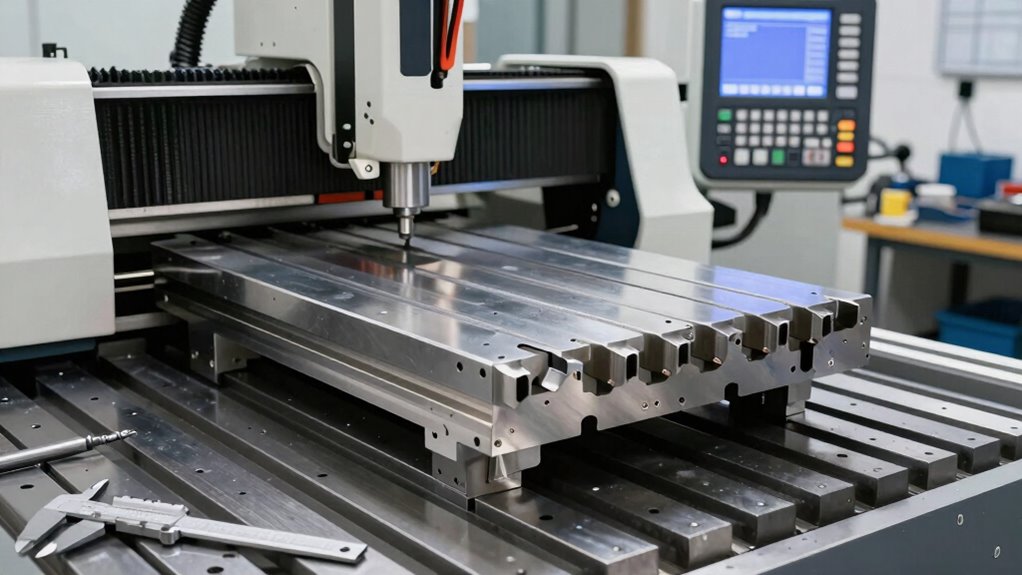
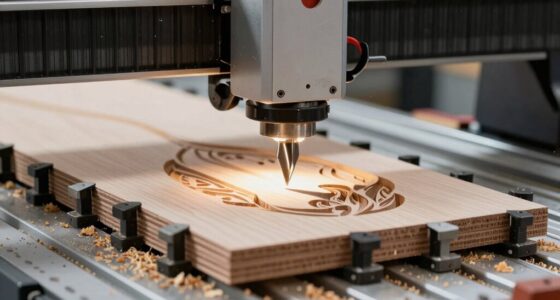
When you’re diving into CNC work, understanding the role of tabs can make a significant difference in the quality of your cuts. Tabs are small connectors that hold your workpiece in place during the cutting process, and they serve important tab functions. They prevent your material from shifting, which can lead to inaccuracies and ruined projects. By knowing how to use tabs effectively, you’ll enhance your overall CNC experience.
Understanding the role of tabs is essential for achieving precision in CNC work and preventing material movement during cutting.
There are various tab types you can consider, each with its unique advantages. Some common options include rectangular tabs, which are simple and easy to design, and more complex shapes that fit specific project needs. The choice of tab design largely depends on the material you’re working with and the complexity of your cuts. Whether you’re cutting plywood, acrylic, or metal, choosing the right tab materials is essential for peak performance.
Tab placement is another critical aspect. You’ll want to strategically position your tabs to maintain stability while minimizing waste. Placing tabs too close to the edge can lead to weak areas, while placing them too far can complicate removal. Finding the right balance is key to achieving clean cuts without compromising the integrity of your project.
Tab sizes also play a significant role in their effectiveness. If your tabs are too small, they won’t hold your material securely, while oversized tabs can be difficult to remove and may mar the surface of your workpiece. Experimenting with different sizes can help you determine what works best for your specific applications.
Once the cutting is complete, you’ll need to focus on tab removal. This step can be tricky, especially with materials like acrylic, which can crack if handled improperly. Using the right tools and techniques for tab removal guarantees that you keep your cuts clean and your workpiece intact. Patience is essential here; rushing the process often leads to unwanted damage.
The benefits of using tabs become evident once you see the results. They not only improve the accuracy of your cuts but also allow for more intricate designs without the risk of material movement. By mastering the art of tab functions, types, placement, and sizes, you’ll set yourself up for success in your CNC projects. Understanding these elements will elevate your craftsmanship and ultimately lead to better outcomes. So, embrace the role of tabs in your CNC work; they matter more than you might initially expect.
As an affiliate, we earn on qualifying purchases.
Frequently Asked Questions
What Materials Are Best for Creating CNC Tabs?
When creating CNC tabs, consider using materials like plywood, MDF, or aluminum for their durability and ease of machining. Each material offers different properties, so choose what fits your project best. For tab thickness, aim for around 1/8 inch for lightweight materials, while thicker tabs may be necessary for sturdier options. Testing various combinations can help you find the perfect balance between strength and ease of removal, ensuring a successful CNC project.
How Do Tabs Affect the Final Finish Quality?
Tabs can greatly impact the final finish quality of your CNC project. If you design your tabs correctly, they help maintain finish consistency by stabilizing your material during cutting. However, poorly placed tabs can lead to uneven surfaces and unwanted marks. So, it’s essential to experiment with tab placement and shape to find what works best for your specific materials. Always remember, a well-thought-out tab design can enhance your overall result.
Can Tabs Be Removed Easily After Machining?
Yes, tabs can be removed easily after machining. You’ll find several tab removal techniques that make the process straightforward. Typically, you can snap them off or use a saw for a cleaner cut. After that, a bit of sanding or filing during post machining cleanup helps achieve a smooth finish. Just remember to be gentle to avoid damaging the part, ensuring you maintain the quality of your project.
What Are the Common Mistakes When Using Tabs?
When you use tabs, common mistakes include improper tab placement and incorrect tab size. If you place tabs too close to the edge, they might not hold your workpiece securely during machining. Similarly, if the tab size is too small, it can break off easily. Make sure you account for your material and cutting process to avoid these pitfalls. Taking the time to plan your tabs can save you from frustrating issues later on.
How Do Tabs Impact CNC Machine Settings?
You might think tabs don’t really impact CNC machine settings, but they actually do. Proper tab placement and size can greatly affect how the machine operates. If tabs are too large, they can cause excessive stress on the tooling, leading to inaccuracies. Conversely, poorly placed tabs might not hold the material securely, risking movement during cutting. By fine-tuning these aspects, you guarantee smoother operations and better end results in your projects.
As an affiliate, we earn on qualifying purchases.
Conclusion
In the world of CNC work, tabs are your silent heroes, holding everything together as you carve your designs. Ignoring them is like trying to build a house without a foundation—it’s bound to crumble. By understanding their importance, you’ll not only enhance the quality of your projects but also save yourself time and frustration. So, embrace tabs; they’re the glue that keeps your creativity from falling apart. Your craftsmanship deserves that extra bit of support!
CNC cutting tab design templates
As an affiliate, we earn on qualifying purchases.
As an affiliate, we earn on qualifying purchases.
CNC workpiece stabilization clamps
As an affiliate, we earn on qualifying purchases.
As an affiliate, we earn on qualifying purchases.
Columbus Day / Indigenous Peoples' Day Picks
long weekend sales
As an affiliate, we earn on qualifying purchases.