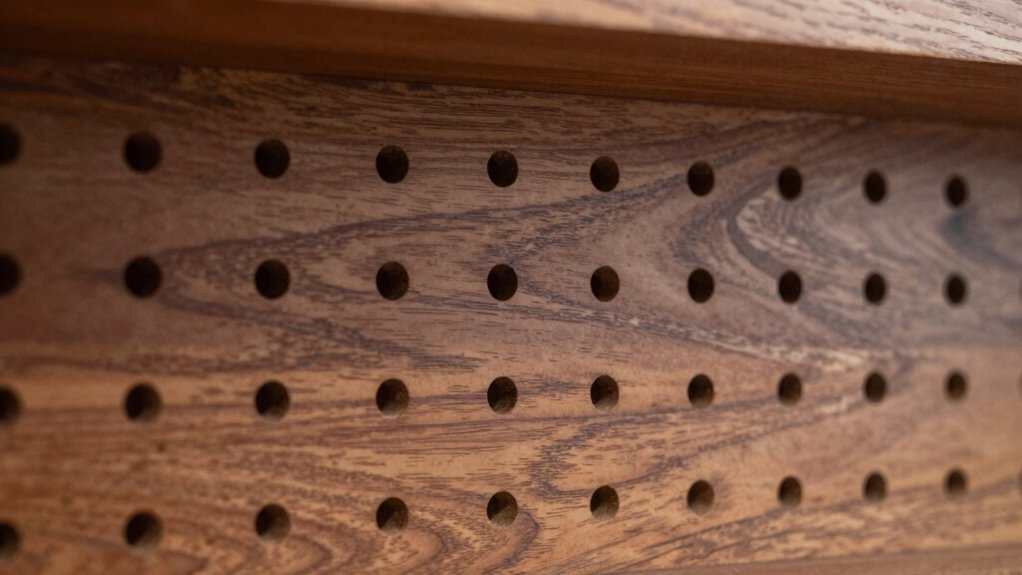

To create a shelf pin layout that looks intentional, space your pins evenly, typically about 32mm or 1.25 inches apart. This spacing balances stability and aesthetics, helping prevent sagging while allowing for future adjustments. Consider using metal pins for heavier shelves, as they’re generally stronger than plastic. Remember, a thoughtful layout not only enhances functionality but also elevates your design. If you want tips on installation and material choices, there’s more to explore.

Get business pricing on tools and workshop supplies
- Business-only prices and quantity discounts
- Tax-exempt purchasing
- Multiple users, one account, clear invoices
Key Takeaways
- Use a consistent spacing guideline of 32mm or 1.25 inches for an intentional and balanced shelf pin layout.
- Consider the weight capacity of shelf pins, opting for metal for heavier materials like solid wood or glass.
- Plan for even spacing to prevent sagging and maintain a visually appealing arrangement.
- Concealed shelf pins create a sleek look, while visible pins can add an industrial touch, enhancing design aesthetics.
- Double-check stability and adjust pin height for optimal functionality and a polished appearance.
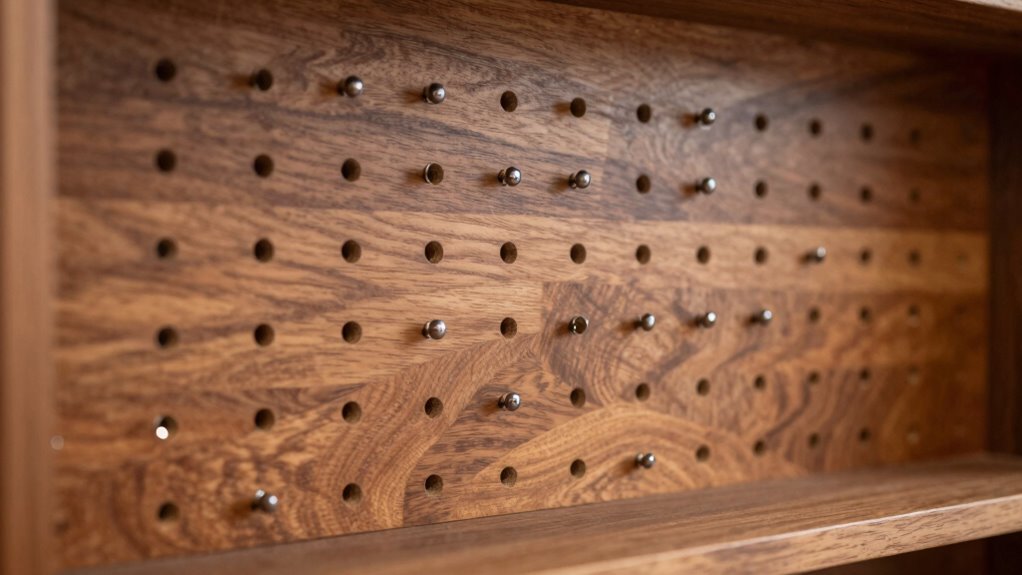
When designing your shelving, the shelf pin layout is vital for guaranteeing stability and flexibility. You want to select the right shelf pin types to suit your needs, as different pins can handle varying weight capacities. For instance, metal pins are often stronger than plastic ones, so consider what items you’ll be placing on the shelves. This choice will notably affect your design’s overall effectiveness and aesthetics.
As you plan the installation, keep in mind some handy installation tips. Start by marking where you’d like the pins to go, making sure they’re evenly spaced to support the weight of your shelves. A common spacing guideline is to place the pins every 32mm or 1.25 inches apart, but this can vary depending on your shelf depth and the overall design you’re aiming for. Too far apart, and you risk sagging; too close, and your design might feel cramped. Proper weight distribution is crucial to maintaining stability over time, especially with heavier loads. Additionally, considering load capacity guidelines can help prevent overloading and potential damage.
Material considerations play a vital role in your layout as well. If you’re using heavy materials like solid wood or glass, you need to guarantee that your shelf pins can support that weight. This includes not only the weight of the shelves themselves but also everything you plan to place on them. Always refer to the manufacturer’s guidelines for weight capacity when selecting your pins, as this will help prevent any unfortunate shelf collapses. Additionally, understanding the weight capacity of your pins can help you choose the most appropriate type for your needs.
Design aesthetics shouldn’t be overlooked either. The layout of your shelf pins can create a clean, intentional look that enhances your space. For a modern design, you might opt for concealed shelf pins, which offer a sleek appearance. Alternatively, visible pins can add a bit of industrial flair if that suits your style. Whichever route you choose, make sure that the pin layout complements your overall design vision. Proper placement can also impact the ease of adjusting or replacing shelves in the future.
Finally, once you’ve got your pins in place, double-check their stability before placing items on the shelves. Adjusting the height and spacing of your shelves can transform not just the function of your storage but also the look of the room. A thoughtful layout of shelf pins can make your shelving not just practical but a focal point in your space. With the right planning and attention to detail, you can create shelves that are both functional and visually appealing, making your design truly stand out.
metal shelf pins for heavy loads
As an affiliate, we earn on qualifying purchases.
As an affiliate, we earn on qualifying purchases.
Frequently Asked Questions
What Materials Are Best for Shelf Pin Construction?
For shelf pin construction, use materials like stainless steel, plastic, or brass. Stainless steel offers excellent durability, resisting rust and wear, making it a top choice for heavy loads. Plastic pins are lightweight and cost-effective, perfect for lighter shelves. Brass adds a touch of elegance but may not be as durable. Consider your shelf pin materials based on the weight they’ll support and the look you want to achieve for lasting functionality.
How Much Weight Can Shelf Pins Support?
So, you think your shelf pins can hold the weight of your entire book collection? Well, hold your horses! Typically, shelf pins can support between 10 to 50 pounds, depending on the material and design. To guarantee shelf stability, you’ll want to space them wisely and avoid turning your bookshelf into a leaning tower of books. Remember, just because they look strong doesn’t mean they’re ready for a weightlifting competition!
Can I Use Shelf Pins in Outdoor Furniture?
Yes, you can use shelf pins in outdoor furniture, but you need to take into account shelf pin durability. Choose pins made from corrosion-resistant materials like stainless steel or coated options for added protection against the elements. When designing your outdoor furniture, make sure that the weight distribution is even to maximize stability. With the right materials and thoughtful design, shelf pins can enhance the functionality and aesthetics of your outdoor pieces.
What Tools Do I Need for Installing Shelf Pins?
Installing shelf pins is like assembling a puzzle; you need the right pieces. For this task, you’ll need a drill or screwdriver, a measuring tape, and a level. Familiarize yourself with different shelf pin types, like metal or plastic, to choose the best fit. For installation tips, pre-drilling holes guarantees precision and helps avoid splintering. With these tools in hand, you’ll create a sturdy, organized space in no time!
Are There Alternatives to Traditional Shelf Pins?
Yes, there are alternatives to traditional shelf pins. You might consider using shelf brackets for a sturdier option, or even metal or plastic peg systems that allow for adjustable shelves. Some designs feature sliding rails or grooves, offering flexibility in positioning. If you want a more aesthetic touch, look into concealed shelf supports, which can create a clean, modern look while still providing the adjustability you need. Each option has its unique benefits.
As an affiliate, we earn on qualifying purchases.
Conclusion
In designing your shelf pin layout, remember that intentional spacing creates harmony in your space. When you align your pins, you enhance stability; when you space them evenly, you invite balance. A well-planned layout not only supports your shelves but also reflects your design sensibility. So, embrace the patterns, appreciate the order, and let each shelf tell a story. With every pin positioned thoughtfully, you’re crafting a space that’s both functional and aesthetically pleasing.
adjustable shelf pin layout tools
As an affiliate, we earn on qualifying purchases.
As an affiliate, we earn on qualifying purchases.
As an affiliate, we earn on qualifying purchases.
Fall yard work Picks
leaf blowers
As an affiliate, we earn on qualifying purchases.