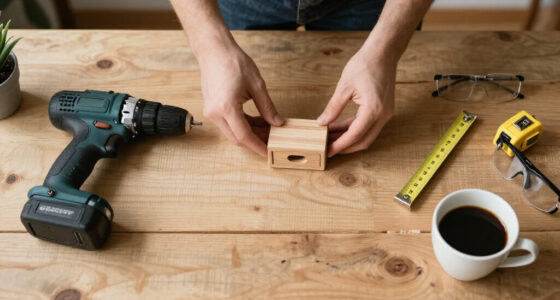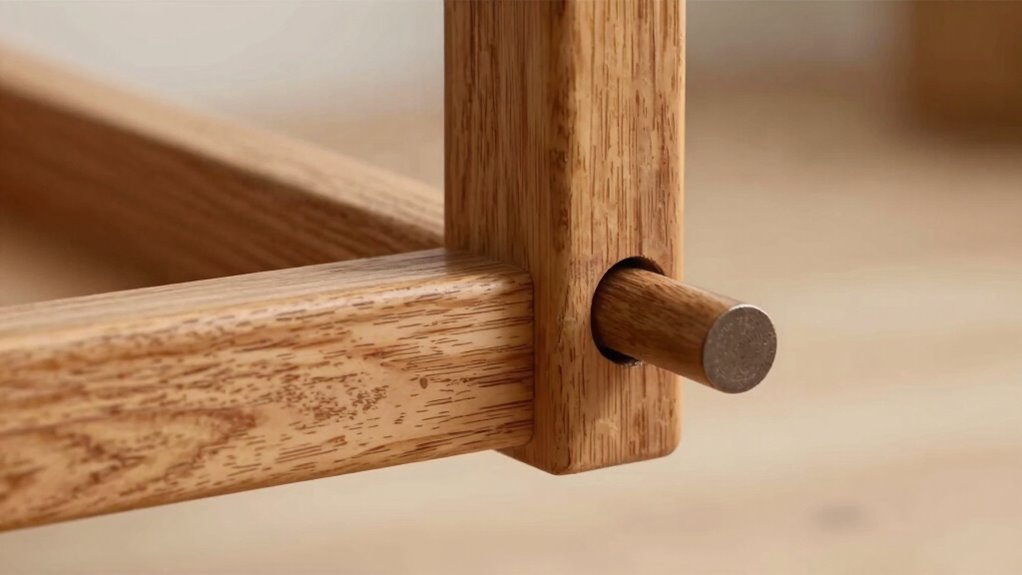
When deciding between floating tenons and dowels for your furniture projects, floating tenons often win out. They offer stronger joints and greater tolerance for alignment mistakes, making assembly easier. Plus, you can use various materials, enhancing design flexibility over traditional dowels. While floating tenons might require more specialized tools, their durability and adaptability can justify the investment. Curious about how these factors stack up in different scenarios? You might find some surprising insights!

Get business pricing on tools and workshop supplies
- Business-only prices and quantity discounts
- Tax-exempt purchasing
- Multiple users, one account, clear invoices
Key Takeaways
- Floating tenons offer superior strength and durability, making them ideal for high-stress furniture applications.
- Assembly is easier with floating tenons due to forgiving tolerances, while dowels require precise alignment.
- Floating tenons provide material versatility, accommodating various woods, whereas dowels are limited to matching materials.
- Less experienced woodworkers benefit from floating tenons’ forgiving fit compared to the precision required for dowel joints.
- While floating tenons may involve higher initial costs for specialized tools, their long-term benefits can justify the investment.
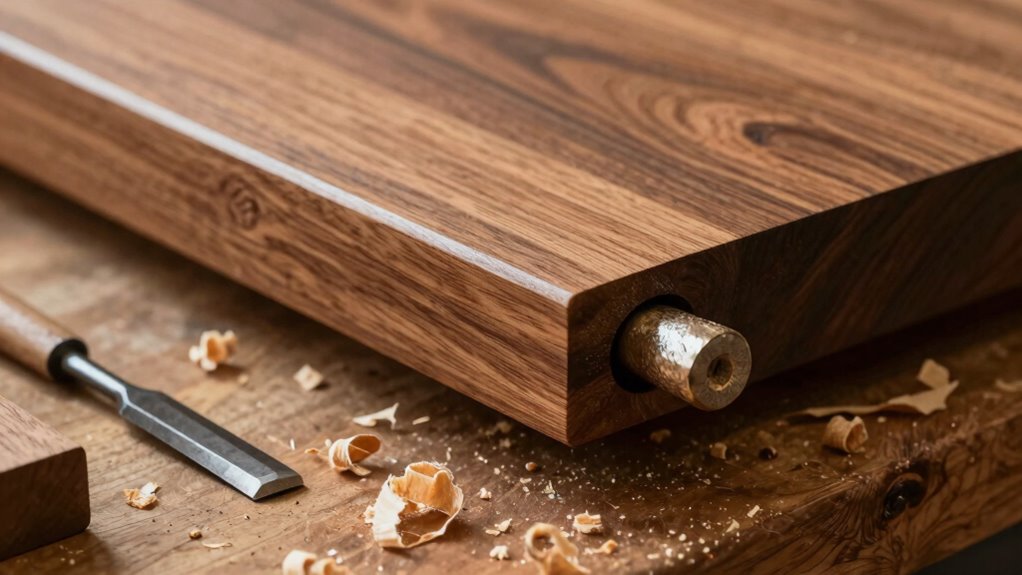
When it comes to joinery, you might wonder whether to choose floating tenons or dowels for your woodworking projects. Both techniques have their merits, but your choice will depend on several factors, including strength comparison, assembly ease, and material compatibility. Floating tenons offer a robust connection, often proving stronger than dowels due to the increased glue surface area. This added surface can enhance the joint’s durability, especially in high-stress applications. Additionally, floating tenons can often be easier to align because they accommodate slight variations in fit, which can be an advantage during assembly. Properly preparing your joints is crucial for ensuring the best results, and floating tenons can help compensate for minor inaccuracies. Furthermore, the use of specialized tools can streamline their installation, making the process more efficient. However, dowels can also provide solid joints, provided they’re sized and positioned correctly.
Assembly ease is another critical consideration. Floating tenons can simplify the process since you only need to drill matching mortises in the workpieces. This method allows for more forgiving tolerances. If you’re looking for a straightforward approach, floating tenons might be your best bet. On the other hand, dowels require precise alignment, which can be tricky. If you’re not careful, you could end up with misaligned joints that compromise the integrity of your project.
Material compatibility plays a role as well. Floating tenons can be made from various materials, allowing you to choose a tenon that matches or complements your workpieces. This gives you flexibility in your designs. Conversely, dowels are typically limited to the same material as the pieces being joined, which can restrict your options. If you’re working with different types of wood, floating tenons may offer more versatility.
Precision accuracy is essential for both techniques. Floating tenons allow for a bit more leeway regarding fit, while dowels require meticulous measurements. If you’re confident in your ability to drill and align dowels perfectly, they can work well. However, if you prefer a more forgiving approach, floating tenons might be more suitable. Using proper measuring techniques can significantly improve the quality of your joints, regardless of the method chosen. This can help minimize errors and ensure consistent results across multiple projects.
Cost analysis is another factor to weigh. Floating tenons often require specialized tools, which can increase your initial investment. Dowels, however, typically necessitate only a simple drill and doweling jigs, making them more accessible for those on a budget. Using appropriate tools can greatly influence the ease and quality of your joinery process.
Ultimately, the decision comes down to your specific application scenarios and personal preferences. Whether you lean toward floating tenons for their strength and flexibility or dowels for their simplicity and cost-effectiveness, each technique offers unique benefits that can enhance your woodworking projects. Choose wisely, and you’ll elevate the quality of your craft.
As an affiliate, we earn on qualifying purchases.
Frequently Asked Questions
What Tools Are Required for Using Floating Tenons or Dowels?
To work with floating tenons or dowels, you’ll need some essential tools. Start with a drill and drill bits for precise holes, ensuring joint accuracy. A doweling jig or a mortise machine will help in tool selection for perfect alignment. Don’t forget wood glue for a strong bond and clamps to hold everything in place while it dries. These tools will make your project easier and enhance the overall quality of your joints.
Can I Combine Floating Tenons and Dowels in One Project?
Yes, you can combine floating tenons and dowels in one project! This approach enhances joint stability by leveraging the strengths of both construction techniques. For instance, use floating tenons for large components and dowels for smaller joints, ensuring a robust structure. Just make sure to plan your design carefully, so the combined method works seamlessly together. With some practice, you’ll create durable, visually appealing furniture that showcases your skills.
How Do I Choose the Right Size for Dowels or Tenons?
To choose the right size for dowels or tenons, consider your project’s needs. Dowel lengths should match the thickness of the material you’re joining, typically 1.5 to 2 times the thickness. For tenons, aim for a thickness that’s about one-third of the material’s thickness for strength. Test fit your pieces to guarantee a snug fit, and adjust sizes as necessary. Proper sizing guarantees durability and stability in your furniture design.
What Types of Wood Are Best for Floating Tenons and Dowels?
When you think of a sturdy bridge, hardwoods like maple and oak stand tall, offering strength and durability for floating tenons. For dowels, softer woods such as pine and poplar work well, providing ease of use without sacrificing stability. Just like building that bridge, choosing the right wood is essential. Remember, while hardwood options give you longevity, softwood suitability can make your project easier and quicker to complete.
How Do I Ensure Strong Joints With Either Method?
To guarantee strong joints, focus on joint stability by selecting the right size and fit for your tenons or dowels. Make certain your holes are clean and precise. For glue options, use high-quality wood glue or epoxy, applying it evenly to both surfaces. Clamp the joint firmly while the glue dries to maximize strength. Regularly check alignment during the drying process to maintain stability and guarantee a solid bond.
As an affiliate, we earn on qualifying purchases.
Conclusion
When it comes to choosing between floating tenons and dowels, it really boils down to your specific project needs and preferences. Floating tenons offer flexibility and strength, while dowels provide simplicity and ease of use. So, which method aligns best with your furniture vision? Ultimately, both options can yield stunning results—it’s all about what you’re comfortable with and what fits your style. Embrace the journey, and you’ll create pieces that truly reflect your craftsmanship.
As an affiliate, we earn on qualifying purchases.
As an affiliate, we earn on qualifying purchases.
Fall yard work Picks
leaf blowers
As an affiliate, we earn on qualifying purchases.