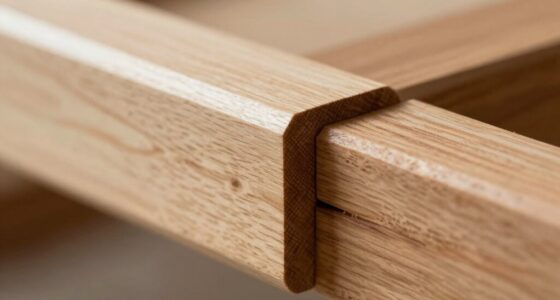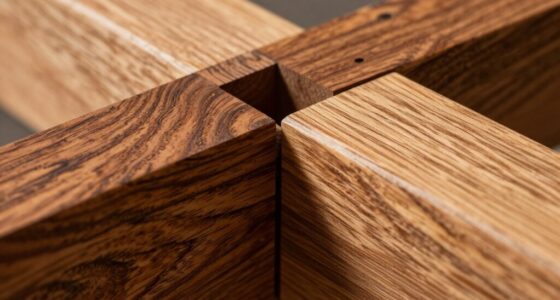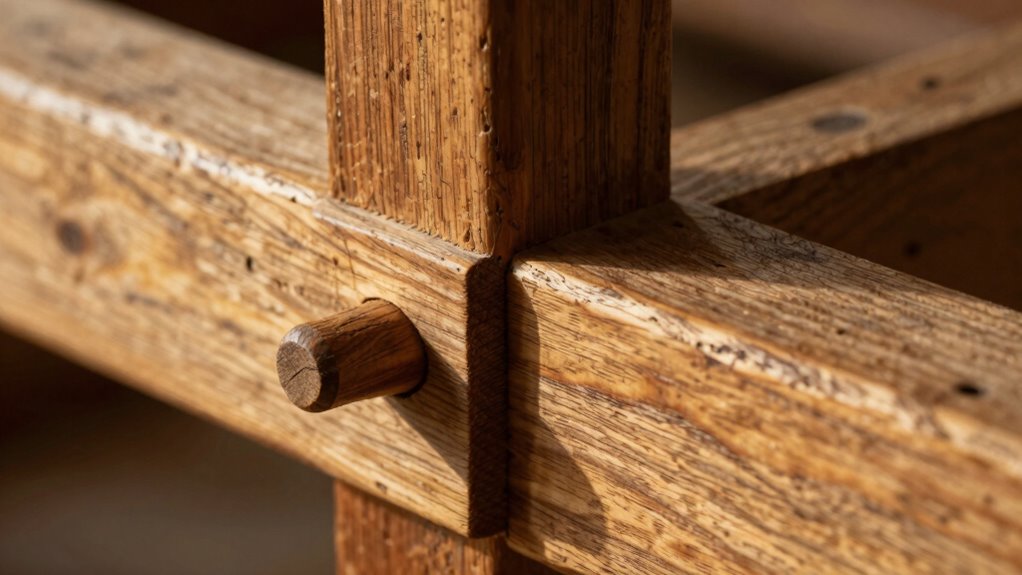

Drawbore pegs are a traditional joinery technique that boosts the strength and durability of your wood joints. By drilling offset holes in your mortise and tenon joints, driving a peg pulls everything tightly together. This method not only eliminates the need for screws, enhancing the natural beauty of your projects, but it also guarantees your pieces stand the test of time. Discover how mastering this technique can elevate your craftsmanship and transform your woodworking skills.
Key Takeaways
- Drawbore pegs create tighter joints by using offset holes, enhancing strength and durability in woodworking.
- The technique showcases precision, pulling joints tighter when pegs are driven through the wood.
- Marking and drilling angled holes in mortise and tenon joints is essential for effective drawboring.
- This traditional method eliminates the need for visible fasteners, preserving wood’s natural beauty and elegance.
- Mastering drawbore pegs connects woodworkers to time-honored techniques, allowing for customized and enduring craftsmanship.
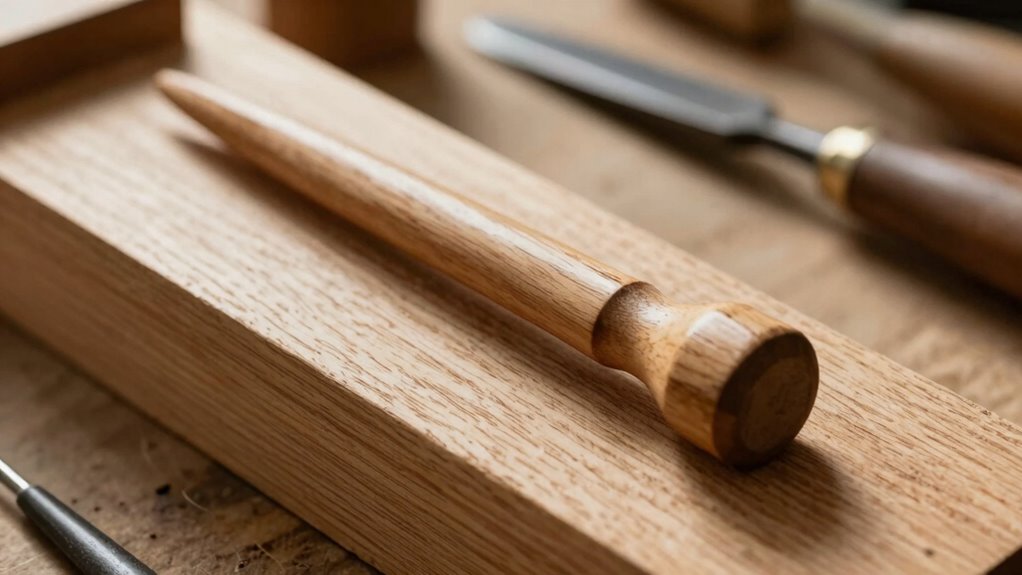
When you’re tackling a woodworking project, understanding drawbore pegs can make a significant difference in your joinery’s strength and durability. These clever little devices, rooted in traditional techniques, allow you to create tighter and more secure joints. This is especially essential if you want your pieces to withstand the test of time. Knowing how to use drawbore pegs effectively can elevate your craftsmanship, making it not just functional but also visually appealing.
At its core, the drawbore technique involves drilling holes offset from one another in two pieces of wood you want to join. When you drive a peg through these holes, it pulls the joint tighter together. It’s a method that showcases woodworking precision, ensuring that your joints are not just held together but are locked in place. This is particularly useful for larger projects, like furniture or structural elements, where strength is critical. Properly executed, this technique can also help prevent future joint loosening caused by wood movement or settling over time.
The drawbore technique, with its offset holes, creates tightly locked joints that enhance strength and precision in woodworking projects.
When using drawbore pegs, you’ll typically start by marking your mortise and tenon joints. You’ll need to drill holes in the tenon and corresponding holes in the mortise at a slight angle. This slight offset is the secret sauce—it creates tension when you drive the peg through. If you do it right, you’ll see your joint snug up beautifully. It’s satisfying to see that immediate result, knowing you’ve used a technique that many craftsmen have relied on for generations.
Another advantage of drawbore pegs is that they can often eliminate the need for additional hardware, such as screws or nails, which can detract from the natural beauty of wood. Instead, you’re left with a clean, elegant look that highlights your skill and understanding of traditional methods. Plus, since the pegs are hidden within the joint, you maintain a seamless appearance in your finished project. This aesthetic appeal is one reason why many woodworkers prefer this method for fine furniture.
As you gain more experience, you’ll appreciate how drawbore pegs contribute to the overall integrity of your work. They allow for a level of customization that can’t be achieved with modern fasteners. You’ll find that the more you practice this technique, the more intuitive it becomes, leading to even greater woodworking precision. You’ll not only improve the strength of your projects but also deepen your connection to the craft as you embrace these time-tested methods.
Ultimately, mastering drawbore pegs isn’t just about strength; it’s about creating pieces that tell a story—your story as a woodworker. So, immerse yourself in this traditional technique, and watch your skills flourish! Incorporating traditional joinery methods like drawbore pegs can also inspire you to explore other age-old techniques that enhance the beauty and durability of your work.

100 Pcs 1/4" Wood Dowel Pins, 1/4" x 1 1/2" Fluted Hardwood Dowel Pins Straight Grooved Wood Pegs for Furniture, Model Building and Woodworking
【Quality Hardwood】 These wood dowel pins are made from quality hardwood, ensuring durability and resistance to splitting, making…
As an affiliate, we earn on qualifying purchases.
As an affiliate, we earn on qualifying purchases.
Frequently Asked Questions
What Tools Are Needed for Making Drawbore Pegs?
To make drawbore pegs, you’ll need a few essential tools: a drill for creating holes, a chisel for shaping, and a saw for cutting peg dimensions to size. Don’t forget a hammer to drive the pegs in and a measuring tape for accuracy. When you focus on tool selection, make certain each tool is suited for the task. This’ll help you create strong, well-fitted joints in your woodworking projects.
Can Drawbore Pegs Be Used in Modern Furniture?
Yes, you can definitely use drawbore pegs in modern furniture. They not only enhance design aesthetics but also improve structural integrity. By incorporating these pegs, you create a unique blend of traditional craftsmanship and contemporary style. They provide strong joints that resist movement over time, ensuring your furniture remains sturdy. Plus, the visible pegs can add an artistic touch that sets your pieces apart in a modern setting.
What Types of Wood Are Best for Drawbore Pegs?
For drawbore pegs, hardwoods like oak, maple, and beech work best due to their wood density and strength. You’ll want to pay attention to the grain orientation, as straight grain helps with stability and durability. Avoid softer woods, as they may compress or split under pressure. By choosing the right wood, you guarantee your joinery remains secure and long-lasting, making your furniture both functional and aesthetically pleasing.
How Do Drawbore Pegs Compare to Modern Fasteners?
Drawbore pegs are like the secret weapon of traditional craftsmanship, standing tall against modern fasteners. While screws and nails offer speed, they can’t match the durability and aesthetic appeal of drawbore pegs. You’ll appreciate the artistry in joinery techniques that these pegs embody, ensuring your projects maintain their integrity over time. They create tight joints that don’t just hold; they tell a story of skilled hands and timeless methods.
Are There Any Historical Examples of Drawbore Peg Use?
Yes, there are plenty of historical examples of drawbore peg use. Craftsmen in ancient civilizations, like the Egyptians and Romans, utilized this technique in their joinery traditions to create sturdy furniture and structures. You’ll find drawbore pegs featured prominently in timber framing during the Middle Ages, showcasing their effectiveness in connecting wooden elements. These historical techniques illustrate how drawbore pegs have stood the test of time, proving essential in traditional woodworking practices.
traditional joinery pegs
As an affiliate, we earn on qualifying purchases.
As an affiliate, we earn on qualifying purchases.
Conclusion
In the world of joinery, drawbore pegs hold secrets that could transform your craftsmanship. You might think modern techniques have it all, but wait—there’s more to discover. As you explore deeper into this ancient method, you’ll find it’s not just about joining pieces; it’s about creating a bond that lasts. Will you embrace this timeless technique and unveil its potential in your next project? The choice is yours, but the rewards could be extraordinary.
mortise and tenon drawbore pegs
As an affiliate, we earn on qualifying purchases.
As an affiliate, we earn on qualifying purchases.

Medsuo 21pcs Wooden Dowels Assorted M6 M8 M10 Hard Wood Grooved Plugs Furniture Woodwork Pin Craft for Grooved, Craft, DIY, Carpentry (6mm 8mm 10mm)
High-quality grooved wooden dowels, there is no problem in knocking into the corresponding dowel holes. Grooves allows much…
As an affiliate, we earn on qualifying purchases.
As an affiliate, we earn on qualifying purchases.