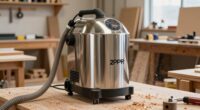
When selecting a cyclone dust collector for a garage workshop, the key considerations are power, capacity, and filtration efficiency. The JET Cyclone Dust Collector with a 2-micron filter stands out for its strong performance and durability, making it a top overall choice. The WEN DC1300 offers excellent CFM for larger spaces at a more affordable price, while the Vevor 2 HP Dust Collector balances capacity with mobility. Buyers often face tradeoffs between high capacity and ease of use, or between cost and filtration quality. Keep reading for a detailed breakdown of each option to find the best fit for your garage workshop needs.

Get business pricing on tools and workshop supplies
- Business-only prices and quantity discounts
- Tax-exempt purchasing
- Multiple users, one account, clear invoices
Complete the kit


Key Takeaways
- The highest CFM ratings consistently correlate with better dust collection in larger workshops.
- Filtration efficiency (e.g., 2-micron filters) significantly impacts indoor air quality and maintenance needs.
- Mobility features like casters and compact design matter for smaller garages or flexible setups.
- More powerful models tend to be louder and more expensive, but offer longer-term durability.
- Capacity size should match your workload; larger collection drums reduce downtime but add bulk.
| JET Cyclone Dust Collector, 2-Micron Filter, 3 HP, 230V 1Ph |  | Best Overall for Heavy-Duty Dust Collection | Filter Efficiency: 99% of 2-micron particles, 86% of 1-micron particles | Power: 3 HP | Voltage: 230V | VIEW ON AMAZON | See Our Full Breakdown |
| WEN DC1300 1,300 CFM 14-Amp 5-Micron Woodworking Dust Collector with 50-Gallon Collection Bag and Mobile Base |  | Best Value for High Airflow and Mobility | Airflow: 1300 CFM | Motor Power: 14 Amps | Collection Capacity: 50 gallons | VIEW ON AMAZON | See Our Full Breakdown |
| JET Cyclone Dust Collector, 2-Micron Filter, 2 HP, 230V 1Ph |  | Best for Two-Stage Separation and Precise Dust Capture | Filter Size: 2 Micron | Horsepower: 2 HP | Voltage: 230V | VIEW ON AMAZON | See Our Full Breakdown |
| Mullet Cyclone Dust Collector, High-Speed Separator for Shop Vac |  | Best for Shop Vac Users Seeking Debris Pre-Separation | Debris Separation Efficiency: Over 99% | Design: Parabolic, seamless | Connection Type: Rigid, cut-to-fit PVC | VIEW ON AMAZON | See Our Full Breakdown |
| Dustopper PRO Dust Collector – 99.9% Efficiency Cyclone Dust Separator |  | Best for Cost-Effective, High-Performance Dust Separation | Efficiency: 99.9% | Material: EPDM gasket | Includes: Two high-flow sweep elbows | VIEW ON AMAZON | See Our Full Breakdown |
| JET Dust Collector, 5-Micron Bag Filter, 1 HP, 115/230V 1Ph (DC-650MK) |  | Best Overall for Small to Medium Workshops | Particle Capture Efficiency: 98% at 5 microns | Power: 1 HP | Voltage: 115/230V | VIEW ON AMAZON | See Our Full Breakdown |
| VEVOR Dust Collector, 763 CFM 1 Micron Cyclone Dust Collection System with 12.5-Gallon Drum and Stand |  | Best for High-Power Woodworking Workshops | Airflow: 763 CFM | Filtration: 1.0 micron | Dust Capacity: 12.5 gallons | VIEW ON AMAZON | See Our Full Breakdown |
| VEVOR 2 HP Dust Collector with 1167 CFM, 39 Gallon Collection Bag, and Mobile Base |  | Best for Industrial-Grade Performance and Large Capacity | Power: 2 HP | Airflow: 1167 CFM | Voltage: 120V | VIEW ON AMAZON | See Our Full Breakdown |
| cyclone dust collector for a garage workshop | Voltage |
|---|---|
| JET Cyclone Dust Collector | 230V |
| WEN DC1300 1,300 CFM 14-Amp 5- | — |
| JET Cyclone Dust Collector | 230V |
| Mullet Cyclone Dust Collector | — |
| Dustopper PRO Dust Collector | — |
| JET Dust Collector | 115/230V |
| VEVOR Dust Collector | — |
| VEVOR 2 HP Dust Collector with | 120V |
More Details on Our Top Picks
JET Cyclone Dust Collector, 2-Micron Filter, 3 HP, 230V 1Ph
This JET cyclone model stands out for its exceptional filtration efficiency, capturing 99% of 2-micron particles, making it ideal for workshops that generate fine dust. Its large 66-gallon drum reduces the frequency of emptying, which benefits users handling big projects. Compared with the smaller 30-gallon JET model, the larger capacity minimizes downtime, though it adds significant weight and bulk, limiting flexibility. The remote timer and RF remote control enhance usability, especially during long sessions. However, its requirement for a 230V power supply restricts portability, and the weight makes it less suitable for smaller or mobile setups.
Pros:- High filtration efficiency for ultra-fine dust
- Large 66-gallon debris capacity reduces emptying frequency
- Remote control and timer for convenient operation
Cons:- Heavy and bulky, difficult to move around in small workshops
- Requires 230V power, limiting placement options
Best for: Heavy-duty workshop operators needing high filtration and large debris capacity
Not ideal for: Small garage workshops or users with limited 230V outlets who prioritize portability
- Filter Efficiency:99% of 2-micron particles, 86% of 1-micron particles
- Power:3 HP
- Voltage:230V
- Phase:1Ph
- Debris Capacity:66 gallons
- CFM:1240
Our verdict“This model is best suited for large, dedicated workshops with high dust generation and stable power sources.”
WEN DC1300 1,300 CFM 14-Amp 5-Micron Woodworking Dust Collector with 50-Gallon Collection Bag and Mobile Base
The WEN DC1300 offers impressive airflow of 1,300 CFM, making it highly effective at capturing dust from multiple tools simultaneously. Its 50-gallon collection bag minimizes interruptions, and the mobile base with swivel casters makes repositioning easier than with bulkier units like the JET 3 HP. Unlike the JET cyclone, it focuses more on airflow volume than ultra-fine filtration, which is suitable for general woodworking but less ideal for fine dust. Its dual 4-inch inlets provide flexibility for connecting multiple tools, yet the unit’s weight and size can make frequent moving cumbersome. It also demands a 14-amp outlet, which may not be available everywhere.
Pros:- High 1300 CFM airflow for effective dust collection
- Large 50-gallon bag reduces frequent emptying
- Mobile base with swivel casters for easy repositioning
- Dual inlets for connecting multiple tools
Cons:- Heavy and takes up significant space
- Requires a 14-amp outlet, not suitable for all setups
Best for: Woodworking shops requiring high airflow capacity and easy mobility
Not ideal for: Workshops focusing on fine dust filtration or with limited electrical capacity
- Airflow:1300 CFM
- Motor Power:14 Amps
- Collection Capacity:50 gallons
- Impeller Speed:3450 RPM
- Inlets:Two 4-inch inlets
- Impeller Size:10-inch steel
Our verdict“This pick makes the most sense for busy woodworking shops needing high airflow and mobility, even if it sacrifices some filtration finesse.”
JET Cyclone Dust Collector, 2-Micron Filter, 2 HP, 230V 1Ph
This JET cyclone model emphasizes a two-stage separation system, which boosts airflow efficiency. Its 30-gallon drum and quick-release levers streamline debris removal, making it well-suited for demanding shop environments. Compared to the 3 HP version, this 2 HP unit offers slightly less power but remains effective for most medium-sized workshops. Its remote control adds convenience, yet the limited 30-gallon capacity may require more frequent emptying during heavy use. Like other 230V models, portability is limited, and the 2-micron filtration may not trap the finest dust particles without upgrading filters.
Pros:- Efficient two-stage separation improves airflow
- Quick-release drum for easy debris management
- Remote control for user convenience
Cons:- Limited to 30-gallon capacity, more frequent emptying required
- Requires 230V power, reducing portability
Best for: Mid-sized workshops needing reliable separation and moderate capacity
Not ideal for: Very large operations or users requiring ultra-fine dust filtration without additional upgrades
- Filter Size:2 Micron
- Horsepower:2 HP
- Voltage:230V
- Phase:1Ph
- Capacity:30 gallons
Our verdict“This model is best for shops that want reliable separation with moderate debris capacity and streamlined maintenance.”
Mullet Cyclone Dust Collector, High-Speed Separator for Shop Vac
The Mullet Cyclone excels in pre-separating debris before it reaches a shop vac, maintaining strong suction and extending filter life. Its parabolic, seamless design creates a faster airstream, which improves dust capture efficiency. Unlike larger cyclone units, it is designed for compatibility with most shop vacuums, making it a cost-effective upgrade for small workshops. While setup needs care for optimal performance, its universal connection and durable PVC construction make it a versatile choice. However, it relies heavily on proper sealing and setup, and may require adapters for some vacuums, limiting plug-and-play ease.
Pros:- Over 99% debris separation efficiency
- Creates strong suction and prolongs vac filter life
- Universal compatibility with various shop vacuums
- Durable, airtight PVC connection
Cons:- Performance depends on correct setup and sealing
- Additional adapters may be needed for some vacuums
Best for: Small workshop owners who use shop vacuums and need an effective debris pre-separator
Not ideal for: Large workshops or those needing a standalone cyclone system with high capacity
- Debris Separation Efficiency:Over 99%
- Design:Parabolic, seamless
- Connection Type:Rigid, cut-to-fit PVC
- Compatibility:Universal with shop vacuums
- Made in:USA
Our verdict“This pick is ideal for small workshops wanting to upgrade their shop vacs with a reliable pre-separator that minimizes fine dust escape.”
Dustopper PRO Dust Collector – 99.9% Efficiency Cyclone Dust Separator
The Dustopper PRO offers an impressive 99.9% dust separation efficiency, making it a standout for those prioritizing maximum dust capture without high cost. Its leak-proof gasket and high-flow sweep elbows optimize performance, while its low-profile, USA-made design fits well in tight spaces and standard 5-gallon pails. Unlike larger cyclone units, it’s designed as a low-profile separator that can be easily integrated with existing systems, reducing cleanup costs and filter wear. Nevertheless, it’s primarily intended for use with standard pails, meaning some setups may need adaptation, and its effectiveness depends on proper sealing. It’s less suited for large-scale dust collection but excels in small to medium setups.
Pros:- Extremely high dust separation efficiency (99.9%)
- Leak-proof gasket ensures secure fit
- Includes high-flow sweep elbows for optimal performance
- Made in the USA with quality engineering
Cons:- Primarily designed for 5-gallon pails, may require adaptation
- Performance depends heavily on proper sealing and setup
Best for: Home workshop users or small-scale professionals seeking maximum efficiency with simple setup
Not ideal for: Large workshops or those needing high-volume collection with large debris capacity
- Efficiency:99.9%
- Material:EPDM gasket
- Includes:Two high-flow sweep elbows
- Made in:USA
- Compatibility:Standard 5-gallon pails
Our verdict“This cyclone separator is best for cost-conscious users who want top-tier dust capture efficiency in small to medium setups.”
JET Dust Collector, 5-Micron Bag Filter, 1 HP, 115/230V 1Ph (DC-650MK)
This JET model stands out for its high efficiency in capturing 98% of 5-micron dust particles, making it an excellent choice for maintaining cleaner air in smaller workshops. Its portable design with caster wheels allows easy movement between workstations, and the quick-install collection bag simplifies maintenance. Compared with larger units like the VEVOR 2 HP Dust Collector, this model is less powerful but offers quieter and more economical operation, ideal for users who prioritize ease of use over raw suction power. The main tradeoff involves its limited 1 HP motor, which may struggle with larger debris or prolonged heavy-duty tasks, requiring users to upgrade for bigger needs.
Pros:- High dust capture efficiency at 5 microns
- Portable with caster wheels for easy repositioning
- Quiet and energy-efficient operation
Cons:- Limited to 1 HP, reducing effectiveness on large debris
- Requires compatible dust port connection from machines
- Filter replacement may be needed periodically
Best for: Small to medium-sized workshop owners seeking efficient, quiet dust collection with easy mobility
Not ideal for: Heavy-duty industrial environments or workshops with extensive dust production needing maximum suction power
- Particle Capture Efficiency:98% at 5 microns
- Power:1 HP
- Voltage:115/230V
- Phase:Single-phase
- Filter Size:5-micron
- Port Diameter:4 inches
Our verdict“This pick is best suited for small to medium workshops prioritizing quiet, efficient dust removal with easy mobility.”
VEVOR Dust Collector, 763 CFM 1 Micron Cyclone Dust Collection System with 12.5-Gallon Drum and Stand
This VEVOR dust collector offers a significant upgrade in power, with 763 CFM airflow and a 1.0-micron filtration system that effectively captures fine dust. Its larger 12.5-gallon drum reduces the frequency of emptying, making it suitable for workshops with more continuous dust production. When compared to the smaller 1 HP JET model, this unit provides substantially higher suction capacity, ideal for serious woodworking setups. However, its increased size and weight mean it’s less suited for limited spaces or users needing a lightweight, portable option. Its noisier operation and larger footprint are notable tradeoffs for raw power and capacity.
Pros:- High airflow at 763 CFM for effective dust removal
- Effective 1.0-micron filtration captures fine dust
- Large 12.5-gallon drum reduces emptying frequency
- Easy maintenance with rolling wheels and quick dust release lever
Cons:- Bulky and heavy for small or cramped workshops
- Can be noisy at higher operation levels
- Requires more space and robust electrical setup
Best for: Woodworking shops that need robust dust collection with continuous operation and high dust capture efficiency
Not ideal for: Small garages or hobbyists with limited space or lower dust output, due to its size and power requirements
- Airflow:763 CFM
- Filtration:1.0 micron
- Dust Capacity:12.5 gallons
- Motor Power:1.5 HP
- Noise Level:≤ 90dB
- Hose Length:not specified
Our verdict“This model makes the most sense for serious woodworking shops demanding high capacity and effective fine dust filtration.”
VEVOR 2 HP Dust Collector with 1167 CFM, 39 Gallon Collection Bag, and Mobile Base
This VEVOR model provides exceptional power with a 2 HP motor, generating 1167 CFM airflow, making it suitable for industrial or large-scale woodworking environments. Its 39-gallon collection drum supports extended operation without frequent emptying, a clear advantage over smaller units like the 12.5-gallon VEVOR model. The 3μm filter captures 99% of dust, improving air quality significantly. Compared to the smaller and less powerful units, this dust collector is more bulky and demands a dedicated space, and it can be noisy despite an 85dB rating. Its portability is enhanced by lockable wheels, but the size and power make it less ideal for small workshops or hobbyists.
Pros:- Powerful suction with 1167 CFM airflow
- Large 39-gallon capacity for extended use
- High-efficiency 3μm filtration captures nearly all dust
- Portable with lockable wheels for ease of movement
Cons:- Bulky footprint requires ample space
- Can be quite noisy at full power
- Requires substantial electrical setup and space
Best for: Industrial or large workshop environments needing maximum dust removal capacity and high airflow
Not ideal for: Small garages or hobbyists with limited space and lower dust generation, due to size and power demands
- Power:2 HP
- Airflow:1167 CFM
- Voltage:120V
- Collection Capacity:39 gallons
- Filter:3μm canister
- Noise Level:≤ 85dB
Our verdict“This model is best for large, industrial-scale workshops that need maximum dust collection with minimal interruption.”

How We Picked
This lineup was chosen based on a blend of performance, build quality, filtration efficiency, and user versatility. I prioritized models with high CFM ratings, reliable filtration systems, and user-friendly features like mobility and ease of maintenance. Cost was also a factor, but only insofar as it reflected value for the features offered. The ranking reflects how well each model balances power, practicality, and price, ensuring options for different workshop sizes and budgets. Each pick offers a distinct advantage for specific workshop setups or user preferences.Factors to Consider When Choosing Cyclone Dust Collector For A Garage Workshop
Choosing the right cyclone dust collector involves more than just looking at specs. It’s important to consider how your workspace size, typical workload, and air quality needs align with each model’s capacity and features. Proper filtration is vital for maintaining a healthy environment, especially in enclosed garages. Additionally, factors like mobility and ease of maintenance can save time and frustration over the long run. Understanding these broader considerations will help you avoid common pitfalls like underpowered units or models that are difficult to operate or clean.Power and CFM Ratings
The power of a dust collector, often indicated by its CFM (Cubic Feet per Minute) rating, directly impacts its ability to handle larger volumes of debris. For a garage workshop, a model with at least 1,200 CFM is recommended if you run multiple machines simultaneously. Higher ratings mean better dust pickup over a broader area, but also typically come with increased noise and cost. Matching your CFM needs with your workshop size prevents underperformance and ensures cleaner air and workspace.
Filtration Efficiency
Filtration quality impacts both your health and the longevity of your equipment. Models with 1- or 2-micron filters capture finer dust particles, reducing airborne contaminants. Cheaper units often use larger micron filters, which may leave residual dust in the air. Investing in a cyclone system with high filtration can reduce the frequency of filter replacements and improve indoor air quality, especially if you spend long hours in your workshop.
Capacity and Collection Size
Collection drum size influences how often you need to empty the system. Larger drums, like 50 gallons, are ideal for frequent use, as they minimize interruptions. However, they add weight and can be cumbersome to move. Smaller models with 12-20 gallon drums are more manageable but require more frequent emptying. Consider your workload and available space to balance capacity with convenience.
Mobility and Space Requirements
Garage workshops often have limited space, so portable models with casters or compact designs offer significant advantages. A cyclone dust collector with a mobile base can be repositioned easily, helping to maximize workspace. Conversely, larger, stationary units may be better suited for dedicated workshops where space isn’t an issue. Think about your workflow and storage options before choosing a model that fits your space constraints.
Noise Level and Ease of Maintenance
Powerful dust collectors tend to generate more noise, which can affect your comfort during long sessions. Look for models with noise-reducing features if your garage is shared or has noise restrictions. Maintenance considerations include filter replacement, bin emptying, and accessibility. A system designed for easy access and filter cleaning can save time and keep your dust collection running smoothly over years of use.
Budget and Long-Term Value
While high-end cyclone dust collectors offer superior performance and durability, they come with a higher price tag. Cheaper models may suffice for occasional use or smaller workshops but could require more frequent maintenance or upgrades. Weigh the initial investment against potential savings in maintenance, filters, and health benefits to determine the best value for your specific needs.
Frequently Asked Questions
How do I know if a cyclone dust collector is powerful enough for my workshop?
To determine if a cyclone dust collector is suitable, compare its CFM rating with your workshop size and the number of machines you plan to connect. As a rule of thumb, a unit with at least 1,200 CFM handles typical garage setups with multiple tools running simultaneously. More powerful units can manage larger spaces or more extensive dust production, but they may also be louder and more expensive. Matching the unit’s capacity to your workload ensures efficient dust collection without overpaying for unnecessary power.
Is a higher micron filter always better for indoor air quality?
Higher filtration efficiency, such as 1 or 2 microns, significantly improves indoor air quality by capturing finer dust particles. Cheaper units with larger micron filters may trap larger debris but often allow smaller dust to recirculate into the air. Upgrading to a cyclone dust collector with finer filters is a wise investment if you spend long hours in your workshop or have respiratory sensitivities. Remember, regular filter maintenance is essential to maintain filtration performance over time.
Can I connect multiple machines to a single cyclone dust collector?
Yes, most cyclone dust collectors are designed with multiple ports or blast gates to connect several machines. However, the effectiveness depends on the unit’s CFM rating and how many machines are running simultaneously. A higher-capacity unit will handle multiple tools better, maintaining strong suction and effective dust collection. Be aware that connecting too many machines to an underpowered system can lead to reduced performance and dust escape, so sizing your system for your workshop’s needs is critical.
How often will I need to replace filters or empty the collection drum?
The frequency of filter replacement and drum emptying depends on your usage and the model’s capacity. Larger drums reduce the need for frequent emptying, but when full, they can be heavy to handle. Filters with higher micron ratings tend to last longer but may reduce filtration quality. Regular inspection and maintenance are vital; a well-maintained cyclone dust collector will serve reliably for years, minimizing downtime and ongoing costs.
Is it worth investing in a more expensive cyclone dust collector?
Investing in a higher-priced cyclone dust collector generally offers benefits like increased capacity, better filtration, quieter operation, and greater durability. These features can translate into a more comfortable and efficient workshop environment, especially if you work frequently or run multiple tools at once. While the initial cost is higher, the long-term savings in maintenance, filter replacements, and improved indoor air quality can justify the investment. Evaluate your workshop size and workload to determine if the added features align with your needs.