
Rip capacity in real projects is the maximum width of material you can cut in a single pass with your saw or tool. It’s essential because it influences how you plan your cuts, ensuring efficiency and precision. Staying within this limit helps avoid mistakes, excessive waste, or damage to your tools. When you understand your rip capacity, you can handle larger pieces confidently. Keep exploring, and you’ll discover how to make the most of this significant feature in your projects.
Key Takeaways
- Rip capacity defines the maximum width of material that can be cut in a single pass with a saw or cutting tool.
- It influences planning, ensuring cuts stay within safe and accurate limits for the project.
- Proper understanding prevents overextending tools, reducing errors, waste, and potential damage.
- Larger rip capacity allows handling bigger components, streamlining workflow and reducing multiple cuts.
- Accurate knowledge of rip capacity ensures precise, efficient, and safe project execution.
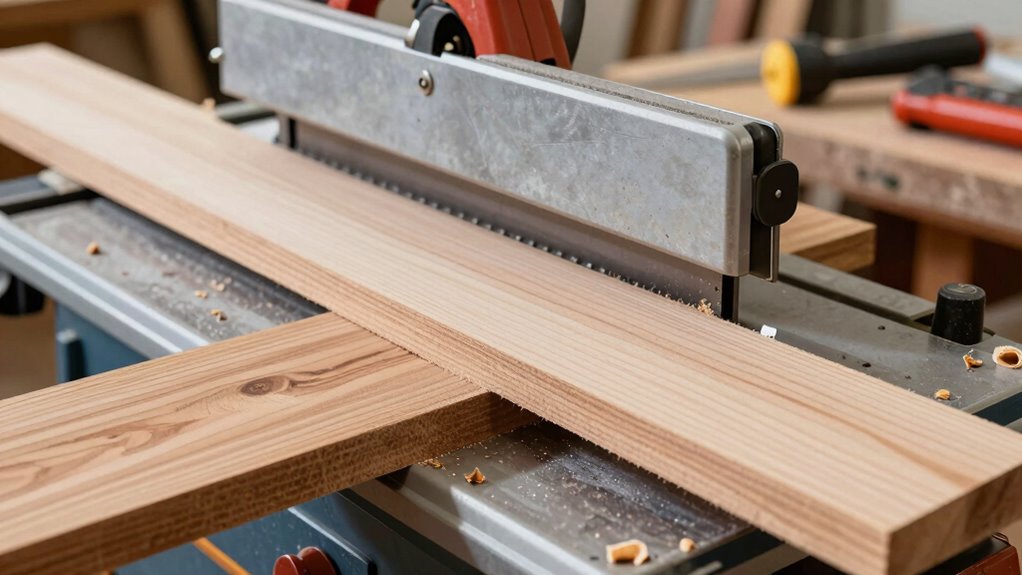
Understanding rip capacity is essential when tackling real projects because it directly impacts how you plan and execute cuts. When you’re working with different materials, knowing the maximum width you can cut in a single pass saves you time and prevents mistakes. Your rip capacity isn’t just a number; it’s a vital factor that influences the overall outcome of your project. For example, if you’re cutting wide sheets of plywood or large pieces of hardwood, a saw with limited rip capacity could force you to make multiple passes or resort to complex workarounds, increasing the risk of inaccuracies. Being aware of your rip capacity helps you select the right tools and approach for each job, ensuring efficiency and precision. Blade alignment plays a significant role in guaranteeing accurate cuts within your saw’s rip capacity. If the blade isn’t properly aligned, you might find that your cuts are uneven, even if the material fits within the saw’s capabilities. Proper blade alignment ensures your cuts are straight and precise, which is especially important when working with wider pieces. Misaligned blades can lead to waste, rework, and a loss of confidence in your tools. Regularly checking and adjusting your saw’s blade alignment guarantees that you’re making the most of your rip capacity and achieving clean, straight cuts every time. Material versatility is another key aspect when considering rip capacity. Different materials have varying hardness, density, and cutting characteristics, which can influence how comfortably you can work within your saw’s limits. For softer materials like pine or MDF, you might be able to push the rip capacity slightly further, but with harder woods like oak or maple, you’ll need to stay within the recommended limits to avoid damaging the blade or the material. Being aware of your material’s properties helps you plan effectively, making certain you don’t overreach your saw’s capabilities. Additionally, understanding material properties helps you select the appropriate blade type and cutting technique for each project. Knowing the limitations of your tools allows you to better anticipate potential issues and adapt your approach accordingly. In real projects, your rip capacity dictates how you approach large or wide components. It influences your choice of tools, the sequence of cuts, and even how you set up your workspace. A saw with an ample rip capacity gives you the flexibility to handle bigger pieces without needing to make multiple cuts or reposition the material repeatedly. Meanwhile, understanding how blade alignment and material versatility affect your cuts helps you optimize your workflow. When you’re clear about your saw’s limits, you can work confidently, minimize waste, and produce professional-quality results. Recognizing the importance of Material versatility also helps you adapt your approach based on the specific properties of the materials you’re working with. Additionally, knowing the capacity limitations prevents you from overextending your tools and risking damage or inaccuracies.
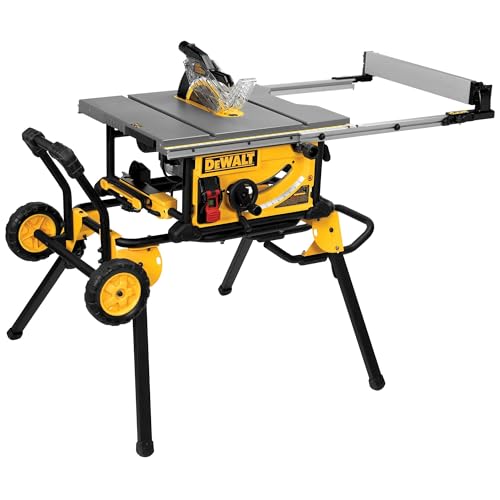
DEWALT Table Saw 10 Inch with Foldable Rolling Table Saw Stand, 15 Amp, 4800 RPM, 32-1/2-Inch Rip Capacity (DWE7491RS)
Rack & Pinion Telescoping Fence System Make fence adjustments fast, smooth and accurate
As an affiliate, we earn on qualifying purchases.
As an affiliate, we earn on qualifying purchases.
Frequently Asked Questions
How Do I Measure Rip Capacity Accurately?
To measure rip capacity accurately, first guarantee your material’s stability on the saw. Check that the blade is properly aligned to prevent uneven cuts. Measure from the blade to the maximum rip fence position with a tape measure, making sure the fence is locked securely. For precise results, double-check your measurements and confirm the blade’s alignment regularly, especially after adjusting or moving the saw.
Can Rip Capacity Vary Between Different Saw Models?
Yes, rip capacity varies between saw models. For example, a contractor’s saw might cut 24 inches, while a cabinet saw handles up to 30 inches. Blade alignment and material flexibility influence this difference: precise blade alignment ensures accurate cuts, and flexible materials may require different saw capacities. As a result, choosing the right saw depends on your project needs, guaranteeing it can handle the maximum width of your materials.
What Safety Precautions Are Necessary When Ripping Large Materials?
When ripping large materials, you need to prioritize safety. Always wear appropriate safety gear like eye protection, earplugs, and dust masks. Make certain the material is stable and properly supported to prevent shifting during cutting. Keep your hands clear of the blade and use push sticks if necessary. Double-check the saw’s rip capacity and adjust the fence securely. Staying alert and following safety protocols helps prevent accidents and ensures a smooth, safe operation.
How Does Rip Capacity Impact Project Efficiency?
Rip capacity acts like a gatekeeper for your project’s flow, directly impacting efficiency. When you maintain material stability and perfect blade alignment within this capacity, your cuts become smooth sailing. Overreaching rip capacity can cause misaligned cuts, delays, and material waste, turning your work into a rough sea. Staying within its limits guarantees your project stays on course, saving time and boosting productivity, like a well-tuned ship on calm waters.
Are There Tools to Extend the Rip Capacity of a Saw?
Yes, you can extend your saw’s rip capacity with blade extension kits and fence adjustments. Blade extensions add extra reach, allowing you to cut wider boards comfortably. Fence adjustments help you set precise measurements and maximize your saw’s capacity. Always make certain that the extensions are compatible with your saw model and securely attached to maintain safety and accuracy during your cuts. These tools make handling larger materials more manageable and efficient.

BOBOVAV Table Saw Alignment Gauge with 0.0005"Digital Dial Indicator – 18cm Rod, Fits 3/4"(19mm)+ with Screw Adjustment, CNC Machined Aluminum Bar Stable for Saw Blade Alignment and Calibration
High Precision Digital Measurement: BOBOVAV digital table saw alignment gauge features a digital dial indicator with 0.0005" (0.01mm)…
As an affiliate, we earn on qualifying purchases.
As an affiliate, we earn on qualifying purchases.
Conclusion
So, next time you’re bragging about your saw’s rip capacity, remember: it’s not just about cutting wide boards effortlessly. In real projects, that capacity often tests your patience more than your skills. It’s funny how the specs can seem so impressive until you realize they rarely match the chaos of actual job sites. So, enjoy your tool’s bragging rights—just don’t be surprised when reality cuts in a little narrower than expected.

GOINGMAKE Thin Rip Jig Table Saw Jig Guide for Making Repetitive Narrow Thin Strip Cuts Woodworking Tools Fast Thin Ripping Guide for Table Saw Band Saw Router Table Fits for 3/8" x 3/4" T Slot
【EASY TO USE】GOINGMAKE thin rip jig is easy to use. Just slide the guide into T-track miter slot…
As an affiliate, we earn on qualifying purchases.
As an affiliate, we earn on qualifying purchases.
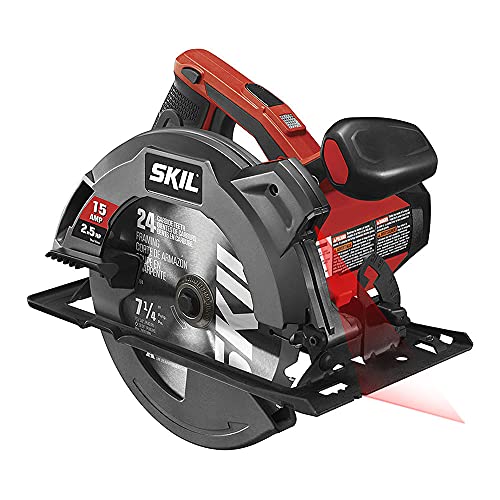
SKIL 15 Amp 7-1/4 Inch Circular Saw with Single Beam Laser Guide – 5280-01
Powerful 15-amp motor delivers 5 300-RPM for greater speed and faster cuts
As an affiliate, we earn on qualifying purchases.
As an affiliate, we earn on qualifying purchases.