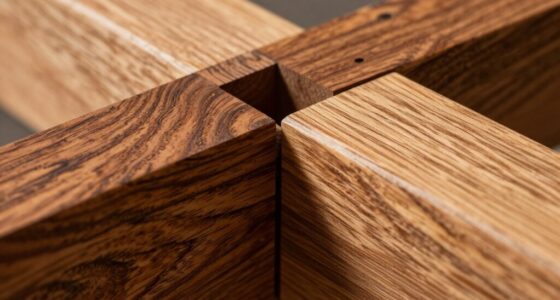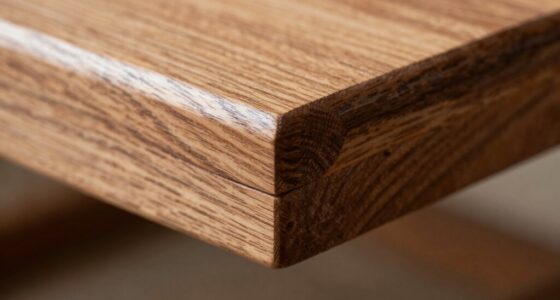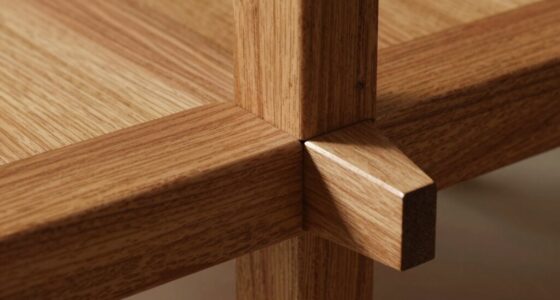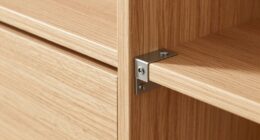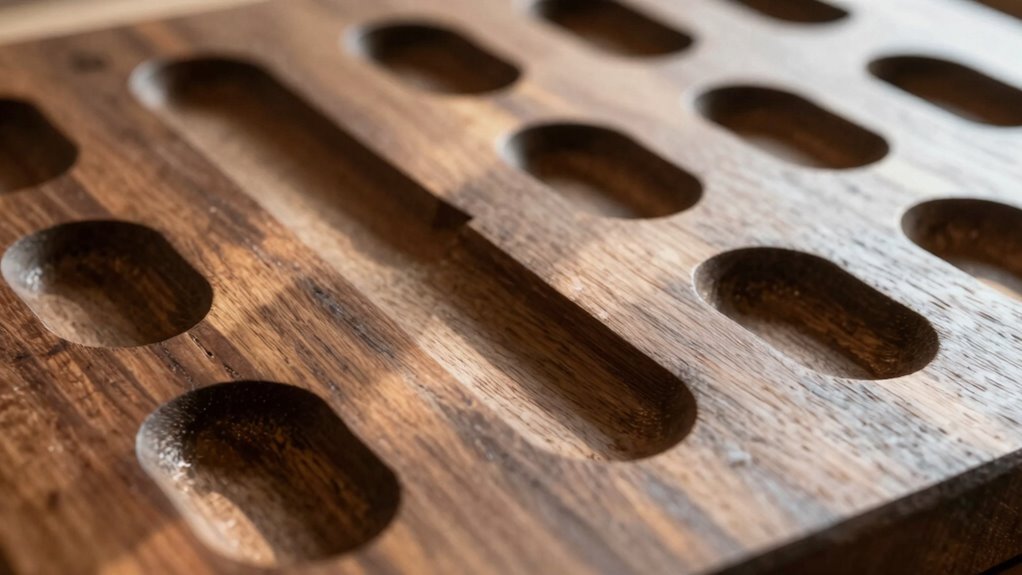

When working with blind mortises, you’ll want the depth to be between one-third to one-half of your workpiece’s thickness. For a one-inch thick board, that means a depth of about 3/8 to 1/2 inch. This range guarantees your joints are strong and can handle stress effectively. A snug fit with the tenon is essential, so you don’t compromise the structural integrity. Stick around to discover more tips for perfecting your mortise technique and enhancing your projects!
Key Takeaways
- Recommended mortise depth is one-third to one-half the thickness of the wood piece for optimal strength.
- For a one-inch thick board, aim for a depth of 3/8 inch to 1/2 inch.
- Depth may vary based on application; deeper for structural joints and shallower for lighter supports.
- Hardwoods require deeper mortises for better joint stability than softer woods, which can use shallower depths.
- Practice different mortise depths on scrap wood to ensure functional and visually appealing joints.

When you’re crafting furniture or cabinetry, understanding blind mortise depth is vital for achieving strong, seamless joints. A blind mortise is one of the most common mortise types used in woodworking, where the cavity doesn’t go all the way through the workpiece. This technique allows you to create clean, unobtrusive joints that maintain the aesthetic integrity of your project. But how deep should you make it?
First, consider the dimensions of the wood you’re using. The depth of your blind mortise should typically be about one-third to one-half the thickness of the piece. If your board is one inch thick, a depth of around 3/8 inch to 1/2 inch is generally recommended. This depth guarantees that your joint is strong enough to withstand stress while also allowing for a snug fit with the tenon. If you go too shallow, the joint may be weak; if you go too deep, you risk compromising the structural integrity of the surrounding wood.
Consider the wood thickness; a blind mortise depth of one-third to one-half ensures strong, seamless joints.
Next, think about the type of joint you’re forming. Different woodworking techniques may call for varying depths. For instance, if you’re using a blind mortise for a leg-to-rail joint in a table, you might want a deeper mortise compared to a shelf support. It’s all about the application and the load that the joint will bear. Always err on the side of caution; it’s easier to adjust the depth if you’ve made it too shallow than to reinforce a joint that’s too deep. Additionally, understanding mortise depth and its impact on joint strength can help you make better decisions during your project.
You should also factor in the type of wood. Hardwoods, like oak or maple, tend to hold joints better than softer woods, so you might choose a shallower depth for softer materials. Keep in mind that the tenon’s fit is just as important as the mortise’s depth. A well-fitted tenon will help distribute forces evenly across the joint, minimizing the risk of splitting or breaking.
Finally, practice makes perfect. Experiment with various mortise types and depths on scrap wood before committing to your final piece. This hands-on approach will give you a better feel for how deep is deep enough. Remember, the goal is to create a joint that’s not only functional but also aesthetically pleasing. With the right depth and technique, you’ll achieve that seamless look that elevates your woodworking projects.

Narex 863600Chisel / Mortise Chisel Set – 4/6 / 10/12 mm – for Mortises
Robust tool used for chopping out joints as well as cutting mortises
As an affiliate, we earn on qualifying purchases.
As an affiliate, we earn on qualifying purchases.
Frequently Asked Questions
What Tools Are Best for Cutting Blind Mortises?
For cutting blind mortises, you’ll want to use mortise chisels and a chisel technique that suits your project. Start with a sharp mortise chisel for clean edges, and consider using a mallet for added force. If you need precision, a router with a mortising attachment can save time. Always verify your tools are sharp, as this makes all the difference in achieving a neat, professional finish. Practice makes perfect!
Can I Use a Router for Blind Mortises?
Sure, you can use a router for blind mortises—who needs chisels, right? With the right router techniques, you can achieve precise mortise depth quickly and efficiently. Just make sure to set your depth correctly to prevent accidentally creating a visible hole! Use a straight bit for clean edges, and consider a template for accuracy. So, grab that router and get to work; your project will thank you for it!
How Do I Measure for Blind Mortise Placement?
To measure for blind mortise placement, start by marking the desired joint alignment on both pieces of wood. Measure the mortise depth based on the thickness of your tenon, ensuring it’s deep enough for a snug fit but not too deep to weaken the wood. Use a square to maintain straight lines, and double-check your measurements before cutting. This’ll help achieve a precise and strong joint that fits perfectly.
Are Blind Mortises Suitable for All Wood Types?
Not all wood types are suited for blind mortises. As the saying goes, “You can’t make a silk purse out of a sow’s ear.” Softer woods may not provide the joint strength you need, while hardwoods can hold strong when properly crafted. Consider the wood characteristics—density, grain, and flexibility. Choose wisely to guarantee your blind mortise holds up over time, enhancing both durability and aesthetics in your project.
What Are the Advantages of Blind Mortises Over Other Joints?
Blind mortises offer several advantages over other joints. They provide strength and stability, ensuring your joints can withstand stress without compromising the piece’s integrity. Additionally, they enhance the aesthetic appeal of your project by allowing for a clean, seamless look. Since the joint is hidden, you maintain a polished finish without visible fasteners. This combination of durability and visual elegance makes blind mortises a popular choice for fine woodworking.
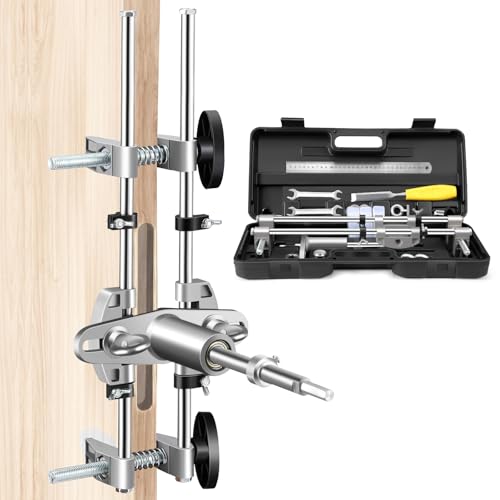
GQGP Door Mortise Lock Jig, Door Lock Installation Kit with 18mm 22mm 25mm Tungsten Steel Cutters, Door Lock Hole Opener Kit, Mortising Machine Mortise Jig Lock Mortiser for Carpenter on Wooden Doors
【Precise and Stable】The door lock hole opener kit: two slides adjustable via two 7-shaped universal screws to keeps…
As an affiliate, we earn on qualifying purchases.
As an affiliate, we earn on qualifying purchases.
Conclusion
In woodworking, finding the right depth for a blind mortise might seem trivial, but it mirrors life’s deeper choices. Just as a mortise needs to be deep enough to hold steadfast, our decisions must be rooted in thoughtfulness. Coincidentally, whether it’s crafting furniture or managing relationships, the depth of our commitment defines strength. So, as you measure that mortise, remember: a little extra care can make all the difference in both your projects and your life.

Devvicoo 6PCS Square Hole Drill Bit Set for Mortise and Tenon Machine (Not Handheld), Bearing Steel Mortiser Bits – 5/8", 9/16", 1/2", 3/8", 5/16", 1/4"
Mortiser Machine Compatibility: Designed exclusively for mortising machines drill presses. Not compatible with handheld drills, ensures clean, splinter-free…
As an affiliate, we earn on qualifying purchases.
As an affiliate, we earn on qualifying purchases.

WETOLS Corner Clamp for Woodworking, 90 Degree Right Angle Clamp, Wood Clamps, 4Pcs Adjustable Spring Loaded Woodworking Clamp, Gifts for Men, Birthday Gifts for Men, Photo Framing, Orange
Cool Gadgets Gifts for Men: WETOLS corner clamp comes with a nice gift box, which can be great…
As an affiliate, we earn on qualifying purchases.
As an affiliate, we earn on qualifying purchases.