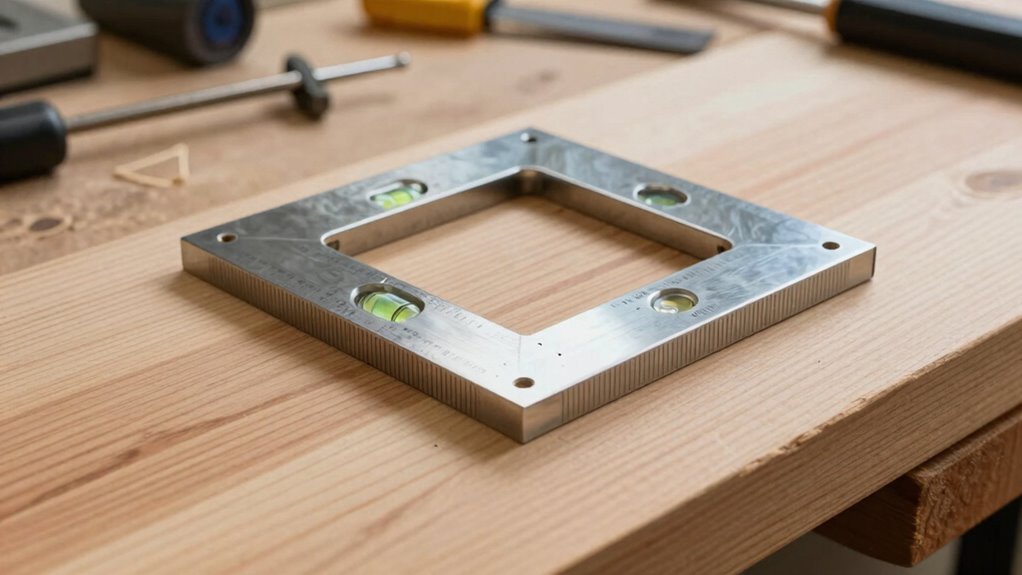
To check your square’s accuracy, place it firmly against a flat surface and align the blade with the edge. Use a reliable ruler to verify inside and outside angles, and look for signs of wear or damage like dents or rounded edges. If needed, adjust the screws or bolts to realign the blade, then recheck. Regular inspection and calibration help maintain precision, and understanding the fix process can save time—more tips await if you keep going.
Listen free for 30 days with Audible
Thousands of audiobooks and originals — cancel anytime.
As an affiliate, we earn on qualifying purchases.
Key Takeaways
- Place the square against a flat surface and verify the inside and outside angles with a straightedge or ruler.
- Look for signs of damage or wear such as dents, chips, or rounded edges that may affect accuracy.
- Recheck the square periodically by measuring known reference points to ensure consistent precision.
- Adjust misaligned squares by loosening screws, realigning the blade, and retightening, then re-test for accuracy.
- Regularly calibrate and inspect your square, and replace it if damage or persistent inaccuracies cannot be corrected.
As an affiliate, we earn on qualifying purchases.
How to Test Your Square for Accuracy
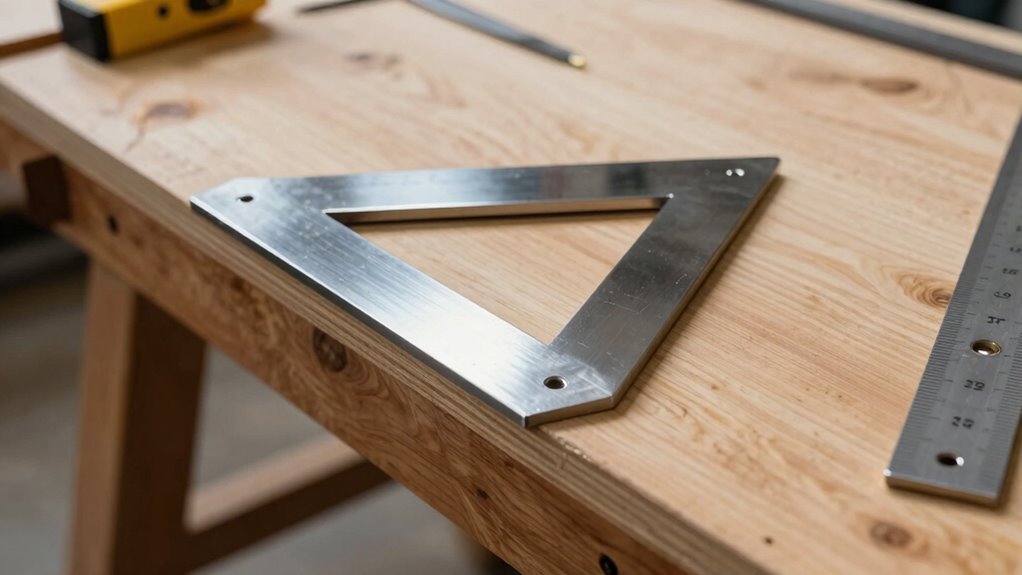
Have you ever wondered if your square is truly accurate? To test it, start with proper measuring techniques. Place the square against a flat, stable surface and align the blade with the edge. Use a reliable ruler or straightedge to check the inside and outside angles. Make sure to hold the square firmly and keep it steady during measurement. Consistently inspect your tools for signs of wear, as tool maintenance is essential for accuracy. Clean any debris or dust that could affect the reading. If you notice discrepancies, recheck your measurements or try different reference points. Regular testing ensures your square remains precise, and maintaining your tools prolongs their lifespan. Accurate measurements depend on proper testing and diligent tool maintenance. Additionally, proper storage of your tools helps prevent damage and maintains their accuracy over time.
As an affiliate, we earn on qualifying purchases.
Signs Your Square Is Out of Alignment or Worn

If your square shows visible damage or wear, it’s a clear sign it might be out of alignment. You may also notice inconsistent measurements or find it hard to keep accuracy over time. These issues suggest it’s time to inspect and possibly fix or replace your square. Regular calibration and checking can also help ensure it remains precise for accurate work, especially when working on detailed projects. Additionally, understanding the air quality in your workspace can improve overall maintenance practices and prolong the life of your tools. Ensuring proper tool storage can prevent dust buildup and damage, further supporting your tools’ longevity. Proper alignment techniques are essential to maintain the accuracy of your square and ensure precise results. Incorporating proper tool maintenance routines can further extend the lifespan and reliability of your squares.
Visible Damage or Wear
Noticing visible damage or wear on your square is a clear sign it might be out of alignment or worn down. Visible damage, such as dents, cracks, or chipped edges, indicates the tool has taken a hit or sustained stress that can compromise accuracy. Wear and tear, like rounded corners or smoothened edges, suggest prolonged use that may have dulled the square’s precision. These signs can cause inaccuracies in your measurements and cuts. If you see any of these issues, it’s a good idea to inspect the entire tool closely. Ignoring visible damage or excessive wear can lead to flawed projects. Addressing these problems early helps ensure your square maintains its accuracy and remains reliable for your tasks. Additionally, proper storage and handling can prevent further tool damage and extend the lifespan of your square. Regularly checking for measurement accuracy and calibrating your square as needed further helps maintain precision over time. Incorporating tools maintenance routines and understanding how sound vibrations influence material properties can greatly reduce the risk of undetected issues developing.
Inconsistent Measurements
Are your measurements inconsistent when using your square? This can be a sign that your tool isn’t properly calibrated or that it’s worn out. When a square loses measurement consistency, you might notice discrepancies between different parts of your project or uneven lines. Worn or misaligned blades, edges, or hinges can cause these issues. To check, measure the same angle or edge multiple times; if results vary, your square may need adjusting or replacing. Regular tool calibration ensures your square maintains accuracy. If you find persistent inconsistencies despite calibration, it’s a sign that the square might be worn beyond repair. Addressing these signs early helps keep your measurements precise and your projects on point. Proper calibration methods help ensure your square stays accurate over time. Additionally, understanding techniques for maintaining your tools can extend their lifespan and accuracy, including inspecting for signs of wear like blade alignment and edge wear.
Difficulty Maintaining Accuracy
Do you find it hard to keep your square aligned during your projects? If so, it may be a sign that your tool isn’t maintaining accuracy. Over time, a square can become worn or slightly out of alignment, affecting your measurements and cuts. Using proper measuring techniques can help identify discrepancies early, but a worn square needs more than just careful measuring. Regular tool maintenance, including checking for loose or damaged parts, is essential to keep your square precise. When your measurements seem inconsistent or your cuts aren’t true, it’s time to inspect and realign or replace your square. Staying vigilant about tool condition ensures that your projects stay accurate and professional-looking. Proper care and regular checks prevent small issues from compromising your work.
As an affiliate, we earn on qualifying purchases.
How to Recalibrate or Fix Your Square Quickly
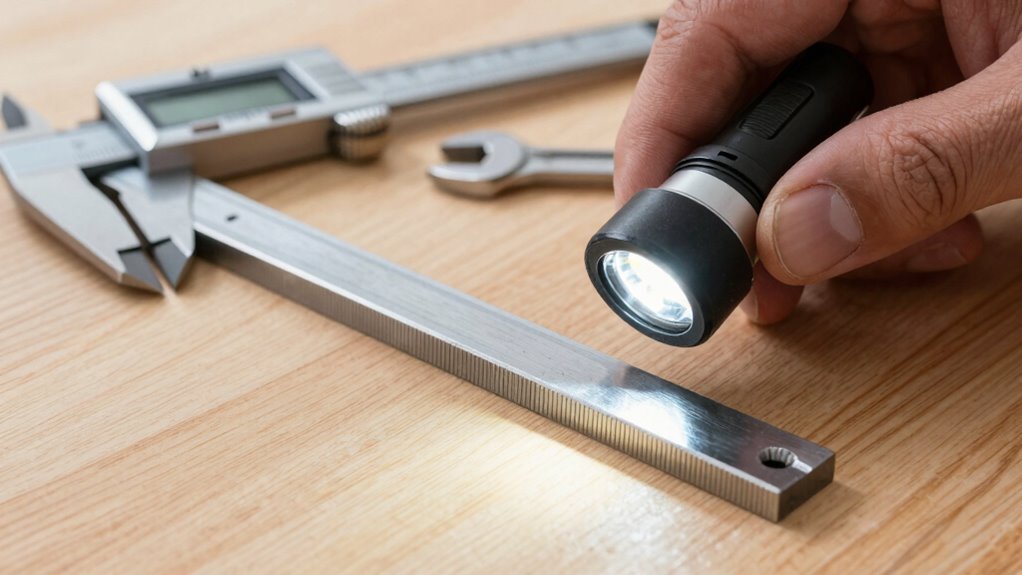
To recalibrate your square quickly, start by checking its calibration settings and making sure they’re correct. Use a known, reliable square to test its accuracy after adjustments. Then, adjust as needed and recheck until you’re confident it’s properly aligned. Incorporating Free Floating principles can help ensure your measurements are precise and not affected by external factors.
Check Calibration Settings
Ever wondered if your square is accurately measuring right angles? Checking calibration settings is vital to guarantee precision. Start by reviewing your square’s calibration procedures to identify if it’s truly square. Next, compare it against a known, reliable benchmark like a precision-machined block or a certified square. Then, adjust the calibration if your square has adjustable components, following the manufacturer’s instructions. Finally, set new benchmarks by measuring multiple angles to confirm your adjustments hold true. This process ensures your square’s settings are accurate and reliable. Regularly checking calibration settings helps prevent errors in your projects. Remember, consistent calibration procedures and setting benchmarks correctly are key to maintaining your square’s accuracy over time.
Use a Known Square
Using a known square is one of the quickest ways to recalibrate or fix your square when it goes out of alignment. First, place the known square against your tool or workpiece to check for discrepancies. If you notice a mismatch, verify your marking tools—such as pencils or scribes—to make sure they aren’t causing false readings. Using the known square as a reference, you can identify which part of your square is misaligned. This method is especially helpful for maintaining woodworking accuracy, as it allows you to detect errors quickly without complex adjustments. Keep in mind that a reliable reference square saves time and improves your results, ensuring your measurements stay true and your projects stay precise. Additionally, periodically checking your square with a precision measurement method helps maintain consistent accuracy over time. Incorporating visual and auditory cues from speech therapy techniques can also inspire innovative approaches to checking and maintaining your tools’ precision and accuracy. Regularly inspecting your tools and using a known reference aligns with the principles of craftsmanship, helping you uphold high standards in your work.
Adjust and Test Again
When you notice your square is out of alignment after testing, it’s essential to make quick adjustments and verify the fix. Proper troubleshooting methods help you avoid wasted time. To adjust and test again effectively, follow these steps:
- Loosen or tighten the screws or bolts holding the blade or arm.
- Realign the blade carefully, ensuring it matches the square’s edge.
- Recheck the square’s accuracy with your test method.
- Repeat the process until the square passes the test confidently.
- Remember to maintain your tools regularly to ensure ongoing precision and reliability. Regular calibration helps maintain measurement accuracy over time.
- Consider using a support breakfast option, such as a quick snack, to keep your focus sharp during calibration.
tool calibration and adjustment kit
As an affiliate, we earn on qualifying purchases.
As an affiliate, we earn on qualifying purchases.
Best Practices for Keeping Your Square Accurate Over Time
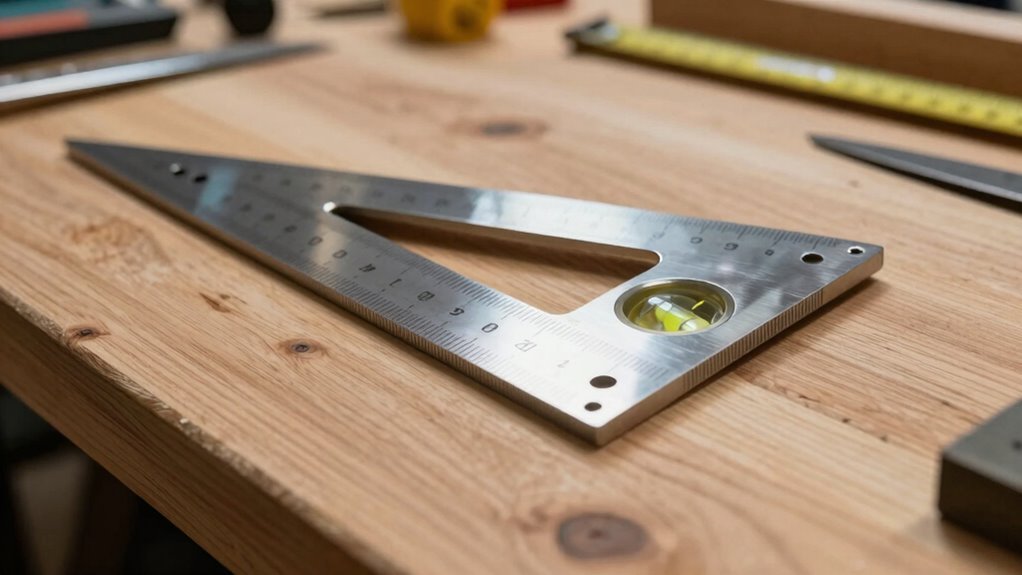
To guarantee your square remains accurate over time, regular maintenance and checks are essential. Start by avoiding materials to avoid that can damage or warp your square, such as moisture-prone wood or low-quality metal. Instead, store your square in a dry, stable environment, preferably in a protective case or a dedicated toolbox to prevent accidental impacts or exposure to humidity. Keep it away from extreme temperatures and direct sunlight, which can cause warping or fading. Periodically clean your tool with a soft cloth to remove dirt and dust that could affect measurements. Proper storage tips include laying your square flat, ensuring it’s free of dust, and avoiding stacking heavy objects on top. Consistent care helps maintain its accuracy and prolongs its lifespan. Additionally, understanding measurement accuracy techniques can help you verify that your square remains precise over time.
Why Regular Checks Help Keep Your Projects Precise
Regular checks are essential because even a well-maintained square can become inaccurate over time due to wear, minor impacts, or environmental factors. Consistent inspections help you catch issues early, ensuring your measurements stay precise. Using proper measuring techniques, like checking angles from multiple points, keeps your work accurate. Regularly maintaining your tool also prevents buildup or damage that could affect results. Here are four reasons why these checks matter:
- Detect misalignments before they affect your project
- Extend the lifespan of your measuring tools
- Ensure your measurements remain consistent
- Avoid costly mistakes caused by unnoticed inaccuracies
Incorporating regular measuring techniques and diligent tool maintenance keeps your projects precise and reliable, saving you time and effort in the long run.
When Should You Replace Your Square for Reliable Results
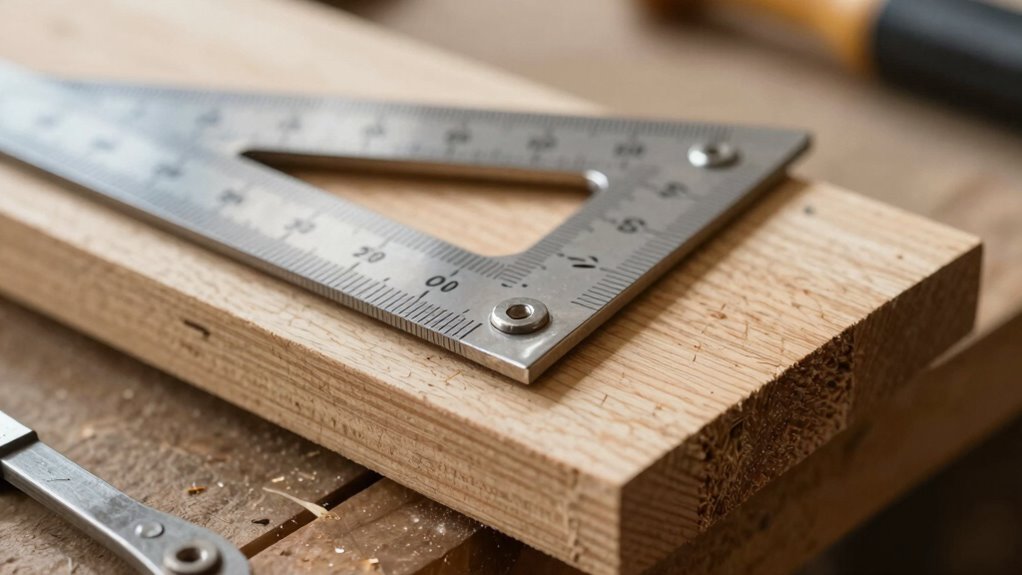
Over time, even the most carefully maintained squares can lose their accuracy due to wear, corrosion, or accidental damage. When you notice your square no longer provides reliable results, it’s time to contemplate replacement. Material degradation from constant use weakens the tool’s integrity, making calibration less effective. Regular calibration frequency helps catch issues early, but if the square shows signs of warping or corrosion, replacement is necessary. Use this guide to decide:
| Issue | When to Replace | Why |
|---|---|---|
| Visible corrosion | Replace immediately | Weakens structure, affects accuracy |
| Warping or bending | Replace if correction isn’t possible | Compromises measurements |
| Frequent calibration errors | Replace when calibration fails repeatedly | Indicates internal damage |
Trust your judgment—if in doubt, a new square ensures your projects stay precise.
Frequently Asked Questions
Can Digital Squares Provide More Accuracy Than Traditional Ones?
Digital squares can offer more accuracy than traditional ones because they often feature digital calibration and adhere to stricter manufacturing standards. You’ll benefit from precise readouts, reducing human error and ensuring your measurements are spot-on. While traditional squares rely on visual inspection, digital squares provide real-time, exact data. This makes them ideal for demanding tasks where precision matters, giving you confidence in your work and faster setup times.
What Tools Are Best for Measuring Square Accuracy?
You should use precision tools like combination squares, try squares, or digital squares for measuring accuracy. Make sure they’re properly calibrated using calibration procedures to maintain their precision. Look for tools made from durable materials like stainless steel, which resist wear and maintain accuracy over time. Regularly check and calibrate your tools, especially after heavy use, to ensure consistent measurements and reliable results in your projects.
How Often Should I Check My Square’s Precision?
You should check your square’s precision regularly, ideally during your calibration frequency, which depends on how often you use it. Incorporate routine maintenance routines like cleaning and inspecting to maintain accuracy. For frequent use, check weekly or monthly to catch any drift early. If you notice inaccuracies, calibrate or replace the square promptly to ensure precise measurements and quality work.
Are There Specific Storage Tips to Prevent Square Damage?
Storing your square is like tucking a delicate butterfly into a cozy box, protecting it from harm. To prevent damage, keep it in a dry, dust-free environment, ideally in a dedicated case or padded toolbox. Avoid exposing it to extreme temperatures or humidity, and don’t toss it around. Regular storage maintenance guarantees your square remains accurate and in top shape, ready for precise measurements whenever you need them.
How Do Temperature Changes Affect a Square’s Accuracy?
Temperature changes can cause thermal expansion in your square, affecting its accuracy. When it gets warmer, the metal expands slightly, potentially leading to inaccurate measurements. To keep your square precise, you should regularly check its calibration, especially after significant temperature fluctuations. Frequent calibration ensures you catch any deviations caused by thermal expansion, maintaining reliable results. Store your square in a stable environment to minimize temperature effects and reduce the need for frequent adjustments.
Conclusion
Keeping your square true is like tending a garden—you must regularly prune and care for it to flourish. When you stay vigilant and check often, you guarantee your projects grow strong and straight, not crooked or fragile. Think of your square as a trusted compass guiding your craftsmanship. With proper care and timely fixes, you’ll navigate every cut with confidence, turning rough drafts into masterpieces. Trust in your tools, and your work will always stand on solid ground.
Flea & tick season Picks
flea and tick prevention
As an affiliate, we earn on qualifying purchases.