
Biscuit joiners are still highly relevant tools that do much more than just align pieces. They create strong, durable joints perfect for furniture or cabinetry and distribute stress evenly across the connection. Modern models offer precision, adjustable settings, and versatility, making them valuable for detailed projects. If you want to understand how these tools combine tradition with innovation to deliver reliable results, there’s more to discover in their ongoing uses and benefits.
Listen free for 30 days with Audible
Thousands of audiobooks and originals — cancel anytime.
As an affiliate, we earn on qualifying purchases.
Key Takeaways
- Modern biscuit joiners provide strong, durable joints suitable for load-bearing applications, not just alignment.
- Advances in motor power and adjustable features enhance their versatility for various woodworking projects.
- They offer precise, seamless joints that improve both structural integrity and aesthetic quality.
- Despite technological evolution, they remain essential for efficient, accurate furniture and cabinetry assembly.
- Their continued relevance stems from balancing speed, strength, and ease in both professional and hobbyist woodworking.

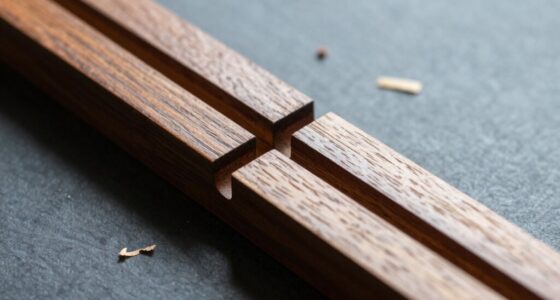
Have you ever wondered how woodworkers create seamless, strong joints? One tool that has stood the test of time is the biscuit joiner. Its history dates back to the early 20th century, when craftsmen sought faster, more precise ways to join wood pieces. Originally, the concept was simple: cut matching slots in two pieces of wood and insert a flexible ‘biscuit’—a compressed wood or ply. Over the decades, the biscuit joiner evolved from basic manual versions to powerful, electric tools that make the process quick and accurate. Today, the modern biscuit joiner benefits from advancements in motor power, blade design, and adjustable settings, making it a staple in many workshops. Its ability to align and strengthen joints with minimal effort keeps it relevant despite the rise of other joining methods.
While some might think biscuit joiners are fading into obsolescence, they still offer significant advantages. They allow you to align panels precisely, especially when joining large surfaces or edge-to-edge boards. You don’t need clamps or additional hardware; the biscuit itself acts as a hidden reinforcement. This makes the process faster and less cumbersome. Plus, because the biscuit slot is relatively shallow, it minimizes the risk of weakening the wood or misaligning the pieces. Modern biscuit joiners are designed to be versatile, with adjustable fences, variable cut depths, and compatibility with various biscuit sizes. This flexibility means you can use the same tool for a wide range of projects, from furniture to cabinetry. Additionally, the precision and consistency of modern biscuit joiners make them especially valuable for detailed woodworking tasks. The ability to create strong, durable joints is crucial for both aesthetic and structural purposes.
Despite the technological advances, some might argue that biscuit joiners are mainly for alignment now. However, their advantages go beyond simple positioning. They create strong, durable joints that can handle stress and weight. When used properly, they distribute load evenly across the joint, reducing the risk of warping or splitting. The strength of biscuit joints is enhanced by proper adhesive application and precise fitting, which modern tools facilitate. Furthermore, the development of adjustable settings has increased their versatility for different project needs. Compared to other joinery techniques, biscuit joining offers a good balance of speed, strength, and ease of use. For DIY enthusiasts and professional woodworkers alike, this tool remains invaluable. It’s not just about aligning pieces; it’s about creating clean, long-lasting joints with minimal fuss.
In essence, biscuit joiners have a rich history and continue to evolve. Their modern advantages—speed, precision, and strength—ensure they’re still highly relevant. Whether you’re building furniture or doing fine cabinetry, this tool helps you achieve tight, seamless joints efficiently. Far from being just an alignment device, the biscuit joiner remains a core part of the woodworking toolkit, blending tradition with modern innovation.
As an affiliate, we earn on qualifying purchases.
Frequently Asked Questions
What Are the Main Advantages of Biscuit Joiners Over Other Joinery Tools?
You find biscuit joiners advantageous because they simplify joinery techniques, making it easier to align and assemble pieces accurately. They offer quick, strong joints with minimal fuss, saving you time. Plus, with proper tool maintenance, your biscuit joiner remains reliable and efficient. Compared to other tools, it’s versatile and user-friendly, allowing you to create seamless joints in furniture projects effortlessly.
How Do I Choose the Right Size of Biscuits for My Project?
Imagine choosing a biscuit so tiny it’s like fitting a grain of sand into a chest cavity—sounds impractical, right? For your project, you’ll want to focus on biscuit sizing that matches your joinery compatibility. Smaller biscuits suit thin or delicate materials, while larger ones provide strength for hefty joints. Measure your groove width carefully, and always match biscuit size to the thickness of your wood for a seamless fit.
Can Biscuit Joiners Be Used for Curved or Angled Joints?
Yes, you can use biscuit joiners for curved or angled joints, but it’s trickier than straight ones. You’ll need to carefully position the tool and often make multiple passes to achieve the perfect fit. This technique is great for assembling wooden puzzles or decorative accents that require precise, seamless joints. Practice helps, and using clamps guarantees stability, giving your project a professional look with smooth, accurate curves and angles.
What Safety Precautions Should I Follow When Operating a Biscuit Joiner?
When operating a biscuit joiner, you should always wear safety gear like goggles and hearing protection to shield your eyes and ears. Keep dust management in mind by using a dust extractor or mask to prevent inhaling particles. Make certain the tool is unplugged when adjusting or cleaning it. Maintain a firm grip during operation, and stay focused to avoid accidents. Following these precautions keeps your workspace safe and your equipment in good condition.
Are Cordless Biscuit Joiners as Effective as Corded Models?
Cordless biscuit joiners can be as effective as corded models if you prioritize battery efficiency and proper tool maintenance. Modern lithium-ion batteries provide longer run times, allowing you to complete projects without interruption. Regularly maintaining your tool, like cleaning the blades and checking the battery contacts, guarantees peak performance. While cordless models offer portability, make certain your battery is charged and in good condition to achieve consistent, precise results comparable to corded options.
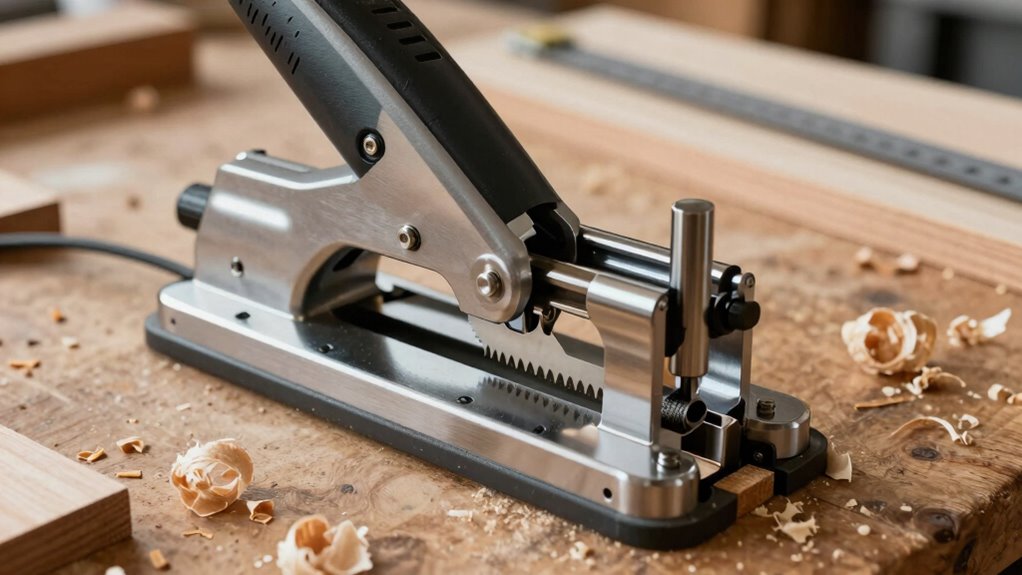
electric biscuit joiner with adjustable fence
As an affiliate, we earn on qualifying purchases.
As an affiliate, we earn on qualifying purchases.
Conclusion
So, after all this talk, it’s pretty amusing how biscuit joiners—once the star of woodworking—are now mostly just the “sidekick” to your trusty alignment tools. You might think they’re relics, but hey, they still have their place, especially if you love a bit of nostalgic craftsmanship. Who knew that a simple biscuit could still bring a smile, even if it’s just for old time’s sake? Sometimes, the past really does stick around.
professional biscuit joiner tool
As an affiliate, we earn on qualifying purchases.
As an affiliate, we earn on qualifying purchases.
As an affiliate, we earn on qualifying purchases.
Fall Picks
fall essentials
As an affiliate, we earn on qualifying purchases.