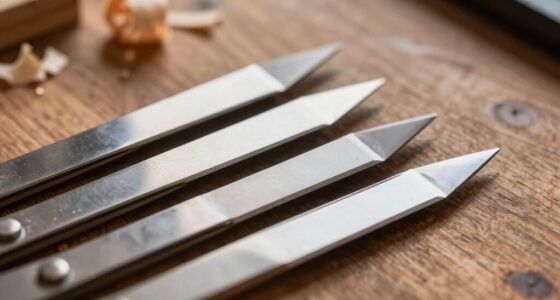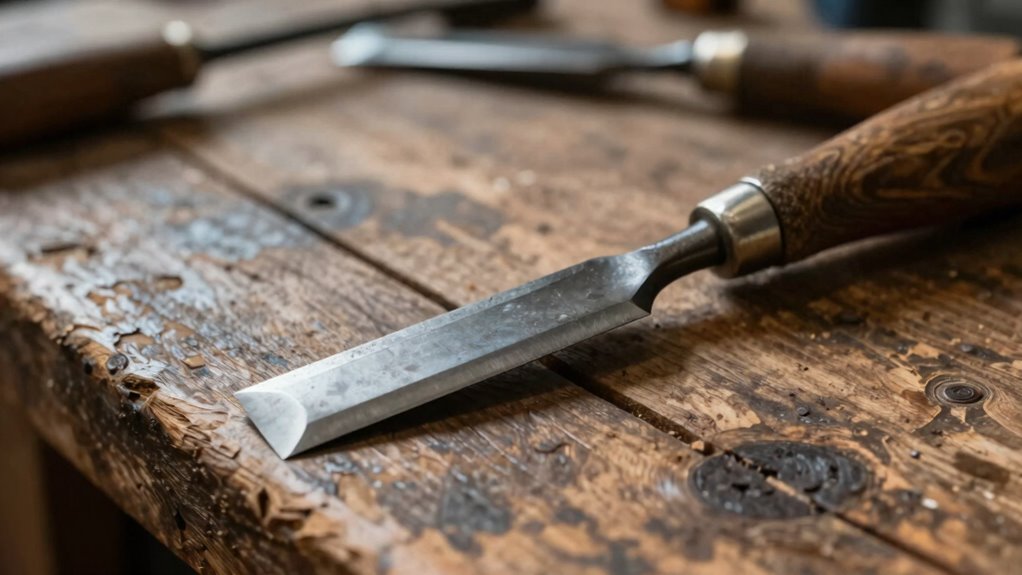

When it comes to chisel edge durability, you’ve got to balance sharpness and longevity. A sharper edge might seem perfect, but it often wears down quickly, especially on tough materials. A slightly flatter angle can provide more durability, allowing you to work effectively without frequent maintenance. Remember, the right edge choice depends on the material you’re using. Keep exploring how different angles and materials affect tool performance for best results in your woodworking projects.

Get business pricing on tools and workshop supplies
- Business-only prices and quantity discounts
- Tax-exempt purchasing
- Multiple users, one account, clear invoices
Key Takeaways
- A sharper edge cuts more easily but wears down faster, especially on harder materials.
- Steeper angles provide sharpness but reduce durability, making them less suitable for prolonged use.
- Flatter angles offer durability but sacrifice sharpness, ideal for tougher woods.
- Maintenance, such as honing, can extend the life of a chisel’s edge, balancing sharpness and durability.
- Material choice affects edge performance; high-carbon steel can achieve sharpness but requires more upkeep than stainless steel.
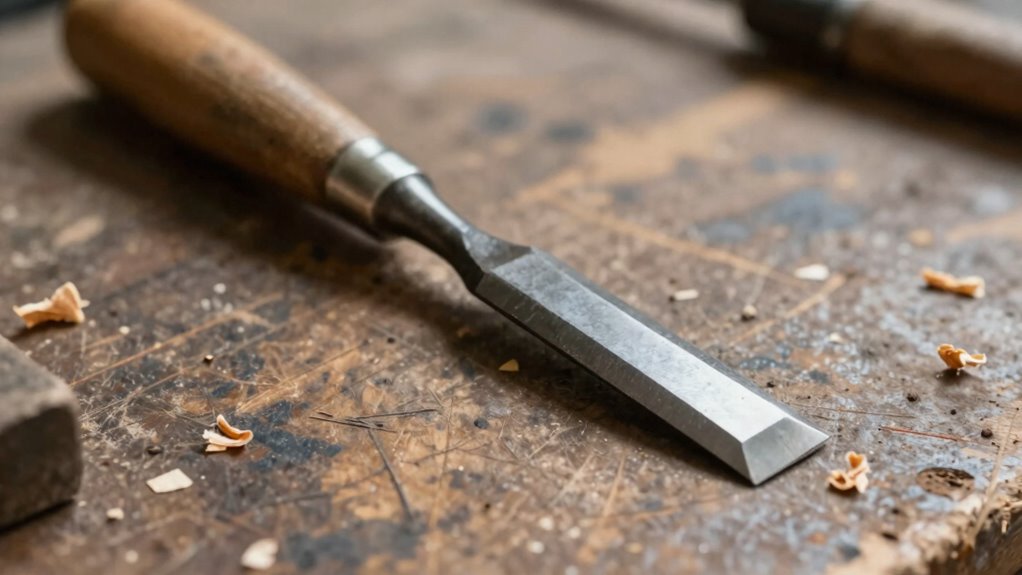
To start off, keep in mind some key chisel maintenance tips. Regular cleaning is essential. After each use, wipe the blade with a dry cloth to remove any moisture and debris. This simple step can greatly extend the life of your chisel. You don’t want rust creeping in and ruining your tool. Additionally, store your chisels in a dry place and consider using a protective cover, especially if you’re stacking them with other tools.
When it comes to edge sharpening techniques, understand that honing and sharpening are not the same. Honing is about maintaining that edge with a finer tool, while sharpening involves reshaping it when it gets dull. For ongoing maintenance, a honing guide can help you keep a consistent angle, which is crucial for durability. You’ll find that a well-honed chisel cuts cleanly, meaning less force is needed and less wear occurs over time.
Honing maintains your chisel’s edge, while sharpening reshapes it; use a honing guide for consistency and durability.
Now, let’s talk about the angle. A steeper angle provides a sharper edge but reduces durability. Conversely, a flatter angle offers more durability but isn’t as sharp. Finding the sweet spot for your specific usage is important. If you’re working with hard woods, you might want to lean towards the more durable side. For softer materials, a sharper edge could be beneficial.
Another important aspect is the material of the chisel itself. High-carbon steel can take a fantastic edge but may require more maintenance than stainless steel. If you’re new to chiseling, you might want to start with a stainless steel chisel. They’re generally easier to maintain and more forgiving when it comes to chisel maintenance tips.
Ultimately, it’s all about knowing your tools and the materials you’re working with. By focusing on both chisel edge durability and effective maintenance, you can make your chiseling experience more enjoyable and productive. So, keep that balance in mind, and you’ll find that your tools serve you well for years to come. Understanding tool material properties can help you select the best chisel for your needs.
As an affiliate, we earn on qualifying purchases.
Frequently Asked Questions
How Do Different Materials Affect Chisel Edge Durability?
Different chisel materials greatly affect edge wear. Harder materials, like high-carbon steel, tend to maintain a sharp edge longer but can chip if misused. Softer materials, such as aluminum or lower-grade steel, might dull quickly but are easier to sharpen. You need to choose the right material based on your application. If you’re working on tough surfaces, a harder chisel might be best, while softer materials could suffice for lighter tasks.
What Maintenance Techniques Extend Chisel Edge Life?
To extend your chisel’s edge life, focus on proper chisel care. Regularly sharpen and hone the edge to maintain its effectiveness. After use, clean and dry the chisel to prevent rusting. Store it in a protective case or use edge guards to avoid accidental damage. When working with harder materials, take breaks to prevent overheating. These simple practices will help you keep your chisel in top shape and extend its lifespan considerably.
Can I Sharpen a Chisel at Home?
Absolutely, you can sharpen a chisel at home! Picture yourself transforming a dull blade into a razor-sharp masterpiece! With the right tools and a bit of practice, chisel care becomes an art form. Grab a sharpening stone, use some water or oil, and let your chisel glide over the surface. Remember, consistency is key! Regular home sharpening keeps your chisel ready for any project, ensuring it cuts through wood like a hot knife through butter!
What Is the Ideal Angle for a Chisel Edge?
The ideal angle for a chisel edge typically ranges between 20 to 30 degrees, depending on your chisel geometry and intended use. A steeper angle offers durability for tougher materials, while a shallower angle provides a sharper edge for finer work. When using sharpening methods, keep this angle consistent to maintain effectiveness. Experiment with different angles to find what’s best for your projects, ensuring you achieve the performance you need.
How Does Edge Durability Impact Woodworking Projects?
Edge durability greatly impacts your woodworking projects by influencing edge retention and project efficiency. When your tools maintain a sharp edge longer, you spend less time honing and more time creating. A durable edge withstands wear and tear, allowing you to tackle tougher materials with ease. This means fewer interruptions and a smoother workflow, ultimately leading to better results and a more enjoyable experience as you craft your pieces.
As an affiliate, we earn on qualifying purchases.
Conclusion
In the world of chisels, a razor-sharp edge might seem like the ultimate goal, but it’s more like a double-edged sword. While it can make clean cuts, it often dulls quickly and demands constant upkeep. Instead, a well-rounded edge, like a sturdy tree, withstands the storms of use and keeps delivering results. So, embrace durability over sharpness; it’s the steady strength that’ll see you through your projects, not just the flash of a fleeting edge.
stainless steel woodworking chisel
As an affiliate, we earn on qualifying purchases.
As an affiliate, we earn on qualifying purchases.
As an affiliate, we earn on qualifying purchases.
Halloween Picks
halloween
As an affiliate, we earn on qualifying purchases.