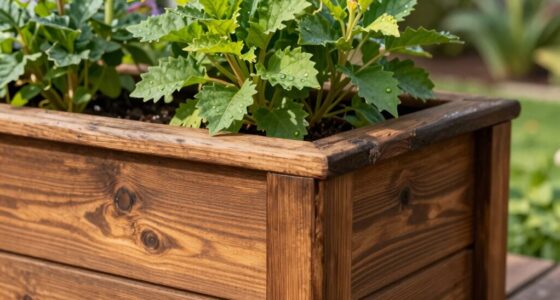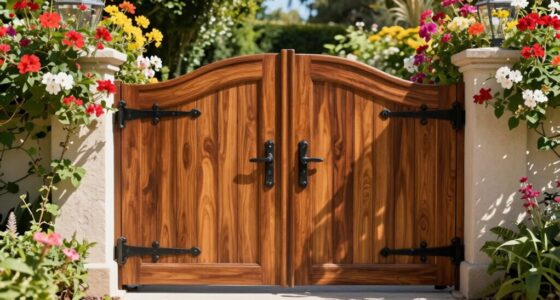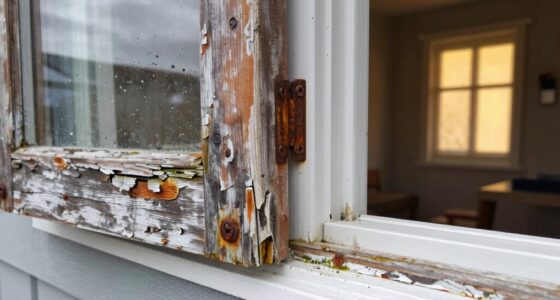
To prevent outdoor fastener corrosion and those unsightly stains, you should choose materials carefully. Stainless steel is a great option since it resists rust and forms a protective layer. If you’re in a coastal area, consider marine-grade stainless steel for added durability. Galvanized fasteners offer good corrosion resistance but can be brittle. Coated carbon steel fasteners can also work, but regular maintenance is key. Want to know more about your best options?
Open a free Amazon Business account
Business pricing, bulk buying and tax-exempt orders.
As an affiliate, we earn on qualifying purchases.
Key Takeaways
- Select stainless steel fasteners for superior rust resistance, especially in coastal and humid environments, to prevent ugly stains and extend lifespan.
- Consider marine-grade stainless steel for projects exposed to extreme conditions, ensuring maximum durability and corrosion resistance.
- Use coated fasteners with protective zinc layers to shield against moisture, but remember to perform regular maintenance to maintain effectiveness.
- Opt for galvanized fasteners for outdoor applications, as their thick zinc coating offers excellent corrosion protection, though they may be more brittle.
- Choose specialty fasteners designed for specific environments, like marine use, to enhance durability and prevent corrosion-related issues.
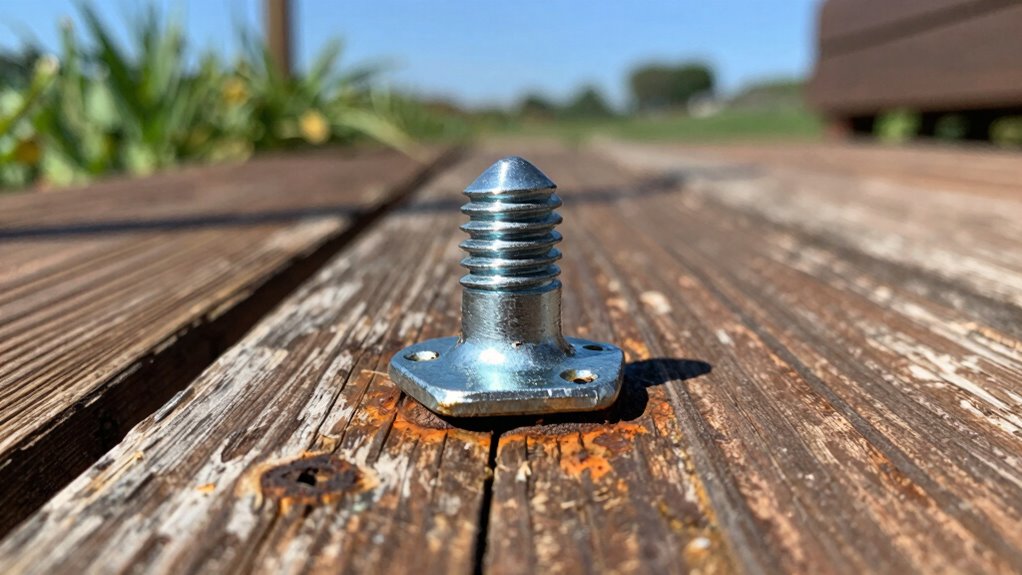
When you install outdoor fasteners, it’s essential to understand that exposure to the elements can lead to corrosion. This is a common issue that can affect the lifespan and appearance of your projects. Corrosion not only weakens the fasteners but can also leave unsightly stains on surfaces, diminishing the overall aesthetic of your work. To avoid these problems, it’s important to focus on corrosion prevention from the start.
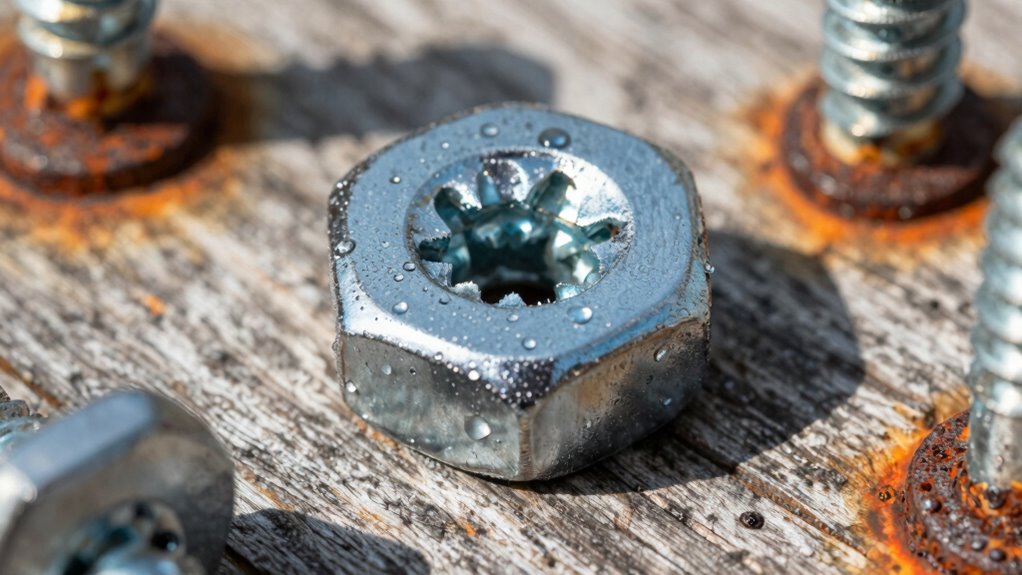
Choosing the right metal is key to ensuring metal durability. Stainless steel is often a popular choice for outdoor fasteners because it naturally resists rust and corrosion. Unlike regular steel, which can quickly deteriorate when exposed to moisture, stainless steel contains chromium, which forms a protective layer to fend off rust. If you’re working in coastal areas or places with high humidity, consider investing in marine-grade stainless steel. It’s designed for extreme conditions and offers enhanced durability.
Choosing stainless steel fasteners ensures durability and rust resistance, especially in coastal or humid environments. Consider marine-grade options for extreme conditions.
If stainless steel isn’t in your budget, you might want to look into coated fasteners. These are typically made from carbon steel and then coated with a protective layer, like zinc. This coating acts as a barrier against moisture and other corrosive elements. However, be aware that the coating can wear off over time, especially in high-stress applications. Regular maintenance and inspection can help you catch any issues before they escalate. Corrosion-resistant materials can further extend the lifespan of your fasteners and protect your surfaces. Incorporating protective coatings into your selection process can also help improve longevity. Additionally, understanding the different types of corrosion mechanisms can help you choose the most suitable materials for your specific environment. Being aware of corrosion types can also guide you in selecting the most effective preventative measures for your project.
Another option is galvanized fasteners, which are dipped in molten zinc to create a thick protective layer. This method provides excellent corrosion resistance and is particularly effective in outdoor settings. Just keep in mind that galvanized fasteners can be more brittle than their stainless counterparts, so evaluate your project’s requirements carefully.
You might also consider using specialty fasteners that are designed for specific environments. For instance, if you’re working on a project near water, look for fasteners that are specifically labeled for marine use. These are engineered to withstand the harsh conditions associated with saltwater exposure.
Ultimately, being proactive about your metal choices can save you a lot of headaches down the line. By focusing on corrosion prevention and selecting durable materials, you’ll keep your outdoor fasteners performing well and looking great for years to come. Understanding corrosion-resistant materials can help you make informed decisions and ensure the longevity of your projects. So, don’t overlook this important aspect of your projects—make informed choices, and you won’t regret it.
stainless steel outdoor fasteners
As an affiliate, we earn on qualifying purchases.
As an affiliate, we earn on qualifying purchases.
Frequently Asked Questions
How Do I Identify Corrosion on Outdoor Fasteners?
To identify corrosion on outdoor fasteners, look for discoloration, rust, or flaking. Different corrosion types, like pitting or crevice corrosion, can occur based on the fastener materials used. Stainless steel may show surface stains, while galvanized fasteners can develop rust if the coating wears off. Regularly inspect the fasteners for these signs, and replace any that show significant deterioration to maintain the integrity of your outdoor structures.
What Are the Signs of Fastener Failure Due to Corrosion?
When fasteners start to show their age, it’s time to pay attention. You might notice rust, flaking, or discoloration, which are all subtle signs of corrosion types like galvanic or pitting. If the fastener materials seem weaker or brittle, that’s a red flag. Keep an eye out for any looseness or difficulty in securing them, as these can indicate that corrosion’s taken its toll. Don’t let neglect lead to bigger problems!
Can I Prevent Corrosion With Regular Maintenance?
Yes, you can prevent corrosion with regular maintenance. Start by inspecting your fasteners frequently for any signs of wear. Use preventive measures like applying protective coatings or sealants. Keep the area clean and free from moisture, as dirt and water can accelerate corrosion. Regularly tighten loose fasteners to avoid stress on the materials. Following these maintenance tips will help extend the life of your fasteners and keep them looking great.
Are There Eco-Friendly Options for Outdoor Fasteners?
Absolutely, you’ve got some great eco-friendly options for outdoor fasteners! Think of them as the green thumb of your construction project. Fasteners made from sustainable materials like recycled steel or aluminum are excellent choices. Plus, you can enhance their durability with biodegradable coatings that break down naturally over time. By choosing these options, you not only protect your investments but also help the planet, making your outdoor spaces both beautiful and responsible.
How Does Humidity Affect Outdoor Fastener Corrosion?
Humidity levels greatly influence outdoor fastener corrosion. When moisture in the air increases, it creates an environment where corrosion mechanisms thrive, accelerating rust and degradation. You’ll notice that fasteners made from less durable metals corrode faster in high humidity. To combat this, consider using stainless steel or coated fasteners designed to resist moisture. By choosing the right materials, you can minimize corrosion and extend the life of your outdoor projects.
marine-grade stainless steel screws
As an affiliate, we earn on qualifying purchases.
As an affiliate, we earn on qualifying purchases.
Conclusion
To keep your outdoor projects looking great, choosing the right fasteners is essential. Did you know that over 70% of rust-related issues come from using the wrong metal in outdoor settings? By opting for stainless steel or coated fasteners, you’ll not only prevent ugly stains but also extend the life of your structures. So, next time you’re building or repairing, remember: the right metal choice can make all the difference in maintaining that fresh look!
galvanized fasteners for outdoor use
As an affiliate, we earn on qualifying purchases.
As an affiliate, we earn on qualifying purchases.
corrosion-resistant fastener coatings
As an affiliate, we earn on qualifying purchases.
As an affiliate, we earn on qualifying purchases.
NFL season / tailgating Picks
team gear
As an affiliate, we earn on qualifying purchases.