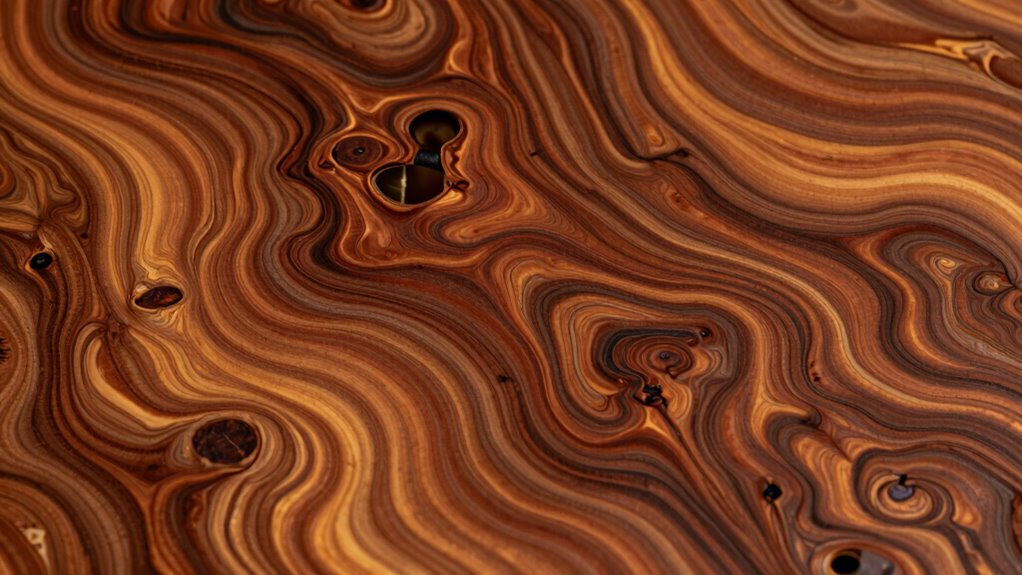

Burl veneer looks wild due to its unique patterns and textures, which emerge from growth anomalies in trees. Each piece tells its own story, showcasing intricate swirls and knots that can’t be replicated. However, this unpredictability can make burl behave less predictably than other woods, requiring careful handling and expertise in crafting. Its artistic charm demands respect, so if you’re curious about maximizing its beauty while minimizing challenges, there’s more to explore.
Key Takeaways
- Burl veneer features unique, chaotic patterns due to growth anomalies, giving it a wild and unpredictable appearance.
- The intricate swirls and knots can complicate crafting, requiring specialized techniques to handle effectively.
- Variability in burl quality may lead to inconsistent behavior in applications, affecting durability and performance.
- Its natural characteristics can result in challenges during finishing processes, making it less predictable than conventional veneers.
- The organic feel and randomness of burl can evoke warmth, but may also clash with modern design aesthetics.

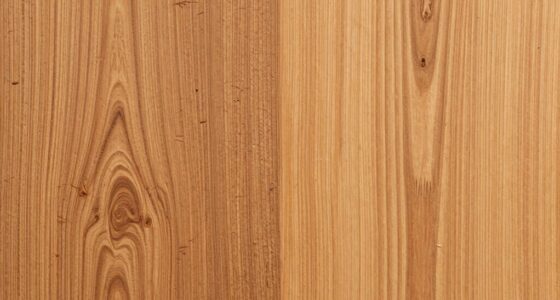
Burl veneer, with its unique patterns and rich textures, adds a touch of elegance to any surface. When you explore burl characteristics, you’ll notice how each piece tells its own story, showcasing intricate swirls and knots that can’t be replicated. These patterns arise from growth anomalies in trees, creating one-of-a-kind aesthetics that draw the eye. Whether you’re using it for furniture, cabinetry, or decorative accents, burl veneer elevates your designs, making them stand out in any setting.
Burl veneer showcases unique patterns and textures, transforming ordinary surfaces into elegant, one-of-a-kind masterpieces.
You’ll find various burl types, each offering different visual and tactile qualities. Common sources include oak, walnut, and maple, each contributing its distinct charm. As you delve into burl applications, you’ll see how versatile this material can be. From high-end furniture to sleek wall panels, burl veneer can transform mundane items into masterpieces. It’s not just about looks; the durability of burl makes it suitable for everyday use, ensuring that beauty doesn’t come at the cost of practicality.
When considering burl sustainability, it’s essential to choose responsibly sourced materials. Many suppliers now prioritize eco-friendly practices, ensuring that the burls are harvested in a way that doesn’t harm the trees or ecosystems. This focus on sustainability allows you to appreciate the beauty of burl while also being mindful of the environment. Sustainable sourcing is a crucial aspect to consider when selecting burl, as it helps preserve forests and promotes environmentally responsible craftsmanship. By selecting sustainably sourced burl, you’re supporting practices that protect our forests for future generations. Additionally, understanding the importance of forest conservation can help you make more informed choices about your materials. Knowledge about burl growth patterns can also assist in selecting high-quality pieces that are less prone to issues over time.
Burl crafting can be an intricate process, requiring skill and patience. Craftsmen often use specialized techniques to showcase the unique patterns that make burl so appealing. Whether you’re a DIY enthusiast or a professional, understanding these techniques can enhance your projects. You’ll learn how to work with the natural grain and texture, ensuring that each piece you create highlights the burl’s natural beauty. Recognizing burl characteristics can help you better appreciate the craftsmanship involved. Additionally, understanding the growth anomalies that create these patterns can deepen your appreciation for the natural art form you’re working with.
Lastly, burl aesthetics offer an organic feel that resonates with many. The randomness of the patterns connects you to nature, evoking a sense of tranquility and warmth in your space. Whether you want a rustic charm or a sophisticated touch, burl has the versatility to fit various styles. As you incorporate burl veneer into your designs, you’ll not only be adding elegance but also a piece of nature’s artistry that’s both beautiful and meaningful.

Docynia Delavayi Burl Veneer Sheet – 17×19 Inches, Exotic Mountain Apple Tree Wood with Unique Burl Patterns for Fine Woodworking, Crafting, Inlay Projects, and Gift Box Veneering
Unique Burl Patterns: Each sheet of Docynia Delavayi burl veneer features distinctive burl patterns, making every piece a…
As an affiliate, we earn on qualifying purchases.
As an affiliate, we earn on qualifying purchases.
Frequently Asked Questions
What Types of Wood Are Commonly Used for Burl Veneer?
Common types of wood used for burl veneer include walnut, maple, cherry, and oak. Each wood offers unique burl characteristics, enhancing the veneer aesthetics. When you choose walnut, you get rich, dark patterns, while maple provides lighter, more intricate designs. Cherry offers warm tones, and oak brings bold, visible grains. These burls not only look stunning but also add depth and texture to your projects, making them truly stand out.
How Is Burl Veneer Harvested and Processed?
Harvesting burl veneer’s like a treasure hunt! You’ll find these unique growths on trees, often using specialized techniques to carefully extract them without damaging the wood. Once harvested, the burls are sliced into thin sheets, revealing their stunning burl characteristics. Each piece tells a story, showcasing swirling patterns and intricate grain. After slicing, the veneer’s dried and prepared for use, turning raw nature into breathtaking works of art for your projects!
Can Burl Veneer Be Stained or Dyed Easily?
Yes, you can stain or dye burl veneer, but you should use specific staining techniques for the best results. Since burl has unique grain patterns, it absorbs dye unevenly, which might lead to unpredictable results. To achieve a more uniform look, consider applying a pre-stain conditioner first. This helps with dye absorption and guarantees a smoother finish. Always test on a scrap piece to see how the veneer reacts before committing to your project.
What Are the Best Applications for Burl Veneer?
Burl veneer shines in applications like furniture, cabinetry, and wall panels. Its unique burl veneer aesthetics add a striking visual appeal, making any piece a conversation starter. You’ll appreciate its burl veneer durability, too, as it stands up well to wear and tear, ensuring your creations last. Consider using it for decorative accents or high-end projects; it transforms ordinary items into extraordinary works of art, elevating your space effortlessly.
Is Burl Veneer Environmentally Sustainable?
Burl veneer can be environmentally sustainable if sourced responsibly. When you choose products from manufacturers who prioritize sustainable sourcing, you’re supporting eco-friendly practices. Burl characteristics, like unique patterns and textures, are often a result of natural growth processes, making them valuable. However, it’s essential to verify that the burl comes from well-managed forests to confirm you’re making a positive impact. Always look for certifications that guarantee sustainable harvesting methods.

Tech Wood Elm Burl Textured Veneer – 0.3mm 98×20.8inch(2.5×0.53meter) – Ideal for DIY Handicrafts Furniture Renovation Home Decor Car Interior Upgrade Wall Decoration and Instrument Decoration
Widely used: woodworking veneer, furniture decoration veneer, home decoration veneer, wooden door decoration veneer, audio decoration veneer, musical…
As an affiliate, we earn on qualifying purchases.
As an affiliate, we earn on qualifying purchases.
Conclusion
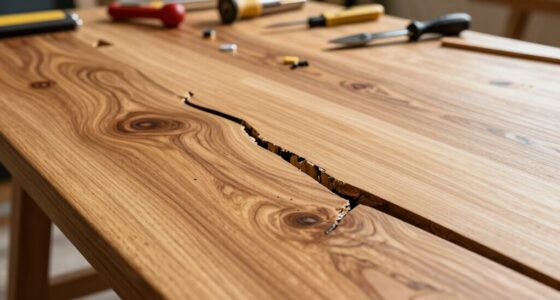
To sum up, burl veneer’s wild, unique patterns come from its irregular growth, making each piece a one-of-a-kind gem. However, its unpredictable nature can lead to challenges in woodworking, as it’s more prone to warping and cracking. Notably, around 70% of burl wood is sourced from just a few tree species, highlighting its rarity and the need for sustainable practices. Embracing burl veneer can add character to your projects, but be prepared for its quirks!

NECAMOCU Edge Banding Trimmer – Upgraded Mini Edge Band Trimmer & Cutter, Stainless Steel Blade Veneer Edge Trimmer for Woodworking, Durable Edgebanding Trimming Tool for Wood, Veneer, PVC, ABS
【Precision & Smooth Trimming】 NECAMOCU upgraded edge banding cutter features thicker blade with larger cutting edges and more…
As an affiliate, we earn on qualifying purchases.
As an affiliate, we earn on qualifying purchases.
Tech Wood Elm Burl Textured Veneer – 0.3mm 98×20.8inch(2.5×0.53meter) – Ideal for DIY Handicrafts Furniture Renovation Home Decor Car Interior Upgrade Wall Decoration and Instrument Decoration
Widely used: woodworking veneer, furniture decoration veneer, home decoration veneer, wooden door decoration veneer, audio decoration veneer, musical…
As an affiliate, we earn on qualifying purchases.
As an affiliate, we earn on qualifying purchases.