If you want edge banding that virtually disappears, focus on precise alignment and surface preparation. Professionals often use pre-glued banding with heat application for a seamless bond. Trimming excess banding with a sharp utility knife guarantees clean edges, followed by sanding with fine-grit paper for a smooth finish. Don’t forget the finishing touches, like varnish or lacquer, to unify the look. Mastering these techniques will elevate your woodworking projects—there’s plenty more to explore for an even better finish.
Key Takeaways
- Professionals ensure precise alignment of edge banding for a seamless appearance, minimizing visible seams between the banding and wood surface.
- Proper surface preparation, including clean and smooth edges, enhances adhesion and the overall finish quality of the edge banding.
- Utilizing heat application effectively bonds pre-glued edge banding, allowing it to integrate smoothly with the wood.
- Skilled trimming with sharp tools ensures clean, jagged-free edges, blending the banding seamlessly into the project.
- Applying a consistent finish, such as varnish or lacquer, unifies the look of the wood and edge banding, creating a polished final product.
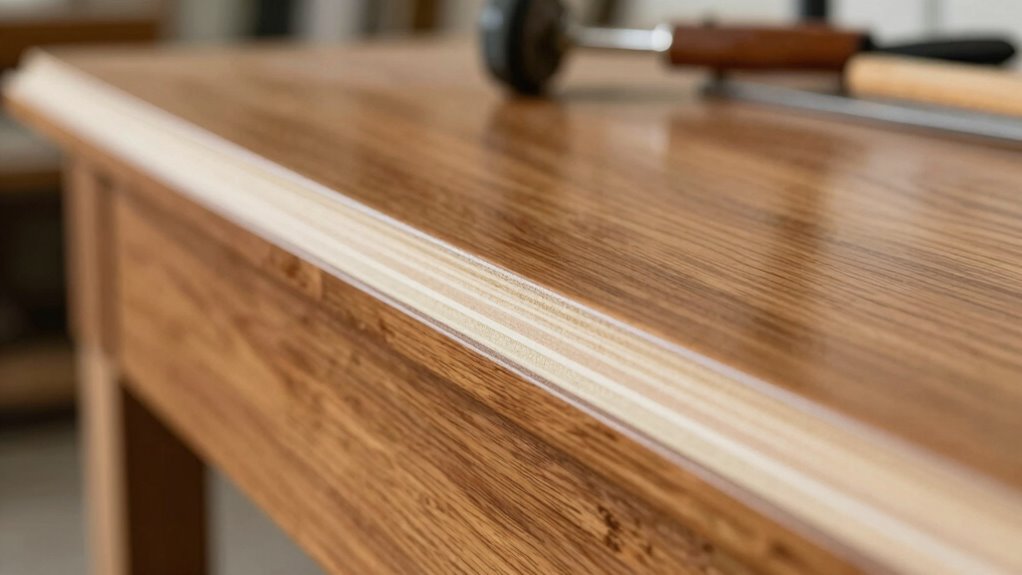
Edge banding is vital for achieving a polished look in woodworking and cabinetry. If you want your projects to stand out, mastering the art of edge banding is essential. Many professionals rely on techniques that make their edge banding virtually disappear, and you can adopt these methods to elevate your own skills.
One of the most effective strategies is using pre-glued edge banding. This type of banding comes with adhesive already applied, allowing for a quicker application process. You can simply align it with the edge of your board, apply heat, and watch it bond seamlessly. When using pre-glued banding, it’s important to verify that your edge is clean and smooth. Any imperfections can lead to uneven adhesion, which you’ll want to avoid at all costs. Proper surface preparation plays a significant role in ensuring a seamless finish.
Using pre-glued edge banding streamlines your project, ensuring a smooth, seamless bond when applied correctly.
To make the most of pre-glued banding, you can use a hot glue gun for extra security. After applying the pre-glued banding, a thin line of hot glue can help reinforce the bond. Just be careful not to overdo it; a little goes a long way. If you apply too much, it can create a mess that’s tough to clean up later.
After you’ve applied the edge banding, it’s necessary to trim any excess. A sharp utility knife or a specialized edge banding trimmer will do the job well. Take your time with this step; precision is essential. If you rush, you may end up with jagged edges that can detract from the overall look of your project.
Once the trimming is done, sanding is next on your list. Use fine-grit sandpaper to smooth out the edges and blend the banding seamlessly with the surface of your wood. This step is vital for achieving that “disappearing” effect. Proper surface preparation plays a significant role in adhesion quality and the final appearance. If you skip this part, the edge banding will stand out, taking away from your polished finish.
Finally, consider applying a finish to your piece. Whether it’s varnish, lacquer, or oil, a good finish can help unify the look of the wood and the edge banding. It’s the final touch that can elevate your project from good to great.

Edge Supply Birch 3/4 in x 50 ft Roll – Pre-Glued Iron On Wood Veneer Tape – Wood Veneer Edge Banding Tape with Hot Melt Adhesive, Smooth Sanded Finish Ideal for Furniture & DIY, Made in USA
- Premium Birch Wood Veneer: High-quality, natural finish for furniture
- Pre-Glued Hot Melt Adhesive: Easy iron-on application for strong bonds
- Flexible and Easy to Use: Bends around curves, trims with scissors
As an affiliate, we earn on qualifying purchases.
As an affiliate, we earn on qualifying purchases.
Frequently Asked Questions
What Materials Are Best for Edge Banding?
For edge banding, you’ll want to contemplate PVC options and wood veneer based on your project’s needs. PVC is durable and easy to clean, while wood veneer offers a natural look. Pay attention to adhesive types for strong bonding, and choose thickness variations to match your substrate. Color matching is essential for a seamless finish. Finally, mastering application techniques guarantees a professional result, making your edges look sharp and polished.
How Long Does Edge Banding Last?
Edge banding typically lasts several years, but its lifespan hinges on durability factors like material quality and environmental conditions. Think of it like a well-tended garden; with the right care, it thrives. To extend its life, avoid excessive moisture and heat, and keep surfaces clean. Regular touch-ups can also help maintain its appearance, ensuring your edges stay sharp and fresh. With proper maintenance, you’ll enjoy lasting results that enhance your projects.
Can I Apply Edge Banding Myself?
Yes, you can apply edge banding yourself! Using DIY techniques, you’ll find it’s quite manageable with the right tools. Start by measuring and cutting the edge banding to fit your project, then use an iron to adhere it properly. The benefits of edge banding include a polished look and added durability, which can elevate your furniture’s appearance. With some practice, you’ll achieve professional-looking results without the cost of hiring a pro.
What Tools Are Needed for Edge Banding?
To tackle edge banding like a pro, you’ll need a few essential tools. Think about a solid edge banding trimmer, a heat source for adhesive options, and a good-quality roller for smooth application. Don’t forget your utility knife for precise cuts! Mastering various banding techniques can make all the difference in achieving that seamless look. With the right tools, you’re well on your way to creating stunning, professional results in no time.
How Do I Repair Damaged Edge Banding?
To repair damaged edge banding, start by identifying the edge banding type—PVC, wood, or melamine. Use repair techniques like re-gluing loose edges with wood glue or replacing torn sections with new banding. For minor scratches, try a matching touch-up marker or wax filler. If the damage is extensive, you might need to remove the old banding entirely and apply a new strip. Always guarantee a clean surface for better adhesion.
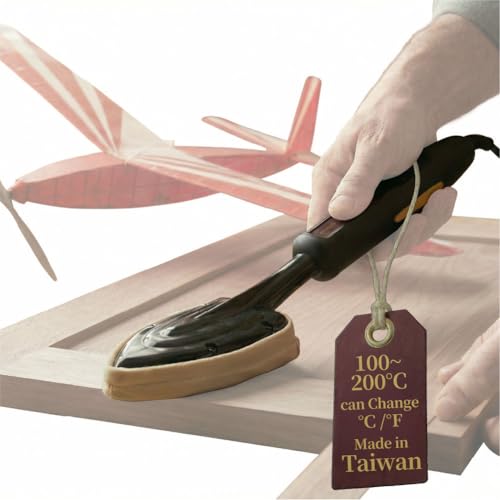
O'SKOOL Edge Banding Iron 100–200°C with Digital Display, Adjustable Heat Sealing Tool for Veneer & Tacking, °C/°F Switchable 110V, VL01
- Digital Temperature Control: 100°C to 200°C with LCD display
- Versatile for Woodworking & RC Models: Suitable for veneer, films, and repairs
- Non-Stick PTFE-Coated Shoe: Smooth, scratch-resistant surface with precision tip
As an affiliate, we earn on qualifying purchases.
As an affiliate, we earn on qualifying purchases.
Conclusion
In the world of edge banding, the magic lies in the details. When you master the art, your edges seem to vanish, leaving a seamless finish that whispers elegance. It’s not just about the tools; it’s about the care you put into every cut and bond. So, as you embrace these techniques, remember: with a little finesse, your projects will transform, turning ordinary into extraordinary, where the edges fade gracefully into the background.

NECAMOCU Edge Banding Trimmer, Upgraded Mini Edge Band Trimmer & Cutter
- Enhanced Cutting Precision: Thicker blade and larger cutting edges
- Durable Construction: High-quality stainless steel blades and phenolic base
- Safe and Comfortable Use: V-shaped blade design with secure screws
As an affiliate, we earn on qualifying purchases.
As an affiliate, we earn on qualifying purchases.

3M Sandpaper, 220 Grit, 5 Sheets, 9 in x 11 in, Sands Paint, Wood & Metal, Great For General Purpose Sanding, Very Fine Aluminum Oxide Sand Paper (9000NA-20)
- Type: General purpose sandpaper
- Material: Aluminum oxide mineral
- Suitable For: Paint, wood, and metal
As an affiliate, we earn on qualifying purchases.
As an affiliate, we earn on qualifying purchases.