
Winding sticks are simple tools that help you detect twists and warps in wood before they cause problems. By placing them along opposite edges of a board, you can see if the sticks are aligned or tilted, revealing hidden distortions. Identifying these issues early allows you to correct them and achieve flat, stable surfaces. To learn how to use winding sticks effectively and avoid common mistakes, keep exploring this helpful method.

Get business pricing on tools and workshop supplies
- Business-only prices and quantity discounts
- Tax-exempt purchasing
- Multiple users, one account, clear invoices
Key Takeaways
- Winding sticks are tools used to detect twists and warps in wood surfaces early in the woodworking process.
- Proper placement and alignment of winding sticks reveal deviations indicating wood distortion.
- Observing the parallelism of sticks helps identify surface twists before they affect project quality.
- Early detection with winding sticks prevents costly rework and ensures accurate, flat woodworking surfaces.
- Regular use improves overall work precision, helping maintain strong, visually appealing, and properly aligned projects.
As an affiliate, we earn on qualifying purchases.
What Are Winding Sticks and How Do They Work?

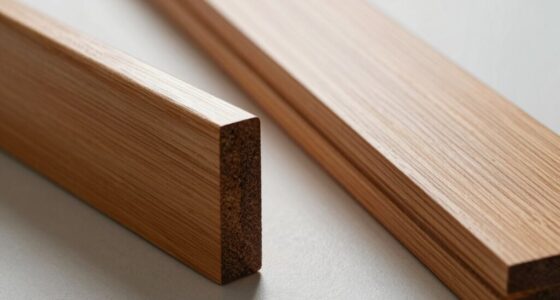
Winding sticks are simple tools used by woodworkers and finishers to check if a surface is flat or warped. They consist of two straight, narrow sticks positioned along the edges of the wood. When you hold them parallel, you can observe the alignment of their top and bottom edges. If the sticks appear tilted or uneven, it indicates warping or twist in the wood. Winding sticks work by revealing variations caused by grain orientation or uneven wood moisture levels. Wood with inconsistent moisture content may warp as it dries or absorbs moisture, affecting flatness. Understanding these factors helps you interpret what the winding sticks show. By carefully observing the sticks’ alignment, you can identify potential issues early, ensuring your project remains accurate and free of hidden twists.
As an affiliate, we earn on qualifying purchases.
How to Use Winding Sticks to Detect Twists in Wood?

To detect twists in wood with winding sticks, start by placing the sticks along opposite edges of the board, ensuring they are perfectly parallel. Observe the wood grain alignment between the sticks; if the lines appear uneven or diverge, a twist exists. Check both ends and the middle of the board for consistent readings. Identifying twists early helps you correct them before they affect your finish quality. When the sticks are aligned, the wood is flat and true, which is vital for achieving a smooth, professional finish. If you notice discrepancies, adjust your plan or plan to straighten the wood before further processing. Using winding sticks regularly lets you monitor the wood’s true surface, preventing subtle twists from turning into larger problems later. Recognizing wood distortions early allows for better planning and more accurate craftsmanship.
As an affiliate, we earn on qualifying purchases.
Common Mistakes to Avoid When Using Winding Sticks
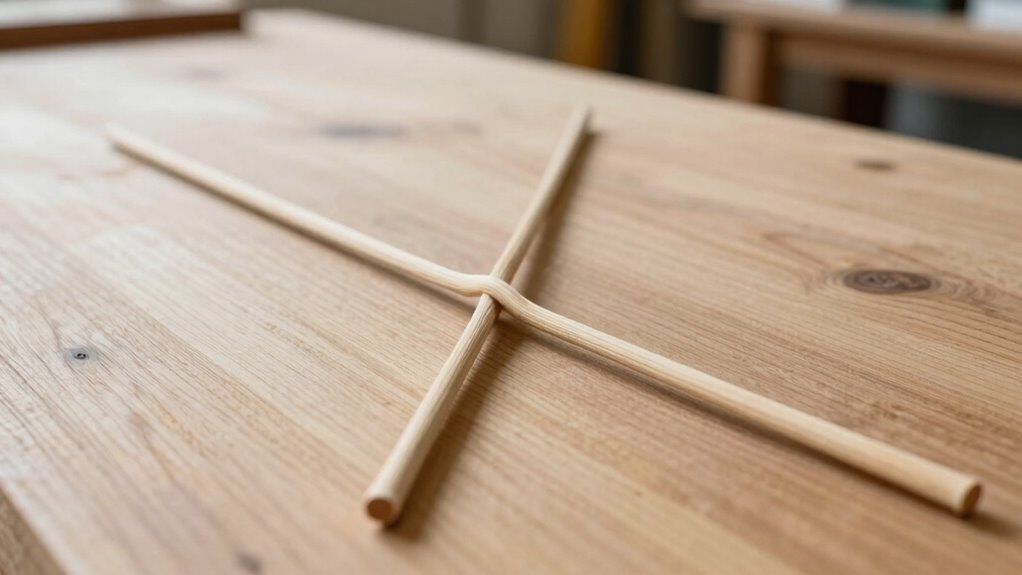
One common mistake is disregarding proper alignment techniques, which can lead to inaccurate readings. Rushing through measurements or checks often causes errors and inconsistency. To get reliable results, take your time and ensure your winding sticks are correctly positioned every time.
Ignoring Proper Alignment Techniques
Ignoring proper alignment techniques can lead to inaccurate readings and flawed results when using winding sticks. If you don’t pay attention to correct positioning, you risk adopting incorrect technique or relying on improper calibration. These mistakes can cause misjudgments of twist or bow in your workpiece. To avoid this, verify your sticks are aligned precisely and checked regularly. Use the following table to understand common pitfalls:
| Mistake | Impact | Solution |
|---|---|---|
| Incorrect technique | Skewed measurements | Practice proper hand positioning |
| Improper calibration | Unreliable readings | Calibrate sticks before use |
| Ignoring alignment | False twist detection | Double-check stick alignment |
| Rushing checks | Overlooked errors | Take time to set up properly |
Focus on consistency and calibration to maintain accuracy. Proper technique ensures reliable results and helps prevent costly mistakes.
Rushing Measurements or Checks
Rushing through measurements or checks with winding sticks can lead to significant errors in your work. When you hurry, you compromise measurement accuracy, risking misjudging twist or surface irregularities. Take your time to guarantee each reading is precise; rushing often causes oversight or mistakes. Proper tool maintenance is also critical—dirty or damaged winding sticks can distort results, so keep them clean and in good condition. Avoid the temptation to skip steps or rush through the process; accuracy depends on deliberate, careful checks. When you slow down and pay attention to detail, your readings become more reliable, helping you identify issues early before they become bigger problems. Remember, patience and proper tool upkeep are essential for accurate, consistent results with winding sticks. Additionally, understanding the importance of projector calibration can ensure your measurements and setups are reliable, just like careful winding stick use.
As an affiliate, we earn on qualifying purchases.
Choosing the Right Winding Sticks: Materials and Sizes

Choosing the right winding sticks depends largely on selecting materials and sizes that suit your woodworking projects and personal preferences. You can opt for wooden or plastic winding sticks, each offering distinct advantages. Wooden sticks feel natural and are typically preferred for traditional woodworking, while plastic ones are durable and resistant to moisture. When choosing sizes, consider the width of your workpieces; larger projects may need longer sticks for better visibility, while smaller projects benefit from compact sticks. You can choose custom-made winding sticks, tailored to your specific needs, or go with standard sizes that are widely available. Custom sticks often provide better precision for specialized work, whereas standard options are more affordable and versatile. Selecting the appropriate ethnicity of the material can influence the durability and aesthetic of your tools. Ensure your winding sticks are made from a material that aligns with your project’s requirements for optimal performance and accuracy.
Troubleshooting Winding Stick Use for Better Results

To get the best results, you need to make sure your winding sticks are positioned properly and you’re reading them accurately. Even small misalignments can lead to incorrect assessments of your work. Proper tool calibration ensures precise measurements and reliable troubleshooting. Let’s explore how to troubleshoot these issues for more precise and reliable measurements.
Proper Stick Positioning
Proper stick positioning is essential for accurate results when using winding sticks, and even small misalignments can lead to incorrect assessments of a board’s twist. To guarantee precision, you need to pay attention to grain orientation and tool calibration. Misaligned sticks can falsely indicate twist, so always verify that both sticks are parallel and properly aligned with the board’s grain. Position the sticks at the ends of the board, ensuring they sit flat and are steady. Check that the sticks are free of warps or damage and that your tool calibration is correct. Keep the sticks in the same plane, avoiding tilts or angles. Consistent positioning helps you read the twist accurately and prevents misinterpretation of the board’s true condition. Additionally, understanding grain orientation can help you interpret measurements more effectively.
Accurate Reading Techniques
Even with correctly positioned winding sticks, misreading results can still happen if you don’t follow proper techniques. To guarantee accuracy, focus on consistent measurement and proper eye level. Check the grain orientation; running with the length of the board can distort your reading, so verify it first. Also, consider moisture content—wood with high moisture can warp, affecting readings. Use this table as a mental guide:
| Grain Orientation | Moisture Content | Reading Accuracy |
|---|---|---|
| Parallel to sticks | Dry wood | Most reliable |
| Perpendicular | Wet wood | Less reliable |
| Slightly angled | Any | Use caution |
| Cross-grain | Any | Avoid readings |
Align your eye properly, confirm grain direction, and account for moisture to interpret twist correctly.
Why Winding Sticks Are Essential for Accurate Woodworking

Winding sticks are essential tools in woodworking because they help you detect and correct twists and warps in your boards. By using them, you can identify issues like wood distortion early, ensuring your project stays true to your design. Proper winding stick use guarantees correct grain alignment, which improves the strength and appearance of your finished piece. These tools allow you to see subtle deviations that might otherwise go unnoticed. When you check your boards with winding sticks, you prevent uneven surfaces and misaligned joints. This simple step saves you time and frustration, especially during precision tasks like joinery and paneling. Additionally, understanding wood distortion can help you select and prepare your lumber more effectively, leading to better results. Ultimately, winding sticks are a small investment that ensures your woodworking is accurate, stable, and visually appealing.
Frequently Asked Questions
Can Winding Sticks Be Used on Curved Wood Surfaces?
Yes, winding sticks can be used on curved surfaces with some curved surface adaptation. However, they work best on flat or slightly bowed surfaces. For complex curves, you might want to contemplate alternative leveling tools like a bubble level or a straightedge that conform better to the curve. Winding sticks are great for detecting twist and ensuring flatness, but on highly curved wood, other tools may give more accurate results.
How Often Should I Check for Twists During a Project?
You should check for twists every few hours or after any major change in your project, as even a small twist can lead to warping later. notably, studies show that wooden winding sticks are preferred for their tactile feedback, but digital tools offer more consistent readings. Whether you use wooden or digital, regularly checking with frequency of checks helps catch twists early, ensuring your project stays true and stable throughout.
Are Digital or Laser Winding Sticks More Accurate?
Digital winding sticks generally offer greater digital accuracy, making them more precise than traditional tools. Laser winding sticks excel in laser precision, providing clear, direct readings that reduce errors. If you want the most accurate results, go for laser winding sticks, especially in detailed or critical projects. They’re faster, more reliable, and minimize guesswork, helping you detect twists early and maintain perfect alignment throughout your woodworking process.
What Are the Signs of Incorrect Winding Stick Alignment?
If your winding sticks aren’t aligned properly, you’ll notice visual cues like uneven edges or gaps between the sticks and the workpiece. Alignment issues become apparent when the sticks don’t sit flat or show inconsistent readings from end to end. These signs indicate that your winding sticks might be off, leading to inaccurate assessments of twist. Regularly check for these visual cues to verify your winding sticks remain properly aligned and your work precise.
Can Winding Sticks Help With Identifying Internal Wood Defects?
You might think winding sticks are just for checking twist, but surprise—they help with defect detection too. By aligning grain orientation, they can reveal internal wood issues like knots or cracks that aren’t visible on the surface. So, next time you’re inspecting wood, don’t overlook winding sticks—they’re a surprisingly handy tool for spotting internal defects and ensuring your project stays true to plan.
Conclusion
Using winding sticks can cut your woodworking errors by up to 80%. By detecting twists early, you save time, avoid waste, and achieve perfectly aligned projects. Remember, even small twists can weaken joints or cause uneven surfaces down the line. So, don’t overlook this simple tool—it’s your best defense against hidden imperfections. Mastering winding sticks today means flawless craftsmanship tomorrow. Keep practicing, and watch your projects come together with confidence and precision.
Fall yard work Picks
leaf blowers
As an affiliate, we earn on qualifying purchases.