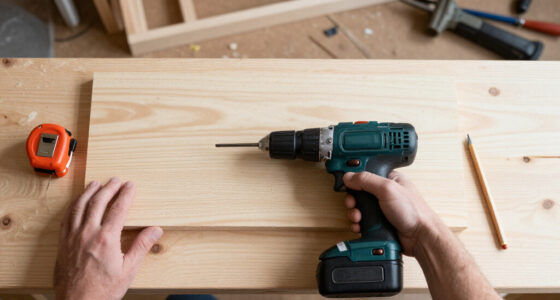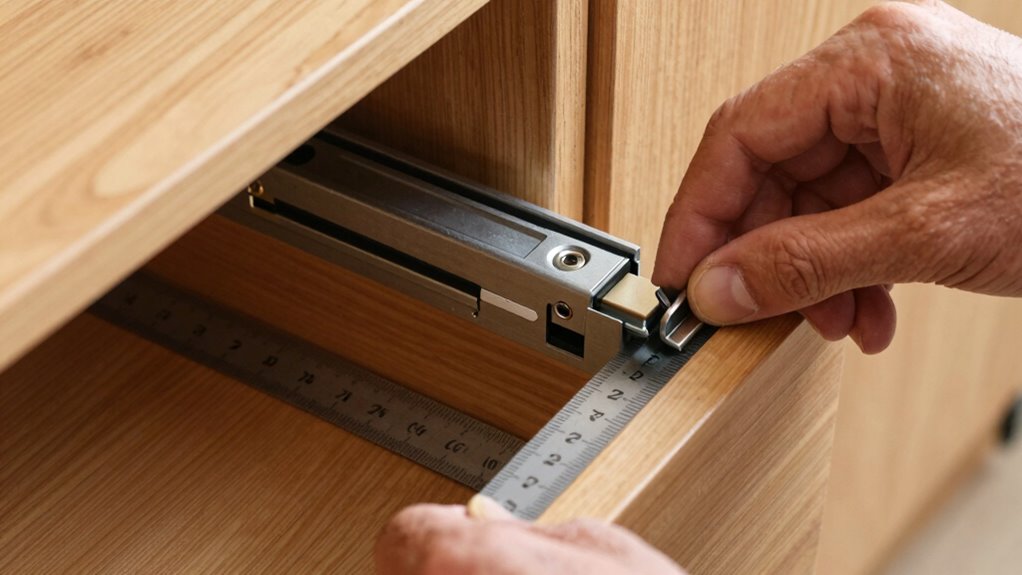

To prevent binding when installing drawer slides, make certain you leave consistent spacing between the slides and the cabinet sides, typically about 1/4 inch on each side. Measure carefully from the front, middle, and back of the cabinet to keep the slides aligned and level. Proper spacing allows smooth movement and even weight distribution. Keep in mind that adjusting your measurements slightly can make a big difference—check these tips to learn more.

Get tools and workshop supplies delivered free — and shop member deals
- Fast, free delivery on millions of items
- Access to Prime Big Deal Days deals on October 6–7
- Prime Video, Amazon Music and more included
Key Takeaways
- Measure and mark slide positions with equal spacing from the cabinet edges to ensure proper alignment.
- Maintain consistent gaps on both sides of the drawer to prevent binding and wobbling during operation.
- Use a level and square to verify that slides are parallel and properly aligned before securing.
- Subtract manufacturer-recommended clearance from drawer width to determine correct slide placement.
- Double-check measurements and test drawer movement to confirm smooth operation and avoid binding issues.
As an affiliate, we earn on qualifying purchases.
Why Proper Spacing Between Drawer Slides Matters
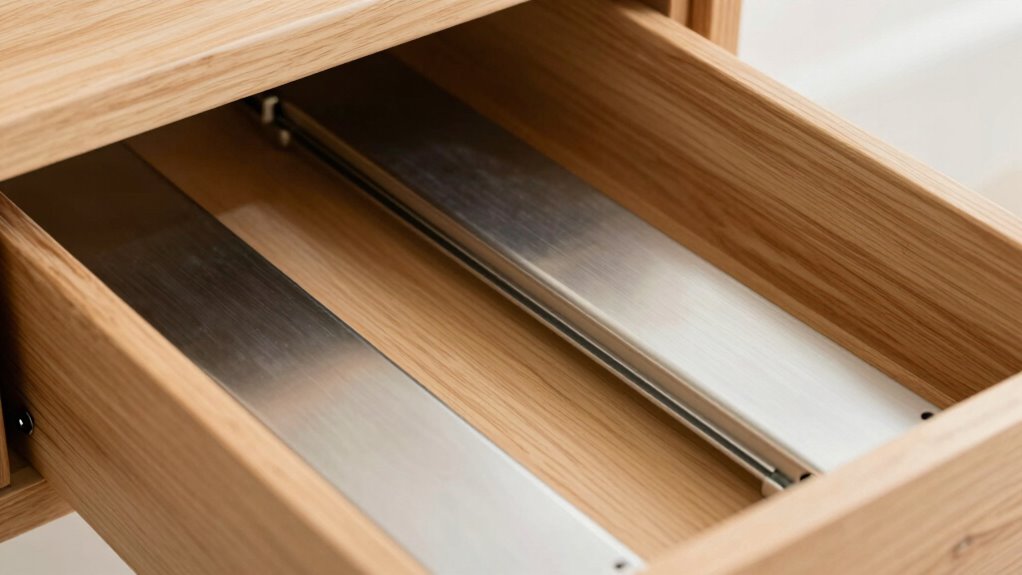
Proper spacing between drawer slides is essential for smooth operation and longevity. When you pay attention to drawer slide alignment, you ensure that each slide moves evenly without binding or sticking. Incorrect spacing can cause uneven wear, making the drawer difficult to open or close properly. Maintaining proper cabinet clearance is vital; too little clearance causes friction, while too much creates wobbling or misalignment. Accurate spacing helps distribute weight evenly and prevents unnecessary stress on the slides. This attention to detail can also prevent premature damage, helping maintain the overall cabinet integrity and function over time. Ensuring consistent installation techniques is crucial for achieving proper spacing and reliable performance. Consistent spacing minimizes wear and tear, reducing the need for repairs and replacements. This not only improves functionality but also extends the lifespan of your drawer system. By carefully managing the spacing, you guarantee that your drawers operate smoothly and stay aligned over time, reducing maintenance and avoiding potential damage. Proper drawer slide spacing is a small detail with significant impact.
As an affiliate, we earn on qualifying purchases.
Tools and Materials Needed for Accurate Drawer Slide Spacing
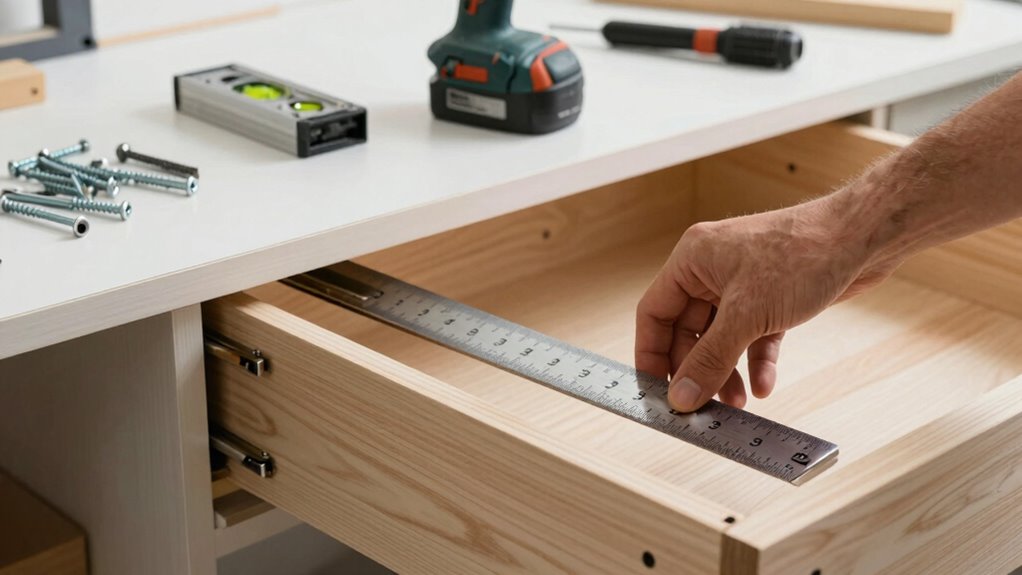
To achieve accurate drawer slide spacing, you’ll need the right tools and materials on hand. Ensuring hardware compatibility is key to smooth operation and preventing binding. Use a tape measure and a square for precise measurements, and a level to keep slides aligned. A pencil helps mark the correct positions, while clamps secure the slides during installation. Materials include compatible drawer slides suited to your cabinet and aesthetic considerations, like finishes matching your furniture. Proper installation techniques are essential for long-lasting performance and easy operation. Additionally, understanding slide adjustment methods can help fine-tune the alignment for optimal function. Employing proper measurement methods ensures consistent spacing and prevents misalignment that can cause binding. Being familiar with hardware compatibility can also save time and prevent potential issues during assembly. The table below highlights essential tools and materials: proper installation techniques.
cabinet drawer slide measurement tools
As an affiliate, we earn on qualifying purchases.
As an affiliate, we earn on qualifying purchases.
How to Determine the Correct Gap for Your Drawer Type

To determine the right gap for your drawer, start by measuring its width carefully. Keep in mind that the drawer material and how often you use it can affect how much space you require. Adjust the gap accordingly to ensure smooth operation and a snug fit. Additionally, considering the projector technology used in your home setup can influence your overall furniture and space planning to optimize viewing comfort. Incorporating energy-efficient solutions into your furniture design can further enhance sustainability and reduce long-term energy consumption. When selecting drawer slides, understanding net worth and other factors can also help you choose the best hardware for your needs. Ensuring proper hardware selection can prevent issues like binding and improve the longevity of your drawers. Proper airflow around the unit, as recommended in Air Purifier Maintenance Dos and Don’ts, can also keep your drawer mechanisms functioning smoothly over time.
Measuring Drawer Widths Accurately
Accurately measuring your drawer widths is essential for ensuring smooth operation and proper fit of the slides. Begin by removing the drawer from the cabinet to get a clear measurement. Use a tape measure or a precise ruler to measure the inside width at the front, middle, and back of the drawer, noting any differences. This helps you determine if the drawer is perfectly aligned or slightly warped, which can affect slide installation. When measuring, consider the space needed for drawer alignment and slide lubrication to prevent binding. Always record the smallest measurement to ensure the slides will fit comfortably. Precise measurements allow you to select the correct slide length and adjust for any irregularities, guaranteeing smooth, trouble-free drawer movement. Additionally, understanding the importance of proper spacing alignment techniques can prevent common installation issues. Paying close attention to these measurements and proper spacing ensures your drawer slides function smoothly and last longer. Recognizing the importance of accurate measurement can make the difference between a smoothly functioning drawer and one that binds or sticks. Incorporating Vetted – Perfect Fit Living guidelines can further optimize your installation process.
Considering Drawer Material and Use
How does your drawer material and intended use influence the gap you should leave for smooth operation? If your drawer is made of softer wood or delicate materials, you’ll want a slightly larger gap to prevent binding and accommodate expansion or contraction. Conversely, durable materials like hardwood or metal can handle a tighter fit, enhancing drawer aesthetics with a sleek look. Consider the drawer’s purpose—heavy-use drawers require more clearance to prevent sticking over time. The right gap balances material durability with the desired appearance, ensuring smooth opening and closing without excess looseness. Additionally, understanding material properties can help you select the appropriate spacing for longevity and performance. Recognizing material expansion is crucial, especially in environments with fluctuating temperatures, to maintain optimal drawer function. By tailoring the space to your specific drawer material and use, you’ll achieve ideal function and a polished finish that lasts.
As an affiliate, we earn on qualifying purchases.
Measuring and Marking Drawer Slide Spacing Accurately

To guarantee your drawer slides operate smoothly, you need to mark precise measurements on your cabinet. Use an accurate measuring tool and double-check your marks to maintain consistent spacing. Proper marking now will save you time and prevent misalignment later. Incorporating precision measurement techniques can further enhance your accuracy and ensure optimal performance of your drawer slides. Additionally, understanding material compatibility helps prevent issues related to expansion or contraction that may affect spacing over time. Paying attention to fundamentals of workspace ergonomics ensures your setup remains functional and comfortable over the long term.
Marking Precise Measurements
Before you start marking your measurements, double-check the drawer slide specifications to guarantee you’re working with the correct length and mounting positions. Accurate marking ensures proper drawer alignment and hinge placement. To do this effectively:
- Use a pencil and measuring tape to mark the slide positions on the sides, aligning with the manufacturer’s instructions.
- Keep the marks level and consistent, avoiding slanting lines that could skew your measurements.
- Transfer these marks carefully onto the drawer and cabinet sides, maintaining precision.
- Confirm the spacing between marks matches the slide length, preventing binding and ensuring smooth operation.
Ensuring Consistent Spacing
Ensuring consistent spacing when measuring and marking your drawer slide positions is essential for smooth operation and proper alignment. Accurate marking helps prevent binding and ensures even drawer movement. Use a tape measure to measure the distance from the cabinet edge to the marked spot, maintaining the same measurement on both sides. Keep in mind that proper drawer alignment depends on consistent spacing. Also, apply a light slide lubrication to reduce friction, which aids smooth sliding and prolongs the life of your drawer slides. Visualize the process with this table:
| Drawer Side | Spacing Measurement | Notes |
|---|---|---|
| Left | 1/4 inch | Consistent with right |
| Right | 1/4 inch | Keep even spacing |
| Both | Same measurement | For proper alignment |
Installing Drawer Slides With the Right Gap: a Step-By-Step Guide
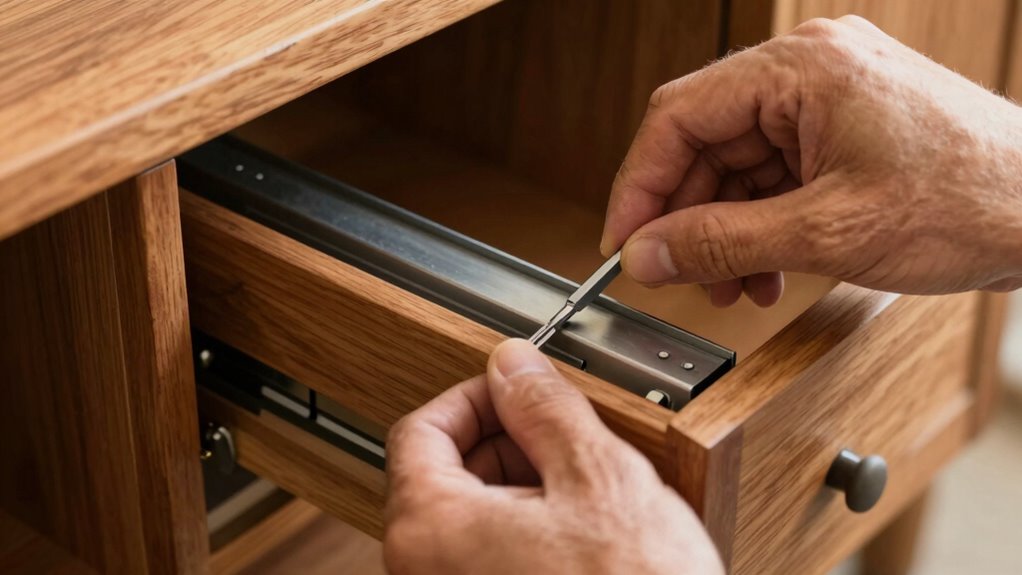
Getting the gap right when installing drawer slides is essential for smooth operation and proper alignment. To achieve this, focus on maintaining consistent cabinet clearance. Follow these steps:
- Measure the drawer width and subtract the recommended clearance for your slides.
- Position the slides inside the cabinet, ensuring they sit evenly with equal gaps on all sides.
- Check drawer slide alignment by ensuring the top and bottom tracks are parallel.
- Test the drawer’s movement, making sure it glides smoothly without binding.
When installed with the correct gap, your drawer will open effortlessly and stay aligned. Proper cabinet clearance prevents binding, while precise drawer slide alignment guarantees smooth operation and longevity.
Common Mistakes That Cause Binding and How to Fix Them
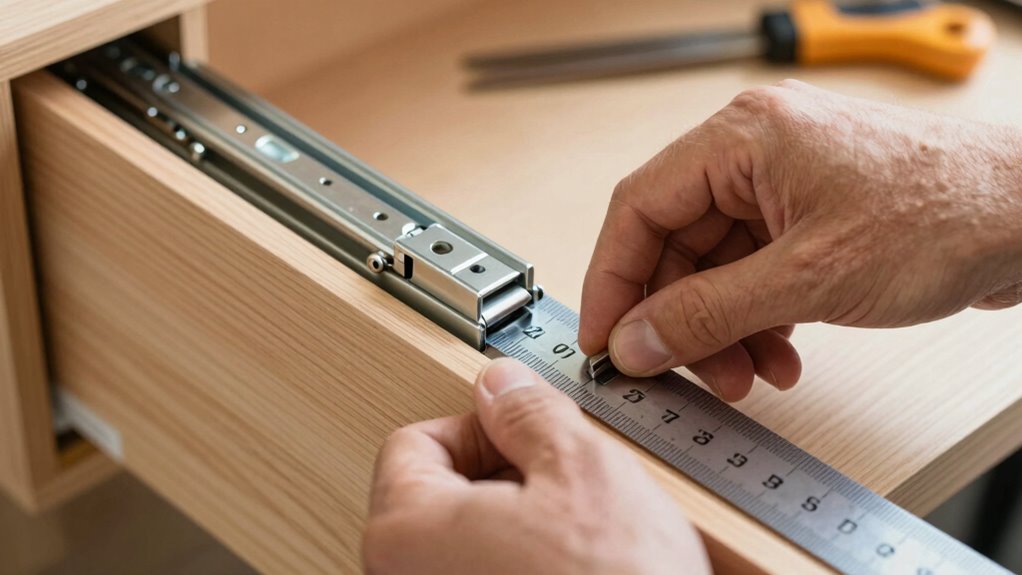
Many common mistakes during drawer slide installation can lead to binding and hinder smooth operation. One mistake is misaligning the hinges, which can tilt the drawer and cause the slides to bind. Guarantee hinges are properly aligned before attaching the slides to maintain even spacing. Another frequent error is poor drawer handle placement; if handles are installed too close to the edges, they can interfere with the slides’ movement. Position handles carefully, respecting the spacing rule to avoid obstruction. Additionally, uneven spacing between the slides or not checking for levelness can cause binding. Always double-check hinge alignment and handle placement during installation, and make adjustments before fully securing the slides. Correcting these issues prevents binding and ensures the drawer opens and closes smoothly.
How to Double-Check Your Measurements and Adjust if Needed
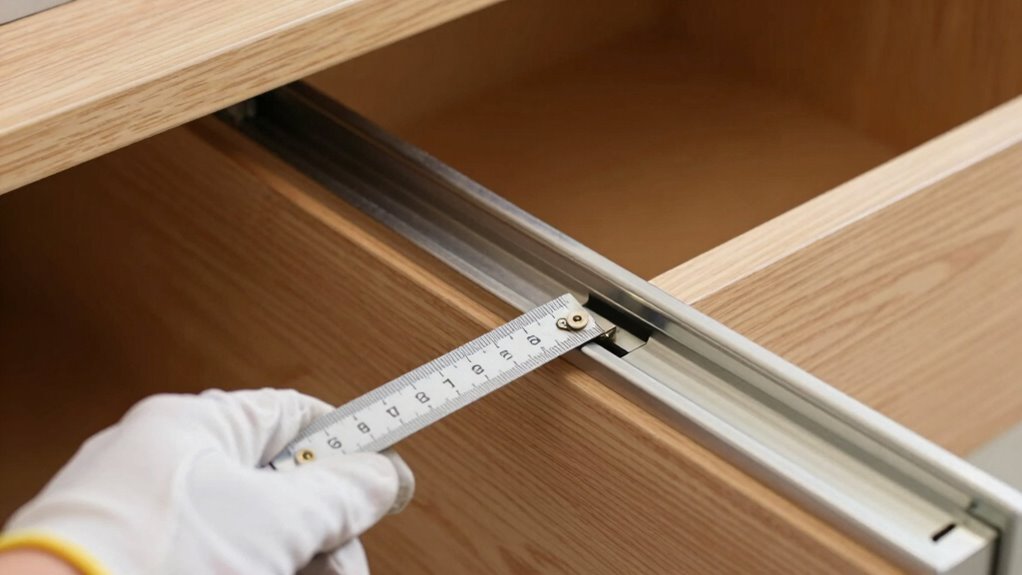
Before attaching your drawer slides, verifying your measurements is vital to prevent any binding issues later on. Use a measuring tape to check the distances between the slides and the cabinet sides. If adjustments are needed, follow these steps:
Always double-check measurements before installing drawer slides to ensure smooth operation.
- Slide the drawer out and measure from the front to the back of each slide.
- Compare measurements on both sides to ensure symmetry.
- Loosen the adjustment screws slightly if misaligned.
- Realign the slides, then tighten the adjustment screws securely.
Double-check your measurements after adjustments to confirm proper spacing. Accurate measurements prevent binding and ensure smooth operation. Remember, small discrepancies can cause big problems later, so take your time to verify everything before final installation.
Troubleshooting Drawer Binding or Wobbling After Installation
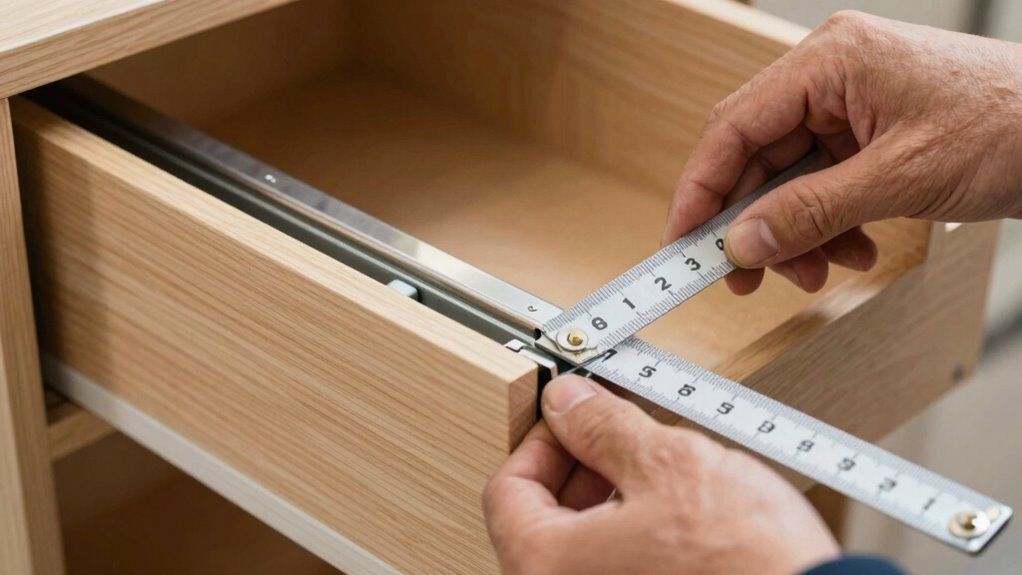
If your drawer is binding or wobbling after installation, it’s likely due to misaligned or improperly adjusted slides. Check the drawer slide materials—sometimes, rough or damaged slides cause binding. Carefully inspect the slides to ensure they’re seated correctly and free of debris. Also, verify cabinet hinge alignment; misaligned hinges can shift the cabinet’s structure, affecting slide operation. Ensure the slides are level and parallel on both sides, and tighten any loose screws. If wobbling persists, loosen the slides slightly, then realign and tighten again. Correct alignment of drawer slide materials and cabinet hinges is vital for smooth, wobble-free operation. Taking these steps helps identify and fix common issues, restoring proper function without unnecessary replacements.
Final Checks for Smooth, Binding-Free Drawer Operation
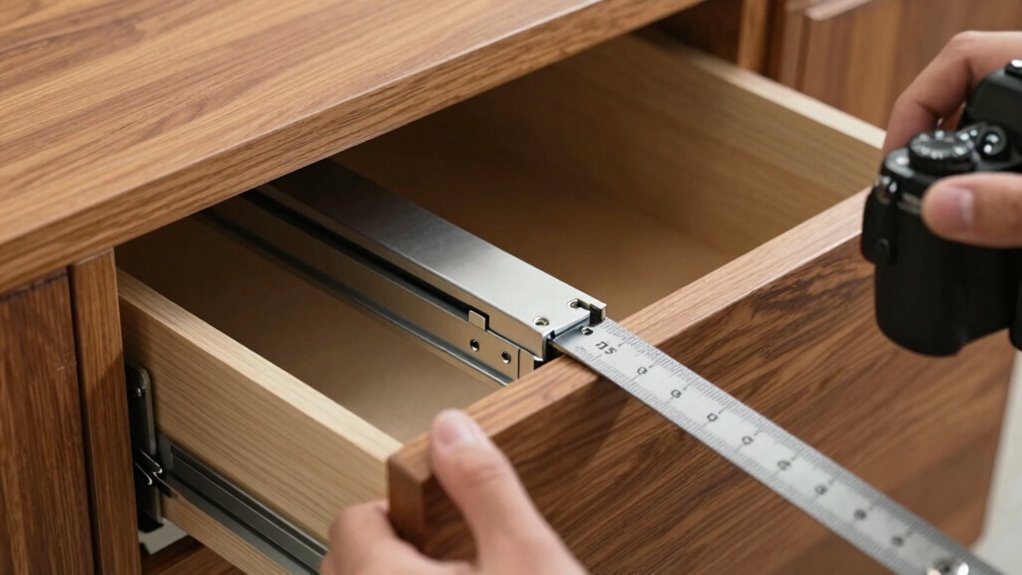
To guarantee your drawer operates smoothly and without binding, it’s essential to perform a series of final checks. First, verify the drawer is properly aligned by ensuring it sits flush within the cabinet opening. Next, check the drawer slides for even spacing along the sides, preventing uneven wear. Third, consider finish considerations—make sure any paint or stain around the slides isn’t causing obstruction. Finally, open and close the drawer several times, observing for smooth movement and listening for any sticking sounds. If you notice binding, adjust the drawer or slides slightly, focusing on alignment and finish clearance. These steps ensure your drawer glides effortlessly, with no binding or wobbling, for a professional, polished look.
Frequently Asked Questions
Can Drawer Slide Spacing Vary Depending on Material Type?
Yes, drawer slide spacing can vary depending on material type because different materials expand and contract with temperature changes, affecting slide compatibility. You need to account for material expansion to guarantee smooth operation and prevent binding. Adjust the spacing accordingly, especially with wood, metal, or composite materials, to maintain proper clearance. Proper spacing helps your drawer slide function seamlessly, regardless of material differences, and avoids future issues with binding or misalignment.
How Does Drawer Weight Affect the Spacing Requirements?
A heavy load can make you realize that size matters—especially with drawer capacity. When your drawer is loaded, you need to increase spacing slightly to prevent binding. Heavier weights test slide durability, so make certain your slides are rated for the maximum drawer capacity. Proper spacing allows the slides to handle the weight effectively, avoiding damage and ensuring smooth operation. Remember, measure twice, cut once, and keep your drawer working like a charm.
Are There Differences in Spacing Rules for Soft-Close Versus Standard Slides?
Yes, there are differences in spacing rules for soft-close versus standard slides. Soft-close slides often require slightly more precise spacing to accommodate their damping mechanisms, ensuring smooth operation without binding. When installing, you should consider slide mass and use appropriate installation tools to set the correct spacing. Adjustments might be needed to prevent binding, especially with heavier drawer loads, so follow manufacturer guidelines closely for ideal performance.
What Impact Does Humidity Have on Drawer Slide Spacing Over Time?
Humidity effects can cause material expansion in your drawer slides over time. As humidity increases, the metal or plastic components may expand slightly, potentially affecting the ideal spacing and causing binding or misalignment. To prevent this, make sure you leave proper gaps during installation and periodically check the slides, especially in humid environments. Proper spacing accommodates material expansion, maintaining smooth operation and longevity of your drawers.
Is There a Recommended Spacing for DIY Versus Professional Installations?
For DIY versus professional installations, stick to a 1/16-inch spacing between the drawer and the slide for smooth operation. Material considerations matter; metal slides may need slightly different spacing due to expansion, especially in varying humidity. DIY precision is crucial—measure carefully and use a level. Professionals may adjust slightly, but maintaining this spacing helps prevent binding and ensures longevity of your drawer slides.
Conclusion
Now that you know the essential spacing rule, your drawers will glide smoother than silk on a winter’s night. No more frustrating sticking, awkward wobbles, or endless frustration—just flawless, whisper-quiet operation every time. Your patience and attention to detail have the power to transform your furniture from clunky to sleek perfection. Embrace this knowledge, and watch your drawers become the envy of every handyman (or woman) around. You’ve got this—go make those drawers glide like magic!
Halloween Picks
halloween
As an affiliate, we earn on qualifying purchases.