If your fence is lying, you can quickly check its accuracy with a simple 60-second test. First, clear your workspace, verify your blade is properly aligned, and gather a square or measuring tape. Then, slide the fence along a straight edge and measure the gap at multiple points. If inconsistencies pop up, fine-tuning your fence is necessary. Keep at it, and you’ll discover effective ways to maintain precision and safety every time you work.
Key Takeaways
- The 60-second test quickly verifies if your table saw fence aligns accurately by checking for consistent measurements along the fence.
- Secure a straight edge or level along the fence, then measure the distance to the blade at multiple points to detect misalignment.
- Regularly performing this quick test helps identify fence inaccuracies early, preventing poor cuts and safety hazards.
- If the fence is out of alignment, adjust it following manufacturer instructions and verify with the 60-second test again.
- Consistent use of the 60-second test ensures ongoing fence accuracy, maintaining safe, precise cuts over time.
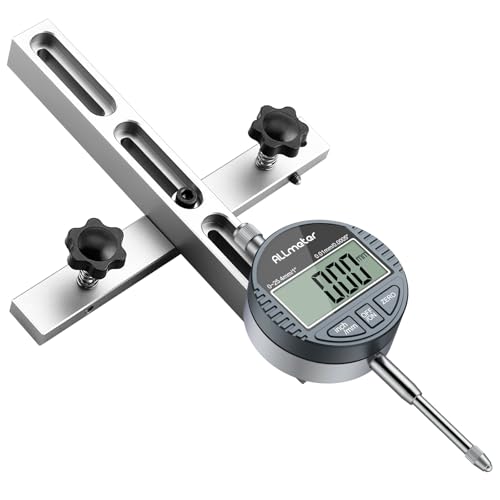
ALLmeter Digital Table Saw Gauge with Dial Indicator 0-1 Inch Range,CNC Machined Aluminum Bar for Fence Alignment on Table Saws Bandsaws (Fits 3/4" or 19mm Groove Width)
High-Precision precision miter gauge for table saw: Our digital table saw miter gauge features a high-precision digital dial…
As an affiliate, we earn on qualifying purchases.
As an affiliate, we earn on qualifying purchases.
Why Fence Accuracy Matters for Your Table Saw
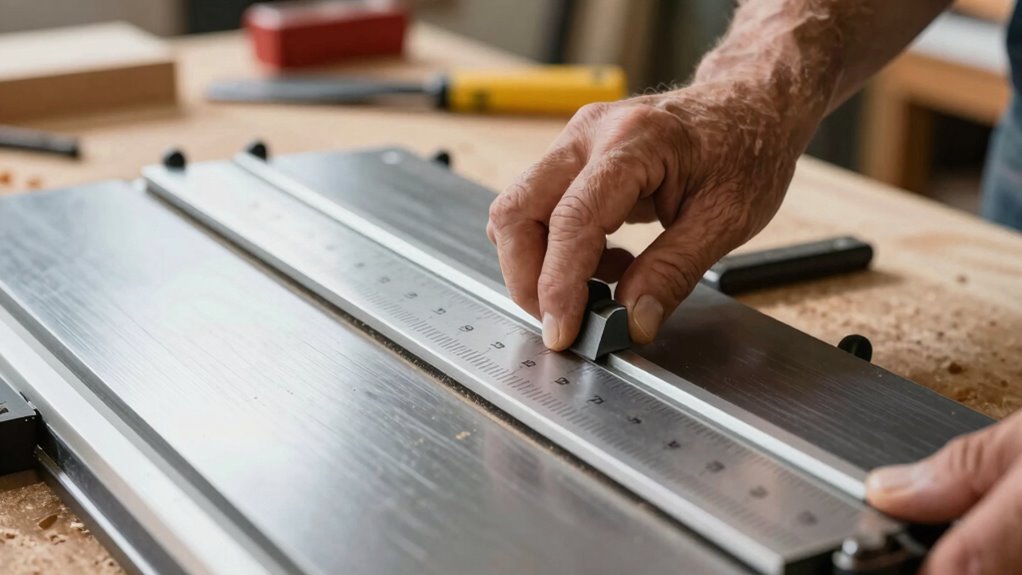
A precise fence is essential for making accurate cuts on your table saw, and even small misalignments can lead to major problems. When your fence isn’t aligned properly, it affects the quality of your work and can compromise safety. Using measurement tools like a square or calipers helps guarantee your fence stays true to your desired cut line. Regular calibration and fence alignment ensure your setup remains accurate over time. Properly calibrated fences also contribute to cut quality, which is vital for professional results. Accurate fencing reduces kickback risks and prevents the need for re-cuts, which can be dangerous. Always follow safety precautions, such as unplugging the saw before adjustments, to avoid accidents. Properly calibrated fences give you confidence that each cut will be precise, saving you time and material. Regular maintenance and proper calibration are key to maintaining fence accuracy and ensuring safe operation. Additionally, understanding table saw safety best practices can further protect you during operation. Ensuring your fence is properly aligned is also crucial for cut accuracy, which directly impacts the quality of your finished projects.
FastCap PSSR-16 16 Foot Pro Carpenter Standard Reverse Measuring Tape
The Standard/Standard Reverse features standard measurements that are readable when the tape is extended from either the right…
As an affiliate, we earn on qualifying purchases.
As an affiliate, we earn on qualifying purchases.
How to Prepare for Your Fence Accuracy Test in 60 Seconds
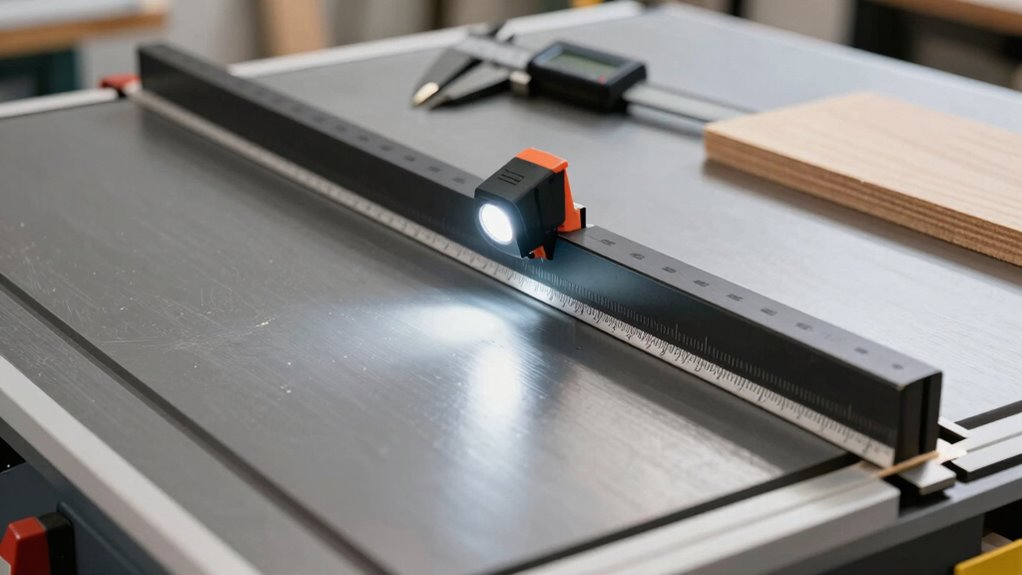
Before testing your fence’s accuracy, gather a few simple tools and clear your workspace to guarantee a quick, smooth process. Start with measurement prep: grab a reliable square, a measuring tape, and a pencil to mark your cut line. Make sure your safety gear is ready—safety glasses and ear protection should be on before you begin. Clear the area around your saw to avoid obstructions, and double-check that your workpiece is secure. Having these items at hand minimizes interruptions, so you can focus on the test. Taking a moment to organize your tools and safety gear reduces the risk of mistakes or accidents, setting you up for an accurate and efficient fence test that’s completed in just 60 seconds. Additionally, ensuring your fence alignment is properly prepared prior to testing can improve the overall accuracy of your results. Understanding your precision tools can help you achieve better woodworking outcomes. Being familiar with fence calibration techniques can also enhance your confidence in the results.

GOINGMAKE Table Saw Gauge Dia Indicator for Table Saw and Band Saw,0.01mm Accuracy Calibration Tool,Table Saw Jig Guide Fits for 3/4" T Slot U Slot,Table Saw Accessories for Woodworking,Machinery
【Precision Calibration】GOINGMAKE table saw gauge provides 0.01mm accuracy dial indicator. It is precision to use and easy to…
As an affiliate, we earn on qualifying purchases.
As an affiliate, we earn on qualifying purchases.
How to Do the Fence Lying Test: Step-by-Step
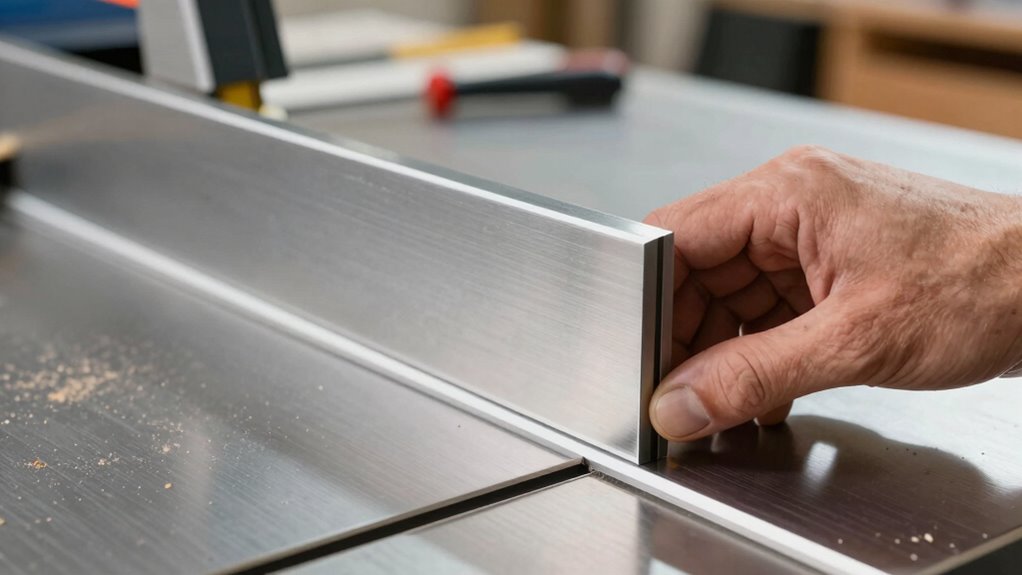
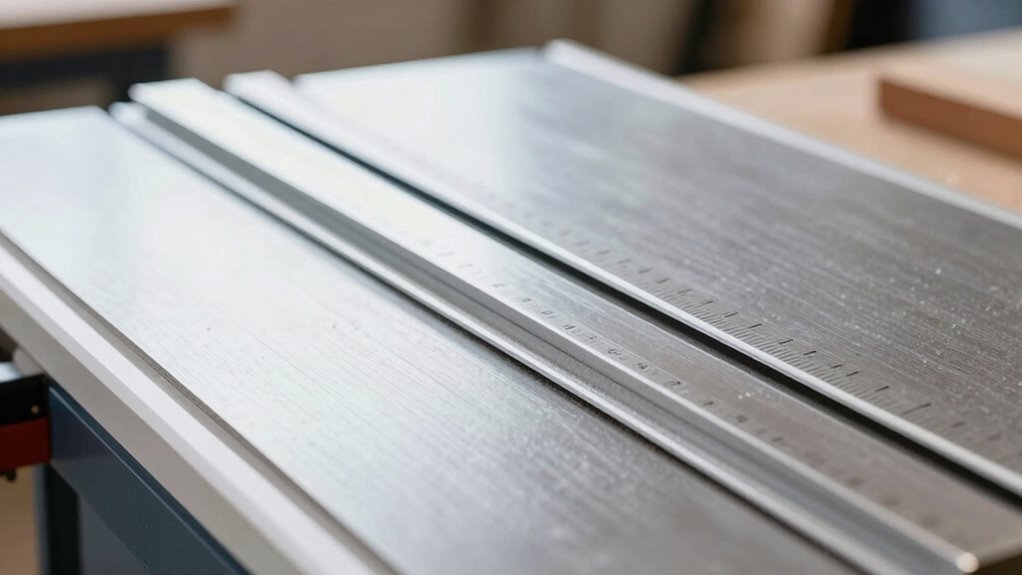
To perform the fence lying test, start by securing a straight edge or long level along the fence line to serve as your reference. Use measuring techniques to check the distance from the fence to the blade at multiple points, ensuring consistency. Place a reliable alignment tool, like a caliper or a square, against the fence and measure the gap at the front and back. Record these measurements carefully. If the distances differ, your fence isn’t perfectly aligned. Repeat the process at different positions along the fence to identify any deviations. Keep your measuring techniques steady and precise to get accurate results. This step-by-step approach helps you determine if your fence is truly parallel to the blade — a vital factor for accurate cuts.

AKNgoes Precision Woodworking Square, Stainless Steel Square with Shoulder Lip, Self Standing for Quick Measurement, Built in Scribe Notches, Framing Tool for Professional Carpentry Use-6 Inch
【Premium Quality】The precision square blade is made of 301 Stainless steel and the handle is high-quality aluminum alloy…
As an affiliate, we earn on qualifying purchases.
As an affiliate, we earn on qualifying purchases.
What Your Fence Test Results Mean: and How to Fix Your Fence
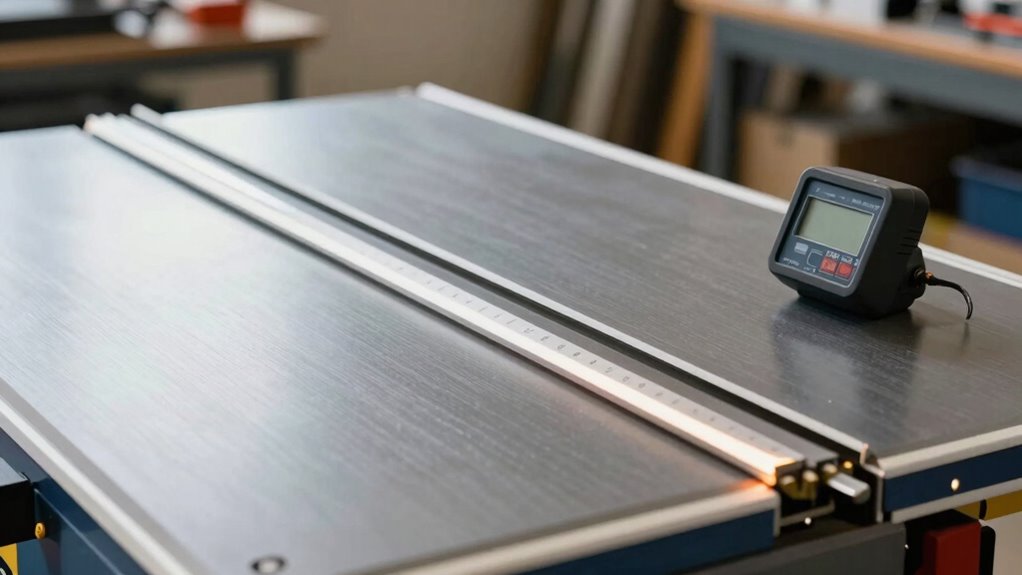
If your measurements show variations along the fence line, it indicates your fence isn’t perfectly aligned, which can affect the accuracy of your cuts. These discrepancies mean you need to perform proper fence calibration to restore woodworking precision. First, identify where the fence is out of alignment and adjust it accordingly, following your saw’s manufacturer instructions. Use a reliable square or gauge to verify the fence’s position after each adjustment. Consistent testing and fine-tuning are essential to maintain accuracy. Remember, a well-calibrated fence ensures precise cuts, reduces material waste, and improves safety. Proper fence calibration is vital for achieving consistent results and avoiding costly mistakes. If you notice persistent misalignment, consider checking for loose bolts or worn parts. Correct fence calibration keeps your woodworking projects accurate and your tools performing at their best. Ensuring your tools are properly fitted and maintained is crucial for achieving consistent, high-quality results.
Tips to Keep Your Fence Aligned for Good
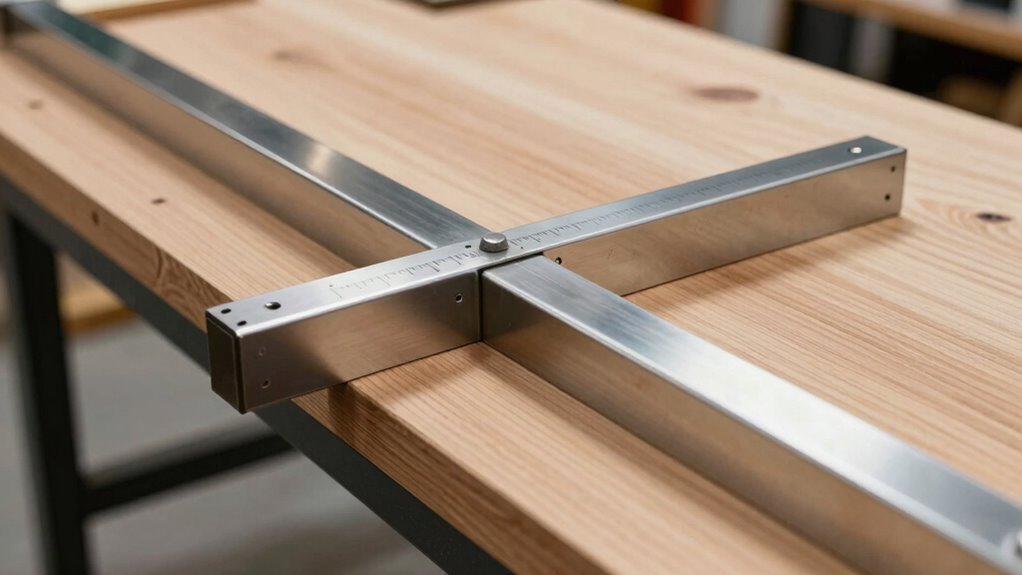
Maintaining a properly aligned fence requires regular attention and proactive habits. Check your blade alignment frequently, ensuring the blade is square and true. Keep an eye on blade tension; a loose blade can cause misalignment, affecting cuts and safety. Regularly calibrate your fence using the 60-second test to catch issues early. For consistent results, understanding the importance of fence alignment helps prevent costly mistakes and ensures safe operation. Staying vigilant about machine calibration is essential for maintaining accuracy over time. Proper piercing care and hygiene also plays a crucial role in preventing complications and ensuring safety during healing. Additionally, using a reliable alignment tool can make regular checks more precise and efficient. Being aware of cutting accuracy reinforces the importance of these maintenance practices. Here’s a quick reminder of the core principles:
| Tip | Why it matters |
|---|---|
| Check blade alignment | Ensures accurate cuts and safety |
| Maintain blade tension | Prevents blade wobble and misalignment |
| Regular fence calibration | Keeps fence true for precision cuts |
Stay consistent with these habits, and your fence will stay aligned for good.
Frequently Asked Questions
Can a Misaligned Fence Cause Dangerous Kickbacks?
A misaligned fence can definitely cause dangerous kickbacks because it compromises the accuracy of your cuts, leading to unexpected blade contact and unstable workpieces. This increases safety hazards and makes equipment maintenance essential. Always verify your fence is properly aligned before use, as neglecting this step can result in accidents. Regularly checking and maintaining your fence helps prevent kickbacks and keeps your workspace safe.
How Often Should I Perform the Fence Accuracy Test?
You should perform fence calibration and safety checks before each use or at least weekly to guarantee accuracy. Regularly testing your table saw fence helps catch misalignments early, reducing the risk of dangerous kickbacks and poor cuts. Keep your fence true by conducting the 60-second fence accuracy test often, especially after moving the saw or changing blades, so you stay safe and maintain precise cuts every time.
What Tools Do I Need for the 60-Second Fence Test?
You’ll need measuring tools like a combination square or a digital caliper for the 60-second fence test. These tools help you accurately check the fence’s alignment with the blade, ensuring precise cuts. By using simple calibration techniques with these measuring tools, you can quickly verify if your fence is true or needs adjustments. Keep them handy, and you’ll confidently maintain fence accuracy in just a minute.
Is It Possible to Adjust a Fence Without Removing It?
Yes, you can often make fine tuning adjustments without removing the fence. Start by loosening the fence’s locking knobs or bolts, then slide it slightly to correct misalignments. If necessary, perform a fence removal first, but usually, small adjustments can be achieved without full removal. This way, you save time and keep the fence secure while ensuring accurate cuts. Just be cautious and re-tighten everything afterward.
How Does Fence Misalignment Affect Cut Quality and Precision?
Fence misalignment directly impacts your cut quality and causes precision loss. When your fence isn’t aligned properly, you’ll notice uneven, rough, or inaccurate cuts, making your projects look unprofessional. It can also lead to material waste or dangerous kickbacks. To avoid these issues, regularly check and calibrate your fence, ensuring it’s square and true. Proper fence alignment keeps your cuts precise and your work safe.
Conclusion
By performing this quick 60-second test, you guarantee your fence stays true, giving you precise cuts every time. Don’t worry if it’s off—just adjust it, and your projects will come out flawless. Imagine your fence as a reliable guide, similar to a well-marked ruler; when aligned properly, it guarantees straight, accurate cuts. Keep testing regularly, and you’ll always stay confident in your table saw’s performance, making woodworking safer and more satisfying.