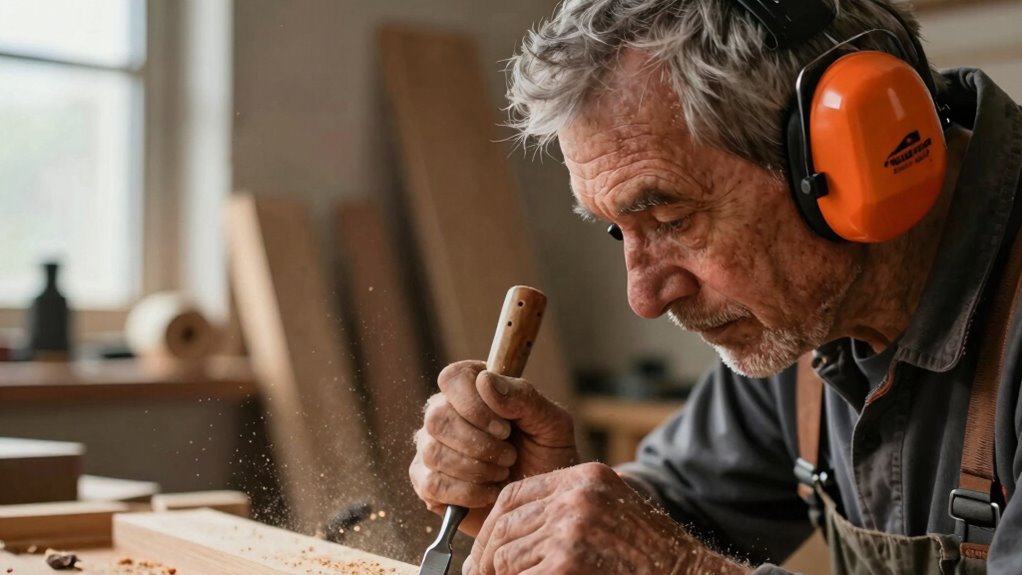
Many woodworkers overlook how loud their tools really are, risking irreversible hearing damage. Power equipment such as saws and drills often exceed safe noise levels of 85 dB, especially during extended use. Wearing proper hearing protection like earplugs or earmuffs drastically reduces this risk, but only if you use and maintain them correctly. If you stay aware of noise levels and recognize early signs of hearing damage, you can protect your hearing long-term. Keep exploring to learn more essential tips and safety measures.
Key Takeaways
- Many woodworking tools produce noise levels exceeding 85 dB, risking hearing damage without proper protection.
- Prolonged exposure to loud sounds can cause irreversible hearing loss, often unnoticed until damage is significant.
- Regularly wearing appropriate hearing protection, like earplugs or earmuffs, significantly reduces noise risk during woodworking.
- Proper maintenance and correct fit of hearing gear ensure maximum noise attenuation and effective hearing safety.
- Awareness of decibel levels and early signs of hearing damage encourages timely protective measures for woodworkers.

BBTO Banded Earplugs for Shooting Range Band Ear Plugs Lightweight Silicone Earplugs for Hearing Protection, Noise Reduction, Work, Construction, Sleeping, Concerts, Sports Racing(Orange,4 Pcs)
Safety material: made of quality silicone with plastic banded, this band earplug is soft and comfortable to wear,…
As an affiliate, we earn on qualifying purchases.
As an affiliate, we earn on qualifying purchases.
Why Do Woodworkers Need to Understand Decibel Levels and Hearing Risks?
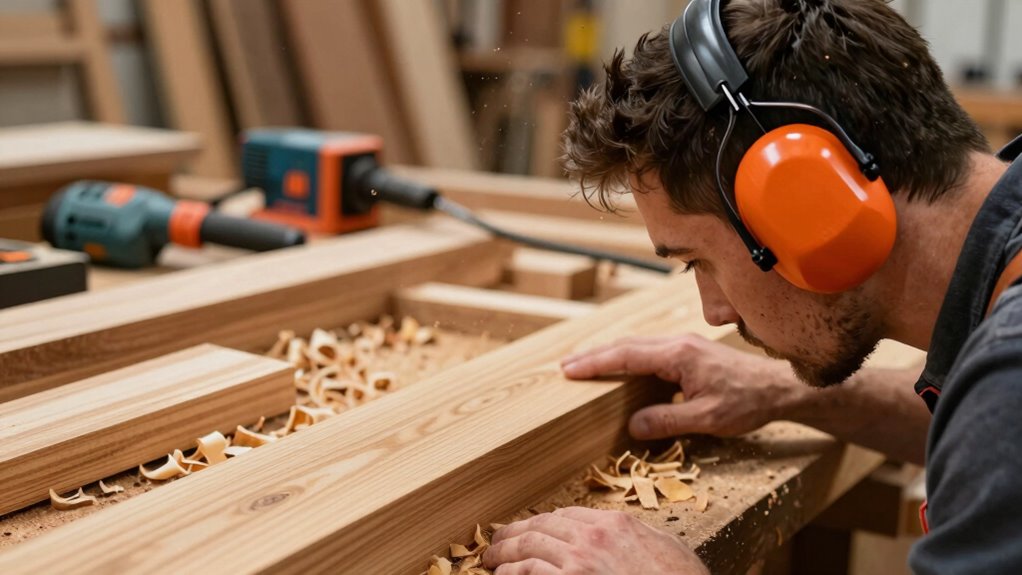
Have you ever wondered why understanding decibel levels is essential for woodworkers? The answer is simple: exposure to high decibel levels can lead to hearing damage over time. Woodworking machines, like saws and planers, often produce loud noises that exceed safe limits. Without proper awareness, you might not realize how quickly your hearing can deteriorate. Recognizing decibel levels helps you gauge when noise becomes harmful, so you can take precautions. Continuous exposure to loud machinery can cause irreversible hearing damage, affecting your ability to communicate and enjoy everyday sounds. Proper hearing protection is crucial in preventing long-term damage. Additionally, understanding electric power output of tools and accessories ensures safer and more effective work practices. Being familiar with sound level measurements allows you to better assess risk and implement necessary safety measures. Knowing the safe noise exposure limits set by health guidelines helps you plan appropriate hearing protection strategies. By understanding the risks associated with decibel levels, you’re better equipped to protect your hearing and maintain your quality of life. Increased awareness of noise-induced hearing loss emphasizes the importance of protective measures in noisy environments. Knowledge is your first step in preventing long-term hearing loss.

ProCase Noise Reduction Ear Muffs, Sound Proof Ear Protection, NRR 28dB Noise Cancelling Headphones for Adults Kids Autism, Hearing Protection for Shooting Gun Range Mowing -Red
Constructed by solid ABS shell and thickened foam, the ear muffs achieve NRR 28 dB (SNR 34 dB)…
As an affiliate, we earn on qualifying purchases.
As an affiliate, we earn on qualifying purchases.
How Loud Are Common Woodworking Tools and Machinery?
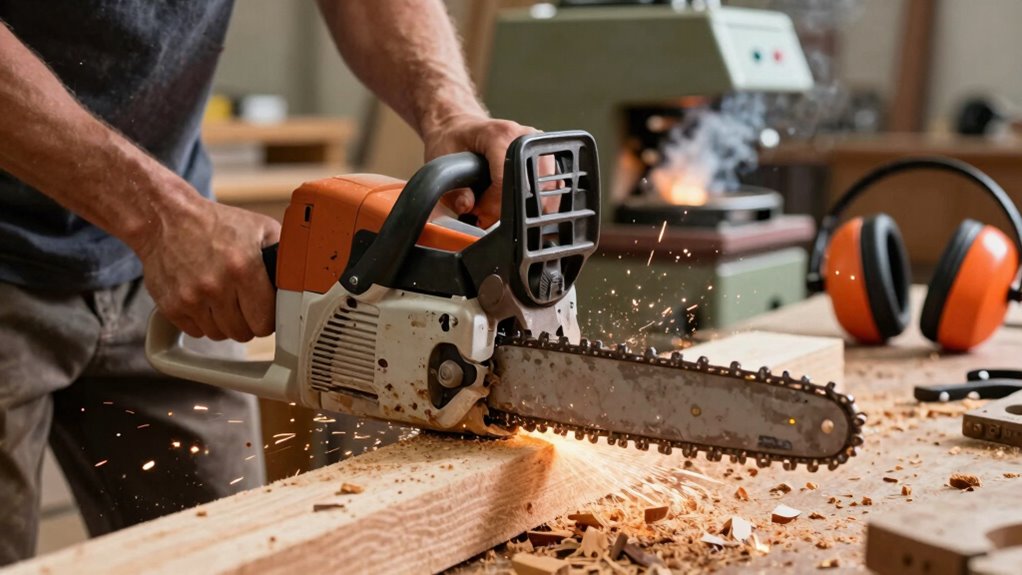
Many woodworking tools produce loud noise that can harm your hearing if you’re not careful. Saws, sanders, and drills each generate different decibel levels, with some reaching levels that require protection. Comparing bench and hand tools helps you understand which ones pose higher risks and how to stay safe. Being aware of noise levels in your workshop can help you select the appropriate hearing protection and prevent long-term damage. Recognizing the sound intensity of power tools allows you to better assess when ear protection is necessary. Paying attention to decibel measurements can guide you in choosing the right safety equipment to safeguard your hearing health. Understanding artistic influences can also deepen your awareness of environmental factors that affect workspace safety. Monitoring decibel levels with simple tools enables you to quickly evaluate noise exposure during your projects.
Noise Levels of Saws
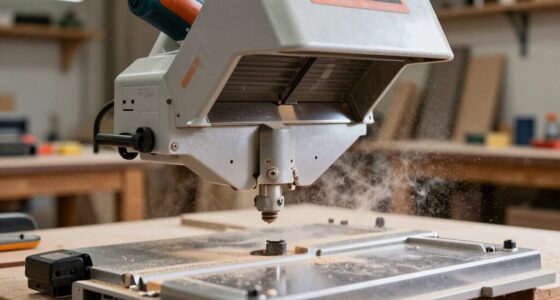
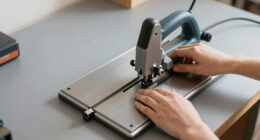
Saws are among the loudest tools you’ll encounter in woodworking, with noise levels that can quickly reach levels harmful to your hearing if not properly protected. When measuring noise, you’ll find that many saws produce decibel levels between 85 and 110 dB, depending on the type and use. To protect your ears effectively, understanding noise measurement is essential. Here are some key points:
- Circular saws often hit around 100 dB, requiring ear protection for prolonged exposure.
- Jigsaws and reciprocating saws produce slightly lower noise levels, typically around 85-95 dB.
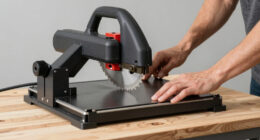
- Table saws can reach up to 110 dB, making proper ear protection mandatory during extended use.
Always wear ear protection when operating saws to prevent hearing loss from these high noise levels.
Impact of Sanders and Drills
While saws are known for producing high noise levels, other common woodworking tools like sanders and drills can also generate significant sound that impacts your hearing. These tools often produce noise levels that can lead to noise-induced hearing loss if you’re not careful. Sanders, especially belt and orbital types, can reach decibel levels comparable to some saws, posing a real threat during prolonged use. noise levels from these tools can vary depending on the specific model and usage, making it important to assess each tool’s potential risk. Additionally, noise exposure during extended periods of use can accumulate, increasing the risk of irreversible hearing damage. The risk of hearing loss increases with longer exposure times, emphasizing the importance of protective measures. To better understand these dangers, it’s helpful to recognize the sound intensity produced by each tool and how it affects hearing health. Drills, particularly impact or rotary models, generate sharp, intense noise that can damage your hearing without proper protection. To prioritize hearing conservation, it’s essential to wear appropriate hearing protection when using sanders and drills. Ignoring these risks can result in permanent hearing damage, making it imperative to consistently safeguard your ears during all woodworking activities. Proper hearing protection is crucial, especially since prolonged exposure to loud tools can cause irreversible damage over time.
Comparing Bench and Hand Tools
Understanding the noise levels of various woodworking tools is essential for protecting your hearing. When comparing bench tools like planers or jointers to hand tools such as saws or chisels, the decibel comparison reveals significant differences. Power tools tend to produce higher tool noise levels, often exceeding 85 decibels, which can cause hearing damage over time. Hand tools, on the other hand, generate much less noise, usually below 70 decibels. Additionally, regular use of hearing protection can significantly reduce the risk of hearing loss during woodworking sessions. Stationary machinery like table saws often produce 90+ decibels, requiring hearing protection.
ProCase Noise Reduction Ear Muffs, Sound Proof Ear Protection, NRR 28dB Noise Cancelling Headphones for Adults Kids Autism, Hearing Protection for Shooting Gun Range Mowing -Red
Constructed by solid ABS shell and thickened foam, the ear muffs achieve NRR 28 dB (SNR 34 dB)…
As an affiliate, we earn on qualifying purchases.
As an affiliate, we earn on qualifying purchases.
What Are Safe Decibel Limits for Protecting Your Hearing?
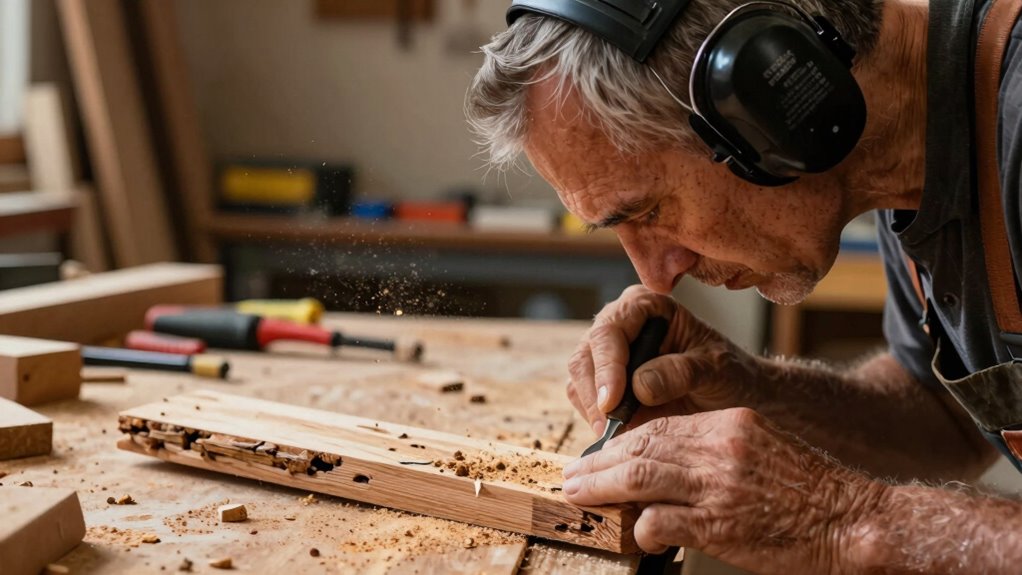
To safeguard your hearing, maintaining within safe decibel limits is vital. The decibel standards for hearing safety recommend staying below 85 decibels to prevent long-term damage. Prolonged exposure to noise above this level increases the risk of hearing loss. Short bursts of louder sounds, like power tools, can be safe if exposure is limited to a few seconds. Using hearing protection when working with noisy equipment is essential. Remember, decibel levels can vary greatly, so always check tool specifications and wear appropriate ear protection. Staying within these decibel limits helps preserve your hearing health and prevents irreversible damage. Understanding safe decibel levels and taking proactive steps to protect your ears during woodworking projects is crucial for long-term hearing preservation. Additionally, being aware of noise exposure duration can help you better manage your risk of hearing damage over time. It’s also helpful to be aware of sound level measurements to accurately assess potential hazards during your work. Being mindful of sound intensity ensures you can recognize when noise levels are approaching unsafe thresholds, and consulting occupational safety guidelines can provide further safety benchmarks.
BBTO Banded Earplugs for Shooting Range Band Ear Plugs Lightweight Silicone Earplugs for Hearing Protection, Noise Reduction, Work, Construction, Sleeping, Concerts, Sports Racing(Orange,4 Pcs)
Safety material: made of quality silicone with plastic banded, this band earplug is soft and comfortable to wear,…
As an affiliate, we earn on qualifying purchases.
As an affiliate, we earn on qualifying purchases.
How Can You Recognize Signs of Hearing Damage From Power Tools?
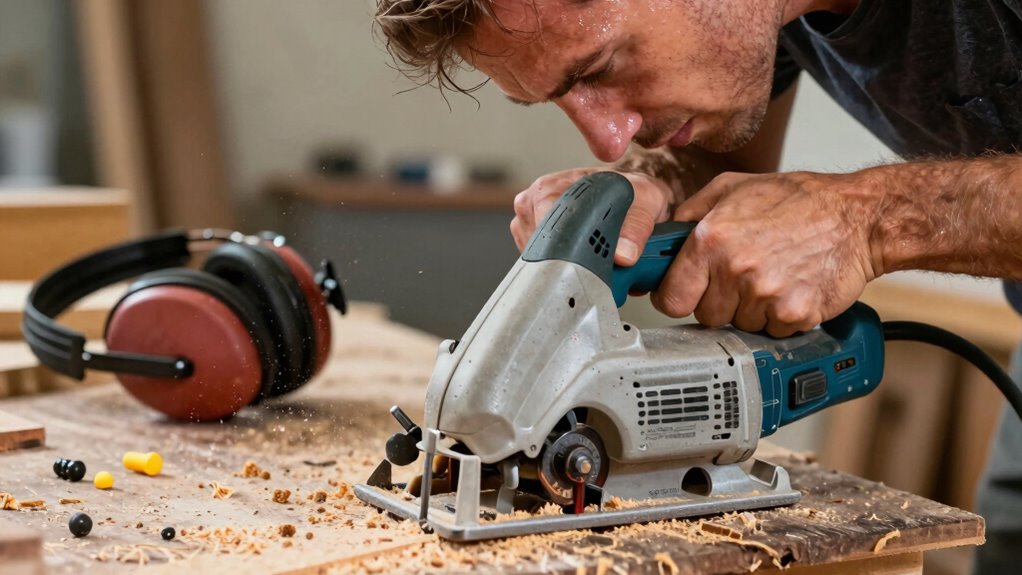
Recognizing signs of hearing damage from power tools is essential for preventing further harm. Early detection can save your hearing and avoid long-term issues. You might notice hearing loss, where sounds become muffled or less clear, especially in noisy environments. Tinnitus symptoms, such as ringing or buzzing in your ears, are also warning signs.
To stay alert, watch for these indicators:
- Reduced hearing clarity, making conversations or alarms harder to hear.
- Persistent tinnitus symptoms, like ringing that won’t go away.
- Sensitivity to loud sounds or discomfort after exposure.
- noise-induced hearing loss is a common concern among woodworkers, emphasizing the importance of protective measures at the right time.
Additionally, understanding hearing protection can help you recognize the importance of protective measures at the right time.
If you experience any of these signs, it’s vital to take action—seek medical advice and improve your hearing protection. Ignoring these signs can lead to irreversible damage.
What Are the Best Hearing Protection Options for Woodworkers?
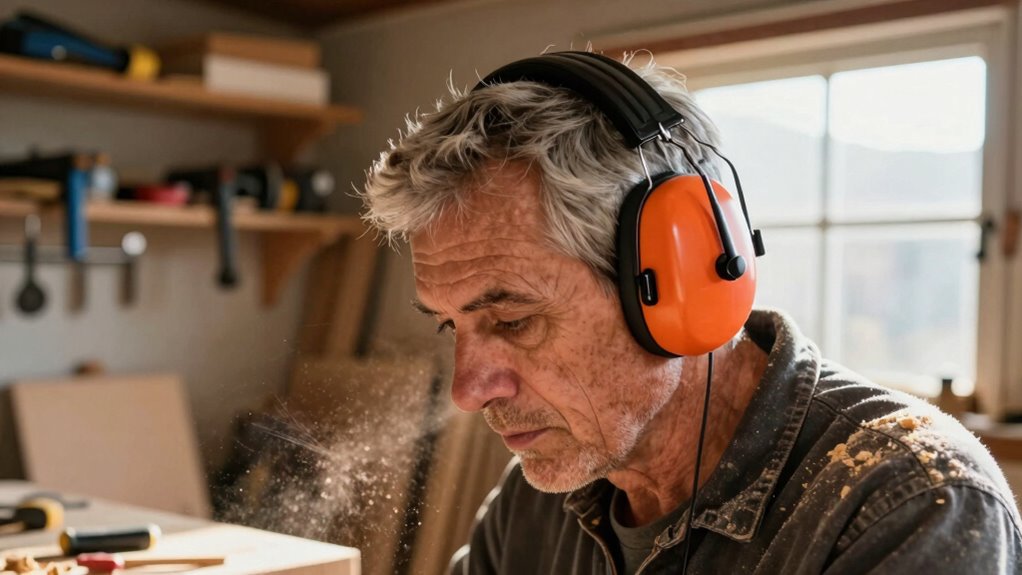
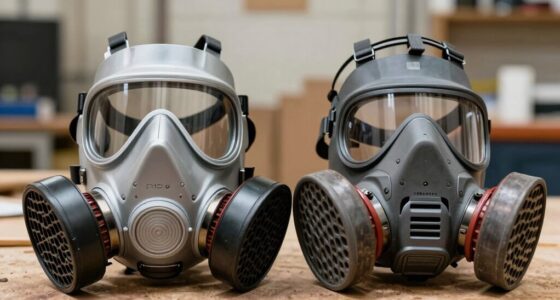
Choosing the right hearing protection is essential for woodworkers to stay safe on the job. You can select from earplugs, which offer discreet comfort, or earmuffs that provide robust coverage. Understanding the different options and benefits helps you find the best fit for your work environment.
Earplug Options for Safety
When working with wood, selecting the right earplugs is essential for protecting your hearing. You need options that balance comfort, durability, and effective noise reduction. Consider these top choices:
- Foam earplugs: They offer high noise reduction ratings and are inexpensive, but their earplug durability varies with repeated use.
- Silicone earplugs: Reusable and more durable, they mold comfortably to your ears and maintain consistent noise reduction.
- Waxed or hybrid earplugs: Combining materials for comfort and durability, they provide reliable noise reduction and are easy to clean.
Choosing earplugs with high noise reduction ratings ensures maximum protection. Always select earplugs suited to your ear shape and working conditions for ideal safety and comfort.
Earmuff Varieties and Benefits
Earmuffs are an excellent hearing protection option for woodworkers because they provide consistent, high-level noise reduction and ease of use. There are various earmuff varieties designed to suit different needs, such as over-ear models with adjustable headbands and lightweight, compact options for mobility. Some earmuffs feature noise-canceling technology, which enhances comfort while maintaining protection. The benefits of ear protection with earmuffs include reduced risk of hearing loss, comfort during extended wear, and quick, simple donning and removal. You can choose between electronic earmuffs that amplify speech or muff-style options for maximum sound attenuation. Selecting the right earmuff variety ensures you stay protected, focused, and comfortable during long hours in noisy environments.
How Do You Properly Use and Maintain Hearing Protection Gear?
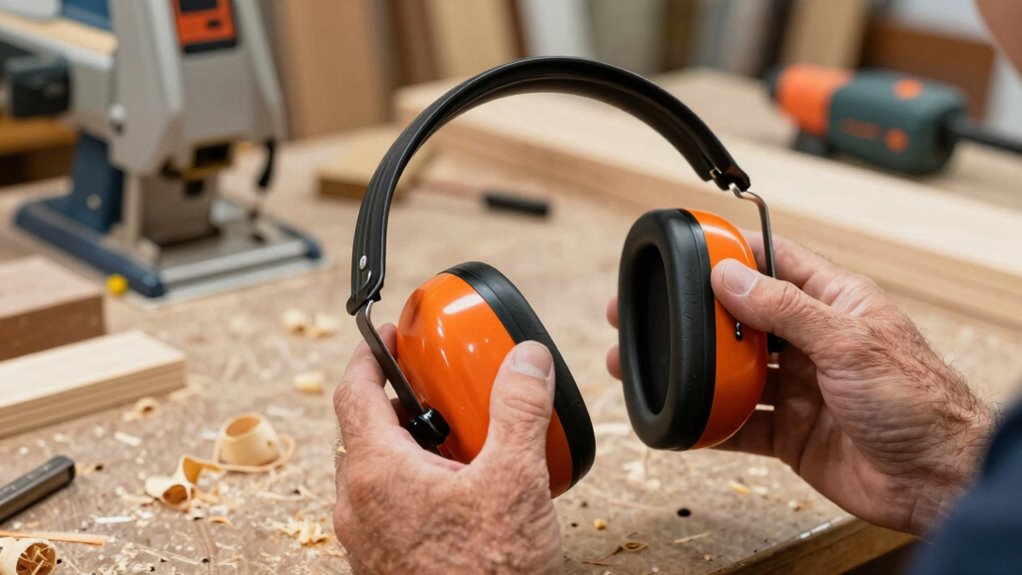
Ever wondered how to get the most effective protection from your hearing gear? Proper use and maintenance are key to guaranteeing maximum noise reduction and hearing conservation. First, always inspect your hearing protection before use, checking for cracks or damage that could compromise noise reduction. Second, ensure a snug fit; earplugs should be inserted properly, creating a seal, and earmuffs should sit comfortably without gaps. Third, clean your gear regularly according to manufacturer instructions—dirt and wax can diminish effectiveness. Store your hearing protection in a clean, dry place to prevent damage. By following these steps, you can maximize hearing conservation efforts and guarantee your gear continues to provide reliable noise reduction, protecting your ears during woodworking or loud environments.
Simple Tips to Protect Your Hearing While Woodworking
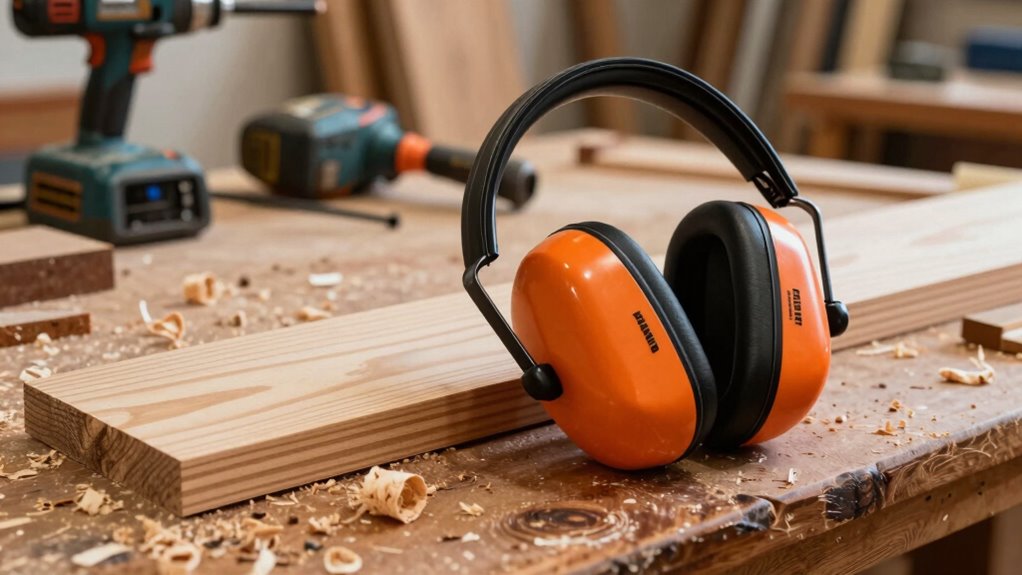
Protecting your hearing during woodworking is essential to prevent long-term damage from loud noises. To reduce noise-induced hearing loss, always wear appropriate hearing protection, such as earplugs or earmuffs, whenever you’re operating loud equipment. Keep your hearing safety gear in good condition and use it consistently. Limit your exposure to loud sounds by taking regular breaks, giving your ears a chance to recover. Position yourself away from the source of loud noise whenever possible. Maintain proper maintenance of tools to keep noise levels as low as feasible. Stay aware of decibel levels, and don’t ignore warning signs of hearing fatigue. These simple tips help safeguard your hearing, ensuring you can enjoy woodworking without risking permanent hearing damage.
Frequently Asked Questions
Can Hearing Damage Occur Without Noticeable Symptoms?
Yes, hearing damage can occur without noticeable symptoms. Noise-induced injury often leads to silent hearing loss, meaning you might not realize your hearing is being harmed until it’s too late. Continuous exposure to loud sounds, even at moderate levels, can cause irreversible damage over time. Protect your ears consistently, because once the damage is done, it’s permanent, and early prevention is the key to avoiding silent hearing loss.
How Often Should Woodworkers Have Their Hearing Tested?
You should have your hearing tested at least once a year to guarantee ear safety, especially if you work around high noise levels regularly. Frequent testing helps catch early signs of damage before symptoms appear. If you notice any changes in your hearing or experience ringing in your ears, see a specialist sooner. Staying proactive with regular hearing checks is essential to protect your hearing health in noisy environments.
Are There Specific Hearing Protection Devices for Children?
Yes, there are specific hearing protection devices for children. Child-friendly earmuffs are designed to provide effective hearing protection for kids, ensuring their delicate ears are shielded from loud noises. When choosing hearing protection for kids, look for comfortable, adjustable options that fit snugly without causing discomfort. These earmuffs are essential in noisy environments, helping prevent hearing damage while allowing children to stay engaged and safe.
What Are the Long-Term Health Effects of Hearing Loss?
Coincidentally, ignoring noise-induced damage can lead to long-term health effects like permanent hearing loss. When you neglect hearing protection, you risk cochlear degeneration, which diminishes your ability to hear high-frequency sounds over time. This damage isn’t just temporary; it can affect your communication skills, cause social withdrawal, and increase the risk of cognitive decline as you age. Protect your ears now to preserve your hearing health in the future.
Do Hearing Protectors Affect Communication on a Woodworking Site?
Hearing protectors do affect communication on a woodworking site by reducing noise, which can make it harder to hear instructions and warnings clearly. The key is balancing noise reduction with maintaining communication clarity. Many modern earplugs and earmuffs are designed with communication in mind, allowing you to hear speech more clearly while still protecting your hearing. Properly fitted hearing protectors help you stay safe without sacrificing important communication.
Conclusion
Protect your ears and preserve your passion by prioritizing protection, awareness, and action. Don’t neglect the noise; dedicate yourself to diligent defense, decisive decisions, and daily discipline. By understanding decibels, donning the right gear, and practicing proper procedures, you can prevent painful, permanent hearing problems. Keep your craft loud and lively, but your ears safe and sound—because safeguarding your hearing guarantees your skills stay sharp and your silence stays secure.