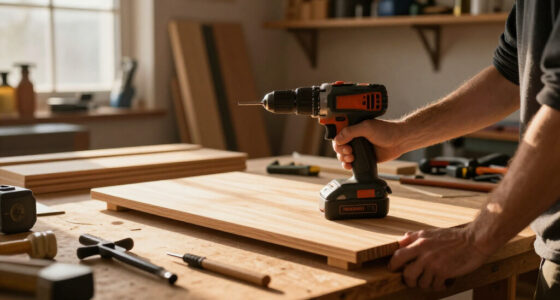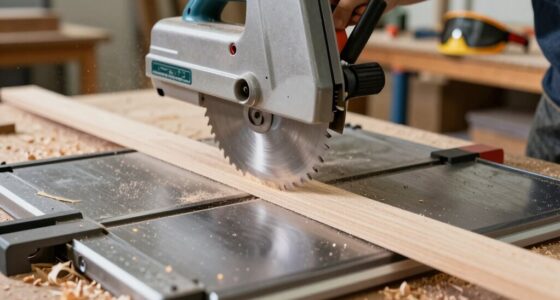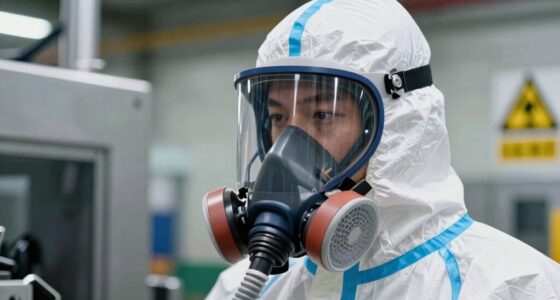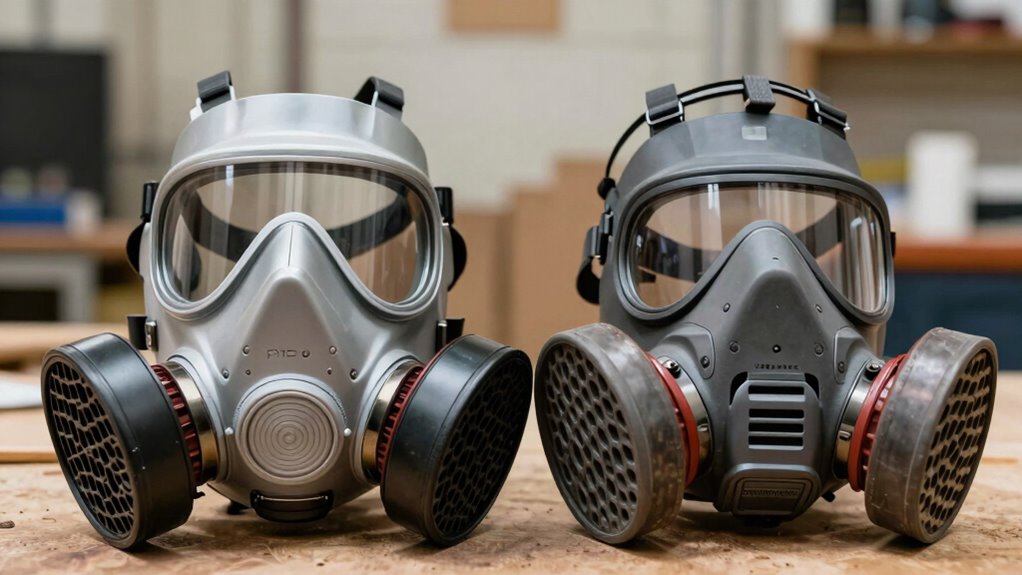
For woodworking, choosing between P100 respirators and cartridge filters depends on your dust and fumes exposure. P100 respirators offer high-efficiency filtration for fine dust and provide a tight seal for maximum protection, making them ideal for heavy dust. Cartridge filters are versatile and protect against specific fumes or vapors but may need more frequent replacement. To guarantee safety and comfort, consider your project needs—more details to help you decide are ahead.
Listen free for 30 days with Audible
Thousands of audiobooks and originals — cancel anytime.
As an affiliate, we earn on qualifying purchases.
Key Takeaways
- P100 filters provide higher particle filtration efficiency (≥99.97%) and are ideal for heavy dust exposure in woodworking.
- Cartridge filters are customizable for specific fumes or vapors but may require more frequent replacements.
- P100 respirators are reusable with replaceable filters, offering long-term cost savings; cartridges often need frequent replacement.
- Proper fit and seal are crucial for both, but P100 masks generally offer better sealing and comfort during prolonged use.
- Choose P100 filters for dust-heavy tasks; select cartridge filters if you need protection against fumes or specific airborne contaminants.
As an affiliate, we earn on qualifying purchases.
What Are P100 Respirators and How Do They Work?
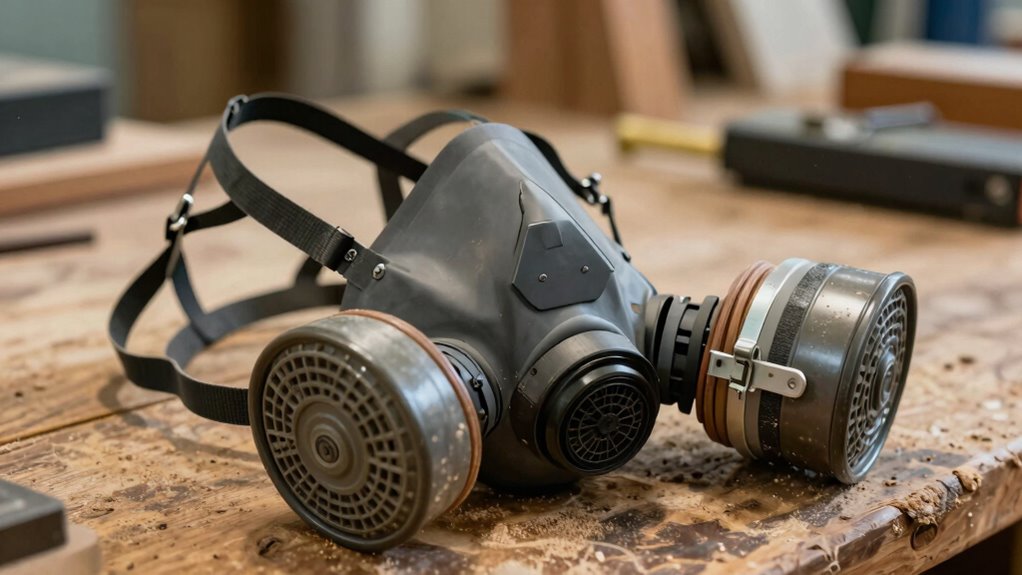
P100 respirators are designed to filter out at least 99.97% of airborne particles, making them highly effective for woodworking. Unlike standard dust masks, P100 respirators provide superior breathing protection by sealing tightly around your face, ensuring minimal leakage. They are typically equipped with a particulate filter that traps fine dust, mold spores, and other hazardous particles generated during woodworking projects. These respirators are often used in environments with heavy dust exposure, offering a higher level of safety than basic masks. When you wear a P100 respirator, you’re effectively reducing your inhalation of harmful particles, which helps protect your lungs and overall health. Additionally, the filtering efficiency of P100 respirators makes them a preferred choice for prolonged or intensive woodworking tasks, providing reliable protection over extended periods. Achieving a proper fit and seal is crucial to ensure maximum protection, especially during long working hours. Proper maintenance and filter replacement are essential to maintain their effectiveness and safety. Regular inspection and replacement of filters prevent loss of filtration capability and ensure continued protection. This makes P100 respirators an essential choice for serious woodworking enthusiasts and professionals alike. Regular maintenance and timely replacement of filters further enhance their effectiveness and longevity, ensuring continued safety during demanding projects.
cartridge filter respirator for fumes
As an affiliate, we earn on qualifying purchases.
As an affiliate, we earn on qualifying purchases.
What Are Cartridge Filters and How Do They Protect You?
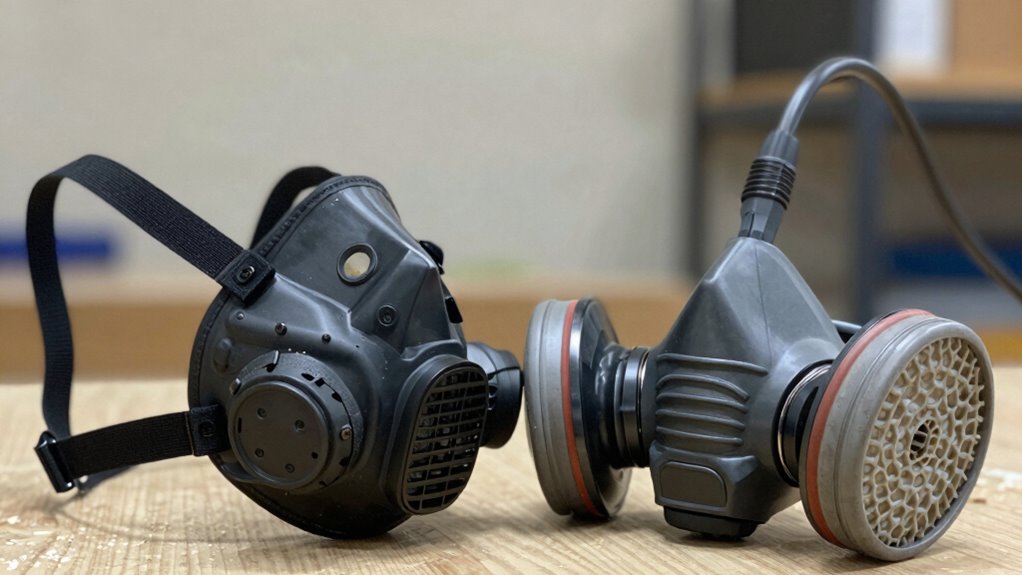
Cartridge filters are essential components of your respirator that trap harmful dust and particles. They’re made of specialized materials designed to capture contaminants while allowing you to breathe comfortably. Using cartridge filters offers strong protection and can be easily replaced to maintain your safety during woodworking.
Filter Composition and Function
A cartridge filter is designed to trap harmful particles before they reach your lungs, providing critical protection during woodworking. Its filter material typically consists of fibrous media that capture particles through a filtration mechanism. This mechanism relies on several processes, including mechanical interception, inertial impaction, diffusion, and electrostatic attraction. This filtration process ensures that airborne contaminants are effectively removed from the air passing through the filter. The filter material is engineered to maximize particle retention while allowing clean air to pass through efficiently. The filter design directly influences its ability to block specific particle sizes, making it essential for protecting your respiratory health during woodworking tasks. Proper filter maintenance ensures the longevity and safety of your respirator, maintaining optimal performance.
Benefits of Cartridge Filters
Have you ever wondered how certain respirators keep you safe from the dust and fumes generated during woodworking? Cartridge filters offer a clear advantage by providing effective dust collection, capturing tiny particles before they reach your lungs. Unlike simple dust masks, they are designed for long-term use with proper respirator maintenance, making them cost‑effective and reliable. These filters are versatile and can be equipped with different cartridges to protect against specific fumes or vapors, giving you flexibility on the job. Their sealed design ensures minimal leakage, maintaining a high level of protection. Overall, cartridge filters improve your safety, reduce exposure to harmful particles, and support easier dust management, keeping your workspace cleaner and your health protected over time. Proper respirator maintenance is essential to ensure your filters continue to function effectively and provide reliable protection. Additionally, understanding filter compatibility can help you select the right cartridges for your specific woodworking environment, especially considering the variety of filters available in the market. To maximize the effectiveness of your respirator, it’s also important to stay informed about VOC protection and how different cartridges can shield you from various fumes. Maintaining a well-organized filter inventory can also prevent the use of expired or incompatible filters, ensuring consistent safety during woodworking projects.
As an affiliate, we earn on qualifying purchases.
How Do P100 Respirators Compare to Cartridge Filters in Filtration?
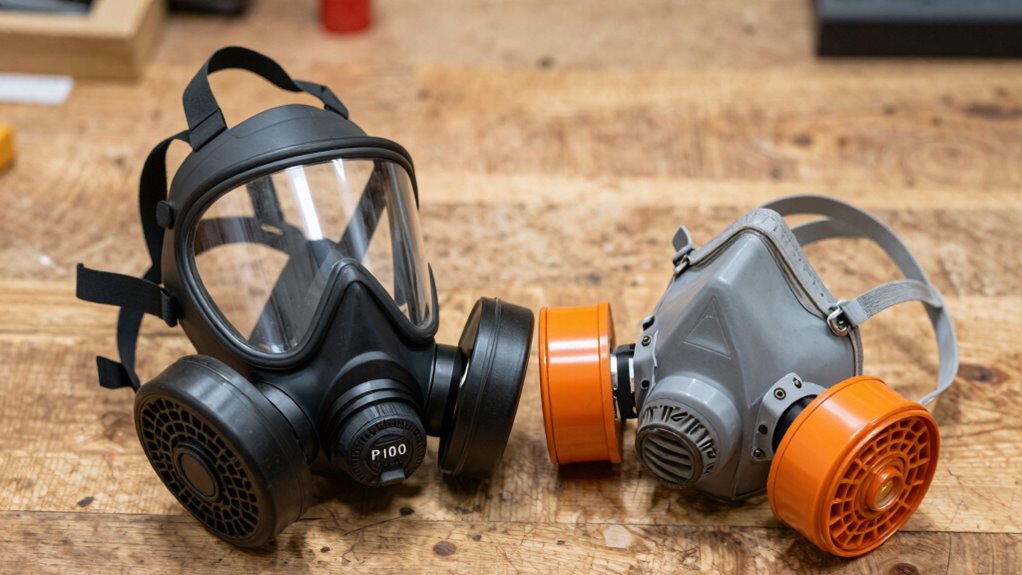
P100 respirators offer higher filtration efficiency compared to standard cartridge filters, blocking at least 99.97% of airborne particles. They also cover a broader range of particle sizes, providing better protection against dust and fumes. Additionally, P100 filters typically need replacing less often, making them more cost-effective over time. Proper maintenance and understanding of airless paint sprayer cleaning methods can help ensure optimal filter performance and longevity. Recognizing the importance of filter maintenance can further extend the lifespan and effectiveness of your respirators. Regularly inspecting the filter media for damage or clogging is essential to maintain optimal protection.
Filtration Efficiency Levels
How do P100 respirators compare to cartridge filters when it comes to filtration efficiency? P100 respirators are designed to filter out at least 99.97% of airborne dust particles, making them highly effective for woodworking fumes and dust. Cartridge filters, depending on their type, often provide similar or slightly lower efficiencies but may vary based on the filter media. The key difference lies in their filter lifespan; P100 filters tend to last longer before needing replacement due to their high filtration standards. This means fewer interruptions during your work and consistent protection. Both options excel at trapping dust particles, but P100 respirators generally offer a higher level of filtration efficiency, ensuring you stay safer over extended periods of use. Additionally, filter lifespan can be a crucial factor in choosing the right respiratory protection for your woodworking projects.
Particle Size Coverage
When comparing particle size coverage, P100 respirators and cartridge filters both excel at capturing fine airborne particles, but their effectiveness varies slightly depending on the specific filter media and design. P100 filters are designed to block at least 99.97% of dust particle sizes as small as 0.3 microns, thanks to multiple respirator filtration layers. Cartridge filters, on the other hand, often use layered media to target a range of dust particle sizes, including very fine particles produced during woodworking. The table below highlights their particle size coverage:
| Filter Type | Dust Particle Sizes Captured | Key Feature |
|---|---|---|
| P100 | 0.3 microns and larger | High efficiency, multiple layers |
| Cartridge | Varies, down to 0.3 microns | Versatile, customizable layers |
Additionally, understanding the filtration efficiency of each type can help users select the most appropriate option for their specific woodworking tasks. Proper maintenance and correct fit are also crucial for ensuring optimal filter performance over time.
Filter Replacement Frequency
While both P100 respirators and cartridge filters require regular replacement to maintain their protective capabilities, the frequency at which you should change them depends on their design and usage. P100 filters generally have a longer filter lifespan, often lasting several months with proper care, especially in low-exposure environments. Cartridge filters, however, tend to have a shorter replacement schedule because they can become saturated more quickly, especially when exposed to high dust levels or contaminants. You should replace your filters when they become visibly clogged, damaged, or if breathing resistance increases. Regular inspection is essential to guarantee maximum protection. Additionally, understanding the Free Floating nature of certain airborne particles can help determine the appropriate filter type for specific woodworking environments. Proper maintenance and filter life management are crucial for ensuring ongoing safety and effectiveness. Factors such as dust particle size and concentration levels influence how often filters need replacement. For optimal performance, always follow the manufacturer’s guidelines and consider the air quality of your workspace when scheduling replacements. Recognizing the filter saturation point helps prevent compromised protection and ensures continued safety. Ultimately, following the manufacturer’s guidelines for your specific respirator model helps you determine the appropriate replacement schedule and maintain safe, effective filtration.
As an affiliate, we earn on qualifying purchases.
Benefits of Using P100 Respirators for Woodworking
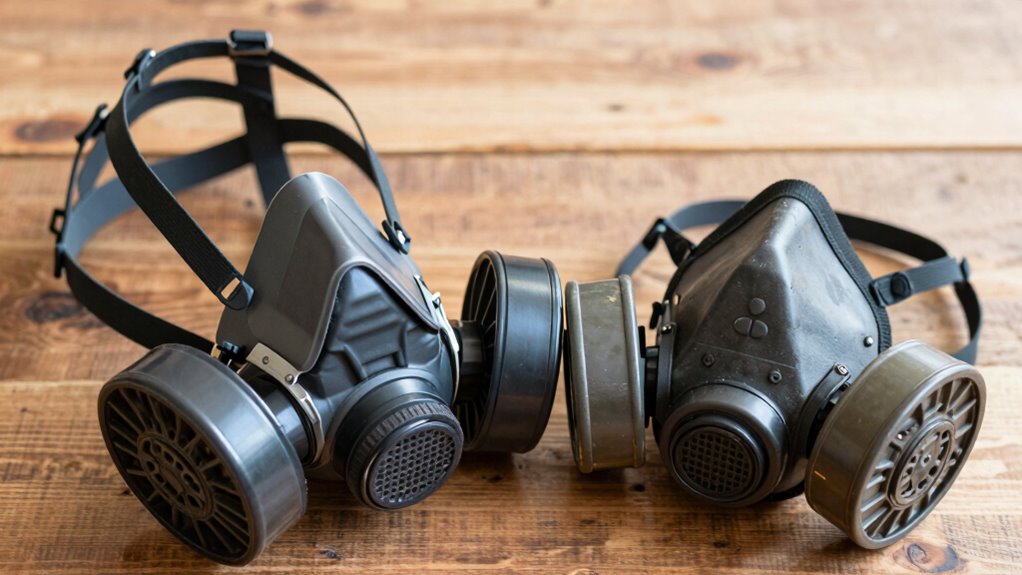
P100 respirators offer significant benefits for woodworking enthusiasts and professionals alike by providing superior protection against airborne particles. They excel at filtering out fine dust, which is vital for maintaining healthy dust collection and reducing respiratory risks. Using a P100 respirator minimizes dust buildup on your facepiece, making respirator maintenance easier and less frequent. This helps guarantee your respirator remains effective without constant adjustments or replacements. Additionally, P100 filters are durable and designed for prolonged use, saving you money in the long run. Their high filtration efficiency also means you stay safer during intensive sanding, cutting, or finishing projects. Overall, investing in a P100 respirator enhances your safety, keeps your workspace cleaner, and simplifies respirator upkeep.
Benefits of Cartridge Filters for Woodworking Projects
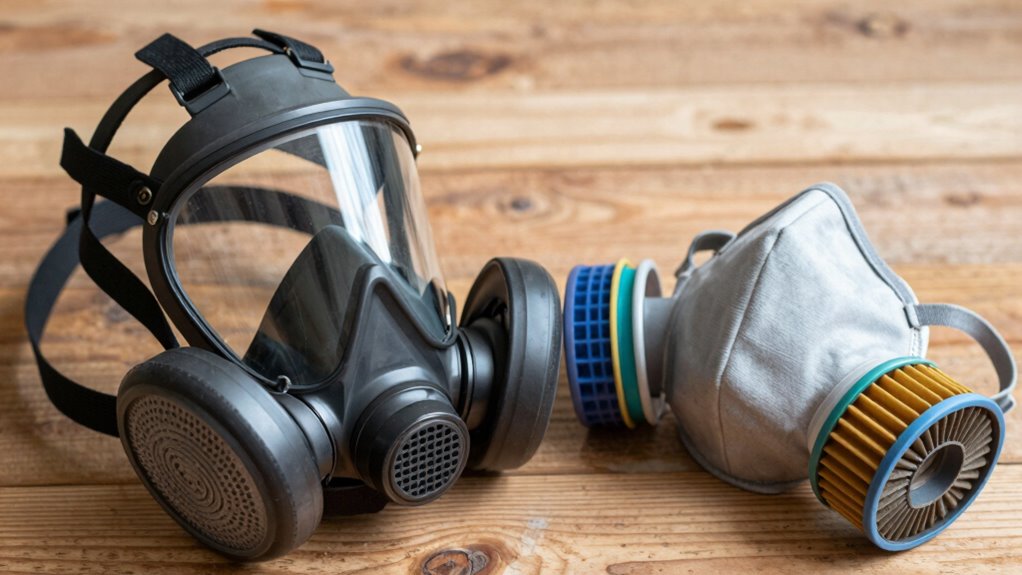
Cartridge filters provide versatile and reliable protection for woodworking projects by effectively filtering out a wide range of airborne contaminants. They excel at capturing dust particles from various woodworking activities, helping to maintain a cleaner workspace and improve air quality. Unlike some other filters, cartridge filters often have a longer lifespan, which can reduce the frequency of respirator maintenance and replacement. This makes them more cost-effective over time. Additionally, cartridge filters allow for better dust collection, preventing fine particles from escaping into the environment. Their adaptability means you can swap out cartridges to target specific fumes or particles, enhancing your safety. Overall, cartridge filters offer a practical, efficient solution for safeguarding your health during woodworking projects.
How to Ensure Proper Fit and Comfort for Your Respirator
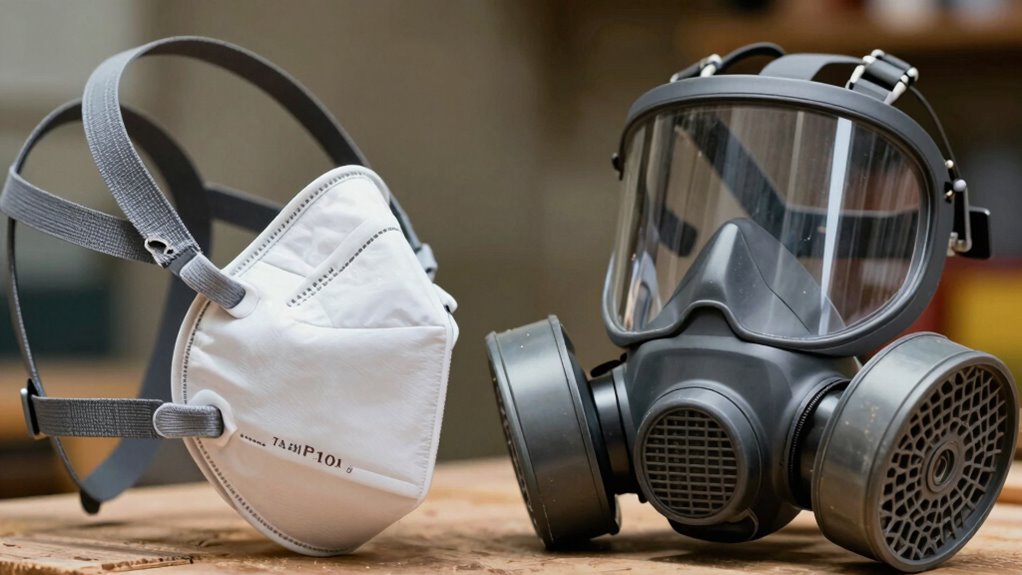
Are you getting a secure and comfortable fit with your respirator? Making certain proper fit and comfort is essential for effective protection. Start by performing fit testing, which confirms the respirator creates a proper seal against your face. Adjust comfort in these ways:
- Use comfort adjustments like straps and nose clips to find a snug but not tight fit
- Check for leaks by inhaling sharply—no air should escape around the edges
- Ensure the respirator sits comfortably on your face without pinching or causing discomfort
Cost Comparison: P100 Respirators vs. Cartridge Filters
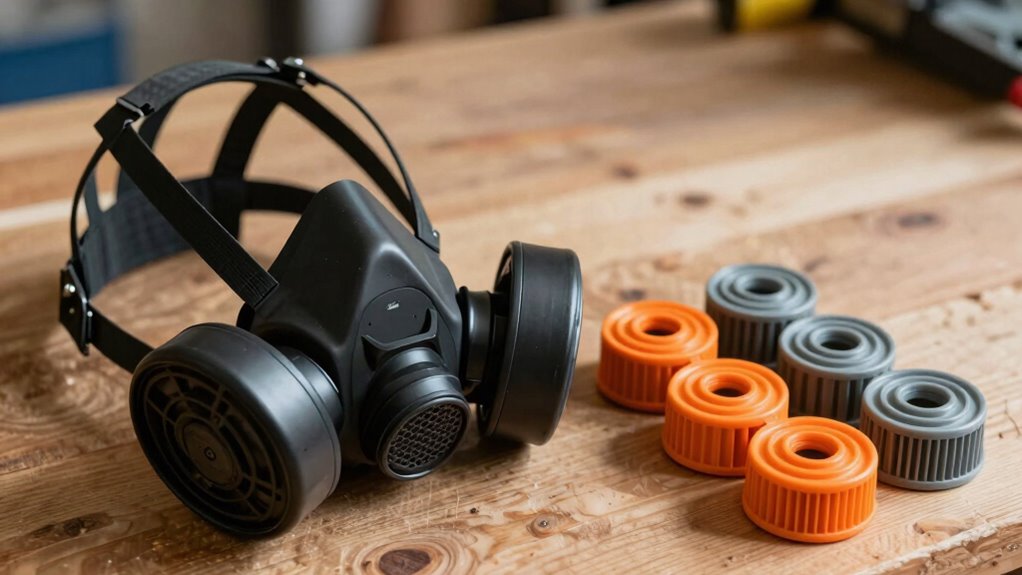
When comparing P100 respirators and cartridge filters, you should consider both the initial purchase cost and ongoing expenses. P100 respirators tend to be more expensive upfront but may save money over time, while cartridge filters are cheaper initially but require regular replacements. Evaluating these costs helps you choose the option that best fits your woodworking needs and budget.
Initial Purchase Cost
The initial purchase cost of P100 respirators is generally higher than that of cartridge filters, but the investment can pay off in long-term savings. When doing a cost analysis, consider that P100 respirators often come as reusable units with replaceable filters, reducing the need for frequent replacements.
Here’s what you should keep in mind:
- P100 respirators typically have a higher upfront price but last longer with proper maintenance.
- Cartridge filters tend to be cheaper initially but may require frequent replacement, adding to ongoing costs.
- The initial investment in a P100 respirator can be justified if you prioritize durability and better fit for extended use.
Long-Term Expenses
Although P100 respirators have a higher initial cost, their long-term expenses often favor them over cartridge filters. P100 filters are more durable and require less frequent replacements, reducing your maintenance costs over time. Cartridge filters, on the other hand, need regular changing due to shorter replacement intervals, increasing overall expenses. Consider this comparison:
| Aspect | P100 Respirators | Cartridge Filters |
|---|---|---|
| Maintenance Costs | Lower, durable filters | Higher, frequent replacements |
| Replacement Intervals | Longer-lasting filters | Shorter lifespan |
| Upfront Cost | Higher | Lower |
Over time, P100 respirators save you money through less frequent replacements and lower maintenance, making them more cost-effective in the long run.
What Safety Certifications and Standards Should You Look For?
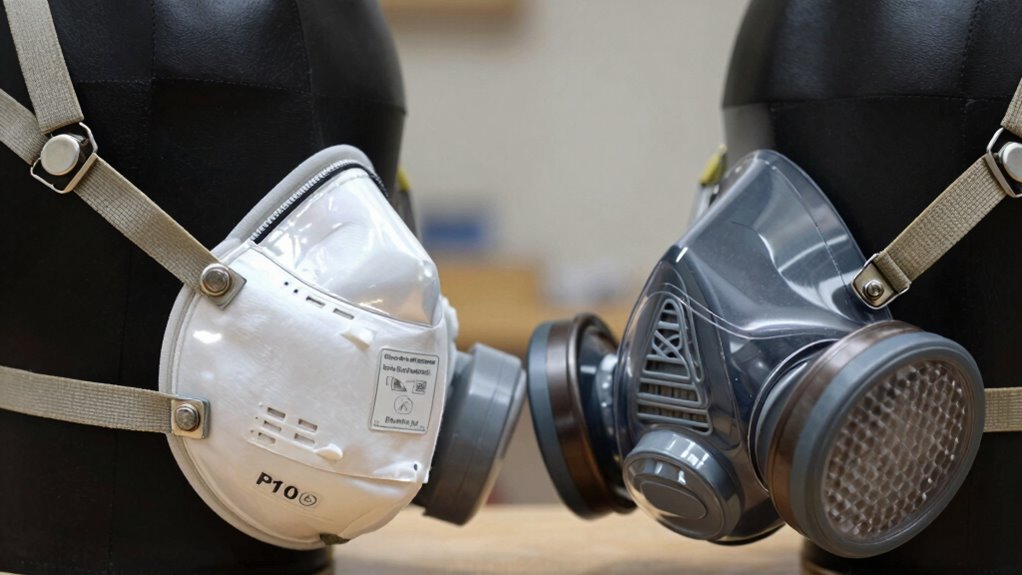
To make certain your safety while woodworking, it’s essential to select respirators that meet recognized safety certifications and standards. These guarantee the respirator provides proper protection and fits well. Look for certifications like NIOSH, which indicates the respirator has passed strict testing. Safety standards also specify that the respirator maintains a proper respirator fit to prevent airborne particles from leaking in.
When choosing, check for:
- NIOSH approval labels, confirming the respirator’s effectiveness
- Proper fit testing guidelines to ensure a secure respirator fit
- Clear manufacturer info adhering to safety standards for consistent quality
Prioritizing these certifications guarantees your respirator performs reliably, offering peace of mind during your woodworking projects.
When Should You Choose a P100 Respirator or a Cartridge Filter?
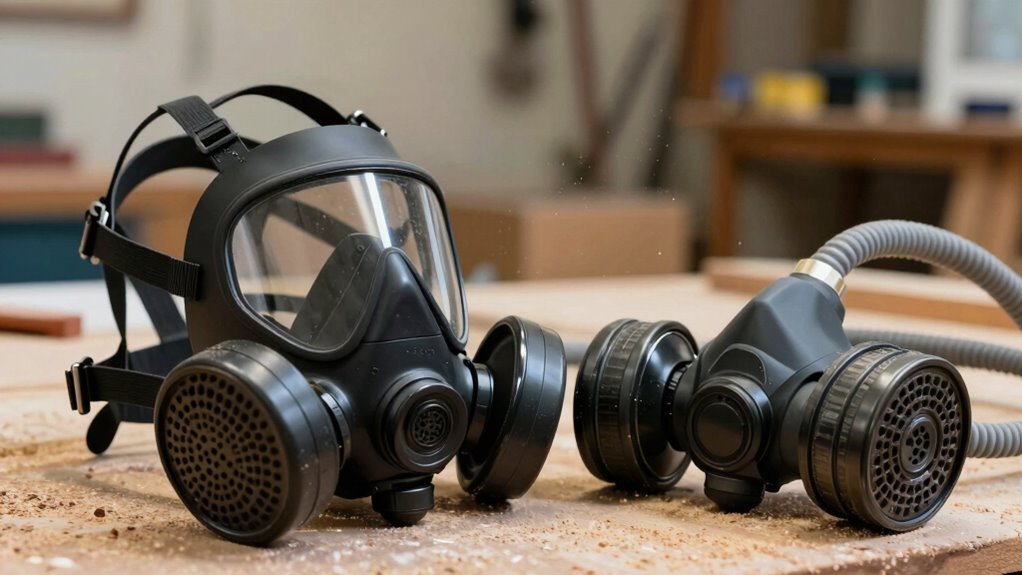
Choose a P100 respirator or a cartridge filter when working with fine dusts, fumes, or airborne particles that require high-level filtration. Dust masks alone often aren’t enough for these hazards, especially in woodworking environments with sawdust, glues, or finishes. A P100 offers superior filtration, making it ideal for prolonged exposure to hazardous particles. Cartridge filters are suitable when you need to safeguard against specific fumes or vapors, depending on the filter type. Consider your ventilation systems too; if your workspace has good ventilation, you might opt for a less restrictive filter. However, in poorly ventilated areas or when handling extremely fine or toxic dusts, a P100 or specialized cartridge filter guarantees you’re protected from inhaling harmful particles.
Final Tips for Choosing the Right Respirator for Your Woodworking Needs
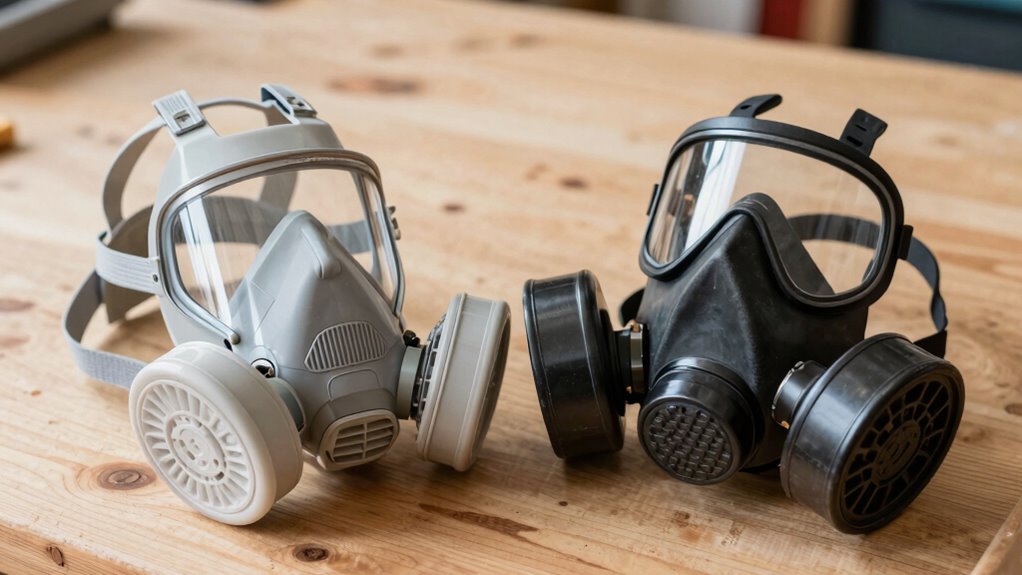
Selecting the right respirator for your woodworking projects hinges on understanding your specific needs and work environment. To make an informed choice, focus on airflow enhancement and ease of maintenance routines. Ensure your respirator fits well and provides a proper seal to maximize protection. Regularly check and replace filters to maintain ideal airflow and filtration efficiency. Consider how often you’ll use the respirator—more frequent use calls for models with durable filters and simple maintenance. Additionally, think about comfort for longer wear, especially if your projects last several hours. Keep these tips in mind:
- Choose a respirator with adjustable straps for a secure fit
- Prioritize models with easy-to-clean components
- Schedule routine filter checks and replacements
Staying proactive ensures your respirator offers reliable protection every time.
Frequently Asked Questions
Can P100 Respirators Be Reused After Cleaning?
Yes, you can reuse P100 respirators after filter cleaning, but it depends on the quality and condition of the filter. Typically, P100 filters are designed for single use, and cleaning can compromise their effectiveness, reducing respirator lifespan. If you choose to clean, carefully inspect the filter for damage or wear, and follow manufacturer guidelines. Remember, proper filter maintenance ensures protection and prolongs your respirator’s usability.
Are Cartridge Filters Suitable for All Types of Woodworking Dust?
You might think cartridge filters suit all woodworking dust, but that’s not always the case. While they’re effective for certain particles, dust collection varies, and some fine or hazardous dust requires specific filters. Always check if your respirator fits properly to maintain its seal and effectiveness. For best protection, select cartridge filters designed for the type of dust you encounter, ensuring your respirator provides a reliable barrier every time you work.
How Long Do P100 Cartridges Typically Last?
P100 cartridges typically last around 40 to 80 hours of active use, but their lifespan depends on dust type and concentration. You should monitor cartridge condition regularly and follow the manufacturer’s recommended filter replacement schedules to guarantee maximum protection. Heavy or prolonged woodworking dust exposure can shorten cartridge lifespan, so replace filters promptly when they become visibly dirty, clogged, or if breathing becomes more difficult.
Are P100 Respirators Effective Against Chemical Fumes?
P100 respirators are effective against some chemical fumes, especially when equipped with appropriate filters, but they primarily excel at particulate filtration. For chemical fume filtration, make certain the mask material is compatible with the specific fumes you’re working with, and consider using cartridges designed for chemical vapors. Always verify that your respirator’s filters are rated for chemical protection to ensure safety during woodworking or other tasks involving fumes.
What Maintenance Is Required for Cartridge Filter Respirators?
Imagine your respirator sitting ready, its filters quietly working. You need to check and replace the filters regularly, especially when breathing feels harder or odors slip through. Follow cleaning procedures by gently wiping the facepiece with a damp cloth and avoiding harsh chemicals. Replace filters when they’re visibly dirty or after their recommended lifespan. This keeps your respirator effective, safe, and ready for every woodworking project.
Conclusion
Choosing between P100 respirators and cartridge filters depends on your woodworking needs. While P100s offer superior protection against airborne particles, cartridge filters can be a cost-effective alternative for less intensive projects. Consider safety standards and your specific environment to make the right choice. Ultimately, investing in proper respiratory protection guarantees your health and safety, proving that the right gear isn’t just a theory—it’s essential for every woodworking session.
NFL season / tailgating Picks
team gear
As an affiliate, we earn on qualifying purchases.