When choosing between nails, screws, and glue, consider your project’s needs. Nails are great for quick, temporary, or lightweight holds, while screws offer stronger, reusable connections for load-bearing tasks. Glue creates seamless bonds ideal for delicate or decorative projects. For heavy-duty strength, screws or a combination of fasteners work best. To maximize durability and efficiency, understanding when each fastener wins helps you make smarter choices—there’s more to discover if you keep exploring.

Get business pricing on tools and workshop supplies
- Business-only prices and quantity discounts
- Tax-exempt purchasing
- Multiple users, one account, clear invoices
Key Takeaways
- Nails are best for quick, simple, and temporary framing or lightweight projects due to fast installation and flexibility.
- Screws excel in load-bearing, durable connections that require removal, reassembly, or strong withdrawal resistance.
- Glue provides seamless, invisible bonds ideal for crafts, delicate materials, or aesthetic applications with even stress distribution.
- Mechanical fasteners like nails and screws are suitable for structural, heavy-duty, or outdoor projects, while glue is suited for lightweight, decorative, or long-term bonds.
- Combining glue with nails or screws enhances joint strength and durability, especially in load-critical or complex assemblies.
As an affiliate, we earn on qualifying purchases.
How Do You Decide Between Nails, Screws, and Glue for Your Project?
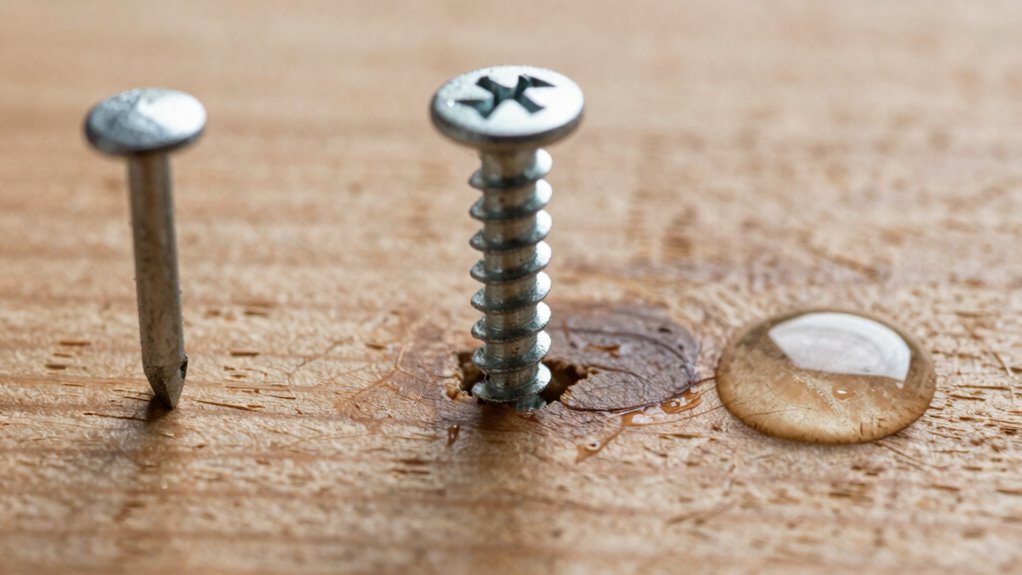
Choosing the right fastener depends on your project’s specific needs and the materials involved. To make the best choice, consider different fastening techniques and how material properties influence them. For example, if you’re working with soft wood, nails might be enough because they’re quick and flexible. However, if you’re dealing with hardwood or materials that require a stronger hold, screws provide better grip due to their threading. Glue can be ideal for lightweight or delicate projects where you want a seamless look and don’t need fast removal. Think about the strength, flexibility, and application of each fastener. Additionally, understanding the material properties and appropriate fastening techniques can help you select the best fastener to ensure your project’s durability and success. Proper fastener selection can also contribute to the overall sustainability of your project by reducing waste and increasing longevity. Considering fastener compatibility with different materials is also crucial to avoid issues like splitting or weak joints. Using the right fastener type also helps in achieving a cleaner finish and reducing the need for repairs later on.
As an affiliate, we earn on qualifying purchases.
When Are Nails the Best Fastener for Quick, Strong Holds?

Nails are the best fastener when you need a quick, strong hold in applications where speed and simplicity matter. Choosing the right nail size ensures you get enough grip without damaging the material; larger nails provide more strength, while smaller ones are ideal for delicate work. When speed is essential, nails excel because they can be driven in rapidly with a hammer or nail gun. Unlike glue, which requires drying time, nails give instant hold, saving you valuable time. This makes them perfect for projects like framing or assembling furniture where a fast, secure connection is critical. Keep in mind, nails are best when a temporary or semi-permanent hold is acceptable, and you need to complete your work efficiently without waiting for adhesives to cure. Additionally, understanding the types of fasteners available can help you choose the optimal option for your specific project needs. To ensure optimal performance, selecting the appropriate fastener material for your environment can enhance durability and prevent corrosion. Moreover, the easy installation process of nails makes them a preferred choice for many DIY and professional projects. For outdoor or humid conditions, selecting corrosion-resistant nails can significantly extend the lifespan of your work.
As an affiliate, we earn on qualifying purchases.
Why Are Screws a Better Choice for Reusable, Long-Lasting Joints?
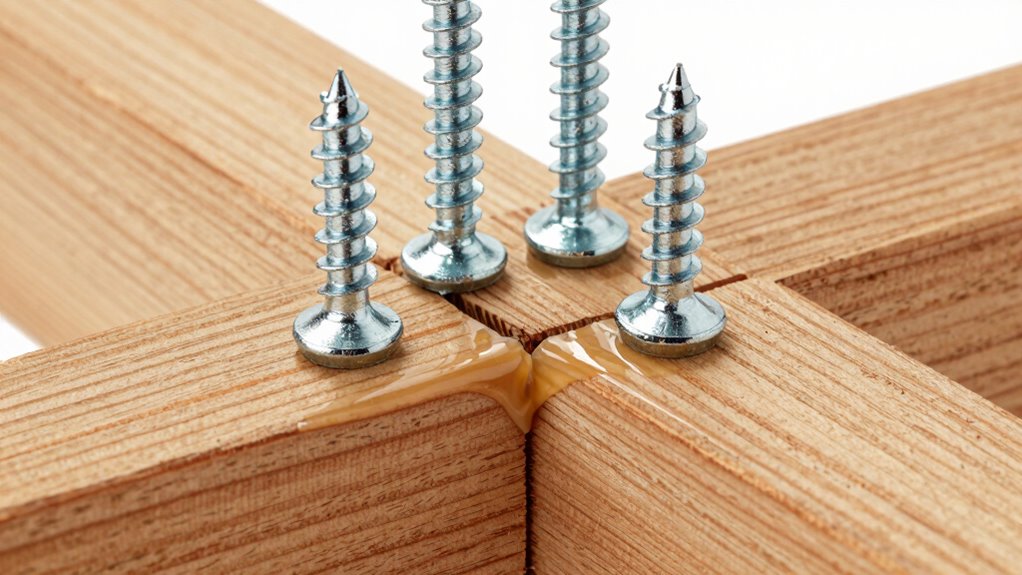
Screws provide better withdrawal resistance, making your joints less likely to loosen over time. They also offer greater holding power, ensuring your project stays secure longer. Plus, you can easily remove and reuse screws, allowing for adjustments without damage. Additionally, they are ideal for long-lasting joints, as they can withstand repeated use and stress. When considering the durability of your project, screws are often the best choice due to their mechanical properties.
Better Withdrawal Resistance
Because screws are designed with threads that grip the material tightly, they provide superior withdrawal resistance compared to nails. The screw’s thread pattern creates a strong hold, making it harder for the fastener to pull out over time. Unlike nails, which rely on shear strength and often have smooth or simple nail head types, screws cut into the material and resist withdrawal forces more effectively. The variety of screw thread patterns, from coarse to fine, allows you to choose the best design for specific materials and applications, enhancing long-term durability. This grip guarantees that joints stay secure during repeated use or against pull-out stresses, making screws ideal for reusable, long-lasting connections where withdrawal resistance is critical. Additionally, affiliate disclosures ensure transparency when selecting fasteners for your projects.
Greater Holding Power
Screws consistently deliver greater holding power, making them the preferred choice for reusable and long-lasting joints. Their design provides a secure grip by threading into materials, enhancing the effectiveness of various fastening techniques. When considering material considerations, screws excel because they can be driven into different surfaces without slipping or loosening over time. Power tools like drills and impact drivers make installing screws faster and more precise, especially on tougher materials. Additionally, their compatibility with wiring basics ensures they can be used safely in complex projects requiring electrical connections. Proper installation techniques are essential to maximize their holding capacity and ensure long-term durability. They resist loosening under vibration or stress. Their threading distributes force evenly. They can be tightened or removed easily. They maintain strength across diverse materials. This combination of features ensures a robust connection that withstands repeated use and environmental factors. For projects requiring dependable, durable joints, screws are often the best option because of their superior holding power. Incorporating fastening techniques that maximize their benefits can further improve joint longevity and stability. Moreover, understanding the material properties helps select the most suitable screw type for different applications.
Reusability and Adjustments
Since they can be easily tightened or removed without damaging the surrounding material, screws are ideal for reusable, long-lasting joints. Their fastener durability ensures they can withstand multiple adjustments without losing strength or integrity. This adjustment flexibility allows you to modify or disassemble structures without damaging the material or needing new fasteners. Unlike nails, which can bend or loosen over time, screws maintain their grip through repeated use. This makes them perfect for projects that require ongoing modifications or long-term reusability. By choosing screws, you invest in a fastening solution that offers reliable adjustment options and longevity, saving you time and money in the long run. Their reusability and adjustability make screws the superior choice for sustainable, adaptable joints.
combination fastener kit for woodworking
As an affiliate, we earn on qualifying purchases.
As an affiliate, we earn on qualifying purchases.
When Should You Use Glue Instead of Mechanical Fasteners?

Choosing glue over mechanical fasteners is ideal when you need a seamless appearance or want to distribute stress evenly across a surface. Glue provides a clean finish, making it perfect for projects where aesthetics matter. It also helps avoid issues like fastener corrosion that can weaken joints over time. Use glue when:
- You need a smooth, invisible bond
- The materials are delicate or brittle
- You want to eliminate the risk of fastener corrosion
- Long-term adhesive longevity is essential for durability
Glue spreads stress uniformly, reducing weak points. It’s especially useful for lightweight or decorative applications. However, keep in mind that glue may not be suitable for heavy loads or dynamic movement, but for many crafts and crafts, it’s the better choice for a neat, lasting bond.
Which Fastener Is Stronger for Heavy-Duty or Load-Bearing Projects?
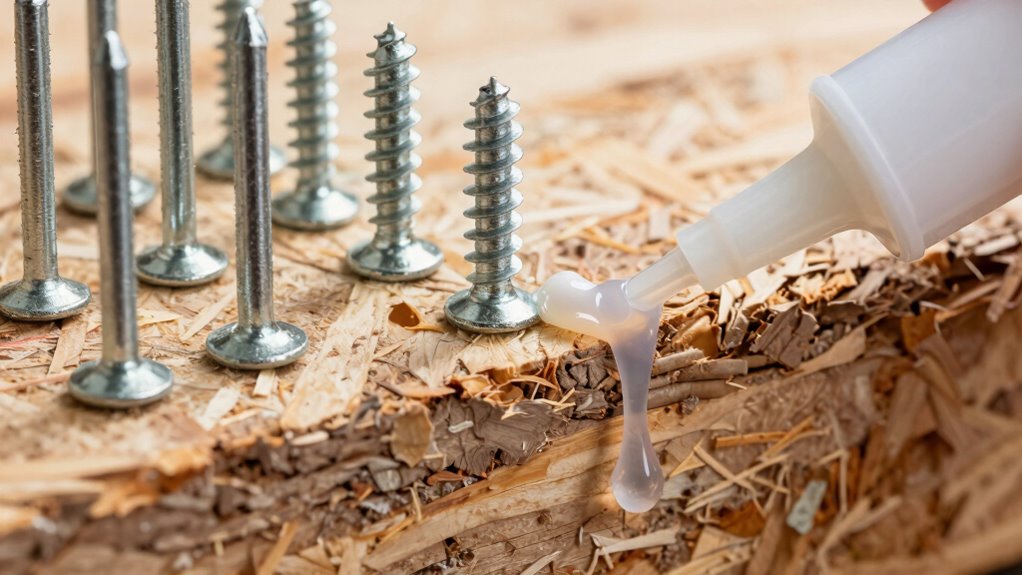
When choosing the strongest fastener for heavy loads, you’ll want to consider tensile strength and how well each fastener distributes force. Different materials can impact the effectiveness of nails, screws, or glue under stress, so material compatibility matters. Understanding these factors helps you pick the right option for safe, load-bearing projects. For example, selecting a stainless steel fastener can increase durability and resistance to corrosion, especially in outdoor or moist environments. Additionally, understanding the mechanics of force distribution can help ensure the selected fastener maintains its integrity under heavy loads. Recognizing the types of load-bearing forces involved can further refine your choice, ensuring optimal performance and safety. Furthermore, knowing about AI ethics and safety can guide better decision-making in selecting appropriate fastening methods for critical applications.
Tensile Strength Differences
In heavy-duty or load-bearing projects, the tensile strength of fasteners determines how well they can withstand pulling forces without failing. Screws generally have higher tensile strength than nails, making them better suited for heavy loads. Nails tend to bend or shear under extreme tension, especially with metal fatigue over time. Screws offer better corrosion resistance, prolonging their strength in harsh environments. Glue, on the other hand, relies on adhesive properties and isn’t suitable for heavy tensile loads but provides even distribution of stress. Consider these points:
- Screws resist metal fatigue better under repeated stress
- Nails have lower tensile strength, risking failure
- Corrosion resistance varies, influencing long-term durability
- Glue offers no tensile strength, only adhesion
Choosing the right fastener depends on your project’s load and environmental conditions.
Load Distribution Efficiency
Among the three fasteners, glue typically offers the best load distribution because it spreads stress evenly across the entire bonded surface. This even stress distribution minimizes points of failure, making it ideal for load-bearing projects where consistent strength matters. Additionally, bonding techniques play a crucial role in maximizing glue’s effectiveness and ensuring durability over time. However, glue’s fastener longevity depends heavily on proper surface preparation and curing time, which can increase installation complexity. Nails and screws, by contrast, concentrate stress at their points of entry, which can lead to localized failure under heavy loads. Screws generally provide better load distribution than nails due to their threaded design, but both are less effective than glue in applications requiring uniform stress dispersion. For heavy-duty projects, considering the load distribution efficiency of each fastener helps ensure long-term stability. Additionally, understanding the material properties of the bonded surfaces is crucial for selecting the most effective fastener type.
Material Compatibility Factors
Choosing the right fastener for heavy-duty or load-bearing projects depends heavily on the materials involved. Material compatibility influences whether nails, screws, or glue will provide the necessary strength. For instance, metal-to-metal connections often require screws with proper threading or adhesive bonding, while wood-to-wood joints may benefit from nails or specialized glue. Consider these factors:
- The hardness and density of materials involved
- The ability of fasteners to grip without damaging surfaces
- The potential for adhesive bonding to fill gaps or distribute load evenly
- Compatibility with moisture or environmental conditions that may weaken materials
- The material properties and how they interact with different fasteners can significantly impact the overall strength and durability of the joint.
Matching fasteners to material compatibility ensures your project’s durability. In some cases, combining adhesive bonding with mechanical fasteners enhances load-bearing capacity, especially in complex or composite materials.
How Can You Combine Nails, Screws, and Glue for the Best Results?

To achieve the strongest and most durable bond, combining nails, screws, and glue can be highly effective when used strategically. Start by applying adhesive bonding to increase overall strength, especially in areas where fastener compatibility might be limited. Use nails for quick, temporary hold and to distribute force evenly, while screws provide a secure, long-lasting grip. Glue fills gaps and enhances stability, especially on porous or uneven surfaces. To maximize results, drill pilot holes for screws to prevent splitting and ensure proper alignment. Be mindful of material types and load requirements to avoid conflicts between fasteners and glue. When combined thoughtfully, these fasteners work together to create a resilient, reliable connection that leverages the strengths of each method for superior durability.
Frequently Asked Questions
What Safety Precautions Should I Follow When Using Nails, Screws, or Glue?
When using nails, screws, or glue, you should prioritize workspace safety by wearing protective gear like goggles and gloves to prevent injuries. Always work in a well-ventilated area, especially when handling glue, to avoid inhaling fumes. Keep your workspace organized to prevent accidents and handle tools carefully, following manufacturer instructions. Staying alert and cautious helps guarantee a safe, efficient project while safeguarding yourself from potential hazards.
How Do Environmental Factors Affect the Choice of Fasteners?
You might think environmental factors don’t matter, but they actually influence your fastener choice fundamentally. For outdoor projects, corrosion resistance is vital, so you should pick nails or screws designed for weather exposure. Moisture sensitivity can weaken glue, making it unsuitable in humid environments. By understanding these factors, you guarantee your project stays secure and lasts longer, proving that selecting the right fastener isn’t just a detail—it’s imperative for durability.
Can I Use Multiple Fasteners Together on the Same Project?
Yes, you can use multiple fasteners together on the same project. To guarantee success, consider fastener compatibility and use combined fastening techniques effectively. For example, nails might provide quick hold, while screws add strength, and glue offers extra stability. Combining these methods can improve overall durability. Just make sure each fastener type suits the material and purpose, and follow proper installation steps for a secure, long-lasting result.
What Tools Are Best for Installing Nails, Screws, or Applying Glue?
You’ll want the right tools to make fastener installation a breeze, and trust me, it’s not a job for amateurs! For nails and screws, a hammer or screwdriver/drill with proper bit compatibility ensures fastener precision. For glue, a caulking gun or applicator works best. Using the correct tools guarantees your fasteners sit perfectly, holding strong and saving you time and effort. Always match your tools to your fastener type for best results.
How Do Cost and Availability Influence Fastener Selection?
You should consider material costs and supply chain availability when choosing fasteners. If screws are more affordable and readily available, you’ll likely prefer them for convenience. Similarly, if nails or glue have lower costs or are easier to source due to supply chain factors, they become better options. Your decision depends on balancing budget constraints with the ease of procurement, ensuring you get the right fastener without delays.
Conclusion
Choosing the right fastener depends on your project needs. Did you know that studies show screws can hold up to 50% longer than nails in similar conditions? By understanding when to use nails, screws, or glue, you guarantee stronger, more durable results. Remember, combining these fasteners can often give you the best of all worlds. Make smart choices, and your project will stand the test of time.
Fall yard work Picks
leaf blowers
As an affiliate, we earn on qualifying purchases.