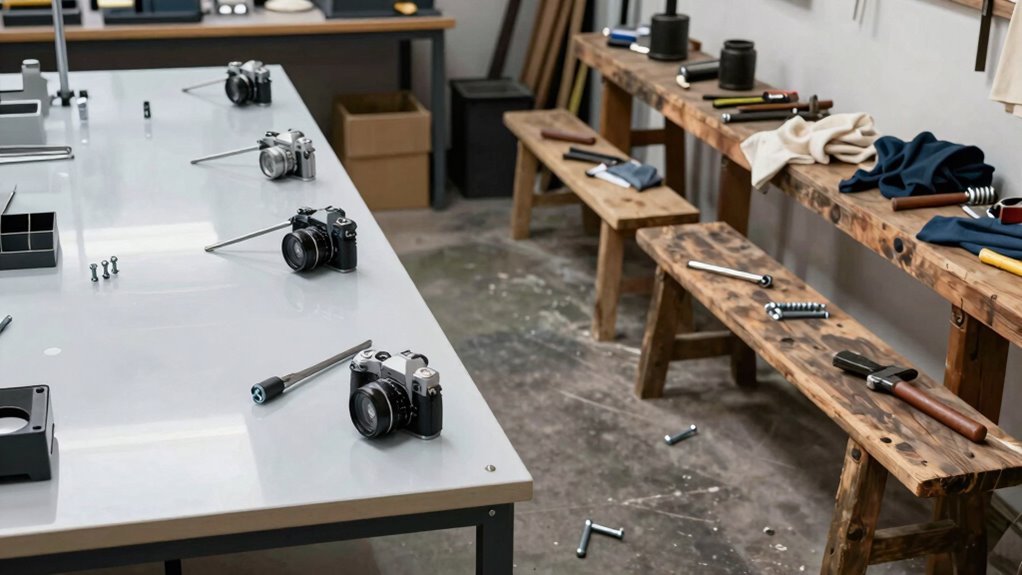

When choosing between assembly tables and traditional benches, consider your work type. Assembly tables are designed for comfort, with adjustable heights, smooth surfaces, and mobility, making them perfect for electronics or detailed tasks. Traditional benches excel at providing stability for heavy-duty projects. Your choice depends on whether you need ergonomic features or a sturdy platform. Keep exploring to discover how each setup can boost your efficiency and reduce fatigue in your workspace.

Get business pricing on tools and workshop supplies
- Business-only prices and quantity discounts
- Tax-exempt purchasing
- Multiple users, one account, clear invoices
Key Takeaways
- Assembly tables offer ergonomic features like adjustable height and mobility, enhancing comfort for detailed or repetitive tasks.
- Traditional benches provide superior stability and durability, suitable for heavy-duty or forceful work.
- Assembly tables are ideal for electronics, assembly, and precision work requiring flexibility.
- Traditional benches are better for tasks needing a sturdy, fixed surface for heavy or forceful operations.
- Choosing between them depends on whether ergonomic flexibility or maximum stability best suits the specific job.
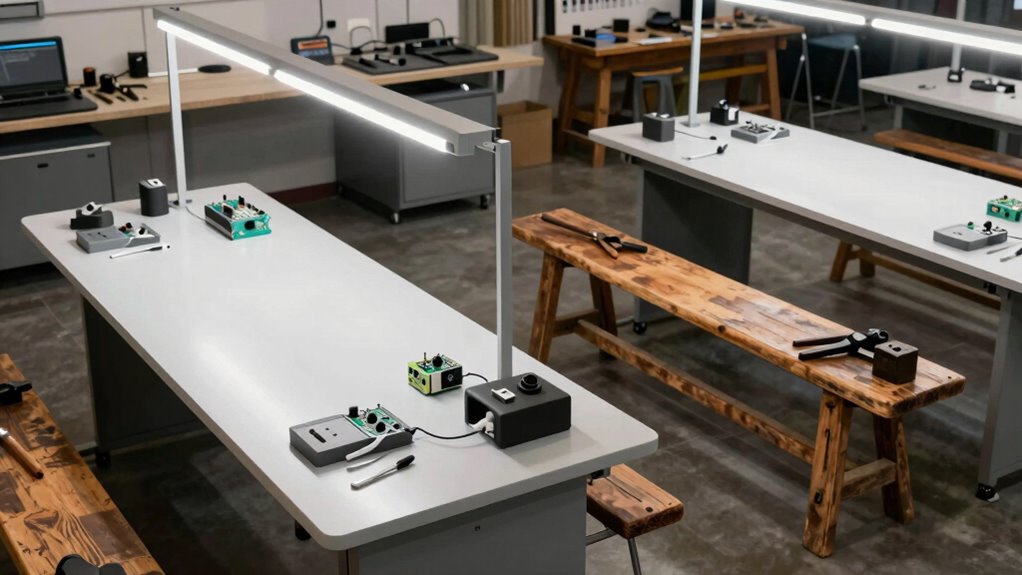
When choosing the right workspace, understanding the differences between assembly tables and traditional benches can make a significant difference in your efficiency and comfort. Assembly tables are designed with ergonomic principles in mind, meaning they help reduce strain and improve your posture during long tasks. The height of these tables is often adjustable or set at an ideal level for standing or sitting work, which minimizes back and neck fatigue. Their flat, smooth surfaces also promote better alignment of tools and parts, making your workflow smoother and more organized. Additionally, many assembly tables come equipped with mobility features, such as wheels or casters, allowing you to move your workspace easily to different locations or adjust your setup without hassle. This flexibility is especially useful if your work involves multiple stations or if you need to reconfigure your workspace frequently. Furthermore, understanding ergonomic design principles can help you select the most suitable workspace setup for your needs. Traditional benches, on the other hand, tend to prioritize sturdiness and simplicity. Usually made of heavier, more durable materials, they provide a stable platform for tasks that require significant force or precision. However, they often lack the ergonomic design features found in modern assembly tables. This means you might find yourself hunched over or stretching awkwardly, which can quickly lead to discomfort or even injury after extended periods. Their fixed height and limited mobility make them less adaptable for dynamic work environments where changing positions or moving equipment is necessary. Incorporating safety features can further enhance their suitability for demanding tasks. It is also important to consider the material quality of the bench, as it directly impacts durability and safety over time. In many cases, your choice depends on the nature of your work. If your tasks involve assembly, electronics, or detailed work that benefits from adjustable height and mobility, an assembly table with ergonomic design and mobility features will serve you better. These features help you stay comfortable and productive, reducing fatigue and increasing precision. Additionally, selecting a table with adjustable height can accommodate different users and tasks, further improving workspace adaptability. Understanding the different job requirements is also crucial in making an informed choice. Conversely, if your work demands a sturdy, no-nonsense surface for heavy-duty projects, a traditional bench might be more appropriate, even if it sacrifices some ergonomic convenience. Ultimately, understanding the strengths of each allows you to select a workspace that aligns with your specific needs, boosting both efficiency and comfort in your daily tasks.
adjustable height assembly table
As an affiliate, we earn on qualifying purchases.
As an affiliate, we earn on qualifying purchases.
Frequently Asked Questions
Are Assembly Tables Portable Compared to Traditional Benches?
Assembly tables are generally more portable than traditional benches, offering significant mobility advantages. They’re designed with features like casters and lightweight materials that make moving them easier. When considering portability, think about the size, weight, and whether they can be easily relocated around your workspace. Assembly tables excel in flexibility, allowing you to quickly adapt your setup, whereas traditional benches tend to be more stationary and less suited for frequent moving.
What Safety Features Are Unique to Assembly Tables?
Assembly tables often feature unique safety elements like ergonomic design, which reduces strain and improves posture during work. They also include safety lock mechanisms that secure the work surface, preventing accidental movement that could cause injury. These features help protect you while working, making assembly tables safer and more user-friendly compared to traditional benches. Prioritizing safety features like ergonomic design and safety locks keeps your workspace secure and efficient.
Can Assembly Tables Be Customized for Specific Projects?
Yes, assembly tables can be customized for specific projects. You can incorporate modular customization features, allowing you to adjust the table’s size, height, and accessories to suit your needs. This flexibility makes it easier to perform project-specific adjustments, enhancing efficiency and precision. By tailoring the assembly table to your task, you guarantee better ergonomics, organization, and safety, ultimately streamlining your workflow and improving overall productivity.
How Do Assembly Tables Impact Workflow Efficiency?
Think of assembly tables as the conductor in an orchestra, guiding your workflow with precision. They considerably boost workflow efficiency by offering ergonomic benefits, reducing fatigue, and speeding up tasks. With features tailored to your needs, assembly tables streamline processes, minimize errors, and keep your workspace organized. As a result, your productivity soars, and projects move smoothly from start to finish, making your workday more effective and less stressful.
What Are the Long-Term Maintenance Differences?
You’ll find that assembly tables generally offer better durability compared to traditional benches, which often require more frequent repairs or replacements. This durability can lead to lower long-term maintenance costs, though the initial investment might be higher. Considering cost implications, assembly tables tend to save you money over time due to their sturdy build and reduced upkeep needs, making them a smarter choice for long-term use.
mobility casters for workbenches
As an affiliate, we earn on qualifying purchases.
As an affiliate, we earn on qualifying purchases.
Conclusion
When choosing between assembly tables and traditional benches, you’ll find each offers unique strengths suited to specific tasks. Assembly tables provide precision and portability, perfect for detailed assembly, while traditional benches deliver durability and stability for heavy-duty work. By matching your needs with the right workspace, you’ll maximize efficiency and enjoy a more enjoyable, effective experience. So, select with purpose, and turn your workspace into a well-worn workshop where work flows smoothly and satisfaction soars.
heavy-duty traditional workbench
As an affiliate, we earn on qualifying purchases.
As an affiliate, we earn on qualifying purchases.
As an affiliate, we earn on qualifying purchases.
Fall yard work Picks
leaf blowers
As an affiliate, we earn on qualifying purchases.