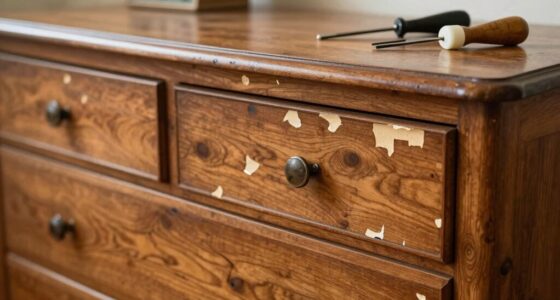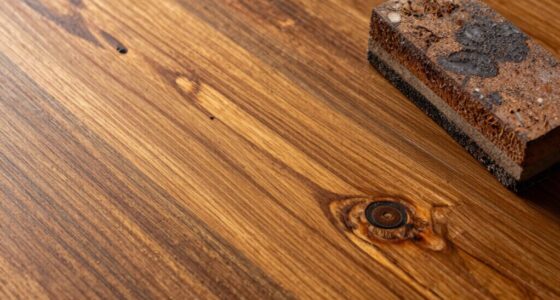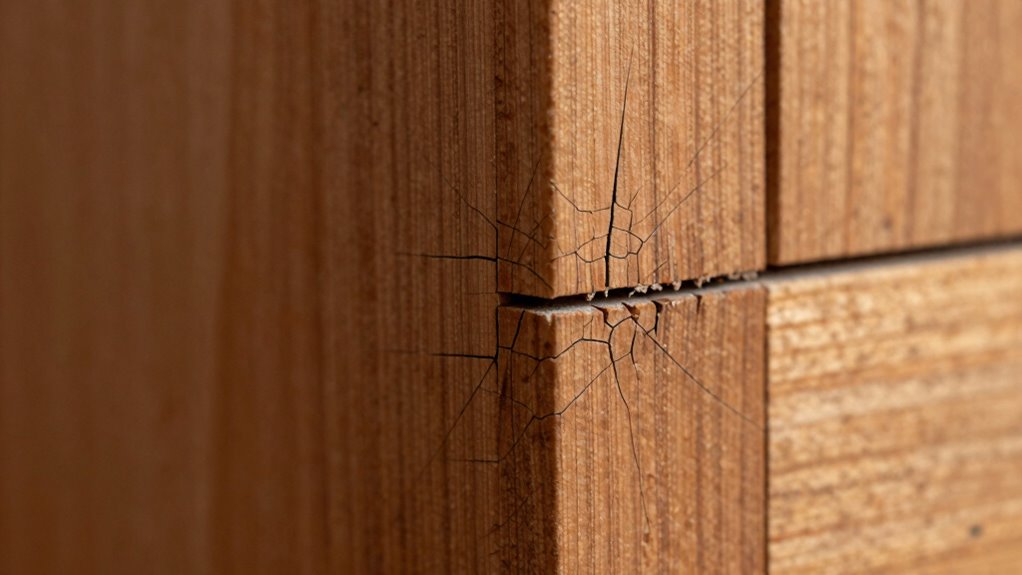
Hairline cracks around joinery aren’t just cosmetic issues; they can indicate structural problems. These cracks often result from the natural movement of wood, humidity changes, or improper installation. Superficial cracks might seem harmless, but widening ones could signal serious concerns. To guarantee the longevity of your furniture, you need to assess the severity and take appropriate action. Understanding how wood behaves can help you address these cracks effectively and keep your furnishings in great shape.

Get business pricing on tools and workshop supplies
- Business-only prices and quantity discounts
- Tax-exempt purchasing
- Multiple users, one account, clear invoices
Key Takeaways
- Hairline cracks can be superficial, primarily affecting aesthetics, or indicate significant structural issues needing professional evaluation.
- Deep or widening cracks suggest potential instability in the joinery or overall structure.
- Regular monitoring of humidity and temperature helps prevent wood movement and associated cracking.
- Minor cracks can be repaired with wood filler, while serious issues may require joinery reinforcement or section replacement.
- Understanding wood behavior and proper installation techniques is essential for long-term durability and to avoid future cracking.
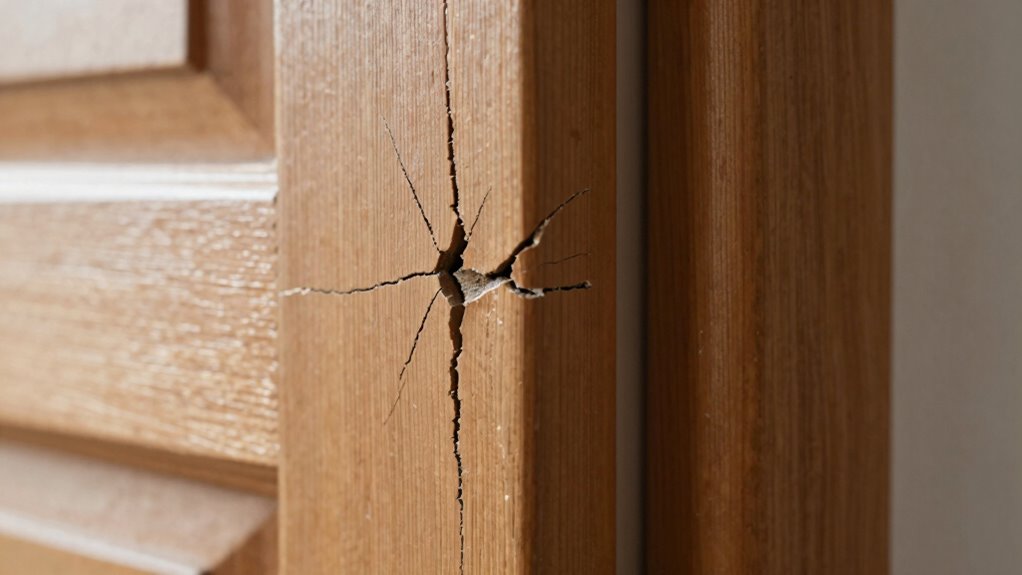
When you notice hairline cracks around joinery, it can be alarming, especially if you’ve just invested in new cabinetry or furniture. You might wonder if these cracks are merely cosmetic or if they signal a deeper issue. Understanding the causes is vital to figuring out the best approach for repairs and maintenance.
One of the primary causes of hairline cracks is the natural movement of wood. Wood expands and contracts with changes in humidity and temperature. If your furniture or cabinetry is made from solid wood, this movement can create stress around the joints, leading to cracking. Another factor could be improper installation or inadequate adhesive used during the joinery process. If the pieces weren’t fitted together correctly, you might see cracks develop as the structure settles over time.
One primary cause of hairline cracks is the natural movement of wood, which expands and contracts with humidity and temperature changes, stressing the joints.
Conducting a causes analysis helps you determine the severity of the situation. If the cracks are superficial and only affect the aesthetics, you might not need to worry too much. However, if the cracks are deep or widening, you should consider consulting a professional. Repair options range from simple touch-ups to more extensive work. For minor cracks, wood filler or putty can be an effective solution. Just sand the area, apply the filler, and finish it to match the surrounding wood. If the cracks indicate a structural issue, you may need to reinforce the joinery or even replace sections of the furniture. Understanding wood behavior is key to preventing future damage and ensuring long-lasting repairs.
Aesthetic considerations are essential when addressing hairline cracks. Even if the cracks are not compromising the structural integrity, they can detract from the beauty of your investment. Choosing the right finish can help blend the repair work seamlessly into the existing design. For a polished look, you might opt for a matching stain or paint, ensuring it complements the surrounding area. Additionally, understanding the movement of wood can help you anticipate and prevent future cracking issues. Being aware of wood behavior allows you to better manage your environment and protect your furnishings from unnecessary stress.
To prevent future issues, keep up with maintenance tips. Regularly check the humidity levels in your home, especially in areas with significant temperature fluctuations. Using a humidifier during dry seasons can help maintain stable conditions. Additionally, avoid placing heavy objects on the furniture, as this can exacerbate the problem. Recognizing the importance of proper installation can also be instrumental in avoiding similar issues in the future.
wood filler for furniture repair
As an affiliate, we earn on qualifying purchases.
As an affiliate, we earn on qualifying purchases.
Frequently Asked Questions
How Can I Prevent Hairline Cracks in Joinery?
To prevent hairline cracks in joinery, focus on regular joinery maintenance. Guarantee your wood is well-hydrated and avoid exposing it to extreme temperature changes. Use quality sealants to protect against moisture. If cracks do appear, employ repair techniques like filling them with wood filler and sanding smooth. Regularly check for signs of wear and address them early to maintain the integrity of your joinery, keeping it looking great and functioning well.
Do Temperature Changes Affect Hairline Cracks?
Yes, temperature fluctuations can definitely affect hairline cracks. When temperatures rise and fall, materials expand and contract, stressing joints and potentially leading to cracks. High humidity levels can exacerbate this issue, causing wood to swell and shrink. To minimize these effects, maintain consistent indoor temperatures and humidity levels. Regularly inspect your joinery and address any moisture issues to help keep those cracks at bay. You’ll guarantee the integrity of your work.
Are Hairline Cracks Common in New Constructions?
Absolutely, hairline cracks are pretty common in new constructions. Think of them like tiny whispers in your home, hinting at settling. Common causes include temperature changes and moisture fluctuations. While they might seem cosmetic, it’s wise to address them. You can use repair techniques like filling with caulk or applying a paint texture to mask the cracks. Stay proactive, and your home will stay looking fresh and welcoming!
What Materials Are Most Prone to Hairline Cracks?
Certain wood types, especially softer ones like pine and fir, are more prone to hairline cracks due to their natural properties and susceptibility to moisture changes. When you use joint techniques like butt joints or miter joints without proper reinforcement, the chances of cracking increase. To minimize this risk, consider using stronger hardwoods and employing more robust joint techniques like dowels or biscuits, which enhance stability and reduce stress on the materials.
Can Paint or Finishes Hide Hairline Cracks Effectively?
Yes, paint and finishes can effectively hide hairline cracks, but their success depends on paint durability and finish application. When you apply a high-quality paint or finish, it can fill in minor imperfections, making them less visible. However, if the cracks are significant, they might still show through over time. Always make sure you prep the surface properly for the best results, as this enhances the longevity and appearance of your finish.
As an affiliate, we earn on qualifying purchases.
Conclusion
In summary, while hairline cracks around joinery might seem like a mere cosmetic issue, they can signal deeper structural concerns. Imagine walking into a room where the walls seem to breathe, shifting ever so slightly as if whispering secrets of underlying damage. Don’t ignore these signs; addressing them early can save you from costly repairs down the line. Your home deserves attention, so take a closer look and guarantee your living space remains safe and sound.
As an affiliate, we earn on qualifying purchases.
As an affiliate, we earn on qualifying purchases.
Fall yard work Picks
leaf blowers
As an affiliate, we earn on qualifying purchases.