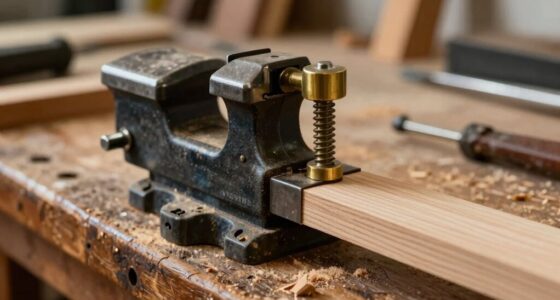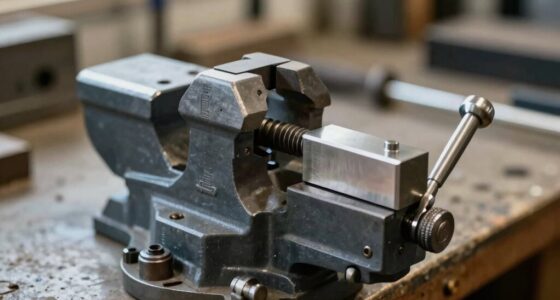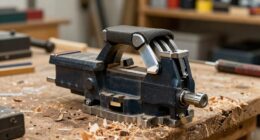
Vise types serve different woodworking needs: a front vise is mounted on the edge of your bench for clamping workpieces securely during edge jointing or carving; a tail vise holds workpieces at the end of the bench for larger or awkward shapes; a leg vise offers exceptional stability for heavy-duty tasks like mortising; and a Moxon vise provides precise, versatile clamping for fine joinery. To master each one’s uses and benefits, continue exploring these versatile tools.
Key Takeaways
- Front Vise: Mounted on the front of the bench, it holds workpieces securely for edge work, carving, and small projects with adjustable jaws.
- Tail Vise: Attached at the end of the workbench, it supports larger or awkward pieces, providing stability during edge and face work.
- Leg Vise: Built into the bench leg, it offers maximum durability and strength, ideal for heavy-duty tasks like mortising and chopping.
- Moxon Vise: Compact, dual-screw clamp suitable for precise work such as dovetailing, carving, and assembly, offering fine control and versatility.
- Vise Selection: Choosing the right type depends on your project size, workpiece shape, and specific woodworking tasks.

Pony Jorgensen 27091 Medium Duty Woodworker's Vise, Orange, Grey, 9-Inch By 7-Inch
Country Of Origin : China
As an affiliate, we earn on qualifying purchases.
As an affiliate, we earn on qualifying purchases.
What Are Woodworking Vises and Why Are They Essential?
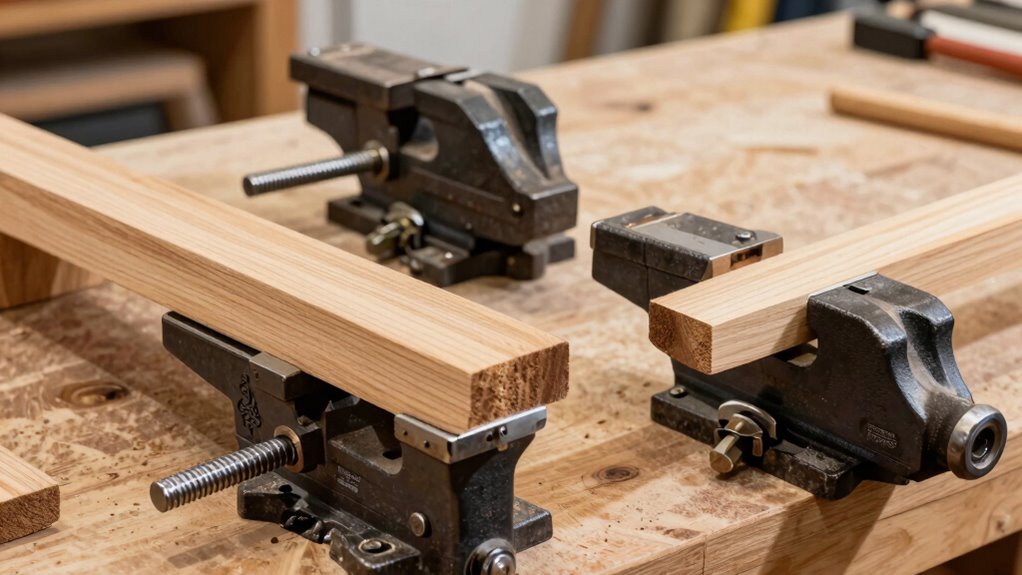
Have you ever wondered why a sturdy woodworking vise is such an essential tool? It’s because it guarantees woodworking safety and precision. A good vise securely holds your workpiece, preventing slips or accidents while you cut, carve, or sand. The materials used for vises are vital; cast iron, steel, and durable alloys provide strength and stability. These materials withstand pressure and reduce wear over time, making your work safer and more efficient. The material quality of a vise directly impacts its durability and performance, ensuring it can handle demanding tasks. In addition, European manufacturing standards often ensure higher-quality materials and construction, further enhancing a vise’s reliability. Without a reliable vise, you risk damaging your project or injuring yourself. A well-made vise keeps everything steady, allowing you to focus on your craft with confidence. Additionally, proper maintenance ensures your vise remains functional and extends its lifespan, maintaining its ability to hold workpieces securely. Recognizing market standards helps you select a vise that meets industry benchmarks for safety and durability.

HFS(R) Woodworking Bench Vise, Heavy Duty Front Screw Vise for Workbench Chrome plating Leg Vise Hardware Woodworking (7IN)
[Iron Structure]: All iron structure with paint coating, wear-resistant, resistant to corrosion and rust. At the same time,…
As an affiliate, we earn on qualifying purchases.
As an affiliate, we earn on qualifying purchases.
How Do You Choose the Right Vise for Your Woodworking Projects?
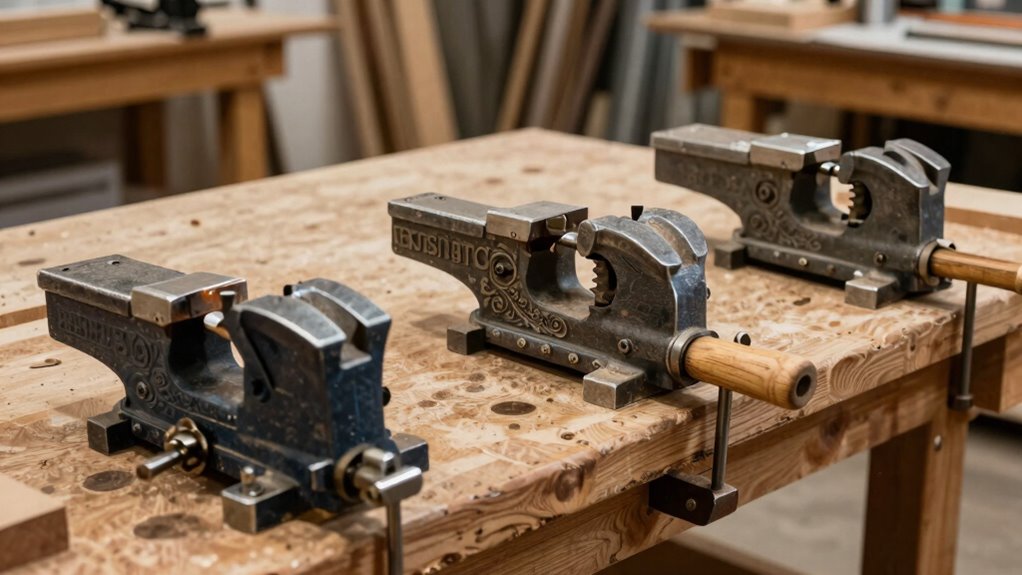
Choosing the right vise for your woodworking projects depends on understanding the specific tasks you’ll perform and the size of your workpieces. Consider your clamping techniques and whether you need quick adjustments or firm holds. Vise materials matter too; cast iron offers durability, while steel provides strength for heavy-duty tasks. Think about the workpiece size and the type of projects—smaller projects may suit a bench vise, while larger pieces need a heavy-duty tail vise. To visualize, see the table below:
| Task Type | Ideal Vise Features |
|---|---|
| Fine Joinery | Precise, smooth-adjusting vise |
| Heavy Clamping | Strong, durable vise with high clamping force |
| Small Pieces | Compact vise with quick-release |
| Large Workpieces | Heavy-duty, large capacity vise |
This helps you choose a vise that matches your specific needs. Understanding clamping techniques can further enhance your selection process.

Hardware Kit for Moxon Vise, Bench Vise Screw Kit Includes 8 Inch Threaded Rods, Cast Knobs, Nuts & Washers Woodworking Workbench Tools Accessories
WOODWORKING HARDWARE KIT: Designed for woodworking, vise kit for moxon enhances the functionality of your workbench. Hardware for…
As an affiliate, we earn on qualifying purchases.
As an affiliate, we earn on qualifying purchases.
The Front Vise: Features, Uses, and Benefits for Clamping
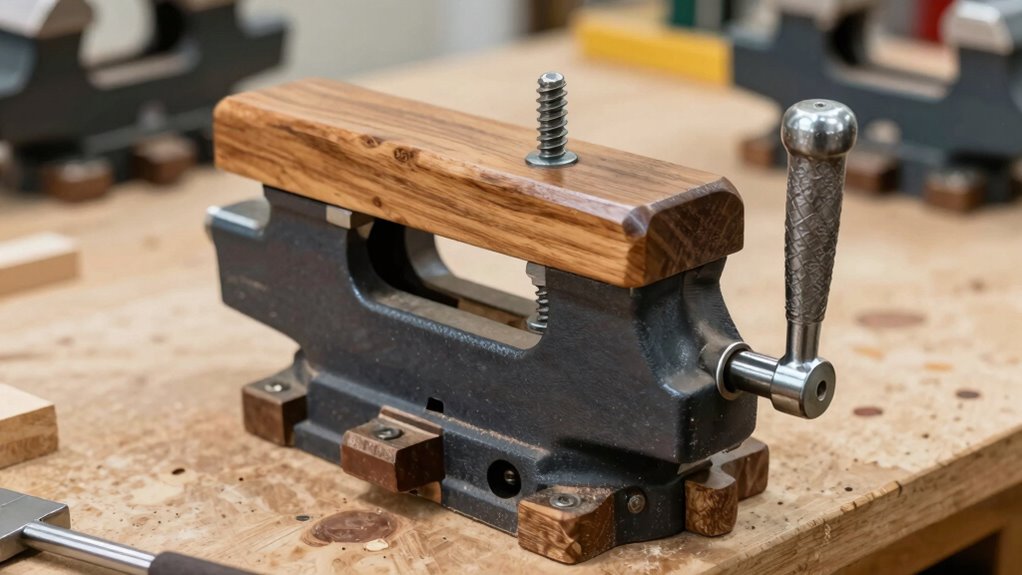
A front vise is a versatile and essential tool for woodworking, providing a secure hold directly on your workbench. Its primary role is offering strong clamping pressure, helping you hold pieces steady during cutting, shaping, or assembly. The jaw design plays a pivotal part in this, as wider or textured jaws improve grip and reduce slipping. You can adjust the vise easily to accommodate different workpiece sizes, making it highly adaptable. The front vise’s positioning allows you to work close to the edge of your bench, which is ideal for edge jointing or carving. Its durability and reliable clamping make it a cornerstone for many woodworking projects, ensuring you can work confidently with tight, secure holds every time. Additionally, understanding Free Floating mechanisms can enhance the effectiveness of your clamping setup and improve overall workpiece stability.

findmall 9 Inch Woodworking Front Vise Heavy-Duty Steel and Cast Iron Front Bench Vise – Fit for Woodworking Projects
Structure – All iron structure, with paint coating, not easy to rust. At the same time, it is…
As an affiliate, we earn on qualifying purchases.
As an affiliate, we earn on qualifying purchases.
Exploring the Tail Vise: Its Role and How to Use It
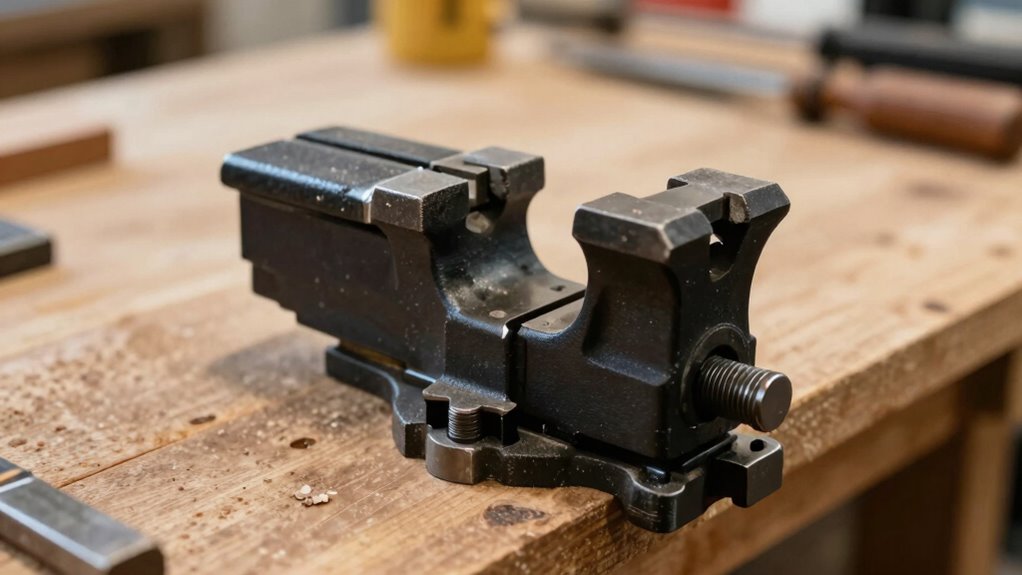
The tail vise plays a vital role in holding workpieces securely at the end of your bench. Its benefits include increased stability and the ability to clamp larger or awkward shapes effectively. Learning proper usage techniques guarantees you get the most out of this versatile tool while maintaining safety and precision. Additionally, understanding vise installation and adjustment ensures optimal performance and longevity of the tail vise. To fully leverage its capabilities, familiarizing yourself with connected home fitness concepts can inspire innovative ways to incorporate technology into your workshop setup, enhancing overall efficiency and safety. Exploring modern workshop tools can further streamline your woodworking projects and improve accuracy. Incorporating ergonomic design principles can also help reduce fatigue and increase comfort during extended work sessions.
Function and Benefits
Because it firmly holds workpieces in place, the tail vise is essential for achieving stability during woodworking tasks. Its primary function is to provide strong, adjustable clamping pressure, keeping your material secure without shifting or slipping. This stability allows you to make precise cuts, drill holes, or shape wood confidently. The benefits extend to reducing work fatigue and increasing safety, as you can focus on your task rather than worrying about movement. Selecting the right vise materials, like cast iron or steel, guarantees durability and consistent performance over time. The tail vise’s design also makes it versatile for various projects, supporting detailed work or larger pieces with ease. Overall, it’s a reliable tool that improves both accuracy and efficiency in your woodworking projects. Modern woodworking techniques leverage innovative tools like the tail vise to enhance precision and ease of use. Additionally, understanding the material properties of your vise can help maintain its functionality and longevity over years of use.
Proper Usage Techniques
To use your tail vise effectively, start by positioning your workpiece firmly against the vise’s face and ensuring the handle is loosened enough to accommodate it. Apply steady clamping pressure, tightening the handle gradually to avoid damaging the wood or causing misalignment. Proper vise ergonomics means adjusting the vise height and orientation so you can work comfortably without straining. Keep the handle turns smooth and controlled to maintain consistent pressure. Avoid over-tightening, which can warp or crush your material. Regularly check that the workpiece remains secure without excessive effort. This technique ensures stability, prevents damage, and maximizes efficiency. Additionally, understanding wood movement and how to accommodate it can prevent cracking or warping over time. Being aware of potential dark psychology tactics can also help you recognize manipulation attempts during collaborative projects or workshops. Moreover, paying attention to clamping techniques and how they influence workpiece stability will lead to better results.
Understanding the Leg Vise: Strengths and When to Use It
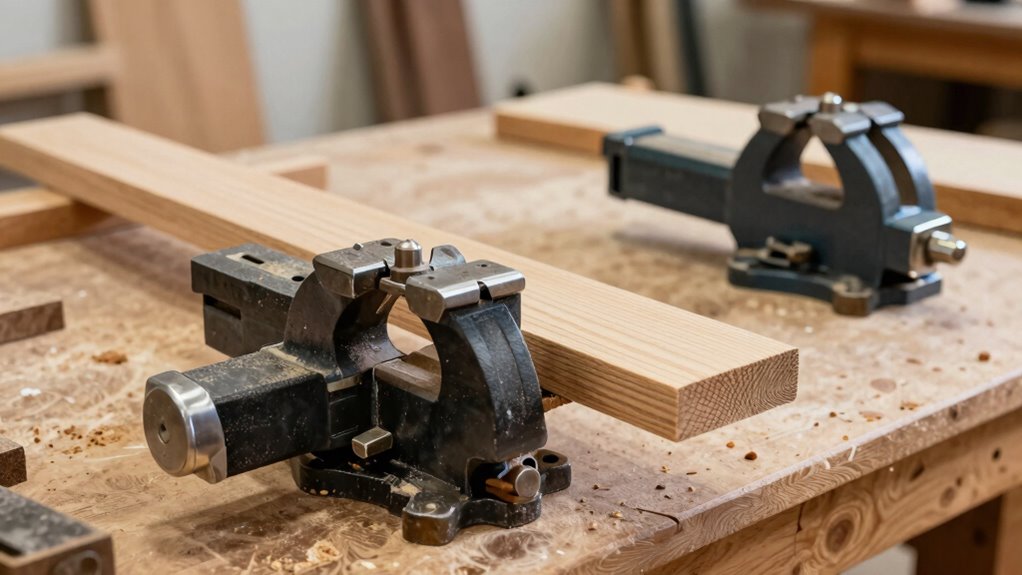
The leg vise offers outstanding durability and stability, making it ideal for demanding clamping tasks. You’ll want to use it when working on projects that require a solid, secure hold over time. Its strengths shine when precision and strength are critical for your woodworking or metalworking needs. For added reliability, choosing a high-quality vise can further enhance your work accuracy and safety. Additionally, understanding vise types can help you select the most suitable tool for your specific application. Being familiar with clamping techniques can also improve your overall work efficiency and project outcomes.
Durability and Stability
A leg vise is known for its exceptional durability and stability, making it a reliable choice for demanding woodworking tasks. Its robust design handles heavy clamping and keeps workpieces secure during intricate woodworking joints. The vise materials, such as cast iron or hardened steel, guarantee long-lasting strength. You’ll notice that the sturdy frame resists twisting or shifting under pressure.
- Its heavy-duty build absorbs force, reducing flex and movement during work.
- The solid base anchors the vise firmly to your workbench.
- Properly maintained, it withstands years of use without losing stability.
- The vise’s design supports precise, consistent clamping for delicate or complex projects.
This combination of construction and materials makes the leg vise ideal for tasks requiring strength and stability.
Optimal Use Cases
Leg vises excel in demanding woodworking tasks that require maximum strength and stability. You should use a leg vise when working on large, heavy pieces that need firm, reliable clamping. Its design provides exceptional clamping force, making it it ideal for tasks like chopping, mortising, and planing where secure holding is critical. Proper clamping techniques with a leg vise ensure your work remains steady and precise, reducing the risk of slips or accidents. Because of its robust hold, it’s especially useful for tasks that demand woodworking safety and stability. Use the leg vise when working with thick or stubborn materials, or when you need to exert significant pressure. Overall, its strength makes it a go-to choice for heavy-duty woodworking activities that require maximum control and safety. Additionally, the durability of materials used in a leg vise’s construction ensures long-lasting performance under rigorous use. Choosing high-quality materials can also help prevent damage from exerting high forces, ensuring the vise remains reliable throughout its lifespan. Moreover, understanding proper maintenance practices can extend the life of your leg vise and keep it functioning at peak performance. Regular upkeep and correct adjustments are crucial for maintaining optimal clamping efficiency over time.
What Is a Moxon Vise and Why Do Woodworkers Love It?
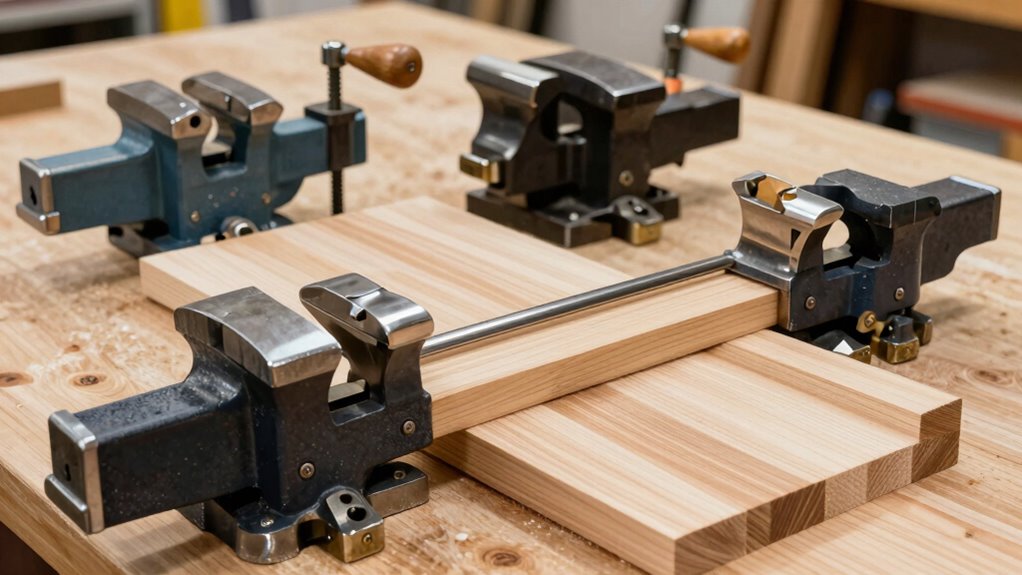
A Moxon vise stands out as a versatile and compact woodworking clamp designed for precise work. Its unique design allows you to hold workpieces securely at comfortable angles, improving woodworking ergonomics. You’ll love how easy it is to adjust and operate, making repetitive tasks smoother. Woodworkers favor Moxon vises because they’re lightweight yet sturdy, often crafted from high-quality vise material choices that resist wear. Its dual-screw mechanism provides fine control, and the small footprint saves space on your bench. Plus, you can customize the vise with different finishes or materials to match your workshop style. Whether for dovetailing, carving, or detailed assembly, a Moxon vise enhances accuracy and comfort, earning its popularity among hobbyists and pros alike.
A versatile, compact woodworking clamp that offers precise angle adjustments and customizable options for enhanced workshop comfort.
- Easy to adjust for different angles
- Compact size for limited workspace
- Enhances woodworking ergonomics
- Customizable vise material choices
Installing Your Vise: Tips for a Secure and Long-Lasting Setup
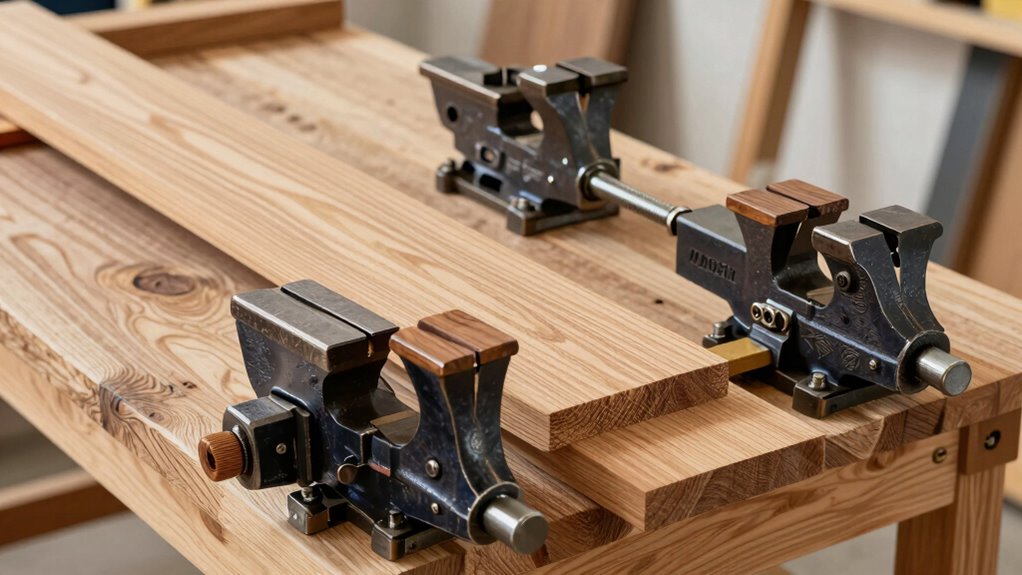
Properly installing your vise is essential to guarantee stability and longevity. Start by choosing a solid, durable material for the vise, as vise material selection impacts both safety and performance. Secure the vise firmly to your workbench using appropriate bolts, ensuring it’s tightly anchored to prevent wobbling during work. When installing, double-check that the mounting surface is flat and clean to avoid uneven pressure. Always prioritize woodworking safety by wearing protective gear and making sure your work area is stable. Use proper tools and follow manufacturer instructions for installation. A well-installed vise not only improves safety but also ensures it withstands heavy use over time, providing a reliable workspace for all your woodworking projects. Additionally, understanding the different vise types can help you choose the best option for your specific needs and workspace.
Maintaining and Troubleshooting Your Vise for Peak Performance
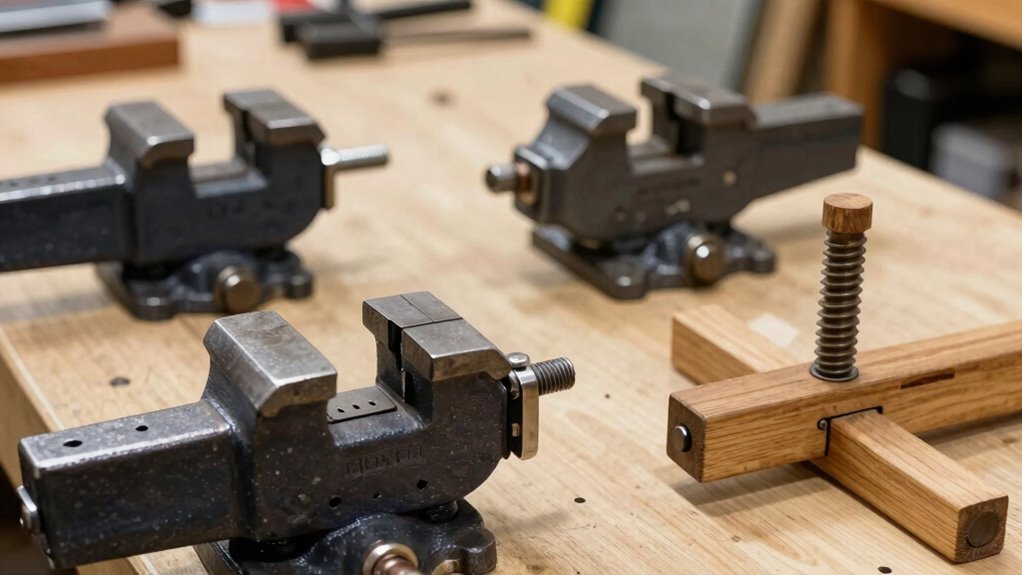
Regular maintenance is key to keeping your vise functioning smoothly and extending its lifespan. Proper vise maintenance involves cleaning, lubricating moving parts, and inspecting for wear. If you notice your vise isn’t holding as securely or turning stiff, troubleshooting techniques can help identify issues quickly.
Here are some tips:
- Clean debris and old grease from the screw and guides
- Lubricate moving parts regularly with suitable oil
- Check for worn or damaged components and replace if necessary
- Tighten loose bolts and screws to maintain stability
Tips to Use Your Vise Effectively and Improve Your Craftsmanship
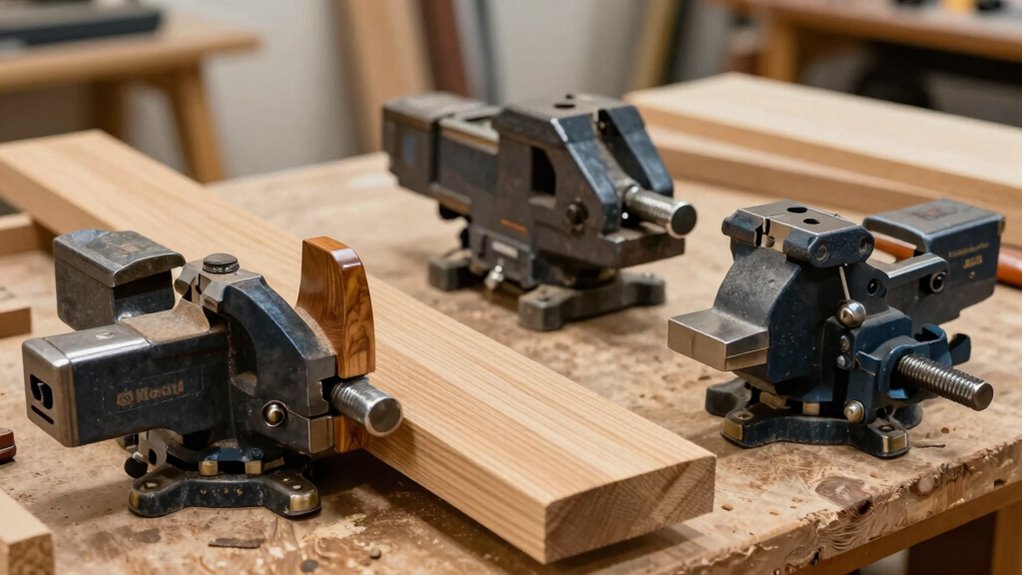
To use your vise effectively and enhance your craftsmanship, focus on positioning your work securely and aligning it properly before tightening. Proper clamp adjustment ensures your work stays steady without over-tightening, which can damage the material or strain the vise. Take time to fine-tune the clamp to hold your project firmly but gently. Utilizing vise accessories, like soft jaw pads or custom-made guides, can improve grip and protect delicate surfaces. Always double-check alignment before tightening to prevent miscuts or uneven pressure. A well-adjusted clamp combined with appropriate accessories helps you achieve precision and reduces fatigue. Remember, the key to craftsmanship is not just in the tools but in how you prepare and secure your work for ideal results.
Frequently Asked Questions
Can I Use Multiple Vise Types on One Woodworking Bench?
Yes, you can use multiple vise types on one woodworking bench. Multi vice setups boost versatility, allowing you to handle different projects efficiently. To do this effectively, focus on vise integration techniques like positioning each vise for easy access and stability. You might combine a front vise with a tail or leg vise, ensuring each is securely mounted and complements your workflow. This setup maximizes your bench’s functionality and workholding options.
What Safety Precautions Should I Follow When Using a Vise?
Think of your vise as a loyal guard—trust it with safety. Always wear personal protective equipment like eye protection and gloves, and make certain your vise is securely mounted to prevent accidents. Keep hands clear of moving parts, and don’t over-tighten to avoid damage. Regularly inspect your vise for wear or damage. By following these precautions, you keep your workspace safe while working confidently on your projects.
How Do I Prevent Wood Damage When Clamping?
To prevent wood damage when clamping, always use clamp padding or vise jaw covers. These accessories distribute pressure evenly and protect your workpiece from dents or indentations. Make certain you’re not over-tightening, which can cause crushing. Position the clamps carefully to avoid concentrated force on delicate areas. Regularly check for even pressure, and replace worn padding or jaw covers to maintain effective protection during your project.
Are There Portable Vises Suitable for Mobile Woodworking Projects?
A portable vise is like a trusty companion on your mobile woodworking adventures. You’ll find lightweight, clamp-style vises perfect for on-the-go projects, easily attaching to different surfaces without much hassle. These vises are compact, versatile, and designed to be carried around, making them ideal for mobile woodworking. Look for models with quick-release features and sturdy clamps to guarantee your work stays secure wherever you are.
How Do I Upgrade or Replace a Worn-Out Vise Component?
To upgrade or replace a worn-out vise component, start with regular vise maintenance—clean, lubricate, and check for damage. Identify the specific part needing replacement, like the screw or jaw, and buy compatible, high-quality parts. Carefully disassemble the vise following manufacturer instructions, then install the new component. Regularly maintaining and upgrading vise components guarantees smooth operation and extends your vise’s lifespan, making your woodworking safer and more efficient.
Conclusion
Now that you know the ins and outs of different vise types, you’re ready to pick the perfect one for your projects. Each vise has its tricks and strengths, so don’t be afraid to experiment and find what works best. Remember, a good vise is the backbone of your woodworking success. Put in the effort to install and maintain it right, and you’ll have a trusty partner that stands the test of time—truly a match made in woodworking heaven.