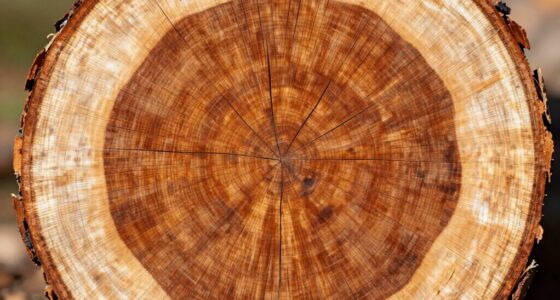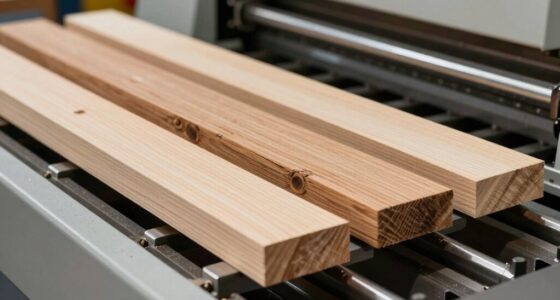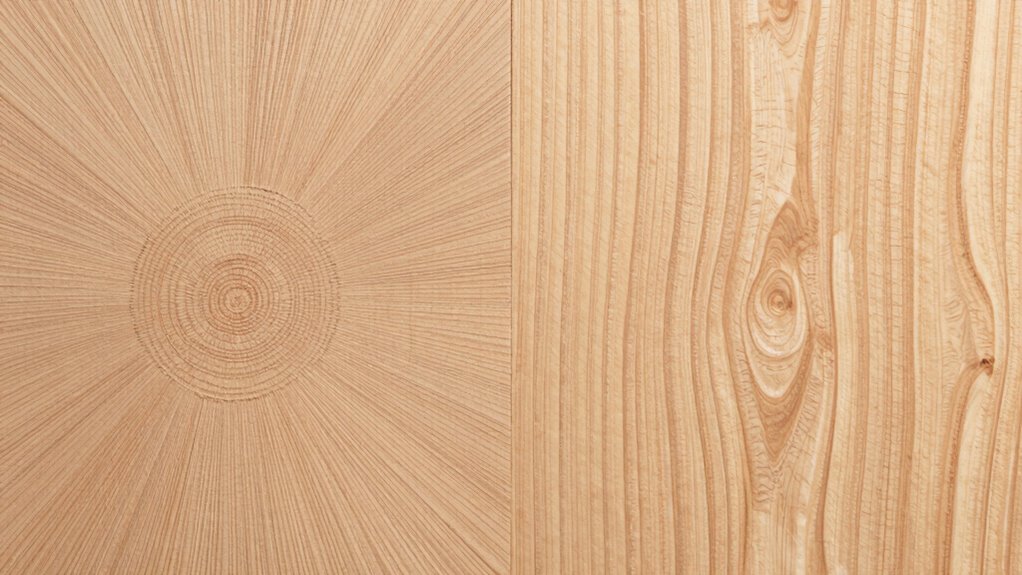
Quarter-sawn wood shows straight, narrow grain lines with visible rays, giving it a uniform look and better stability. Flat-sawn wood has wavy or cathedral-shaped grain patterns with wider, irregular lines, adding character but less stability. You can see these differences by examining the grain orientation and ring shapes. If you want to learn how to tell them apart easily, keep exploring the details that make each type unique.
Key Takeaways
- Quarter-sawn wood shows straight, narrow grain lines with visible rays; flat-sawn displays wider, wavy, or semi-circular grain patterns.
- Growth rings in quarter-sawn lumber run mostly perpendicular to the surface, creating tight, consistent lines; flat-sawn rings are wider and more irregular.
- Quarter-sawn surfaces are smoother with uniform grain texture; flat-sawn surfaces feel rougher with more pronounced, varied grain patterns.
- The visual difference in grain orientation makes quarter-sawn wood look more refined and stable; flat-sawn offers a more dynamic, character-rich appearance.
- Recognizing the shape of growth rings and grain line patterns helps visually distinguish between the two cuts.

Barrington Hardwoods Quarter Sawn White Oak Lumber Board – 3/4" x 4" (2 Pieces) (3/4" x 4" x 36")
Beautiful Grain
As an affiliate, we earn on qualifying purchases.
As an affiliate, we earn on qualifying purchases.
What Are the Grain Patterns of Quarter-Sawn and Flat-Sawn Wood?
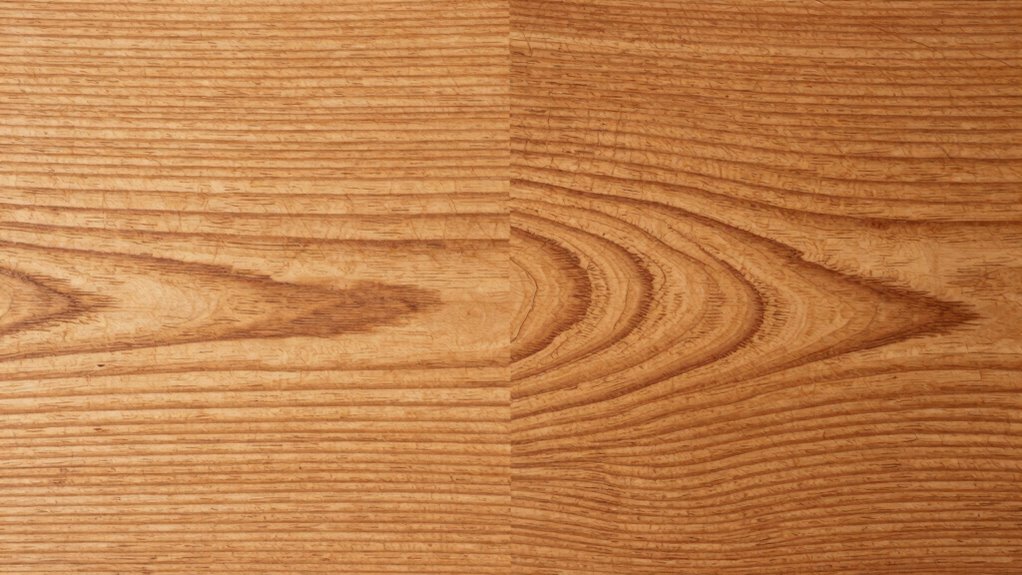
When examining the grain patterns of quarter-sawn and flat-sawn wood, you’ll notice distinct differences that impact both appearance and stability. Quarter-sawn wood features a grain orientation that runs perpendicular to the growth rings, creating a consistent, straight pattern. This results in a uniform, ribbon-like visual texture that many find appealing. In contrast, flat-sawn wood displays a grain orientation parallel to the growth rings, producing a more varied and wavy pattern. The visual texture of flat-sawn wood is often more irregular, showcasing unique and lively grain patterns. These differences in grain orientation not only influence how the wood looks but also affect how it responds to environmental changes, making each type suitable for different applications based on aesthetic and structural preferences. Additionally, understanding the grain orientation helps in selecting the right wood for specific projects. Recognizing these patterns is essential for woodworking and design, ensuring the desired durability and visual effect are achieved.

The Hardwood Edge Walnut Hardwood Planks – 2-Pack Walnut Wood for Unfinished Wood Crafts – 1/8’’ (3mm) 100% Pure Hardwood – Laser Engraving Blanks – Solid Hardwood Planks for Crafts and Gifts
Craft Wood — Thin-sawn, 100% pure hardwood planks designed for crafts; Natural wood blanks for laser cutting &…
As an affiliate, we earn on qualifying purchases.
As an affiliate, we earn on qualifying purchases.
How Do Cutting Methods Affect Wood Stability and Durability?
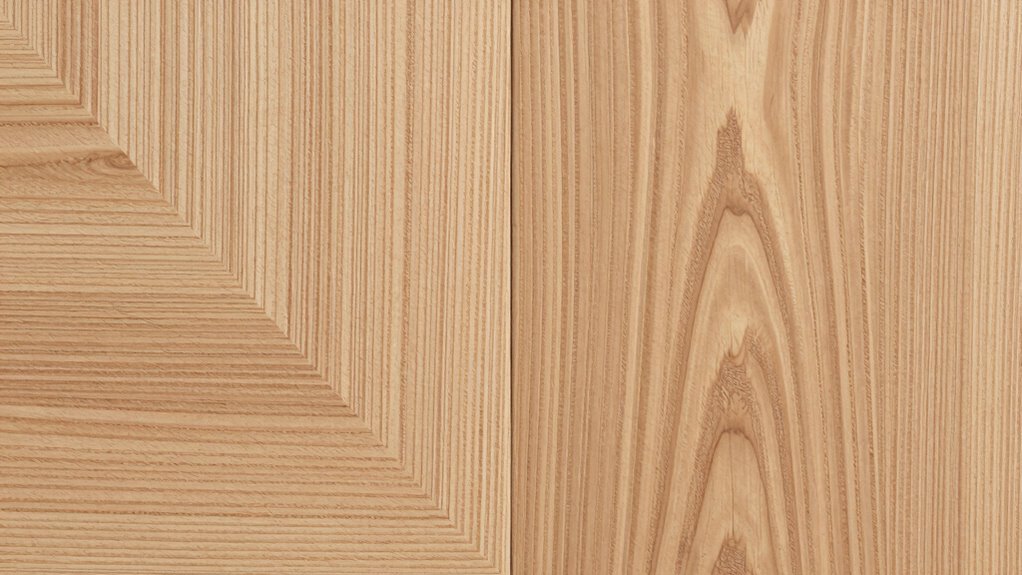
Your cutting method determines the grain structure of the wood, which influences its stability. Quarter-sawn cuts create fibers that resist warping better over time, while flat-sawn cuts are more prone to movement. Understanding these differences helps you choose wood that lasts longer and stays true to its shape. Additionally, selecting the appropriate cut can also impact the overall wood durability, ensuring your project remains stable and resilient over the years. Recognizing the grain orientation can further enhance your ability to select the best wood for your specific needs. Moreover, knowing the wood’s heritage can assist in predicting its behavior and longevity in various applications, especially considering how different cuts may highlight specific grain patterns that affect aesthetic appeal and structural integrity.
Grain Structure Variations
The way wood is cut considerably influences its grain structure, which in turn affects its stability and durability. With quarter-sawn wood, the grain density is more uniform, resulting in a consistent appearance and enhanced stability over time. This method exposes the grain at a 90-degree angle to the growth rings, reducing warping. Flat-sawn wood, however, features more varied grain density, with visible grain patterns that display the natural color variations and unique character of the wood. These variations in grain structure can lead to differences in wood coloration and how it responds to environmental changes. Understanding how cutting methods alter grain structure helps you select the right wood for your project, ensuring longevity, visual appeal, and structural integrity.
Impact on Warping
Wood cutting methods directly influence how likely the material is to warp over time. Quarter-sawn wood tends to have less wood movement because its grain runs perpendicular to the board’s surface, making it more stable and resistant to warping. Flat-sawn wood, on the other hand, is more prone to twisting and cupping due to greater grain variability and uneven expansion. This difference impacts moisture resistance as well; quarter-sawn cuts absorb and release moisture more slowly, reducing overall warping risks. By choosing the right cut, you enhance your wood’s durability and maintain its shape longer. Understanding how these cutting methods affect wood movement helps you select material that stays stable, especially in environments with fluctuating humidity.

The Art of Coloring Wood: A Woodworker’s Guide to Understanding Dyes and Chemicals
As an affiliate, we earn on qualifying purchases.
As an affiliate, we earn on qualifying purchases.
How Can You Recognize Quarter-Sawn and Flat-Sawn Wood Visually?

You can tell quarter-sawn and flat-sawn wood apart by looking at their grain patterns; quarter-sawn wood has straight, uniform lines, while flat-sawn shows more wavy or irregular patterns. Check the visible growth rings—quarter-sawn boards reveal rings that run mostly perpendicular to the surface, whereas flat-sawn rings tend to be more parallel. Additionally, surface textures vary, with quarter-sawn wood often feeling smoother and more consistent than the often more varied flat-sawn surface. Understanding wood grain patterns can also help in identifying these cuts and selecting the right material for your project. Recognizing the grain pattern differences can improve your ability to choose the appropriate wood for durability and aesthetic purposes, especially when considering natural beauty in your design choices. Exploring sawing techniques can provide deeper insight into how these patterns are created during processing. Furthermore, being aware of these distinctions can aid in assessing the wood’s structural integrity and suitability for specific applications.
Grain Pattern Differences
Have you ever wondered how to tell quarter-sawn and flat-sawn wood apart just by looking at their grain patterns? The key lies in grain orientation and visual texture. Quarter-sawn wood displays a consistent, straight grain pattern with rays that run parallel to the surface, creating a subtle, linear look. Its grain lines are usually narrow and uniform. In contrast, flat-sawn wood shows a more varied grain pattern with wider, wavier lines and prominent swirling or cathedral shapes. The visual texture of flat-sawn wood is often more dynamic and less uniform. By examining these patterns, you can easily identify the grain orientation and distinguish between the two cuts, helping you make better-informed decisions for your woodworking projects. Recognizing these differences can also influence the durability and stability of the finished piece.
Visible Growth Rings
When examining growth rings, the key difference lies in their appearance based on how the wood was cut. With quarter-sawn wood, you’ll notice that the growth rings appear as narrow, tight lines running parallel to the grain, creating a consistent, linear pattern. The grain orientation is mostly vertical, making the rings look more uniform across the surface. In contrast, flat-sawn wood shows wider, more irregular growth rings that form arcs or curves, reflecting the radial cuts. These visual cues indicate a more varied grain orientation, with rings often appearing as semi-circular or wavy lines. Recognizing these differences helps you identify whether the wood is quarter-sawn or flat-sawn just by looking at the growth rings and overall grain pattern. Additionally, understanding the grain orientation can aid in selecting the right wood for both aesthetic and structural purposes. Knowing how the cutting method influences the appearance can help you make more informed choices when selecting wood for your projects. For example, considering the visual cues can also help determine the wood’s durability and stability over time.
Surface Texture Variations
Surface texture differences between quarter-sawn and flat-sawn wood are quite noticeable once you observe the grain surface closely. Quarter-sawn wood often has a more uniform, smooth texture with subtle variations, while flat-sawn wood shows more pronounced texture variation due to its grain pattern. You can identify these differences by feeling the surface or examining how the grain appears visually. Quarter-sawn pieces tend to have a consistent, fine grain surface, whereas flat-sawn wood may feel rougher and display wider, irregular grain lines. Recognizing these texture variations helps you determine the cut type at a glance. Additionally, understanding grain orientation can further assist in identifying the type of cut used.

PC Products PC-Woody Wood Repair Epoxy Paste Kit with Mixing Tool, Two-Part 6 oz in Two Cans, Tan (83321)
Two-part epoxy paste to replace missing or rotted wood is resistant to dry rot, UV light, fresh and…
As an affiliate, we earn on qualifying purchases.
As an affiliate, we earn on qualifying purchases.
Which Sawn Wood Is Better for Different Projects?
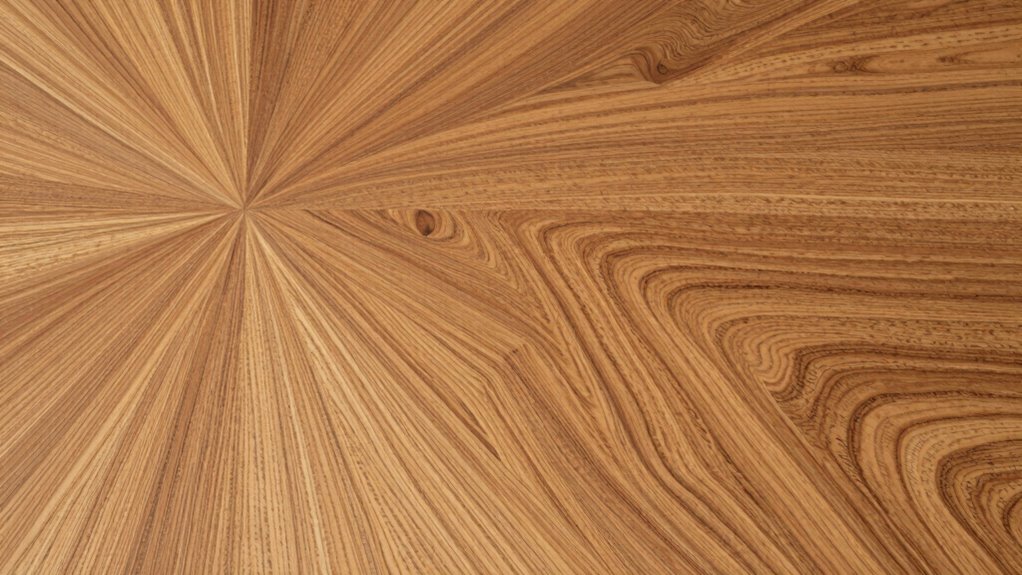
Choosing the right type of sawn wood depends on your project’s specific needs and goals. For interior furniture, quarter-sawn wood is ideal because of its stable grain alignment and minimal movement. It’s perfect for fine cabinetry or detailed joinery. Flat-sawn wood works well for larger, less detailed projects like paneling or flooring, offering more uniform color variation. Consider these factors:
- Grain alignment: Quarter-sawn offers straight, stable grain; flat-sawn has more varied grain patterns.
- Color variation: Flat-sawn displays more variation, adding character; quarter-sawn tends to have a consistent appearance.
- Dimensional stability: Quarter-sawn resists warping, making it suitable for projects requiring precision.
- Cost and availability: Flat-sawn is usually more affordable and easier to source for large projects.
Match these qualities to your project’s needs for the best results.
Are Quarter-Sawn or Flat-Sawn Lumber More Affordable and Available?
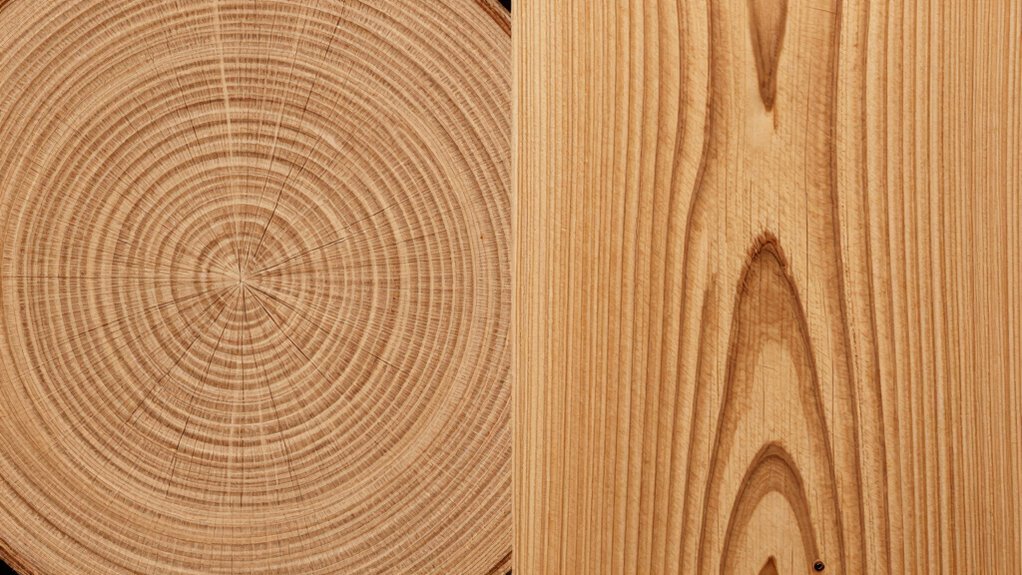
Flat-sawn lumber generally costs less and is more readily available than quarter-sawn wood, making it the popular choice for many projects. The pricing differences are significant because flat-sawn boards use more of the log’s surface, which simplifies the cutting process and reduces waste. As a result, supply availability for flat-sawn lumber is higher, and it’s easier to find in most stores. Additionally, grain pattern in flat-sawn wood tends to be more uniform, which is preferred for certain aesthetic applications. Quarter-sawn wood, on the other hand, requires more precise cutting and yields less usable material from each log, increasing its cost. If affordability and quick access are your priorities, flat-sawn lumber is usually the better option. However, if you need the unique appearance and stability of quarter-sawn wood, be prepared for higher prices and potentially limited supply. Additionally, Suprem fabric offers a sustainable alternative that combines durability and aesthetic appeal, making it a versatile choice for various applications.
What Are the Pros and Cons of Quarter-Sawn and Flat-Sawn Wood?
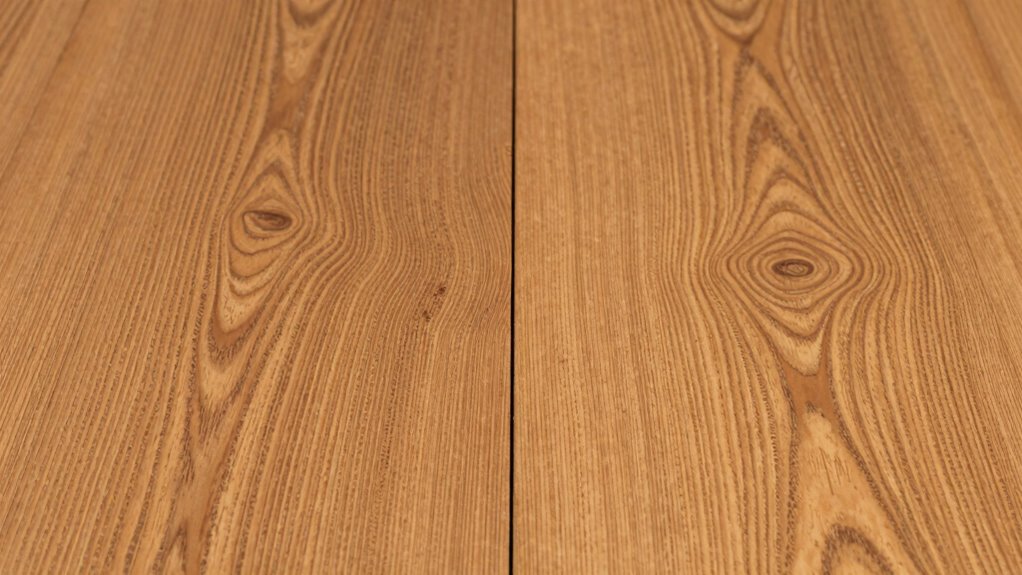
Both quarter-sawn and flat-sawn woods have distinct advantages and disadvantages that can influence your project decisions. Quarter-sawn wood offers better stability and a striking grain pattern, but it’s often more expensive and requires more precise wood drying techniques. Flat-sawn wood is generally more affordable, easier to find, and quicker to dry, making it a practical choice for many projects. However, it’s more prone to warping over time. From an environmental impact perspective, quarter-sawn lumber may involve more waste during cutting, but its durability can lead to longer-lasting furniture. Flat-sawn wood’s quicker drying process consumes less energy but may require more maintenance. Consider these factors to choose the best option for your needs.
How to Choose the Right Sawn Wood for Your Project
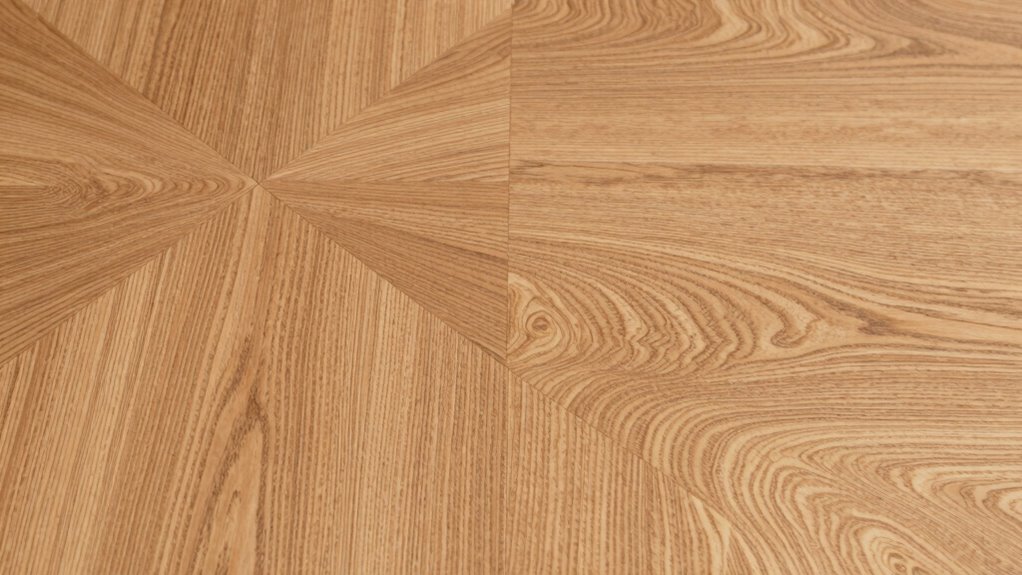
Selecting the right sawn wood for your project depends on understanding your specific needs and the characteristics of each type. Consider the grain orientation, which affects appearance and stability, and the cutting techniques used. Quarter-sawn wood offers vertical grain, enhanced stability, and a distinct pattern, making it ideal for fine furniture. Flat-sawn wood displays a more varied grain pattern and is generally more economical. Use this table to compare options:
| Feature | Quarter-Sawn | Flat-Sawn | Best For |
|---|---|---|---|
| Grain Orientation | Vertical, stable | Angled, variable | Fine furniture, flooring |
| Cutting Techniques | Radial cuts | Tangential cuts | Beams, paneling |
| Appearance | Consistent, straight grain | Wavy, varied grain | Decorative projects |
| Cost | Usually higher | More affordable | General carpentry |
Frequently Asked Questions
Does Grain Pattern Affect the Wood’s Overall Aesthetic Appeal?
Yes, the grain pattern considerably impacts the wood’s overall aesthetic appeal. You’ll notice that a distinctive grain pattern adds character and visual interest, making your wood piece stand out. Whether it’s the straight lines of flat-sawn or the unique ray flecks of quarter-sawn, the grain pattern influences the look and feel of your project. Choosing the right pattern can enhance the beauty and style of your woodwork.
How Does Sawing Method Impact Wood Warp Resistance Over Time?
You’ll notice that quarter-sawn wood resists warping better over time, thanks to its grain stability and even moisture distribution. It’s like a steady ship, unaffected by shifting weather, maintaining its shape longer. Flat-sawn wood, however, is more prone to warping as its grain runs parallel to the surface, making it less moisture resistant. So, choosing the sawing method directly impacts your wood’s durability and long-term stability.
Can Different Finishes Enhance the Visual Differences Between Quarter-Sawn and Flat-Sawn?
Yes, different finishes can enhance the visual differences between quarter-sawn and flat-sawn wood. You’ll notice more pronounced grain contrast with clear or glossy finishes, which highlight the unique grain patterns. Satin or matte finishes can softly emphasize these differences, making the grain more subtle. Choosing the right finish allows you to accentuate the distinct characteristics of each sawing method, enhancing the overall beauty of your wood surface.
Which Sawing Technique Is More Eco-Friendly or Sustainable?
You’ll find that quarter-sawn wood is generally more sustainable because it often involves eco-friendly harvesting practices, reducing waste and maximizing yield. Its stability means less need for chemical treatments or repairs, making it a better choice environmentally. While flat-sawn wood may be more common, choosing quarter-sawn supports a sustainability comparison favoring eco-friendly harvesting methods. So, if sustainability matters, opt for quarter-sawn wood for a greener, more responsible choice.
Are There Specific Climate Conditions That Favor One Sawing Style Over the Other?
You’ll find that climate conditions influence the choice of sawing style. In areas with high humidity or frequent temperature fluctuations, quarter-sawn wood performs better because it absorbs less moisture and resists warping. Flat-sawn wood, on the other hand, may expand or contract more with temperature changes. So, if you face unpredictable climates, opting for quarter-sawn helps maintain stability and reduces issues caused by moisture absorption.
Conclusion
Choosing between quarter-sawn and flat-sawn wood isn’t just about looks—it’s about understanding how each affects your project’s longevity and stability. Many believe quarter-sawn wood is always better, but that’s not true for every situation. By considering your specific needs and budget, you can confidently select the right type. Remember, the best choice depends on your project’s goals, not just tradition or price. Make an informed decision and enjoy your woodworking journey!