Choosing between MDF, plywood, and solid wood depends on your project needs, budget, and durability requirements. MDF offers a smooth surface ideal for painting and is budget-friendly, but it’s less durable. Plywood provides strength and resistance to warping, great for structural uses. Solid wood offers natural beauty and high durability for fine furniture. To make the best decision, learn about each material’s strengths and weaknesses as you explore further.
Key Takeaways
- MDF offers a smooth, budget-friendly surface ideal for painted projects, but is less durable and moisture-resistant than plywood or solid wood.
- Plywood provides better strength, stability, and moisture resistance, making it suitable for structural and outdoor applications.
- Solid wood boasts natural beauty and high durability, perfect for high-end furniture but at a higher cost and with more challenging workability.
- Consider project needs: MDF for painted interiors, plywood for structural or outdoor use, and solid wood for decorative, heirloom pieces.
- Budget, environmental impact, and desired finish should guide your choice among these materials for optimal results.
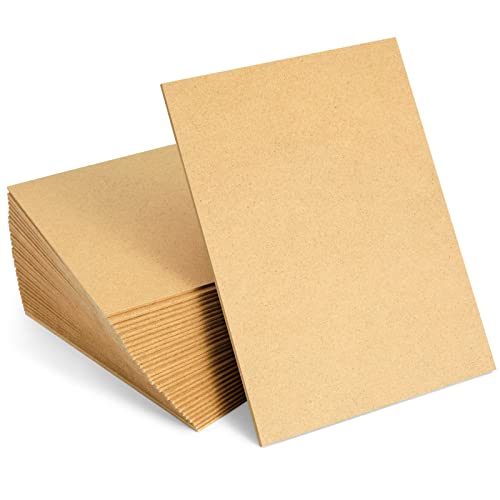
Juvale MDF Board Sheets – 30 Pack, 2mm Thin, 6 x 8 in, Brown – Chipboard & Photo Mailers & Document Boxes with Lid – Wood Boards for Shelves & Craft Projects
Creative Crafting Boards: Ignite your creativity with this set of 30 MDF wood boards from Sustainable Greetings, perfect…
As an affiliate, we earn on qualifying purchases.
As an affiliate, we earn on qualifying purchases.
How to Choose the Best Wood Material for Your Project
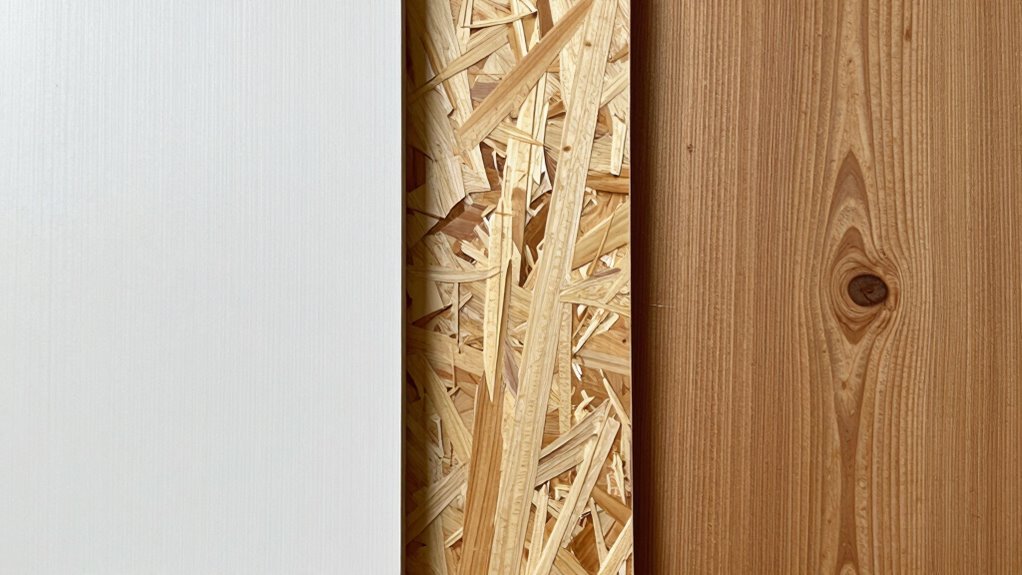
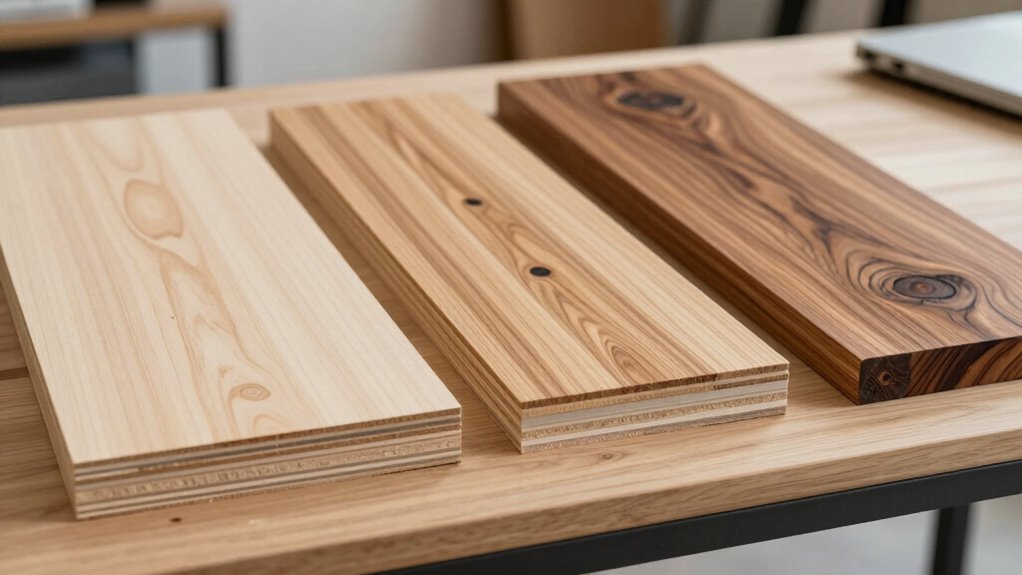
Choosing the right wood material for your project starts with understanding your specific needs and priorities. Take a close look at the grain patterns, as they influence the visual appeal and how natural light reflects off the surface. If you want a sleek, uniform look, MDF offers a smooth finish with minimal grain visibility. Plywood has more distinctive grain patterns, adding character but requiring careful selection for a consistent appearance. Consider your finish options too—whether you prefer painted, stained, or natural wood looks—as different materials respond uniquely to finishes. Think about durability, ease of work, and budget. Additionally, understanding sustainable practices can help ensure your chosen material aligns with eco-friendly principles and long-term environmental impact. Incorporating proper material selection ensures your project benefits from optimal longevity and aesthetic appeal. Furthermore, understanding art care principles can help ensure your chosen material will stand the test of time and maintain its aesthetic appeal. Being aware of material maintenance requirements can also influence your choice by highlighting how easy it is to keep the wood looking its best over the years. Considering workability and tools needed can assist in planning your project efficiently and safely. By evaluating these factors, you can select the wood that best aligns with your project’s aesthetic and functional goals.

Working with plywood, including indoor/outdoor projects
Used Book in Good Condition
As an affiliate, we earn on qualifying purchases.
As an affiliate, we earn on qualifying purchases.
What Are the Main Differences Between MDF, Plywood, and Solid Wood?
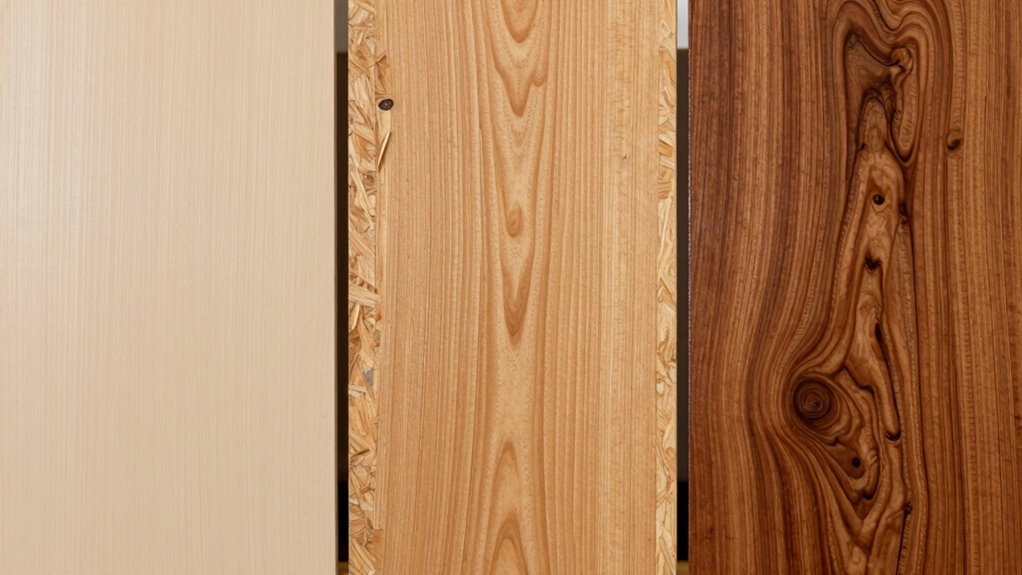
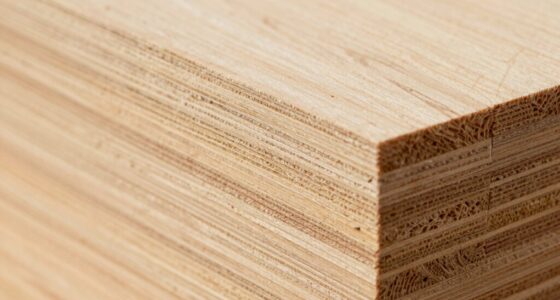
MDF, plywood, and solid wood each have distinct characteristics that set them apart for various projects. MDF offers a smooth surface finish, making it ideal for painted surfaces, but lacks natural grain patterns. Plywood provides layered construction, with visible grain patterns on the surface, offering strength and versatility. Solid wood features authentic, prominent grain patterns and natural beauty, but can be more prone to warping. When choosing between these materials, consider the specific style and finish you desire for your project, as well as durability and ease of workability. Additionally, understanding the grain patterns can help determine the aesthetic appeal and suitability for different applications. Recognizing the cost differences among these materials can also influence your decision based on budget constraints. For outdoor or humid environments, selecting the right material can significantly impact longevity and performance, particularly with regard to moisture resistance.

Grain Wood Furniture Shaker Solid Wood Panel Platform Bed, Queen Size, Walnut
No box-spring required.
As an affiliate, we earn on qualifying purchases.
As an affiliate, we earn on qualifying purchases.
Which Material Is Most Durable and Strong?
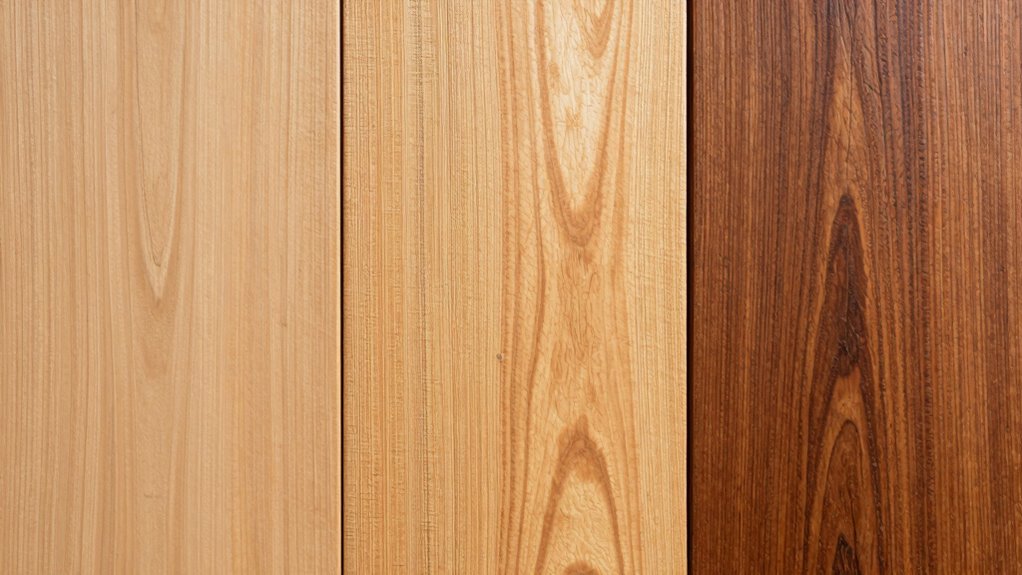
When comparing durability and strength, you should consider each material’s composition and how it withstands stress. Plywood generally resists warping better than MDF, thanks to its layered construction. Solid wood often offers the highest load-bearing capacity, but its overall strength depends on the type of wood used. Additionally, natural ingredients in certain wood products can influence their resilience and long-term durability. Understanding wood grain patterns can also help in selecting the most suitable material for specific projects. Furthermore, the manufacturing process of each material impacts its overall durability and suitability for various applications. Recognizing material treatment methods can provide further insight into their longevity and performance over time. Moreover, the presence of natural oils and resins in some wood types enhances their resistance to pests and moisture, contributing to their durability.
Material Composition Strength
Among the three materials, solid wood generally offers the highest durability and strength because its dense, natural fibers provide superior load-bearing capacity. Its material density contributes markedly to its robustness, making it ideal for heavy-duty applications. The grain patterns in solid wood also enhance its strength, as aligned fibers distribute stress evenly. In contrast, MDF has a uniform composition but lower material density, which makes it less strong but more stable. Plywood’s layered construction adds strength through cross-grain reinforcement, though it doesn’t match solid wood’s natural resilience. To summarize:
- Solid wood’s grain patterns enhance strength and durability.
- Its material density directly affects load-bearing capacity.
- MDF’s uniform composition offers stability but less strength.
- Plywood’s cross-grain layers improve strength but aren’t as dense.
Resistance to Warping
While all three materials can warp under certain conditions, solid wood is generally more resistant due to its natural fibers and stable grain structure, which help it maintain shape over time. Its inherent warp resistance makes it less prone to wood swelling caused by humidity changes. Additionally, natural grain structure contributes significantly to its durability. Furthermore, the presence of moisture regulation within solid wood helps it adapt better to environmental fluctuations. However, factors like moisture exposure can still lead to warping in solid wood. Plywood and MDF are more susceptible, especially if not properly sealed or stored. Plywood’s layered construction offers moderate warp resistance, but moisture can cause delamination. MDF, being dense and uniform, is the least resistant to warping, especially when exposed to moisture. Furthermore, protective finishing can help enhance the durability of all three materials against warping and environmental effects.
Load-Bearing Capacity
Solid wood generally offers the highest load-bearing capacity because of its dense, fibrous structure that can handle heavy weights without bending or breaking. Its strength depends largely on grain orientation, with grain running parallel to the load providing ideal load distribution. When the grain is aligned properly, solid wood can support significant weight, making it ideal for structural applications. Plywood also has good load capacity thanks to cross-grain layers, which improve load distribution and reduce warping. MDF, on the other hand, has lower load-bearing strength because of its compressed fiber makeup. To maximize load capacity, guarantee proper grain orientation in solid wood and consider layered construction in plywood. Overall, solid wood generally handles the most weight, especially with ideal grain alignment.
How Much Do These Materials Cost? Budget Tips for Woodworking
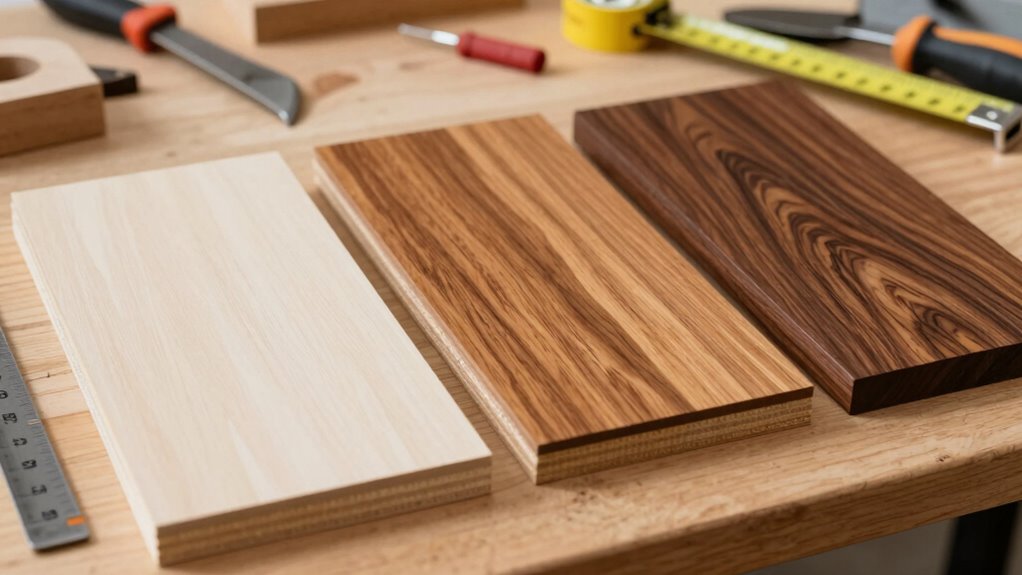
Understanding the costs of MDF, plywood, and solid wood is essential for staying within your woodworking budget. Material costs vary considerably, so knowing the price differences can help you plan effectively. MDF is usually the most affordable, making it ideal for projects on a tight budget. Plywood costs more but offers durability, while solid wood is often the priciest, especially for high-quality varieties. Use these budget tips to optimize your spending:
| Material | Approximate Cost per Sheet | Best For |
|---|---|---|
| MDF | $40 – $60 | Budget furniture, shelving |
| Plywood | $70 – $150 | Cabinets, furniture with strength needs |
| Solid Wood | $150 – $400+ | Fine furniture, decorative projects |
Stick to these tips to balance material costs and achieve quality results without overspending. Additionally, understanding the herbal properties of different wood types can help in selecting materials that complement your project’s durability and aesthetic qualities. When choosing materials, consider the manufacturing processes involved, as they can influence both cost and quality. Being aware of material sustainability can also guide eco-friendly selections that align with responsible woodworking practices. Moreover, exploring the market trends for these materials can help you identify the best times to purchase at lower prices.
How Easy Is It to Work With MDF, Plywood, and Solid Wood?
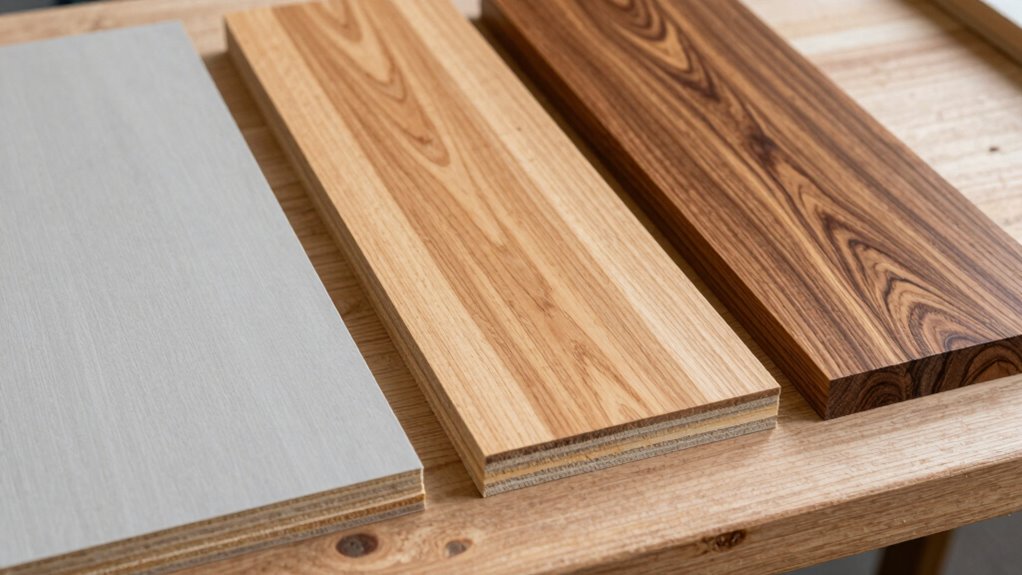
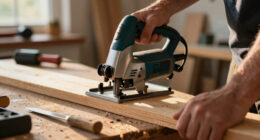
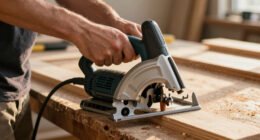
Working with MDF, plywood, and solid wood varies in ease depending on your experience and project requirements. MDF is straightforward to cut and shape, offering smooth surfaces with consistent finish quality, but it lacks visible grain patterns. Plywood is versatile; it’s easier to work with than solid wood thanks to its layered structure, which resists splitting. Solid wood provides natural beauty and distinctive grain patterns, but it can be more challenging to work with due to its tendency to split or warp. Safety considerations such as proper tools and protective gear are essential when working with these materials. Additionally, understanding material properties can help prevent common issues like warping or splitting during your project. Being aware of moisture content is especially important to ensure stability and durability over time.
Are MDF, Plywood, and Solid Wood Eco-Friendly?
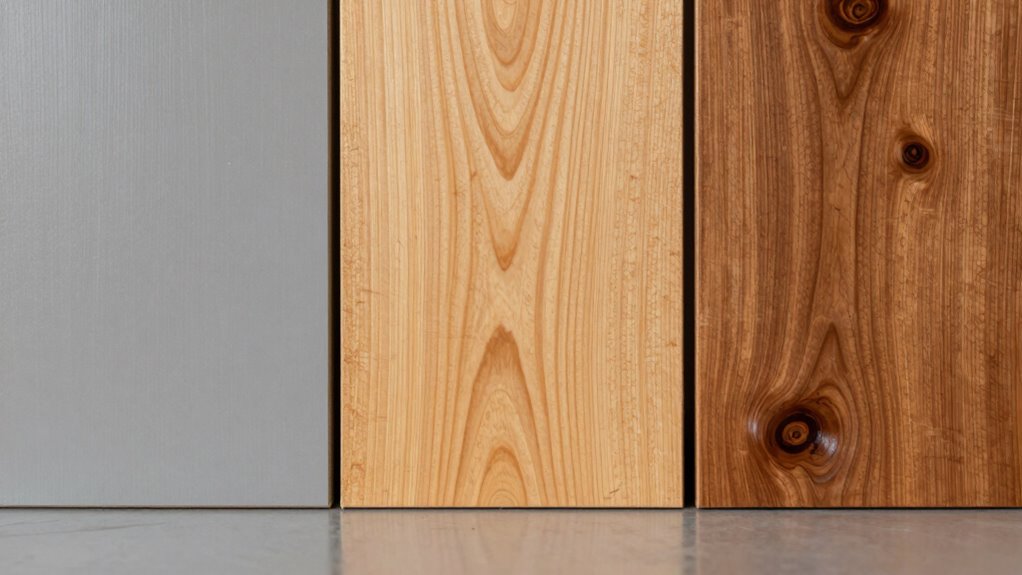
Are MDF, plywood, and solid wood environmentally friendly choices? The answer depends on how they’re sourced and manufactured. MDF and plywood can be eco friendly options if made with sustainable sourcing practices and low-VOC adhesives, reducing harmful emissions. However, some MDF products use formaldehyde-based resins, which may impact indoor air quality. Solid wood is generally more eco friendly when harvested responsibly, emphasizing sustainable sourcing that maintains forest health. Choosing certifications like FSC or PEFC helps ensure your materials come from well-managed forests. While all three materials can have eco friendly aspects, it is crucial to consider their production processes, sourcing methods, and certifications. Making informed choices allows you to select the most sustainable options for your projects.
When Should You Use Each Material? Best Applications and Projects
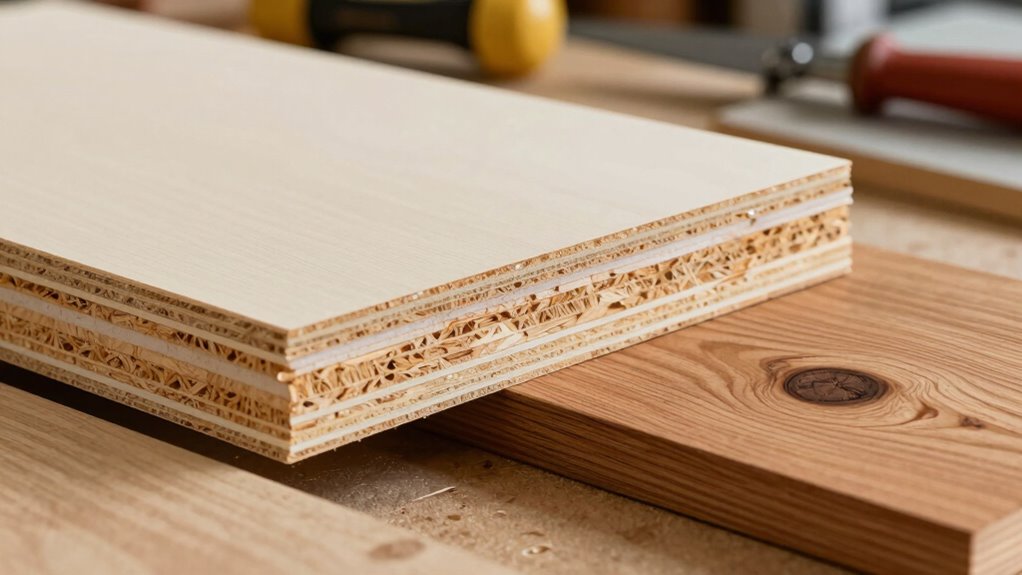
Choosing the right material for your project depends on its specific needs and how each option performs in different applications. MDF is ideal for painted surfaces and projects needing a smooth surface finish, as it lacks distinct grain patterns. Plywood’s layered grain pattern makes it sturdy and suitable for structural uses and furniture that require strength. Solid wood is best when you want natural beauty, showcasing unique grain patterns and a rich surface finish, perfect for high-end furniture or decorative accents.
Consider these applications:
- MDF for cabinets and painted furniture
- Plywood for shelving and outdoor projects
- Solid wood for heirloom furniture or detailed carvings
- Plywood or solid wood for decorative paneling, depending on surface finish preferences
Common Challenges With MDF, Plywood, and Solid Wood: And How to Overcome Them
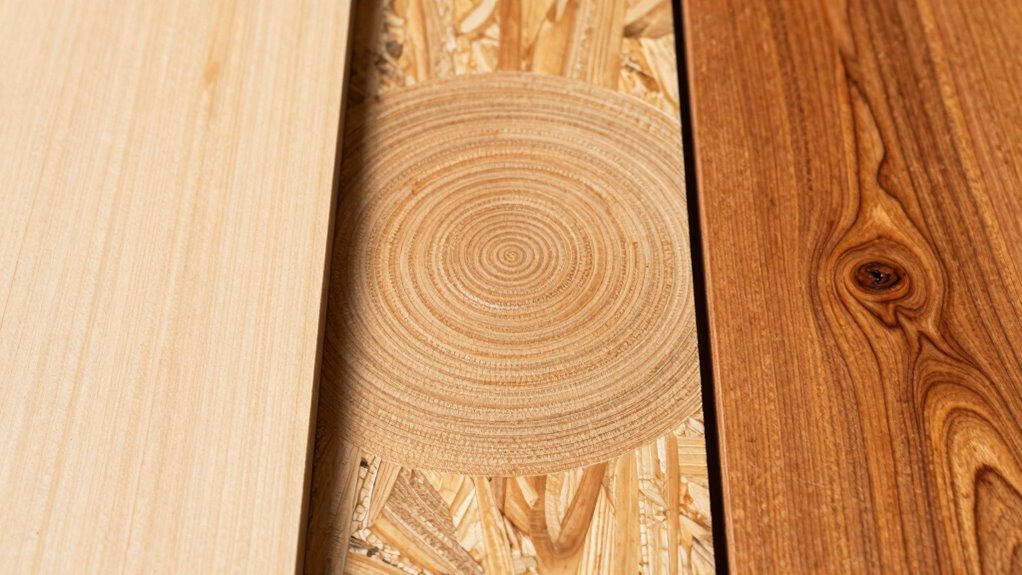
Moisture can quickly damage MDF, plywood, and solid wood if you’re not careful, but applying sealants and proper finishes can help. Strength and flexibility issues often come up, especially with heavy or dynamic loads, so choosing the right material and design is key. By understanding these common challenges, you can implement effective solutions to prolong your project’s lifespan.
Moisture Damage Prevention
Since moisture exposure poses a significant risk to MDF, plywood, and solid wood, understanding how to prevent damage is essential. To protect your materials, focus on reducing moisture absorption and improving water resistance. Start by sealing surfaces with appropriate finishes or sealants to block water entry. Use moisture barriers like plastic sheets or vapor barriers during storage or construction. Keep environments dry with proper ventilation and dehumidifiers. Additionally, select weather-resistant finishes for outdoor projects. Here are some tips:
- Apply water-resistant sealants regularly
- Store materials in dry, covered areas
- Use protective coatings for outdoor use
- Ensure proper ventilation to reduce humidity
Implementing these strategies helps minimize moisture damage, prolongs lifespan, and maintains the integrity of MDF, plywood, and solid wood.
Strength and Flexibility Solutions
Strength and flexibility are common challenges when working with MDF, plywood, and solid wood, especially in projects requiring durability and structural integrity. To enhance these qualities, pay attention to grain patterns, which influence how the material responds to stress and bending. For solid wood, choosing the right grain orientation can improve flexibility and reduce cracking. Plywood’s layered structure provides inherent strength, but selecting sheets with consistent grain patterns helps prevent weak spots. MDF is less flexible but can be reinforced through strategic shaping or supports. Finishing techniques also play a role—proper sealing and reinforcement can protect against splitting and moisture-related weakness. By understanding these factors, you can optimize each material’s strength and flexibility for your project’s specific demands.
Quick Comparison: MDF vs Plywood vs Solid Wood – Which Is Right for You?
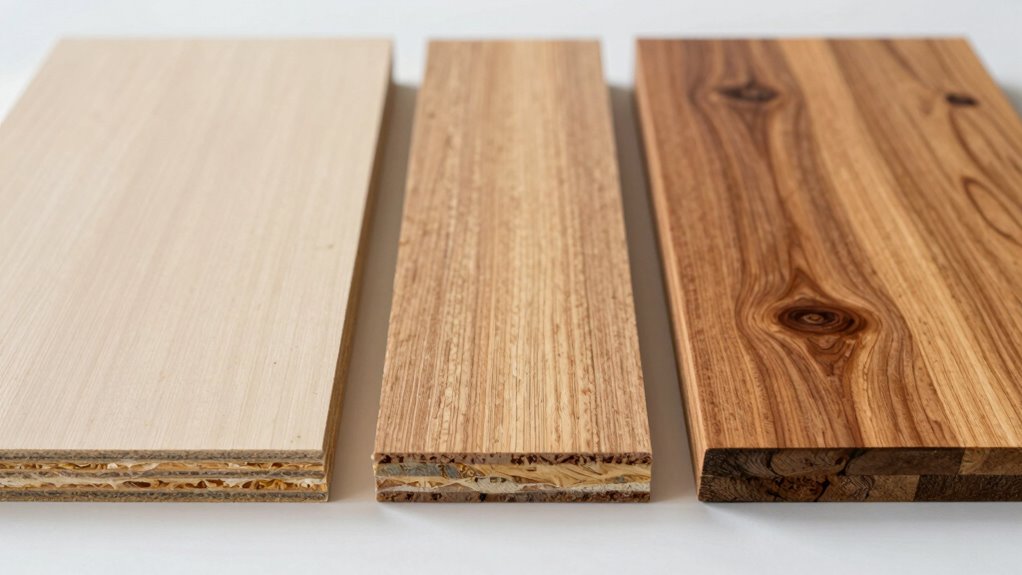
Choosing the right material depends on your specific needs and priorities. MDF, plywood, and solid wood each have unique advantages. MDF offers a smooth surface ideal for painted finishes and consistent grain patterns, making it great for detailed finishing techniques. Plywood provides strength, stability, and attractive grain patterns, suitable for furniture that requires durability. Solid wood boasts natural beauty, unique grain patterns, and the ability to be refinished multiple times, but it’s more susceptible to warping. Consider these factors:
- MDF’s smooth surface for sleek finishes
- Plywood’s strength and stability
- Solid wood’s natural grain and refinishing potential
- Cost-effectiveness and ease of working with each material
Your choice depends on your project’s look, durability needs, and budget.
Frequently Asked Questions
How Does Moisture Affect Each Type of Wood Material?
Moisture absorption affects each wood type differently. When exposed to moisture, MDF tends to swell and warp easily because of its dense fibers. Plywood resists swelling better due to its layered construction, which helps distribute moisture. Solid wood absorbs moisture and can expand, causing cracks or warping over time. You should seal and protect all materials to minimize moisture damage and wood swelling, especially in humid environments.
Can MDF, Plywood, and Solid Wood Be Recycled or Reused?
You can definitely recycle or reuse MDF, plywood, and solid wood, but their potential varies. MDF has limited recycling options due to resin content, while plywood and solid wood are more eco-friendly and often find reuse opportunities in furniture or crafts. Think of it as hitting two birds with one stone—reducing waste while giving old materials a new lease on life. Always check local recycling programs for the best way to handle each type.
What Maintenance Is Required for Each Wood Material Over Time?
You need to maintain MDF, plywood, and solid wood regularly. For finish care, clean each with gentle, damp cloths and avoid harsh chemicals. Pests can threaten all, so apply pest prevention treatments, especially for solid wood. Keep them dry to prevent warping or swelling, and reapply finishes or sealants as needed to safeguard against moisture and wear over time. This routine ensures durability and longevity for each material.
Are There Health Risks Associated With Working With These Materials?
You should be aware that working with MDF, plywood, and solid wood can impact indoor air quality due to chemical emissions. MDF often contains formaldehyde-based glues, which can release volatile organic compounds (VOCs), posing health risks. Plywood’s adhesives vary, while solid wood generally has fewer emissions. Always work in well-ventilated areas, wear masks if needed, and choose low-emission products to minimize health risks from chemical emissions.
How Do They Perform in Outdoor or Humid Environments?
You’ll find that plywood and solid wood generally perform better outdoors or in humid environments due to their weather resistance, but they still need proper sealing to prevent moisture damage. MDF isn’t ideal outdoors, as it’s highly susceptible to moisture and swelling. Also, consider termite susceptibility; plywood offers better resistance than solid wood, but none are completely termite-proof without treatments. Always choose weather-resistant, treated options for durability in such conditions.
Conclusion
Choosing between MDF, plywood, and solid wood is like selecting the hero for your project’s epic story. Each material has superpowers—durability, affordability, ease of use—that can turn your vision into reality. Think of MDF as the versatile chameleon, plywood as the resilient warrior, and solid wood as the majestic king. Pick the right one, and you’ll craft masterpieces that stand the test of time—more legendary than you ever imagined!