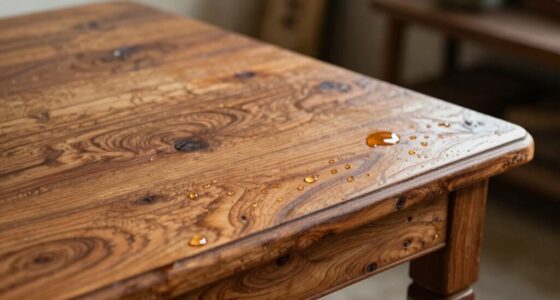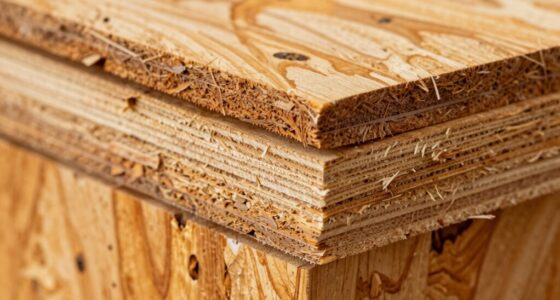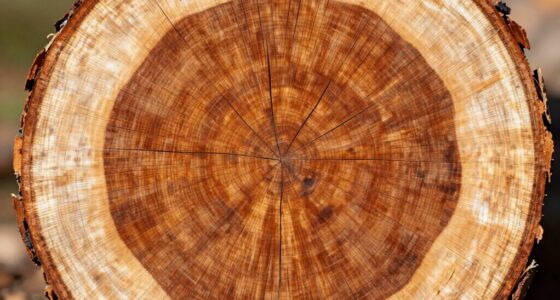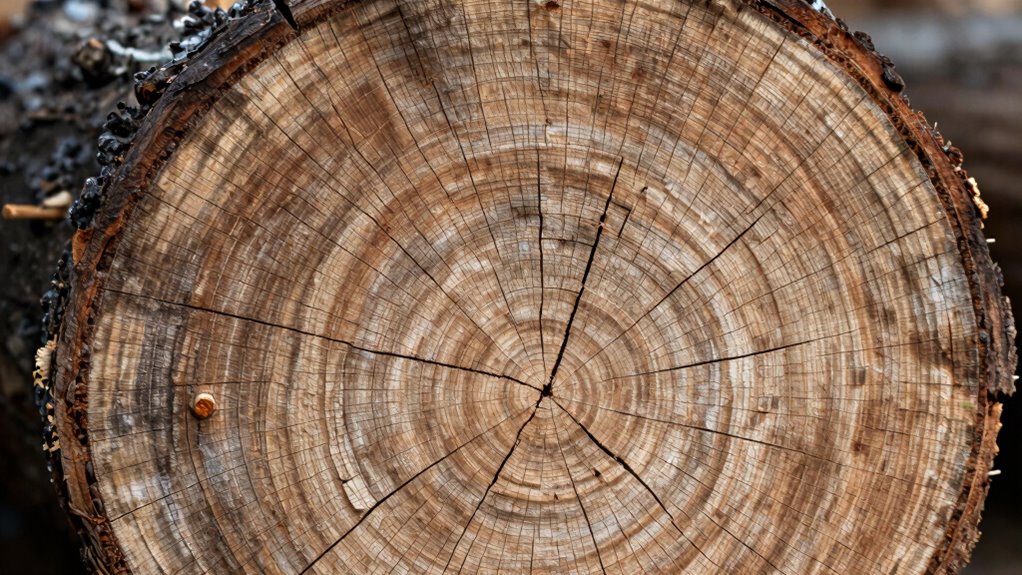

Case hardening in lumber occurs when the outer layer dries too quickly, trapping moisture and internal stresses. This uneven drying makes the surface harder and more brittle, often leading to cracks and defects that appear later. Since these signs develop beneath the surface, early detection is tricky. To avoid this issue, controlling drying rates and moisture levels is essential. Keep going to discover more about how to spot and prevent case hardening effectively.

Get business pricing on tools and workshop supplies
- Business-only prices and quantity discounts
- Tax-exempt purchasing
- Multiple users, one account, clear invoices
Key Takeaways
- Case hardening occurs when the outer layer dries faster, trapping moisture inside and creating internal stress.
- It develops during drying, as rapid surface moisture loss causes uneven shrinkage and stress buildup.
- Signs include surface cracking, rough spots, and internal warping, often hidden beneath the hardened exterior.
- Detecting case hardening early is difficult because internal stresses are not visible on the surface.
- Proper drying techniques and moisture control can prevent or minimize case hardening in lumber.
As an affiliate, we earn on qualifying purchases.
What Is Case Hardening in Lumber?
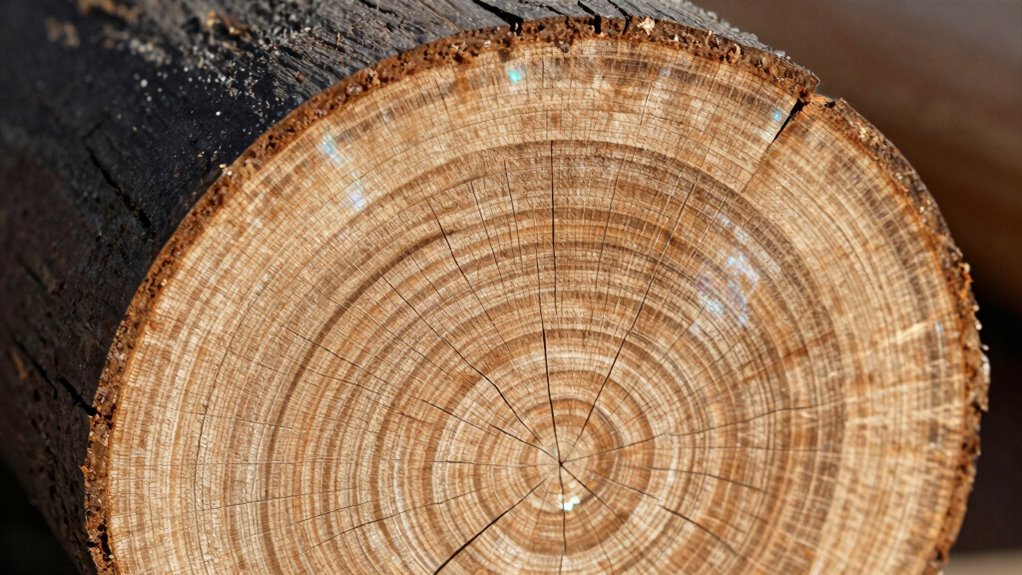
Have you ever noticed that some pieces of lumber feel harder on the surface than inside? That’s a sign of case hardening. It happens when the outer layer of the wood dries faster than the interior, creating internal stress. This uneven drying causes the surface to become harder and more resistant, while the inside remains softer. Over time, this internal stress can lead to surface cracking and defects, even if the wood looks fine externally. Fundamentally, case hardening traps moisture and tension in the outer layer, making it appear hardened. This process doesn’t happen evenly, which is why you might see cracking or warping develop later. Understanding what case hardening is helps you better recognize and prevent potential issues during drying or processing. Additionally, controlling drying conditions can help minimize internal stress and reduce the risk of defects.
As an affiliate, we earn on qualifying purchases.
How Does Case Hardening Develop During Drying?
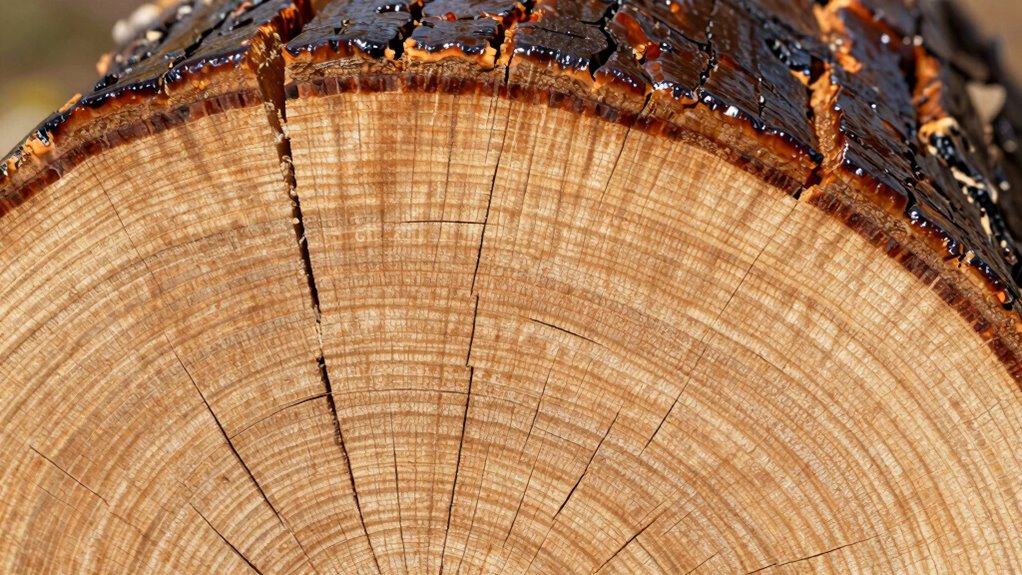
During the drying process, case hardening develops when the outer layers of the wood lose moisture more quickly than the interior. This creates moisture gradients, with the surface drying and shrinking faster than the core. As a result, internal stresses build up, causing the outer layer to become harder and more brittle. This rapid surface drying can lead to surface cracking, especially if the moisture loss is uneven or too quick. The hard outer shell restricts further moisture escape, trapping water inside and intensifying internal stresses. Over time, these stresses can cause the wood to crack or distort, even after the drying process is complete. Understanding how moisture gradients influence case hardening helps you anticipate and manage potential defects during drying. Additionally, the development of smart drying techniques can help control moisture loss more evenly, reducing the risk of stress-related defects.
As an affiliate, we earn on qualifying purchases.
What Are the Signs That Your Wood Has Case Hardening?
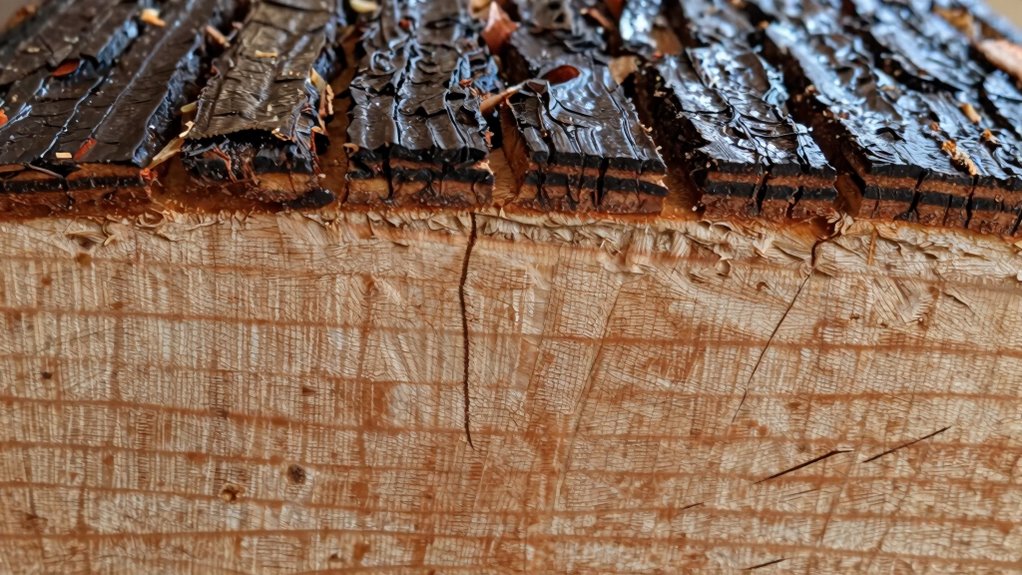
You can often spot case hardening in your wood by inspecting its surface for specific signs. Look for irregular grain check patterns, which indicate uneven stress distribution. Finish issues are common, such as rough spots or areas that chip easily. You might notice a dull or uneven sheen, revealing inconsistent hardness. Warping or cupping can also signal case hardening beneath the surface. Finally, feel the surface for brittleness—if the wood feels unusually hard yet fragile, that’s a red flag. These signs can compromise your project’s quality and durability. Recognizing these early warning signs helps you decide whether the wood needs further treatment or replacement, ensuring your work remains safe and visually appealing. Additionally, understanding the underlying causes, like stress distribution, can help prevent future issues in your woodworking projects.
As an affiliate, we earn on qualifying purchases.
Why Is It Hard to Detect Case Hardening Early?
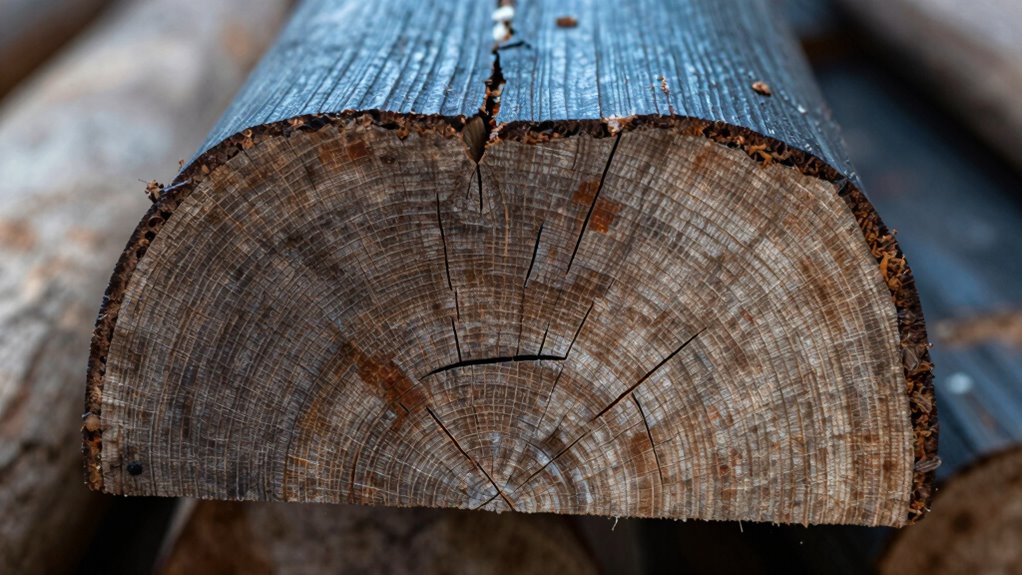
Detecting case hardening early proves difficult because its signs often develop beneath the surface, making visual inspection insufficient. The process begins with moisture migration within the wood, which causes uneven drying and internal stress buildup. These internal stresses don’t immediately manifest externally, so by the time you notice any damage, the case hardening has already progressed. Moreover, the hardened outer layer can hide underlying issues, preventing early detection. Since moisture movement occurs internally, it’s hard to pinpoint the problem through simple observation or surface tests. Without specialized equipment or techniques, you might miss the early stages of case hardening, allowing the problem to worsen over time. This hidden development underscores why early detection remains a challenge. Additionally, understanding the energy-efficient processes involved in moisture migration can help in developing better detection methods.
How Can You Prevent or Minimize Case Hardening in Your Wood?
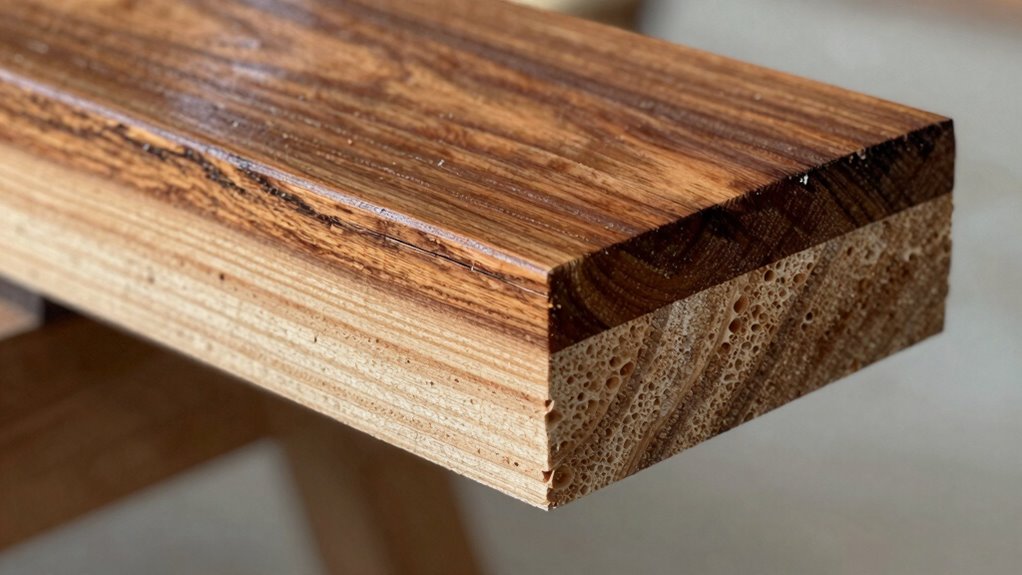
To prevent or minimize case hardening in your wood, controlling moisture content throughout the drying process is essential. Proper moisture control ensures even drying, reducing internal stresses that cause case hardening. Focus on accurate kiln scheduling to maintain ideal temperature and humidity levels, avoiding rapid drying that leads to a hard outer shell. Implement gradual drying steps to allow moisture to escape evenly. Regularly monitor moisture levels with reliable tools to stay on track. Utilizing expert voice actors in instructional materials or training videos can improve understanding of proper drying techniques. Be proactive with these strategies:
- Use precise kiln scheduling to prevent uneven drying
- Avoid abrupt changes in temperature or humidity
- Maintain consistent airflow during drying
- Regularly check moisture content to guide adjustments
- Handle wood carefully to reduce internal stress buildup
These practices help you produce high-quality, stress-free lumber.
Frequently Asked Questions
Can Case Hardening Occur in All Types of Lumber?
Yes, case hardening can occur in all types of lumber. When wood experiences uneven thermal expansion during drying, internal stresses develop. These stresses can cause the outer layer to harden faster than the interior, creating case hardening. This phenomenon isn’t limited to specific wood types; any lumber subjected to rapid or uneven drying is susceptible to developing these internal stresses, which may lead to warping or cracking over time.
Does Ambient Temperature Affect Case Hardening Development?
You bet ambient temperature affects case hardening development. It’s like the temperature effects are the spark that can accelerate or slow this process. Environmental factors, especially fluctuating temperatures, influence how moisture moves within the wood, impacting stress buildup. Warmer conditions often increase the risk, while cooler settings may delay or reduce it. Keeping your environment stable helps prevent unexpected stresses from sneaking up on your lumber projects.
Are There Specific Wood Species More Prone to Case Hardening?
Certain wood species are more susceptible to case hardening, especially hardwoods like oak and maple, which tend to have higher species susceptibility due to their dense cell structure. Softwoods like pine are generally less prone. You should consider the wood type when planning drying processes, as hardwoods may require more careful management to prevent case hardening issues, ensuring the lumber maintains its integrity during and after drying.
How Does Moisture Content Influence the Risk of Case Hardening?
You should know that moisture content profoundly impacts case hardening risk, with studies showing that lumber dried too quickly can develop stress. When moisture levels are uneven or too high during drying, the surface hardens faster than the interior, causing stress. Proper drying methods, like gradual kiln drying, help balance moisture content, reducing this risk and ensuring stable, high-quality wood. Keep moisture levels consistent for best results.
Can Post-Drying Treatments Reverse or Fix Case Hardening?
Post-drying correction can sometimes fix case hardening, but it’s not always guaranteed. You should consider surface treatment options like sanding or planing to remove hardened layers. In some cases, applying controlled heat or moisture can help relieve internal stresses. However, prevention during drying is better. If you notice case hardening after drying, try these methods to improve your lumber’s quality and reduce stress-related issues.
Conclusion
Understanding case hardening is vital, just like knowing the secret behind the Hanging Gardens of Babylon. If you spot it early, you can prevent future headaches and guarantee your lumber stays strong and reliable. Stay vigilant during drying, and don’t hesitate to take action if you notice signs. Remember, ignoring it now could lead to surprises later—kind of like discovering a hidden trapdoor in an old castle. Stay informed, and your wood will thank you!
Fall yard work Picks
leaf blowers
As an affiliate, we earn on qualifying purchases.