To guarantee your lumber is ready for milling, you should acclimate your boards for about one to two weeks for hardwoods and two to four weeks for softwoods or dense species. Factors like moisture content, species, ambient humidity, and temperature affect how long it takes. Store your wood in a stable environment with controlled humidity and monitor moisture levels regularly. Staying aware of proper steps will help you avoid issues later; learn more to make your project successful.
Key Takeaways
- Hardwoods typically require 1-2 weeks to acclimate before milling, while softwoods may need 2-4 weeks.
- Monitor moisture content regularly using a moisture meter to determine when boards reach stable levels.
- Store lumber in a stable environment with consistent humidity (40-60%) and temperature (65-75°F) during acclimation.
- Boards should be stacked flat with grain aligned, elevated for airflow, and checked periodically for warping or cracking.
- Wait until moisture content stabilizes and boards are fully acclimated to prevent warping, cracking, or uneven milling.

General Tools MMD4E Digital Moisture Meter, Water Leak Detector, Moisture Tester, Pin Type, Backlit LCD Display With Audible and Visual High-Medium-Low Moisture Content Alerts, Grays
HUMIDITY SENSOR: Our handy meter tool can quickly determine what level of remediation is needed to keep your…
As an affiliate, we earn on qualifying purchases.
As an affiliate, we earn on qualifying purchases.
Why Is Lumber Acclimation Important for Your Projects?
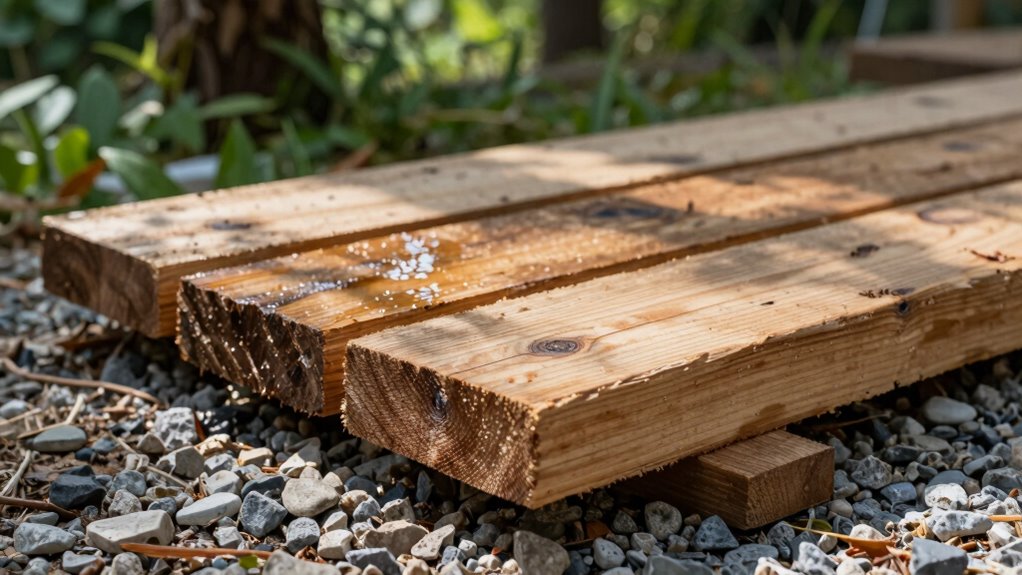
Lumber acclimation is essential because wood naturally adjusts to its environment by absorbing or releasing moisture. Achieving a proper moisture balance ensures that the wood’s dimensions stay stable, preventing warping or cracking later. When you control the climate during acclimation, you give the wood time to reach equilibrium with its surroundings. This process minimizes surprises after installation, saving you time and effort. Without proper acclimation, moisture imbalance can cause boards to shrink or swell, compromising your project’s integrity. By allowing the lumber to adapt to your workspace’s climate, you ensure a more reliable, predictable outcome. Proper climate control during this phase is key, helping you avoid costly mistakes and ensuring your finished project remains durable and beautiful over time.

Ultrawall Wall Mount Wood Organizer and Lumber Storage Metal Rack with 3-Level – Indoor & Outdoor Use, 4 Pack
Storage Master – These high-impact lumber storage racks are designed to store long objects such as lumbers, pipes,…
As an affiliate, we earn on qualifying purchases.
As an affiliate, we earn on qualifying purchases.
What Factors Affect How Long Lumber Needs to Acclimate?
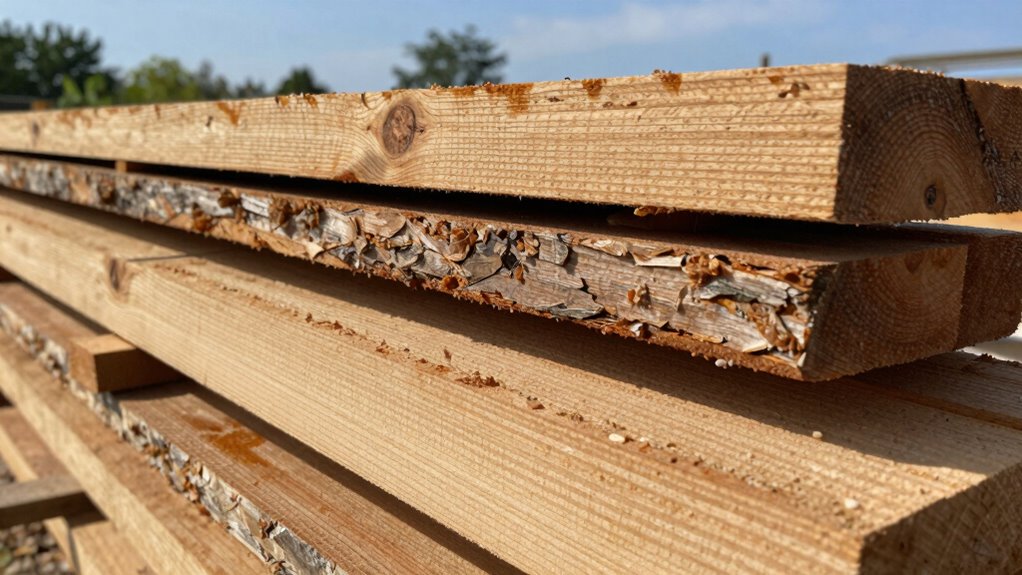
The amount of time your lumber needs to acclimate depends largely on its moisture content and the environment. Different wood species also vary in how quickly they adjust to new conditions. Understanding these factors helps you determine the right acclimation period for your project. Additionally, timeless style principles remind us that proper preparation ensures a durable and beautiful finish in your woodworking endeavors. Monitoring wood moisture content during the acclimation process can further help achieve optimal results. Factors such as humidity levels and ambient temperature significantly influence the rate at which wood reaches equilibrium.
Moisture Content Variability
Have you ever wondered why some pieces of lumber dry and stabilize faster than others? Moisture content variability plays a key role, influenced by environmental fluctuations like humidity and temperature. When conditions change frequently or abruptly, the moisture levels within the wood shift, making it harder for the lumber to reach equilibrium. This inconsistency can extend the acclimation period because the wood continually gains or loses moisture. Additionally, lumber with uneven moisture distribution or stored in environments with fluctuating humidity may take longer to stabilize. You’ll find that stable, predictable conditions help minimize moisture content variability, speeding up the acclimation process. Recognizing how environmental fluctuations affect moisture levels helps you determine how long your lumber needs before it’s ready for milling.
Wood Species Differences
Ever wondered why some wood species require more time to reach moisture equilibrium than others? Different species have unique properties influencing acclimation time, species-specific concerns, and finish suitability. Hardwoods like oak and maple typically stabilize faster, while softwoods or dense species like mahogany may take longer. Consider this table:
| Species | Moisture Equilibrium Time | Finish Suitability |
|---|---|---|
| Oak | 1-2 weeks | Good for most finishes |
| Maple | 1-2 weeks | Excellent for smooth finishes |
| Mahogany | 2-4 weeks | Sensitive to moisture changes |
| Pine | 1 week | Suitable for light finishes |
Knowing these differences helps you plan milling and finishing more effectively, addressing species-specific concerns and ensuring ideal results. Additionally, understanding wood species differences can help prevent issues like warping or cracking during the drying process.

Wood Moisture Meter, with battery and LCD display, suitable for quick determination of moisture content of many types of logs, paper, plywood, plaster walls, floor coverings, etc.
🌲【Accurate and fast measurements reveal hidden water leaks】: It has 2 high-precision pins that can penetrate the surface…
As an affiliate, we earn on qualifying purchases.
As an affiliate, we earn on qualifying purchases.
How to Properly Acclimate Your Wood Step-by-Step

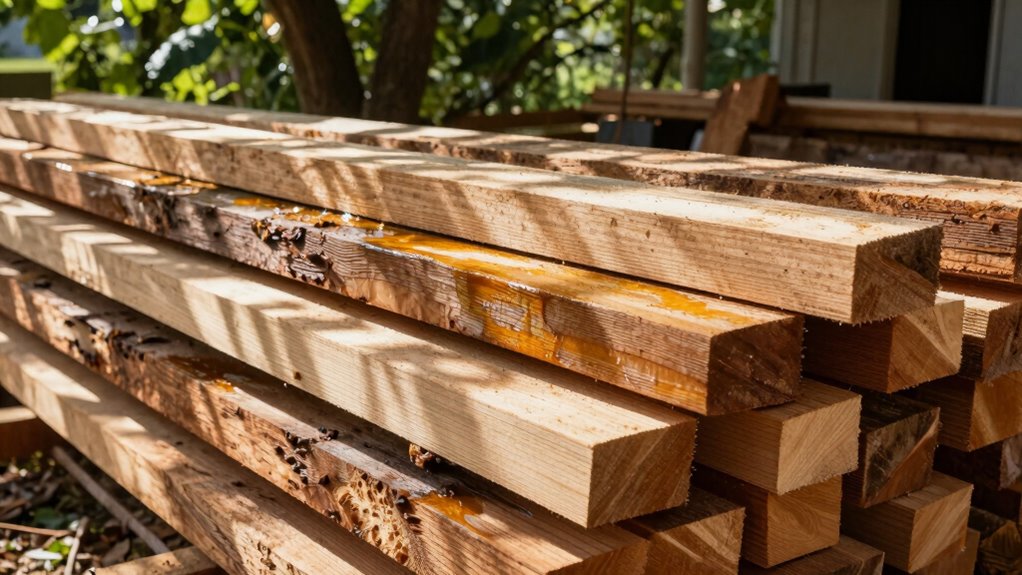
To guarantee your wood stabilizes properly before installation, you need to follow a clear acclimation process. Begin by selecting the right location with consistent temperature and humidity. Store the boards flat, with the grain orientation aligned to prevent warping. Allow the wood to acclimate for at least one to two weeks, checking moisture levels regularly with a moisture meter. During this period, avoid finish smoothing or sanding, as it can trap moisture. Proper cabinet pairing and placement are also essential to promote even moisture distribution. Ensuring proper storage conditions and monitoring environmental factors can significantly improve the acclimation process. Once the moisture content stabilizes, you can proceed with finish smoothing and milling. Proper acclimation ensures the wood’s dimensions remain stable and reduces the risk of movement after installation. Patience during this process is key to achieving a professional, long-lasting result. Additionally, understanding ventilation considerations can help maintain consistent conditions during acclimation.
wood drying and acclimation kit
As an affiliate, we earn on qualifying purchases.
As an affiliate, we earn on qualifying purchases.
How to Know When Your Lumber Is Fully Acclimated and Ready to Mill
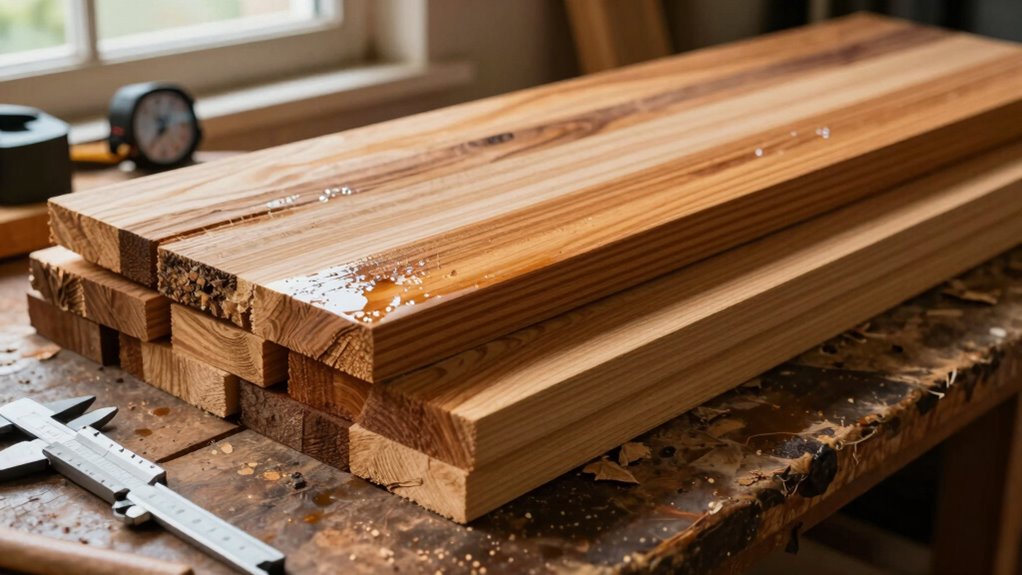
Knowing when your lumber is fully acclimated is essential before you begin milling. One of the most reliable ways to determine this is through moisture measurement, which shows if the wood has reached the appropriate moisture content for your environment. Use a moisture meter to check the wood’s moisture levels—ideally, they should match your local climate’s average. Proper storage techniques also help guarantee your lumber stays stable, such as stacking boards with spacers and in a dry, ventilated space. When the moisture content stabilizes and matches the ambient conditions, your lumber is ready. Consistent readings over several days indicate the wood has acclimated fully, reducing warping or splitting during milling. Additionally, understanding the concept of Free Floating in wood can aid in predicting how the lumber will respond to environmental changes over time. Monitoring moisture content regularly is crucial, as fluctuations can signal that the wood has not yet fully acclimated. Incorporating moisture management techniques can further enhance your confidence in the lumber’s stability before milling. Regularly checking for moisture content fluctuations can help you detect early signs of instability, ensuring optimal milling results.
How Long Does Lumber Usually Need to Acclimate?

Lumber typically needs between one and four weeks to fully acclimate, but the exact time depends on several factors. Higher wood density pieces take longer to reach equilibrium with ambient moisture levels, often extending the process. Kiln drying reduces moisture content quickly but can alter the wood’s natural equilibrium, so further acclimation might be necessary. Factors such as climate, storage conditions, and species influence the timeframe. Consider the following:
| Factor | Impact | Notes |
|---|---|---|
| Wood Density | Longer acclimation needed | Denser wood holds moisture longer |
| Climate | Affects moisture exchange | Humid environments extend time |
| Kiln Drying | Shortens initial moisture | Still requires acclimation afterward |
Understanding these factors helps determine when your lumber is ready to mill. Moisture content also plays a crucial role in the acclimation process, as it directly impacts the wood’s stability and workability. Additionally, monitoring wood stability during this period can prevent issues like warping or cracking later in the project.
What Problems Can Happen If You Skip Acclimation?
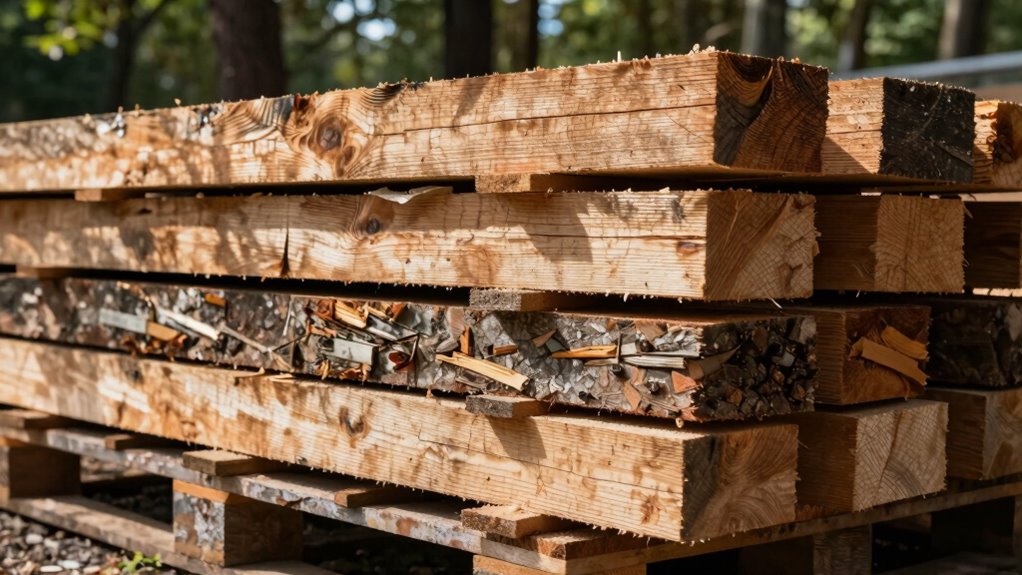
Skipping lumber acclimation can lead to serious issues like warping and twisting, which affect the final appearance and stability of your project. You might also face poor adhesion and gluing problems, causing joints to weaken or fail. Additionally, cracks and splits can develop as the wood reacts to moisture changes, compromising its integrity.
Warping and Twisting Risks
If you neglect to acclimate your lumber properly, you risk it warping or twisting as it adjusts to its environment. This can lead to serious problems in your project, especially with grain orientation and color variation. Warping can cause boards to bow or cup, making them difficult to work with and compromising your final product’s quality. Twisting can misalign joints and create uneven surfaces. Here’s what you might face:
| Issue | Effect |
|---|---|
| Warping | Boards bend out of shape |
| Twisting | Edges no longer align properly |
| Grain misalignment | Affects stability and appearance |
| Color variation | Inconsistent look after milling |
Skipping acclimation puts your project at risk of these issues. Proper lumber acclimation helps prevent these problems by allowing the wood to reach equilibrium with its environment before use.
Poor Adhesion and Gluing
When lumber hasn’t been properly acclimated, its moisture content remains mismatched with your project’s environment, which can cause significant issues during gluing. Poor adhesion often results because the wood swells or shrinks after gluing, weakening joints or causing gaps. This can ruin the finish and limit your finishing options, forcing you to redo work. Improperly acclimated wood also affects storage solutions, as moisture fluctuations continue after assembly, risking future damage. To avoid these problems, ensure boards are properly acclimated before gluing. Pay attention to the moisture content, and store lumber in a controlled environment. Proper storage solutions help maintain consistent moisture levels, ensuring strong bonds and a smooth, durable finish. Recognizing the importance of wood moisture content is essential for successful projects. Additionally, understanding the moisture equilibration process can help you better manage your lumber to prevent these issues. Monitoring moisture levels during acclimation can further improve your results and prevent unexpected problems. Being aware of proper acclimation techniques will also support achieving optimal moisture balance for your specific project needs.
Cracking and Splitting
Without proper acclimation, your lumber is more prone to cracking and splitting as it dries unevenly or too quickly once exposed to changes in humidity or temperature. This rapid moisture loss causes seasonal expansion and contraction, stressing the wood along its grain orientation. If the boards aren’t acclimated, tension builds within the wood, increasing the risk of cracks forming along the grain or splitting entirely. These issues weaken the board’s integrity and can ruin your project. Proper acclimation allows moisture levels to stabilize, reducing internal stresses and preventing cracks caused by sudden changes. By giving your lumber time to adapt to the environment, you ensure smoother milling, better stability, and a higher-quality finished product. Consistent auditory feedback from your environment can also influence how moisture levels fluctuate, impacting acclimation effectiveness.
Tips for Keeping Your Workshop Conditions Ideal During Acclimation

Maintaining stable workshop conditions is essential for successful lumber acclimation, as fluctuations in temperature and humidity can cause wood to warp or crack. To guarantee ideal conditions, focus on humidity control and temperature stability. Keep the workshop’s humidity levels consistent, ideally between 40-60%, to prevent moisture imbalance. Use a dehumidifier or humidifier as needed. Maintain a steady temperature around 65-75°F, avoiding rapid changes. Additionally, consider these tips:
- Use a hygrometer and thermometer to monitor conditions regularly
- Keep the wood off the ground on supports to promote airflow
- Avoid direct sunlight or drafts that cause temperature swings
- Maintain consistent airflow with fans or ventilation systems
- Regularly inspect the wood for signs of warping or cracking during acclimation. Proper climate control helps your lumber acclimate properly, reducing the risk of defects.
Frequently Asked Questions
Can Indoor and Outdoor Lumber Require Different Acclimation Times?
Yes, indoor and outdoor lumber often require different acclimation times because of their moisture content and storage conditions. Indoor wood typically has a more stable moisture level, so it needs less time to reach equilibrium. Outdoor lumber, exposed to varying weather, might need longer to adjust. Proper stock storage helps control moisture content, ensuring you acclimate each type appropriately before milling to prevent warping or cracking.
Does the Type of Wood Affect How Quickly It Acclimates?
Yes, the type of wood affects how quickly it acclimates because of differences in wood density and moisture content. Denser woods generally take longer to reach equilibrium with your environment, while less dense woods adjust faster. You should measure moisture content regularly and allow more time for high-density species. This guarantees your wood stabilizes properly, reducing warping or cracking during milling and use.
How Does Humidity Impact the Acclimation Process?
Humidity acts like a gentle tide, guiding moisture into and out of your lumber. If humidity isn’t managed, your wood struggles to find moisture equilibrium, causing warping or cracking. To guarantee proper acclimation, maintain consistent humidity levels, allowing the wood to breathe and stabilize. Proper humidity control creates a calm environment where your boards can adapt naturally, minimizing surprises and ensuring a smoother, more predictable milling process.
Should Lumber Be Acclimated Before or After Cutting?
You should acclimate lumber before cutting to guarantee proper moisture content and wood stability. By letting the boards reach equilibrium with your environment first, you prevent warping or cracking later. This process allows the wood to adjust to relative humidity and temperature, maintaining its shape and strength. Acclimating beforehand helps you achieve better cuts, more precise dimensions, and a higher-quality finished project.
What Tools Can Help Monitor Lumber Moisture Levels Accurately?
Think of moisture meters as your lumber’s health monitors. They help you gauge moisture levels accurately, much like a thermometer checks temperature. When shopping for one, prioritize hygrometer accuracy to avoid misleading readings. I once used a reliable moisture meter that saved me from warping a project. With the right tools, you confidently guarantee your wood’s moisture content is just right before milling, preventing costly mistakes down the line.
Conclusion
So there you have it—ignore lumber acclimation at your peril, and watch your projects warp into abstract art. Skip the wait, and your carefully planned masterpiece might turn into a crooked disaster faster than you can say “measure twice, cut once.” Embrace the patience, or prepare for a world of warped wood and regret. After all, who needs precision when you can have a lovely, twisted sculpture instead? Happy woodworking!