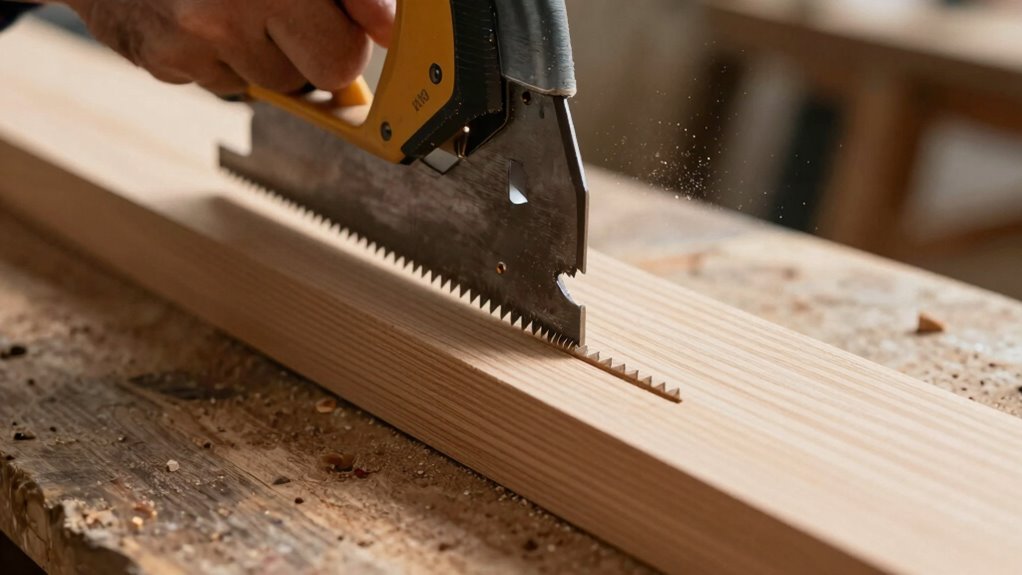

A dual bevel saw lets you tilt both left and right, making complex cuts faster and reducing the need to flip or reposition materials. This streamlines your workflow, especially for tasks like crown molding and framing, saving time and minimizing errors. In contrast, a single bevel saw requires manual flipping, which can slow you down and increase inaccuracies. Want to discover more about how these features can boost your projects? Keep exploring to find out.

Get business pricing on tools and workshop supplies
- Business-only prices and quantity discounts
- Tax-exempt purchasing
- Multiple users, one account, clear invoices
Key Takeaways
- Dual bevel saws tilt both left and right, reducing the need to flip workpieces and speeding up complex cuts.
- They minimize setup time and measurement errors compared to single bevel saws, enhancing workflow efficiency.
- Dual bevel models allow for more precise cuts on angled edges without repositioning, improving accuracy.
- Single bevel saws require manual flipping or repositioning, which can slow down productivity and increase errors.
- Overall, dual bevel saws streamline tasks, especially for complex projects, leading to faster and more accurate results.
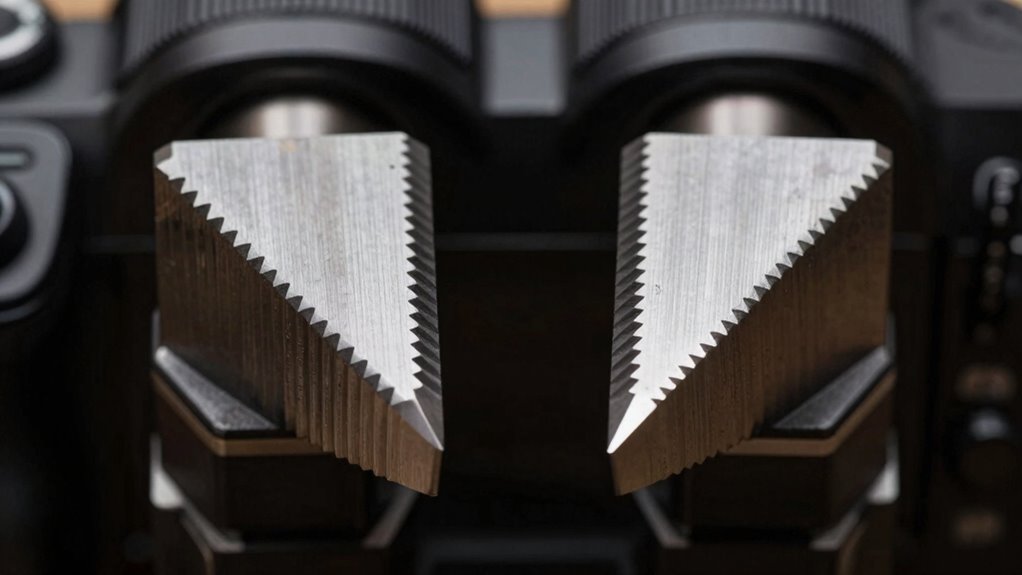
When choosing a miter saw, understanding the differences between dual bevel and single bevel models is crucial to making an informed decision. These differences notably impact your workflow, especially when it comes to efficiency and accuracy. A dual bevel saw allows you to tilt both left and right, making complex cuts more straightforward without needing to flip the workpiece. This flexibility can save you time and reduce errors, especially on projects that involve multiple angled cuts. Conversely, a single bevel saw tilts only in one direction, meaning you’ll need to manually flip or reposition your material for certain cuts. This extra step might slow you down, particularly on large or intricate projects. Edge durability plays a key role in how well your saw performs over time. Dual bevel saws often have more robust build quality, designed to withstand frequent adjustments without compromising the saw’s stability. This durability ensures that your cuts remain precise, and the saw maintains consistent performance longer. On the other hand, blade maintenance becomes more critical with dual bevel models because the frequent tilting and adjustments can lead to more wear on the blade and its components. Regularly inspecting and sharpening your blade keeps it in top shape, ensuring clean cuts and prolonging its edge longevity. Proper blade maintenance also minimizes the risk of uneven cuts or damage to your material, which is essential for professional results. Additionally, understanding the importance of Edge durability helps ensure your investment remains reliable over time. The workflow difference between the two types influences your day-to-day work. With a dual bevel saw, you can approach tasks more efficiently, especially when making compound cuts or working on crown molding and framing. The ability to tilt both ways reduces the need to reposition your workpiece repeatedly, cutting down on setup time and potential measurement errors. Furthermore, considering ergonomic design can improve comfort during extended use. A precision and accuracy focus is vital when selecting your saw, as it directly affects the quality of your finished work. A single bevel saw might be more economical and simpler to operate initially, but it can slow you down when tackling complex cuts. You’ll find yourself flipping your workpiece and recalibrating angles more often, which increases the risk of inaccuracies and can fatigue you over long sessions. It’s also important to factor in cost and value when making your decision, as initial investment and long-term benefits can vary significantly. Ultimately, choosing between a dual bevel and single bevel saw depends on your project scope and your workflow preferences. If you prioritize speed, accuracy, and less hassle during complex cuts, a dual bevel model offers clear advantages. But if your projects are straightforward and budget constraints matter, a single bevel saw might suffice. Considering additional features such as dust collection or laser guides can further enhance your cutting experience. Regardless of your choice, paying attention to edge durability and maintaining your blades will ensure your saw performs reliably, giving you professional results every time.
As an affiliate, we earn on qualifying purchases.
Frequently Asked Questions
Which Bevel Type Is Better for Beginner Woodworkers?
For beginners, a single bevel saw is better because it offers simpler operation and easier control. It has a straightforward bevel angle adjustment, making it easier to learn basic cuts. While dual bevel saws provide more cutting flexibility for complex angles, they can be overwhelming initially. Starting with a single bevel helps you master essential skills before exploring the more advanced features of a dual bevel saw.
Can Both Bevels Be Used for the Same Projects?
Yes, both bevel types can be used for the same projects, but bevel versatility impacts how easily you adapt. Single bevel saws are straightforward and work well for simple cuts, while dual bevel saws offer more project compatibility with complex angles and compound cuts. If you often work on detailed projects, a dual bevel saw provides greater flexibility. For basic tasks, a single bevel might be sufficient and easier to handle.
How Do Bevels Affect Cutting Accuracy and Precision?
Your choice of bevel considerably impacts cutting accuracy and precision—it’s like the difference between a sharp arrow and a dull one. A dual bevel offers more control, reducing errors and ensuring cleaner cuts, while a single bevel may require more adjustments, possibly affecting precision. The bevel impact on your workflow is essential; selecting the right one helps you achieve consistently perfect results with less effort and higher accuracy.
Are Dual Bevel Saws More Expensive Than Single Bevel Ones?
Dual bevel saws tend to be more expensive than single bevel ones due to their added features and complexity. When considering the cost comparison, remember that dual bevels offer more versatility, which might justify the higher price. Maintenance considerations also play a role; dual bevel saws may require more upkeep because of their additional parts. Overall, if you need greater flexibility, investing in a dual bevel saw could be worth the extra cost.
What Safety Precautions Are Essential for Bevel Cuts?
When making bevel cuts, you need to prioritize safety gear like goggles and ear protection to shield yourself from debris and noise. Always check blade safety by ensuring the saw is unplugged before adjusting the bevel angle or changing blades. Keep your hands clear of the cutting path, and make sure the workpiece is securely clamped. Following these precautions helps prevent accidents and keeps your workspace safe.
As an affiliate, we earn on qualifying purchases.
Conclusion
Choosing between dual bevel and single bevel blades is like selecting the right tool for a job—you’ll find that the right choice makes your workflow smoother and more efficient. I once watched a seasoned carpenter switch from single to dual bevel, and suddenly, his cuts were cleaner and faster. It’s a small difference, but it adds up, transforming a challenging task into a manageable one. Ultimately, your decision shapes your work’s precision and ease—so pick what suits your style best.
compound miter saw for crown molding
As an affiliate, we earn on qualifying purchases.
As an affiliate, we earn on qualifying purchases.
best dual bevel saw for woodworking
As an affiliate, we earn on qualifying purchases.
As an affiliate, we earn on qualifying purchases.
Fall yard work Picks
leaf blowers
As an affiliate, we earn on qualifying purchases.